
Here’s the thing: tech shouldn’t be a chore. If a gadget doesn’t have what I call a “High Lifestyle ROI”—meaning it actually saves you time, reduces stress, or sparks genuine joy—it doesn’t belong in your space. This year, I wanted to do something different. Instead of just listing “cool stuff,” I’ve spent the last few months diving into the behavioral science of why we quit and how specific tech can actually help us stay the course.
Whether you’re hitting the trails at Lady Bird Lake or trying to finally master sourdough in your kitchen, these tools are about building a “Digital Operating System” that supports your best life, long after the calendar turns.
Quick Summary: High-ROI Resolution Picks
- Best for Fitness: Garmin Forerunner Series (Precision tracking without the notification clutter).
- Best for Wellness: Oura Ring Gen3 (The gold standard for recovery and sleep insights).
- Best for Focus: reMarkable 2 (Digital paper that protects your deep work).
- Best for Finance: Emporia Smart Home Energy Monitor (Automated savings on your utility bills).
The Science of Why Resolutions Fail (and How Tech Bridges the Gap)
Let’s be honest: lack of motivation isn’t your only enemy. It’s often the tools we use to track it. Recent research from Cornell University highlights a fascinating framework called “GAINS vs. DRAINs” [1]. Most resolution tech actually becomes a “DRAIN” because it creates measurement fatigue—too many notifications, too much manual data entry, and the constant feeling of being judged by your wrist.
To actually succeed, we need tech that provides “GAINS”—automated progress and positive reinforcement. A Harvard Business School study found that regular progress monitoring can increase your goal achievement rate by up to 70% [2]. The secret is making that monitoring invisible.
What finally clicked for me was BJ Fogg’s B=MAP model. For a habit to stick, you need Motivation, Ability, and a Prompt. The gadgets I’ve curated below aren’t just toys; they are sophisticated “Prompts” designed to make the right choice the easiest choice.
Resolution Archetype 1: Radical Health & Fitness
Most people start with “I want to lose weight,” but the high-ROI way to look at fitness is through holistic health data. We aren’t just counting steps anymore; we’re monitoring recovery. UCLA Health reports that about 20% of Americans now use wearables to support chronic condition monitoring and daily wellness [3].
I used to be the person who would run until I was burnt out, wondering why I wasn’t seeing results. I realized I was tracking the work, but I wasn’t tracking the recovery. I tried various “smart” watches that felt more like tiny smartphones glued to my wrist, constantly buzzing with emails when I just wanted to find my pace. Then I switched to a dedicated fitness ecosystem.
The Garmin Forerunner 265 was the game-changer for me. It doesn’t just tell you how far you ran; its “Training Readiness” score tells you if your body is actually ready for a hard workout or if you need a rest day. It takes the guesswork out of progress.
Micro-Verdict: The ultimate tool for turning raw effort into measurable, sustainable fitness gains.
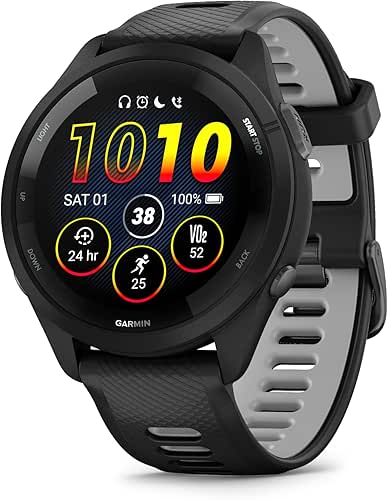

High-Accuracy Wearables for Every Budget
If you’re a beginner, you don’t need a $900 ultra-watch. You need something that makes you want to put your shoes on.
I’ll admit it—I was skeptical of the “ring” trend at first. I’m a jewelry minimalist and the idea of a bulky plastic ring didn’t appeal to me. But after a month of struggling with morning brain fog, I decided to try the Oura Ring Gen3. What surprised me was the nuance. Instead of a generic “sleep score,” it tracks my Heart Rate Variability (HRV), which is a metric the American Heart Association identifies as a key indicator of your nervous system’s health. It’s subtle, stylish, and the battery lasts for days.
Micro-Verdict: The best “set it and forget it” device for optimizing sleep and recovery.

The Smart Scale: Beyond Just Weight
Weight is a lying metric. You can be getting healthier while the scale stays the same because you’re gaining muscle. This used to frustrate me to no end until I stopped using a “dumb” scale.
I researched dozens of options before landing on the Etekcity HR Smart Fitness Scale. PCMag’s testing confirms it tracks 14 different metrics, including muscle mass and visceral fat [4]. Seeing my “Metabolic Age” go down even when my weight stayed steady was the motivation I needed to keep going in February.
Micro-Verdict: Provides the “hidden” data you need to see real progress when the scale won’t budge.
The “Fitness Junkie” Loadout
- Essential: Garmin Forerunner 265 (GPS & Training Readiness)
- Essential: Etekcity HR Smart Scale (Body Composition)
- Essential: Shokz OpenRun Pro (Safety-first bone conduction headphones)
- Pro Upgrade: Hydrow Wave Rower (For low-impact, high-intensity home workouts)
Resolution Archetype 2: Focus & Productivity ‘Deep Work’
In our Austin tech-heavy world, the biggest hurdle to “Deep Work” is the very tech we use to do it. Inefficient goal management usually stems from “notification creep”—we are so busy responding to pings that we never actually produce.
I struggled with this for years. I’d sit down to journal or plan my week on my iPad, and ten minutes later, I’d be scrolling through a sourdough forum or checking emails. The friction was too low. I needed a device that did less.
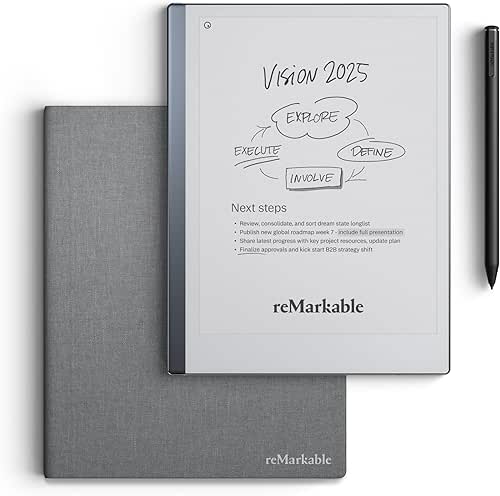
The reMarkable 2 felt like coming home. It’s an E-Ink tablet that feels exactly like pen on paper but keeps everything organized digitally. There are no apps, no emails, and no blue light. It’s just you and your thoughts. It’s become the centerpiece of my morning routine.
Micro-Verdict: A distraction-free sanctuary for planning and high-level thinking.
For digital tools, I’ve found that accountability is the missing ingredient. PCMag currently rates Caveday as a top focus tool, and I have to agree [4]. It’s essentially a virtual “deep work” room. When you join a “cave,” you’re working alongside others, which uses social pressure to keep you off your phone.
The “Deep Work” Loadout
- Essential: reMarkable 2 Tablet (Distraction-free planning)
- Essential: Caveday Membership (Group focus sessions)
- Essential: Sony WH-1000XM5 (Industry-leading noise cancellation)
- Pro Upgrade: BenQ ScreenBar Halo (Reduces eye strain for late-night sessions)
Resolution Archetype 3: The Optimized Home (Organization & Energy)
Can smart home devices actually help you save money or keep a cleaner house? The answer is yes, but only if you automate the “boring” stuff. According to the Consumer Technology Association, smart home adoption is surging because people are finally seeing the ROI in utility savings.
I’ll be honest: I used to forget to turn the AC down when I left for the Austin Farmers Market on Saturdays. I was literally throwing money away. I tried those basic programmable thermostats, but the interface was so clunky I never used it.
The Nest Learning Thermostat was the first “smart” thing I bought that actually paid for itself. It learns your schedule and adjusts automatically. Pairing it with a few smart plugs for my “vampire” electronics (like the TV and coffee maker) dropped my electric bill by 15% in the first two months.
Micro-Verdict: The easiest way to automate your financial “saving” resolutions.

The “Efficient Home” Loadout
- Essential: Nest Learning Thermostat (Energy automation)
- Essential: Kasa Smart Plugs (Eliminating standby power waste)
- Essential: Roborock S8+ (Automated floor maintenance)
- Pro Upgrade: Emporia Gen 2 Energy Monitor (Real-time circuit tracking)
The “Digital Operating System” Setup Guide
Buying the gadgets is the easy part. The “Pro” move is linking them together. Here is how I set up my personal “Digital OS” to avoid the January Fade:
- The Morning Trigger: My Oura Ring detects when I wake up. Through an IFTTT (If This Then That) automation, it signals my smart plug to turn on my coffee maker. The “Prompt” is the smell of coffee.
- The Focus Gate: When I sit at my desk, I turn on my “Deep Work Lamp.” This is a simple smart bulb set to a cool blue light. It’s a visual cue to my brain (and my partner) that I am in “Do Not Disturb” mode.
- The Evening Wind-down: At 9:00 PM, my smart home shifts the lights to a warm amber. This follows the “digital hygiene” principles suggested by wellness experts to prepare the body for melatonin production.
Jordan’s 30-Day Gadget Onboarding Plan
To avoid measurement fatigue, do not turn everything on at once.
- Week 1: Just wear the tracker. Don’t look at the data yet. Just build the habit of wearing it.
- Week 2: Check your “Baseline” metrics. What is your average?
- Week 3: Set ONE small goal (e.g., 500 more steps or 15 mins more sleep).
- Week 4: Review the “GAINS.” Focus on the feeling of the win, not just the number.
Safety & Privacy: Keeping Your Resolutions Secure
Here’s a reality check: health and home data are incredibly personal. You don’t want your daily routine or heart rate history floating around unsecured. The Electronic Frontier Foundation (EFF) emphasizes that “always-on” devices should be secured with more than just a default password [5].
Before you set up your new gadgets:
- Use a Guest Network: Put your smart home devices on a separate Wi-Fi band so they can’t access your primary computer.
- Check Privacy Toggles: In apps like Garmin or Oura, go to settings and ensure you aren’t “broadcasting” your location or data to the public by default.
- Update Firmware: Manufacturers push security patches often. Set your devices to “Auto-Update.”
Final Thoughts: You are the Why
At the end of the day, gadgets are the “How,” but you are the “Why.” No piece of tech can replace the spark of a new goal, but the right tools can certainly keep that spark from flickering out when life gets busy.
My advice? Don’t buy 20 things. Pick two archetypes that resonate most with your 2026 vision. Maybe it’s the Garmin for your fitness and the reMarkable for your focus. Build your system slowly. Living well isn’t about the sheer volume of tech in your life—it’s about how that tech clears the path for the things that truly matter.
Affiliate Disclosure: We may earn a commission on products purchased through our links. This guide is for informational purposes and not a substitute for professional medical or financial advice.
Sources & Further Reading
- Cornell University (2025). “What Makes Goal-Setting Apps Motivate or Backfire.” [Research on GAINS/DRAINs framework].
- Harvard Business School. “Research on Goal Monitoring and Achievement.” [Study on 70% success rates].
- UCLA Health. “7 Ways Wearable Technology Can Help You Reach Your Health Goals.” [Wearable adoption statistics].
- PCMag (2026). “The Ultimate Guide to Health and Fitness Tech.” [Product testing and ratings].
- Fordham Law Review. “Regulating Habit-Forming Technology.” Vol 88. [Behavioral design and security].