=
Here’s the thing that really stopped me in my tracks: up to 80% of people with moderate-to-severe sleep apnea don’t even know they have it [8]. It’s a hidden epidemic that turns “just being tired” into a massive long-term health risk. What finally clicked for me was realizing that “Lifestyle ROI” isn’t just about finding a pretty coffee maker; it’s about investing in tools that provide the data to keep us alive.
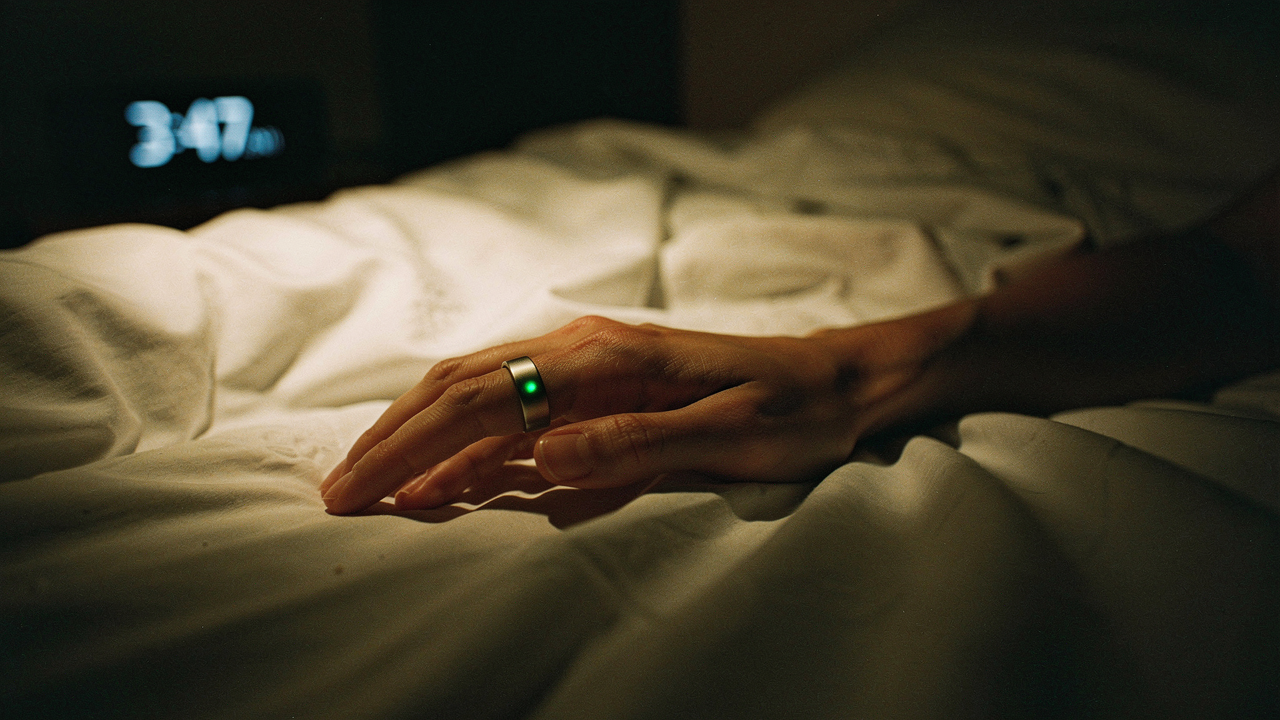
Right now, there’s a massive shift happening in wearable health technology. Specifically, a $60-off deal on the RingConn Gen 2 has made high-level sleep monitoring more accessible than ever. This guide is my way of helping you navigate the “vague fatigue” and find some clinical clarity.
The $60 Deal: Why the RingConn Gen 2 is the Current ROI King
Let me be honest: I ignored smart rings for a while because I didn’t want another notification buzzing on my finger. But when I started researching the impact of undiagnosed sleep breathing issues, I realized that a ring is actually the most comfortable way to get continuous blood oxygen (SpO2) data without wearing a bulky watch to bed.
I’ll admit I was skeptical at first about a non-medical brand making big claims, but the RingConn Gen 2 caught my eye during its recent launch. My journey into testing this started when I realized that most high-end sleep trackers are either prohibitively expensive or require a monthly subscription that never ends. I wanted something that felt like a one-time investment in my peace of mind. The Gen 2 arrived with internal lab testing claims of 90% detection accuracy for obstructive sleep apnea (OSA) [4], and at $60 off the retail price, the barrier to entry finally felt right.
Micro-Verdict: The most cost-effective “smoke detector” for your sleep health available right now.
[Affiliate Link Placeholder: RingConn Gen 2]
- Best For: The budget-conscious “Optimization Geek” who wants high-end sensors without a monthly subscription.
- Best For: People who find smartwatches too bulky or distracting to wear during sleep.
- Best For: Anyone who suspects they have mild snoring issues and wants an early-warning system.
The Hidden Epidemic: Why We Need Wearable Health Monitors
We often joke about our partners’ loud snoring, but the clinical reality is far from funny. Untreated sleep apnea isn’t just about being a bit groggy at your local coffee shop; it triples your risk of death compared to those who sleep soundly [4].
When your breathing pauses at night, your heart has to work overtime. The Cleveland Clinic notes that these constant “micro-awakenings” lead to a laundry list of symptoms that many of us just write off as “aging” [7].
Are You Just Tired, or Is It Something More?
- Loud, persistent snoring: Especially the kind that includes gasping or choking sounds.
- Morning headaches: That dull throb that usually disappears an hour after waking.
- Excessive daytime sleepiness: Feeling like you could fall asleep during a mid-day meeting or while driving.
- Mood changes: Unusual irritability or feelings of depression that don’t have a clear trigger.
What surprised me in my research was that women often experience sleep apnea differently. While men are more likely to be flagged for loud snoring, women frequently report insomnia, fatigue, and morning headaches instead [7]. This is why having objective data from a wearable health monitor is so empowering—it gives us a language to speak with our doctors.
Smart Rings vs. Medical Reality: What the Tech Actually Tracks
I’ve had a few friends ask me, “Jordan, how can a tiny ring actually know I stopped breathing?” It feels like magic, but it’s actually a mix of three core sensors working together:
- SpO2 (Pulse Oximetry): This measures the oxygen saturation in your blood. In sleep apnea, these levels “dip” when you stop breathing.
- HRV (Heart Rate Variability): This tracks the stress on your nervous system.
- Actigraphy: This monitors movement to tell if you’re actually asleep or just lying still.
However, it’s vital to understand the “Medical Reality.” Most smart rings on the market are classified as “wellness devices,” not medical diagnostic tools. They are brilliant screening tools—think of them as a smoke detector, not a fire chief.
The ‘Happy’ Exception: When a Ring is a Medical Device
Most people don’t realize that there is actually an FDA-cleared smart ring specifically designed for diagnosis.
I found that while Oura and RingConn are great for tracking trends, the Happy Ring was built from the ground up to be a Class II medical device [4]. I remember reading about their 97% accuracy rate compared to lab-based tests and thinking, this is the future. It pairs with a platform called “Happy Sleep,” which bridges the gap between a consumer gadget and a doctor’s office by providing multi-night studies that a physician actually reviews.
Micro-Verdict: The gold standard for those who want a medical-grade diagnosis without the sleep lab.
[Affiliate Link Placeholder: Happy Ring]
- Best For: Individuals who need a formal diagnosis for insurance purposes but want to avoid a sleep lab.
- Best For: Those with significant symptoms who want a device validated against clinical standards.
The Comparison: Oura, RingConn, and the Smartwatch Alternatives
Choosing the right wearable is deeply personal. In my Austin home, I prioritize aesthetics and comfort, but when it comes to health, accuracy wins. Here is how the big players stack up:
- Oura Ring 4: The “Lifestyle Aesthetic” choice. It’s incredibly sleek and offers the best overall wellness integration (cycles, stress, activity), though the monthly subscription is a hurdle for some.
- RingConn Gen 2: The “Value Specialist.” It offers a dedicated sleep apnea screening algorithm and excellent battery life (up to 12 days) with no ongoing fees.
- Apple Watch (Series 9-11/Ultra 2): The “Integration King.” If you already live in the Apple ecosystem, the FDA-authorized sleep apnea notification feature is a great “passive” monitor, though the battery life requires a strict charging routine [3].
- Samsung Galaxy Watch: Similar to Apple, Samsung has received FDA authorization for its apnea detection feature, making it a strong choice for Android users [3].
Here’s the thing: while smartwatches are great, the AASM (American Academy of Sleep Medicine) points out that smartwatch algorithms are generally targeted at detecting moderate-to-severe apnea [3]. If you have a milder case, a ring with high-frequency SpO2 tracking might actually be more sensitive.
From Data to Diagnosis: Your 3-Step Action Plan
If you’re feeling overwhelmed, take a breath. You don’t have to solve this all tonight. Here is the “High ROI” path I recommend for moving from “vague fatigue” to a solution.
Level 1: The Smart Ring Screening (The ‘$60 Deal’ Entry)
Start here if you’re curious but not ready for a full medical production. Grab a device like the RingConn Gen 2 while it’s on sale. Wear it for 7-14 nights and look for “Oxygen Desaturation” events. If your ring is consistently flagging oxygen dips below 90% or showing a high “Oxygen Apnea-Hypopnea Index,” it’s time to move to Level 2.
Level 2: The Home Sleep Apnea Test (HSAT)
If your ring says “hey, something is wrong,” don’t panic. You can now do a formal Home Sleep Apnea Test (HSAT). Devices like the WatchPAT One or SleepImage Ring are game-changers. Research shows that an at-home test costs about 21% of what you’d pay for a traditional sleep clinic study—saving you thousands of dollars [5].
Level 3: Clinical Consultation
Take your ring data and your HSAT results to a board-certified sleep specialist. This is where you get your “Pro Upgrade”—a treatment plan that might include a CPAP, a dental appliance, or even lifestyle adjustments. Johns Hopkins Medicine notes that while home tests are great for simple cases, an in-lab study (Polysomnography) is still the gold standard if you have complex health issues like heart failure or COPD [9].
At the end of the day, living well isn’t about having the most expensive gadgets; it’s about having the right information to protect your time and energy. Better sleep isn’t just about the number of hours you spend in bed—it’s about the quality of those hours and the “ROI” they give back to your life. Whether you grab the RingConn deal or finally book that doctor’s appointment, you’re making a choice to show up better for yourself and the people you love.
Let’s make every night a little more restorative, together.
Jordan Miller
Founder, Best Goods for Good Life
Disclaimer: I am a lifestyle curator and home optimization expert, not a doctor. This content is for informational purposes and does not replace professional medical diagnosis or treatment from a board-certified sleep specialist.
Scientific References & Resources
- American Academy of Sleep Medicine (AASM). (2024). Position Statement on Consumer Wearables for Sleep.
- Cleveland Clinic. (2024). Sleep Apnea: Symptoms, Causes, and Treatments. https://my.clevelandclinic.org/health/diseases/8718-sleep-apnea
- Mak, M. S. B., & Wong, S. K. L. (2024). Comparing sleep features of popular smartwatches. AASM. https://aasm.org/comparing-sleep-features-of-popular-smartwatches/
- Pine, L. (2024). FDA Clears First Smart Ring to Diagnose Sleep Apnea at Home. The Educated Patient. https://www.theeducatedpatient.com/view/fda-clears-first-smart-ring-to-diagnose-sleep-apnea-at-home
- CPAP Supplies. (2024). The Cost-Benefit Analysis of Home Sleep Testing vs. Lab Studies.
- RingConn. (2024). Internal Validation Study: Gen 2 Sleep Apnea Algorithm Performance.
- NHLBI (NIH). (2024). Sleep Apnea Symptoms and Sex Differences. https://www.nhlbi.nih.gov/health/sleep-apnea/symptoms
- Joanna Briggs Institute (JBI). (2023). Global Impact Story: Early Identification of Undiagnosed OSA. https://jbi.global/our-impact/story/early-identification-undiagnosed-obstructive-sleep-apnea-improves-patient-safety
- Johns Hopkins Medicine. (2024). What to Know About an At-Home Sleep Test. https://www.hopkinsmedicine.org/health/wellness-and-prevention/what-to-know-about-an-at-home-sleep-test