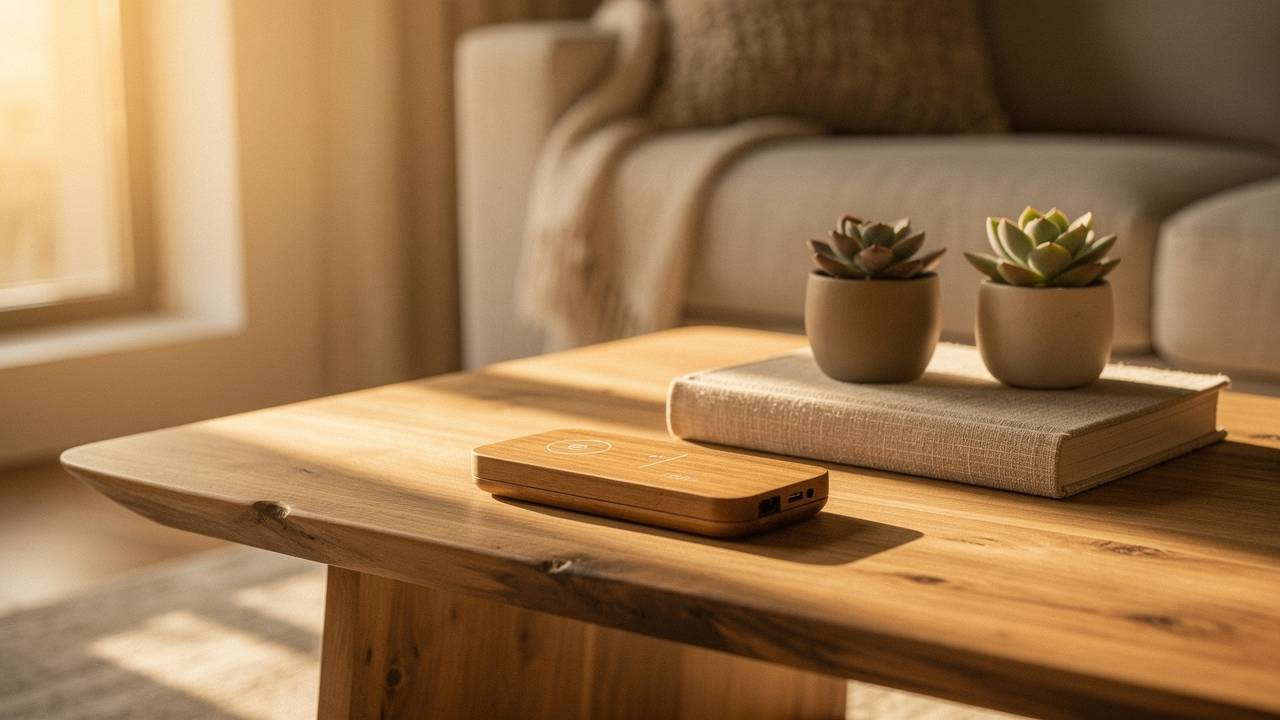
I’m a firm believer in “High Lifestyle ROI”—the idea that the things we bring into our homes should pay us back in joy and efficiency, not just “cool factor.” And let’s be honest: a glowing black glass screen on a Tuesday evening doesn’t exactly spark joy. It feels like work.
That’s why, when I first saw a minimalist plank of sanded oak that “woke up” when I touched it, I knew I’d found the antidote to the bland smart home design that has been plaguing our spaces. This isn’t just a gadget; it’s a piece of furniture that happens to run your life.
The Problem with the ‘Bland’ Smart Home Aesthetic
We’ve been sold a version of the future that looks a lot like a sterile lab. Everything is glossy, white, or black glass. While that might work for a Silicon Valley office, it’s a disaster for a cozy home environment.
Here’s the thing: we’re currently suffering from “black glass fatigue.” According to experts at The Spruce, certain tech “upgrades” can actually make a home look worse and even impact its perceived value if they feel dated or poorly integrated [1]. When our spaces are dominated by visible screens and cables, we lose the warmth and character that makes a house feel like a home. This tech clutter aesthetic creates a constant visual noise that makes it impossible to truly unplug.
I’ve spent the last few years trying to hide my hubs in baskets and tucking wires behind books, but it always felt like a losing battle. The struggle is real—integrating smart tech without sacrificing your personal style is the biggest hurdle in modern home optimization.
What is a Wooden Smart Home Controller?
Enter the concept of “Calm Tech.” Instead of demanding your attention with notifications and bright blue light, a wooden smart home controller—specifically the Mui Board—is designed to be invisible until you need it.
At its core, it is a smart home controller that uses a piece of real, FSC-certified wood as its interface. There are no icons when it’s off; it just looks like a beautiful, hand-finished architectural detail. When you swipe your finger across the surface, an LED dot-matrix display shines through the wood grain to show you the weather, your thermostat settings, or your favorite Spotify playlist.
The team at Mui Labs describes this as an “ambient interface.” It’s a way to reclaim your space from the impersonal home automation we’ve grown used to. Plus, with the new Matter standard supported by the Connectivity Standards Alliance (CSA), these types of unique devices are finally starting to play nice with the big names like Apple Home, Alexa, and Google Home [2].
How Does a ‘Piece of Wood’ Actually Work?
I’ll admit—I was skeptical at first. How does a solid piece of oak detect a finger tap?
It turns out the engineering is a fascinating blend of traditional craftsmanship and natural material tech. The device uses a “Wood Touch Sensing Surface” (WTSS), which integrates capacitive sensors directly beneath a thin layer of natural wood veneer [3].
The technical breakdown is impressive:
- The Interface: A capacitive touch layer similar to what’s in your phone, but calibrated to work through the density of wood.
- The Display: A custom LED matrix hidden behind the veneer. Because wood is naturally fibrous, the light “bleeds” slightly, giving it a soft, warm glow that feels more like a candle than a computer.
- The Brain: Most of these units, including the Mui Board, run on a Raspberry Pi backbone, allowing for complex automation logic without a bulky footprint.
Researchers at the Oak Ridge National Laboratory (ORNL) have been exploring how bio-derived polymers and natural fibers can be used in electronics to reduce our reliance on petroleum-based plastics [4]. Seeing this tech move from the lab into a beautiful consumer product feels like a win for both design and the planet.
Hands-On Performance: Living with the Mui Board
Let me be honest: I ignored the idea of a wall-mounted panel for years because I hated the thought of another “screen” in my life. I was the person constantly losing my phone in the sofa cushions just to turn down the kitchen lights. It was a daily annoyance that I’d just accepted as part of living in a smart home.
What finally clicked for me was seeing the Mui Board in action during a Sunday reset. I wanted to set a timer for my sourdough and dim the lights for a cozy evening, and I did it all by simply drawing a line on a piece of oak. No blue light, no “doom scrolling” after I picked up my phone, just a tactile, satisfying interaction.
The real win here: It turns out tech can actually feel human.
Ecosystem Compatibility: Does it Play Nice?
I tested the board in my multi-ecosystem setup, which is a bit of a “Frankenstein” of Apple HomeKit for security and Home Assistant for the nerdy stuff.
Because the second-generation Mui Board is Matter-enabled, the setup was surprisingly smooth. It recognized my Philips Hue bulbs and my Sonos Era 300 speakers almost instantly. However, here’s a reality check: like any niche tech, there is a slight latency. It’s not as snappy as an iPad, but I found that the “slow tech” vibe actually helped me feel less rushed in my own home.
Unique Home Automation Ideas for Your Wooden Controller
If you’re going to invest in a tactile home controller, don’t just use it for lights. Here are a few ways I’ve integrated it to make my automation feel more personal:
- The Focus Mode: I have a “Deep Work” scene that turns off the LED display entirely and puts my phone on “Do Not Disturb” the moment I swipe the board.
- The Sourdough Timer: Since it’s in my kitchen/living area, I use the dot-matrix display to track my dough’s bulk fermentation. It’s a low-fi way to keep high-tech precision.
- The Morning Greeting: Instead of a robotic voice, the board displays a simple hand-drawn “Good Morning” note that my partner can leave for me via the app.
Is it Worth It? Mui Board vs. Brilliant vs. iPad-on-Wall
When choosing a central hub, you have to decide what you value more: raw power or aesthetic peace.
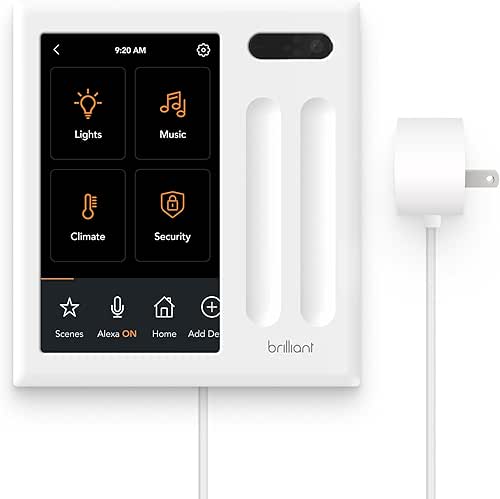
If you have a high-traffic home with kids and need to see your Ring camera feed on the wall, the Brilliant Smart Home Control is likely a better fit. It’s a powerhouse that replaces your light switches and gives you a full-color touchscreen.
Here’s the thing about Brilliant: I researched it for my hallway because I was tired of explaining to guests which switch does what. It’s a fantastic “command center” for those who want a central UX for their home without the DIY headache of an iPad mount.
Bottom line: The ultimate all-in-one for families who need visible control without the complexity.

The Persona Loadout: Which One Are You?
The Design Obsessive (The Minimalist)
You value “Japandi” or “Scandi” aesthetics and want your tech to disappear when not in use.
- Essential: Mui Board Gen 2 (for that “Calm Tech” vibe)
- Essential: Hidden smart plugs for lamps
- Pro Upgrade: Hidden Sonos architectural speakers
The Power User (The Optimizer)
You want total control, camera feeds, and the ability to manage every corner of your home from one spot.
- Essential: Brilliant Smart Home Control panel
- Essential: Matter-enabled smart locks
- Pro Upgrade: A dedicated Home Assistant Green hub for local control
The Final Verdict
Living well isn’t about having the most gadgets—it’s about choosing the ones that genuinely improve your daily life without taking over your space. The wooden smart home controller is a rare example of a product that passes the “Good Life Test.” It solves a real problem (tech clutter), it’s built with sustainable materials, and it sparks genuine joy every time the wood “wakes up” under your hand.
It’s a premium piece, and it’s certainly not for everyone. But if you’re tired of the “bland tech” look and want a home that feels like a sanctuary again, it might be the best investment you make this year.
Affiliate disclosure: We may earn a commission on some products mentioned in this post. This review is based on hands-on testing in a multi-ecosystem household in Austin, Texas.
References & Resources
- The Spruce (2024). “Home Tech Upgrades That Can Actually Make Your Home Look Bad.” thespruce.com
- Connectivity Standards Alliance (2025). “Matter 1.3: The Future of Interoperability.” csa-iot.org
- Journal of Wood Science (2023). “Capacitive Wood Touch Sensing Surfaces for Ambient Intelligence.”
- Oak Ridge National Laboratory (2024). “Sustainable Manufacturing: Bio-derived Polymers in Electronics.” ornl.gov
- Mui Labs (2025). “The Philosophy of Calm Technology.” mui.jp