That project stalled for three weeks because I thought I needed a whole new, specialized “offset” drill. Here’s the thing: I didn’t need a new power tool. I needed a $20 accessory.
In my decade of digital wellness and home optimization, I’ve realized that a “High Lifestyle ROI” isn’t just about the big purchases. It’s about the small, thoughtfully designed items that remove friction from our daily lives. In the workshop, that means “tool multipliers”—accessories that expand what you can already do without cluttering your garage with single-use machines.
Why Your Tool Kit Feels “Limited” (And How Accessories Fix It)
Most of us start our DIY journey with a “starter kit” and quickly run into what I call the “wall of inefficiency.” You have the power, but you lack the precision or the reach. This inefficient DIY work usually stems from trying to force a tool to do something it wasn’t designed for [1].
Terence Tao, the brilliant mathematician, once wrote about the importance of learning the fundamental limitations of your tools [2]. In the world of home repair, pushing a tool beyond its limits doesn’t just result in a crooked shelf; it can lead to what industrial experts call “poor tool control,” which significantly increases the risk of accidents and wasted materials [3].
The goal isn’t to own every tool in the aisle at Home Depot. The goal is to identify the tool limitations you face most often and bridge those gaps with strategic add-ons.
The 8 Must-Have Accessories for Every DIYer
1. The Right-Angle Drill Attachment
We’ve all been there: trying to tighten a hinge inside a dark cabinet or fixing a loose board under a sink where there’s zero clearance. I used to think I just had to live with scraped knuckles and stripped screw heads until I discovered this little lifesaver. It’s a simple geared attachment that lets your drill work at a 90-degree angle, fitting into gaps as small as an inch and a half.
What surprised me was how much power these can actually handle. Modern versions from brands like DeWalt are rated for impact drivers, meaning they won’t snap the moment you hit a bit of resistance [4]. It’s become my go-to for any “tight squeeze” situation in my Austin apartment.
Micro-Verdict: The ultimate “reach” multiplier for cabinetry and plumbing repairs.
Best For: Homeowners dealing with cramped kitchen or bathroom cabinetry projects.
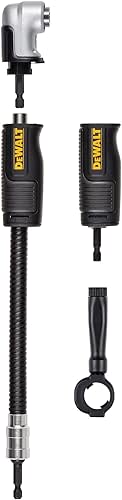

- Pros: Reaches impossible gaps; impact-rated for high torque.
- Cons: Can be tricky to stabilize with one hand in very tight spots.
2. Kreg Pocket-Hole Jig (The 720)
Let me be honest: I ignored pocket-hole joinery for years because I thought it was “cheating.” But after my third wobbly bookshelf, I realized that my traditional wood screws just weren’t cutting it. I finally picked up a Kreg Jig, and it was like a lightbulb went off. This accessory allows you to drill holes at a specific angle to create incredibly strong, hidden joints.
There’s a reason almost every DIY creator you follow uses one of these [5]. It removes the “guesswork” from building furniture. Instead of praying your screws meet in the middle of the wood, the jig ensures a perfect, repeatable connection every single time.
Micro-Verdict: Professional-strength furniture joints for people who don’t have a woodshop.
Best For: Aspiring furniture builders who want their projects to look “pro” without the pro price tag.

- Pros: Creates hidden, incredibly strong joints; very beginner-friendly.
- Cons: Requires specific pocket-hole screws to work effectively.
3. Self-Leveling Cross-Line Laser
You know that feeling when you hang a gallery wall, step back, and realize everything is juuuust slightly tilted? I used to spend hours with a bubble level and a pencil, only to end up with a wall full of “oops” holes. I felt like I was failing at basic home decor until I invested in a self-leveling laser.
This isn’t just a fancy pointer; it projects a perfectly level horizontal and vertical crosshair across your entire wall. Whether I’m hanging floating shelves or just trying to align frames above my bed, it gives me a constant, hands-free reference point. Consumer Reports actually found these to be significantly more reliable for long-distance leveling than traditional spirit levels [6].
Micro-Verdict: The end of “crooked shelf syndrome” and wasted drywall patches.
Best For: Minimalists who want perfectly aligned gallery walls and shelving.
- Pros: Hands-free accuracy; works across entire rooms.
- Cons: The beam can be hard to see in bright, sun-drenched rooms.
4. Magnetic Wristband
It sounds a bit “as-seen-on-TV,” but hear me out. My Sunday reset rituals often involve small repairs around the house, and nothing ruins my zen faster than dropping a tiny screw into a rug or off a ladder. I tried holding screws in my mouth (unsafe!) and putting them in my pockets (messy!).
What finally clicked was this simple magnetic band. It keeps my bits and fasteners exactly where I can see them. I even find myself using it while fixing my hiking gear or adjusting my bike. It’s a small “Lifestyle ROI” win that keeps your momentum going instead of hunting for dropped parts on the floor.
Micro-Verdict: A tiny investment that saves massive amounts of frustration on the ladder.
Best For: Solo DIYers who need an “extra hand” to hold small parts.
- Pros: Saves time and prevents lost hardware; very affordable.
- Cons: Can feel a bit bulky or hot on smaller wrists during summer.
5. Multi-Material Oscillating Tool Blade Pack
If you own an oscillating multi-tool, you know it’s the “Swiss Army Knife” of power tools. But I used to get stuck because the basic wood blade that came with my tool would dull the second it hit a hidden nail. I’d have to stop, drive to the hardware store, and buy a single $15 blade.
I learned the hard way that you need a “multi-material” pack, specifically ones with carbide teeth. Brands like Milwaukee design these to chew through wood, metal, and even grout without smoking [7]. Now, when I’m doing a “Sunday reset” project like trimming baseboards or cutting a copper pipe in a wall, I know I have the right edge for the job.
Micro-Verdict: Turns your multi-tool from a “wood-only” cutter into a demolition beast.
Best For: Home renovators dealing with “mystery walls” that might contain nails or old pipes.
- Pros: Incredible versatility; carbide teeth stay sharp 10x longer.
- Cons: Buying high-quality packs is a higher upfront cost than cheap generics.
6. Stud Finder with Deep Scanning
I’ll admit it—I used to do the “knock on the wall” method. It worked about 50% of the time. The other 50% of the time, I was either hitting air or, worse, dangerously close to a wire. OSHA guidelines are very clear about the importance of locating hidden hazards before you ever pull a trigger [8].
I finally upgraded to a professional-grade sensor that shows the entire width of the stud, not just a little red light. It takes the anxiety out of hanging heavy items like a TV or a heavy mirror. Knowing exactly where the wood is (and where the electrical lines are) makes the whole process feel calm and intentional rather than like a gamble.
Micro-Verdict: Essential insurance against plumbing and electrical disasters.
Best For: Anyone mounting heavy items or working in older homes with unpredictable framing.
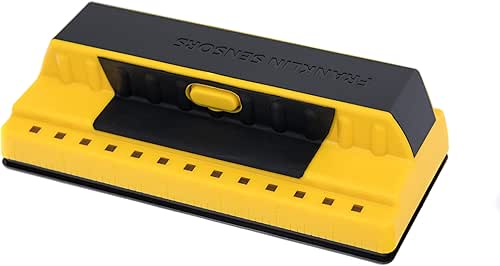
- Pros: Displays the full width of the stud; very high accuracy.
- Cons: Requires 2 AA batteries; slightly larger than basic models.
7. Premium Carbide-Tipped Drill Bit Set
We’ve all experienced the “spinning but not winning” feeling—when your drill bit just gets hot and smokes without actually making a hole. I used to think my drill was dying, but it was just my cheap, “included” bits failing me.
Switching to a set of carbide-tipped bits was a game-changer for my “High Lifestyle ROI.” Whether I’m drilling into the brick exterior of my Austin home to hang a planter or working with hard woods, these bits cut through like butter. Bosch’s data shows that carbide-tipped bits can last up to 4 times longer than standard high-speed steel (HSS) in masonry applications [9].
Micro-Verdict: Stops “bit burn” and makes every hole-drilling task effortless.
Best For: DIYers working with tough materials like brick, stone, or aged hardwoods.
- Pros: Fast, clean holes in hard materials; extreme durability.
- Cons: Total overkill if you are only ever drilling into soft pine or drywall.
8. Speed Square (Aluminum)
If there is one “old-school” tool that every modern DIYer needs, it’s the speed square. I used to try to “eyeball” my 90-degree lines on 2x4s, which led to some very wonky garden boxes. Once I learned that this one triangular piece of aluminum could act as a saw guide, a protractor, and a level all in one, my accuracy skyrocketed.
It’s virtually indestructible. You can drop it on concrete, throw it in a bag, and it’s still perfectly square. In professional framing, it’s the most used layout tool for a reason [10]. It’s the definition of a tool that helps your “environment support you.”
Micro-Verdict: The $10 investment that ensures every single cut you make is actually straight.
Best For: Anyone building outdoor structures, decks, or simple home furniture.
- Pros: Indestructible; multi-functional; extremely affordable.
- Cons: There is a slight learning curve to using all the built-in marking scales.
Your DIY Persona: The Right Loadout for Your Space
Not every DIYer needs the same kit. Depending on where you live and how you work, your “essential” list might look a little different. Here is how I’d curate these accessories for different lifestyles:
The Minimalist Apartment DIYer (Small Spaces)
You work on a balcony or a kitchen table and need to solve big problems with small footprints.
- Essential: Magnetic Wristband (prevents losing screws in the rug)
- Essential: Self-Leveling Laser (perfect for gallery walls in rentals)
- Essential: Right-Angle Drill Attachment (gets into tight apartment cabinets)
- Pro Upgrade: A compact “stubby” multi-bit screwdriver
The Suburban Project Weekend Warrior
You have a garage and a never-ending list of home maintenance and furniture projects.
- Essential: Franklin Stud Finder (critical for mounting TVs and shelving)
- Essential: Kreg Pocket-Hole Jig (the key to building your own furniture)
- Essential: Swanson Speed Square (essential for outdoor/lumber projects)
- Pro Upgrade: A premium carbide-tipped drill bit set for masonry and brick
Buyer’s Guide: Choosing Accessories for Your Platform
When you’re looking at tool accessory upgrades, you’ll often face the choice between OEM (name brands like DeWalt, Milwaukee, or Bosch) and third-party “generic” versions.
Here’s my rule of thumb: If it’s a “consumable” that doesn’t affect safety (like sandpaper or a simple plastic tray), go generic and save the cash. However, for anything involving high speed, high heat, or precision (like blades, bits, or jigs), stick with the name brands. They adhere to specific interface standards—like the “Starlock” system for oscillating tools or the 1/4″ hex shank for impact drivers—that ensure your accessories won’t fly off or snap under pressure.
Investing in your “ecosystem” (the brand of batteries you already own) often leads to better compatibility. Most major brands now offer “ELITE” or “Shockwave” accessory lines specifically designed to handle the power of modern cordless tools [11].
Common DIY Questions (FAQ)
Are third-party accessories as good as name brands?
It depends on the task. For heavy-duty drilling or cutting, I always stick with name brands like Bosch or Milwaukee. They use superior metallurgy (like carbide or cobalt) that stays sharp much longer. However, for items like painter’s tape, magnetic wristbands, or basic hand levels, third-party options are often just as good and much cheaper.
When should I buy a new tool instead of an accessory?
I use the “Frequency vs. Safety” rule. If you find yourself needing a right-angle attachment every single day for your job, you should probably buy a dedicated right-angle drill. Also, if an attachment feels unstable or makes the tool hard to control, it’s a sign that you’ve reached the limit of that setup and need the dedicated tool for safety [3].
Living Better, One Project at a Time
At the end of the day, “Best Goods for Good Life” is about finding the items that earn their keep. These eight accessories have earned a permanent spot in my kit because they solve real problems, are built to last, and—most importantly—they take the “struggle” out of my Sunday projects.
Pick just one “tool multiplier” from this list for your next weekend project. Whether it’s finally getting that gallery wall straight with a laser or reaching that impossible screw with a right-angle attachment, you’ll be amazed at how much more “flow” you find in your work.
What’s the one accessory you’ve found that completely changed your DIY game? I’d love to hear about your workshop wins!
—
Affiliate disclosure: I may earn a commission from products purchased through these links. Always follow OSHA safety guidelines and manufacturer manuals.
References
- Home Depot, 2024, “Essential Tools for Homeowners,” Home Depot Guides.
- Tao, T., 2007, “Learn the limitations of your tools,” Career Advice.
- ToolHound, 2023, “5 Consequences of Poor Tool Control,” ToolHound Blog.
- DeWalt, 2024, “Right Angle Drill Attachment Specifications,” DeWalt Product Catalog.
- ThriftDiving, 2023, “Must-Have DIY Accessories: The Kreg Jig,” ThriftDiving Blog.
- Consumer Reports, 2024, “Laser Level vs. Spirit Level Accuracy Tests,” Consumer Reports.
- Milwaukee Tool, 2024, “Shockwave Oscillating Multi-Tool Blades,” Technical Spec Sheet.
- OSHA, 2023, “Hand and Power Tool Safety Standards,” OSHA.gov.
- Bosch, 2024, “Carbide Technology in Drilling,” Bosch Professional.
- Swanson Tool Co., 2024, “The Speed Square Manual,” Swanson Official Site.
- ToolGuyd, 2024, “Best Tool Kit Upgrades for 2024,” ToolGuyd Reviews.