
What finally clicked for me was realizing that I was treating sleep like a chore rather than a high-ROI lifestyle investment. Most of us are told to “just get eight hours,” but we aren’t told how to make those hours count. Creating a sleep routine isn’t about following a rigid set of rules that make you feel like you’re back in boarding school; it’s about building a system that supports your unique biology.
Here is the thing: your body craves predictability. When we master the transition from our busy days to our restful nights, everything else—our mood, our metabolic health, even our skin—starts to flow better. Let’s walk through how to build a blueprint that actually works for your life.
Schedule vs. Routine: Why the Distinction Matters for Your Health
Before we dive into the “how,” we need to clear up a common misconception. I used to use the terms “sleep schedule” and “sleep routine” interchangeably, but they serve two very different functions. Think of your sleep schedule as the “when” (your timing) and your sleep routine as the “what” (your behaviors).
What surprised me during my research was that the timing might actually be more important than the duration. A 2023 study found that sleep regularity—going to bed and waking up at the same time—is actually a stronger predictor of mortality risk than how many hours you actually sleep [3].
When our timing is all over the place, we experience what scientists call “Social Jet Lag.” Here is the catch: for every one-hour increase in your night-to-night bedtime variability, your chance of experiencing a metabolic abnormality (like high blood sugar or cholesterol) jumps by 27% [2]. Your body doesn’t know it’s “just the weekend”; it just knows its internal clock is being reset, leaving you feeling perpetually foggy.
Phase 1: Designing Your Personalized Sleep Schedule
Building a personalized schedule is like a workshop for your life. You can’t just copy a billionaire’s 4:00 AM wake-up call if you’re naturally a night owl.
The Math of Sleep: The Backward-Calculation Tool
To find your ideal window, we start at the end. The American Academy of Sleep Medicine (AASM) and the CDC both recommend that adults get at least seven hours of sleep per night to maintain optimal health [1].
- Step 1: Identify your “Anchor” wake-up time (the time you must be up for work or family).
- Step 2: Subtract 8 hours from that time (allowing 7 hours of sleep plus 1 hour to fall asleep and wake up).
- Step 3: If you feel you need more, adjust in 15-minute increments over several days.
The Chronotype Factor: Are You a Lark or an Owl?
Your genetics play a massive role in when your body naturally wants to shut down. I found that I’m a “Morning Lark,” which means I’m most productive at 7:00 AM but hit a wall by 9:00 PM. If you’re a “Night Owl,” forcing yourself into an early-bird schedule will only lead to frustration. Work with your body, not against it, by choosing a schedule that aligns with when you naturally feel the most alert.
Phase 2: Building Your Bedtime Routine ‘Recipe’
Once the “when” is set, we need the “what.” A bedtime routine is essentially a series of cues that tell your brain, “Hey, it’s time to stop thinking about that email and start producing melatonin.” Research cited by the American Heart Association shows that simple rituals, like reading quietly, can reduce stress levels by up to 68% within just a few minutes [4].
Depending on your lifestyle, you might need a different “recipe.” Here are three archetypes I’ve found most effective:
The 20-Minute ‘Sprint’ (For Busy Nights)
If you’ve had a late dinner or a long commute, you don’t need a marathon ritual.
- Dim the Lights: Switch to lamps instead of overhead lighting immediately.
- Physically Reset: Spend 5 minutes on light stretching or foam rolling.
- Prep for Tomorrow: Lay out your clothes to reduce “decision fatigue” in the morning.
The 45-Minute ‘Stress Buster’ (For Racing Minds)
This is for the nights when your brain feels like a browser with 50 tabs open.
- Brain Dump: Spend 10 minutes journaling or writing a to-do list for tomorrow.
- Hydrotherapy: A warm bath or shower to help lower your core body temperature.
- Analog Entertainment: 20 minutes of fiction reading (no non-fiction, which can spark “work brain”).
The 60-Minute ‘Deep Tech Detox’
The Sleep Foundation recommends avoiding blue-light electronics at least 30 to 60 minutes before bed to prevent melatonin suppression [5].
- Phone Lockout: Place your phone in another room or a dedicated charging station.
- Sensory Immersion: Use aromatherapy (lavender is a classic for a reason).
- Mindfulness: 15 minutes of guided meditation or deep breathing exercises.
Optimizing Your Sleep Environment (The Hardware)
I ignored my bedroom environment for years, thinking I could sleep through anything. But the reality is that your environment acts as the infrastructure for your routine. If the “software” (your habits) is great but the “hardware” (your room) is glitchy, you’ll still wake up tired.
Light and Sound Control
I’ll be honest: I used to live near a busy street in Austin, and the late-night traffic was my daily nemesis. I tried earplugs, but they always fell out, and standard fans were too loud or too cold. I felt like I was losing the battle against the city noise until I started looking into dedicated sound conditioners.
What changed the game for me was moving away from “recordings” of white noise to a machine that generates a consistent, soothing frequency. It masks everything from neighbor’s music to the hum of the fridge, creating a “sound cocoon.”
Micro-Verdict: The ultimate tool for silencing a noisy neighborhood and reclaiming your peace.
Bedding: Investing in Your Infrastructure
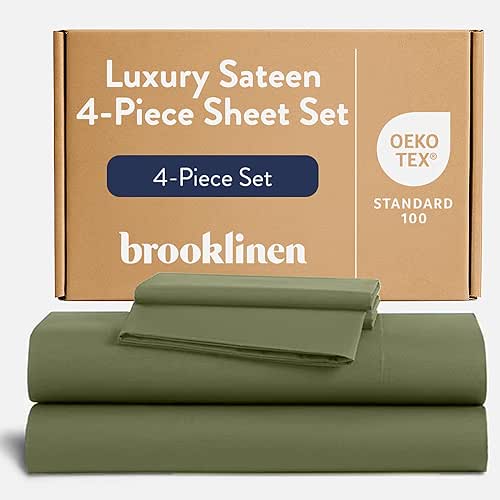
If you’re waking up at 3:00 AM feeling like you’re in a sauna, your sheets might be the culprit. I spent years buying cheap, synthetic blends, only to realize they were trapping heat and moisture.
After researching thermoregulation, I learned that materials like high-quality cotton or wool are essential for “hot sleepers” [7]. I wanted something that felt like a luxury hotel but actually breathed. Making the switch to a high-thread-count, long-staple cotton set was the single best “environment” upgrade I’ve made. It’s that crisp, cool-side-of-the-pillow feeling every single night.
Micro-Verdict: A high-ROI investment that keeps you cool and makes your bed feel like a five-star retreat.

The Habit Science: How to Make it Stick
The hardest part isn’t knowing what to do; it’s doing it on a Tuesday night when you’re exhausted. This is where habit science comes in.
I’m a huge fan of BJ Fogg’s “Tiny Habits” approach. Instead of trying to overhaul your entire night, start with a “microstep.” For example, tell yourself, “After I brush my teeth, I will turn off the big overhead light.” That’s it. Once that feels automatic, add the next step.
Another trick I use is the “caffeine cut-off.” The Kansas Health System recommends stopping caffeine intake at least six hours before bedtime [6]. In our house, that means the espresso machine goes off at 2:00 PM—no exceptions.
When Routine Isn’t Enough: Identifying Red Flags
While a solid routine can solve many “poor sleep” issues, it’s important to know when the problem is medical rather than lifestyle-based. I always tell my friends to follow the “Rule of 3.”
- Frequency: Do you have trouble falling or staying asleep 3 nights a week?
- Duration: Has this been happening for 3 months or more?
- Impact: Does it significantly affect your daytime mood or productivity?
If you meet the “Rule of 3,” or if you find yourself gasping for air or snoring loudly, it’s time to see a specialist. Sleep hygiene is foundational, but it isn’t a cure for clinical insomnia or sleep apnea [5].
Living well isn’t about having a perfect life; it’s about making choices that support your best self. Tonight, try just one thing. Maybe it’s dimming the lights at 9:00 PM or leaving your phone in the kitchen. Consistency beats perfection every single time.
Disclosure: This guide is for informational purposes and does not replace professional medical advice for sleep disorders like clinical insomnia or sleep apnea.
References
- Watson, N. F., et al. (2015). Recommended Amount of Sleep for a Healthy Adult: A Joint Consensus Statement of the American Academy of Sleep Medicine and Sleep Research Society. Journal of Clinical Sleep Medicine.
- National Institutes of Health (NIH). (2023). Study links irregular sleep patterns to metabolic disorders.
- Sleep Foundation. (2023). Sleep Regularity and Mortality Risk: New Findings.
- American Heart Association (AHA). (2023). How to Sleep Better with a Bedtime Routine.
- Sleep Foundation. (2025). Bedtime Routine for Adults: Expert-Reviewed Guidelines.
- The University of Kansas Health System. (2023). Restful Sleep Schedule and Caffeine Guidelines.
- Review of Bedding Materials and Thermoregulation. (2024). Journal of Sleep Research and Environment.