
=
When we talk about back pain, most people get stuck in the “firm vs. soft” debate. But after a decade of lifestyle curation and home optimization, I’ve realized that the “best” mattress isn’t a one-size-fits-all solution. It’s a clinician’s blueprint. Whether you’re dealing with the sharp zing of sciatica after a trail run or the dull ache of a degenerative disc, the mattress that supports me might be a disaster for you. In this 2026 guide, we’re moving past the marketing fluff and looking at the biomechanics of how brands like Saatva, Bear, and Helix actually interface with your spine.
The Bio-Mechanics of Back Pain: Why ‘Medium-Firm’ Isn’t Enough
Here is the thing about the “medium-firm” recommendation you see everywhere: it’s a generalization that ignores your unique body weight and pain etiology. According to research from the Cleveland Clinic, back pain relief requires a multi-modal approach [1]. A mattress is a massive part of that, but its job is specific: maintaining “neutral spinal alignment.”
Spinal misalignment happens when your mattress is too soft (causing your midsection to sag like a hammock) or too firm (leaving a gap under your lower back). This “hammocking” effect puts immense strain on your ligaments and can trigger inflammation in your facet joints. Conversely, an overly firm surface can create high-pressure points at your shoulders and hips, which is a nightmare for side sleepers.
What surprised me during my research journey was the distinction between firmness—which is just how the top layer feels against your skin—and support, which is the structural integrity of the coil system [2]. You can have a mattress that feels like a cloud on top but has a “plank-firm” core that keeps your spine perfectly straight.
It’s also important to know when a mattress won’t solve the problem. The Mayo Clinic suggests looking for “red flag” symptoms like unexplained weight loss, fever, or pain that travels down both legs [3]. If you’re experiencing those, a new bed shouldn’t be your first stop—a specialist should be.
2026 Comparison Matrix: Saatva vs. Bear vs. Helix
Navigating the top-tier brands can feel like a full-time job. To make it easier, I’ve looked at the 2026 data from independent labs like NapLab, which gave Saatva an average performance score of 9.24 compared to Helix’s 9.05 [4]. While both brands are elite, they solve different “pain puzzles.”
Best for Orthopedic Support: Saatva Rx
I’ll admit it—I was skeptical when I first heard about “therapeutic” mattresses. It felt like a buzzword. But then I spent a week waking up with that familiar, nagging stiffness in my lower back and realized my old hybrid just wasn’t cutting it. I started looking for something that treated spinal alignment as an engineering problem rather than a comfort preference.
That’s when I found the Saatva Rx. Unlike standard hybrids, this model uses “Therapeutic Support Core” technology—basically individual foam modules that sit on top of the coils to provide localized pressure relief. What sold me was the dedicated lumbar memory foam pad in the center of the bed. It fills that “lumbar gap” that usually causes my back to arch awkwardly during the night. The National Council on Aging (NCOA) recently named this the Best Overall Orthopedic Mattress, giving it a 4.32/5 pain-relief score in their 2026 testing [5].
Micro-Verdict: The gold standard for those with chronic conditions like sciatica or scoliosis who need precise, zoned support.


Best for Athletic Recovery: Bear Elite Hybrid
Living in Austin means most of my weekends are spent on the Greenbelt or hitting a local trail. That active lifestyle is great for the soul, but my muscles often pay the price at 2:00 AM. I used to think the “recovery” claims made by athletic brands were just fancy marketing, until I looked into the actual science of infrared textiles and responsiveness.
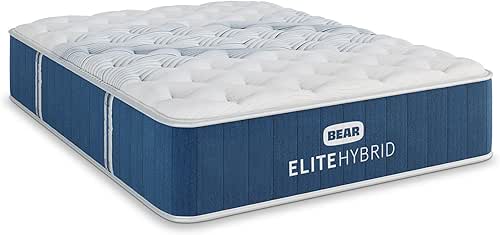
The Bear Elite Hybrid uses a Celliant-infused cover, which is designed to convert body heat into infrared energy to improve local circulation. But the real win for me was the mattress’s responsiveness. Mattress Clarity gave this bed a perfect 5/5 score for responsiveness, meaning you don’t feel “stuck” when you try to roll over [6]. If you have muscular back pain, being able to change positions without straining your core is a game-changer. It’s built with high-density foam that provides a “buoyant” feel rather than a “sinking” one.
Micro-Verdict: The ultimate recovery tool for active bodies who need ease of movement and temperature regulation.
Best for Side Sleepers: Helix Midnight Luxe with ErgoAlign
Side sleeping is a double-edged sword. It’s great for digestion and snoring, but if your mattress doesn’t “give” in the right places, your spine ends up looking like a zigzag. I spent months trying to prop myself up with pillows to fix my hip pain before I realized my mattress was the culprit—it was simply too firm for my side-sleeping frame.
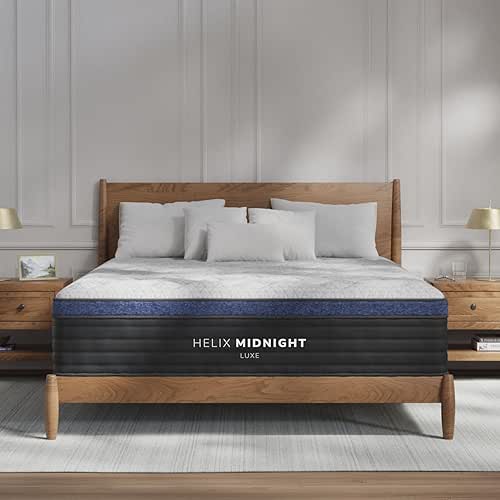
I eventually dove into the Helix Midnight Luxe, specifically with the 2026 ErgoAlign layer upgrade. This isn’t just a layer of foam; it’s a precision-engineered zone designed to be firmer under your hips and softer under your shoulders. In 2026 testing by WIRED, the Luxe models were cited for maintaining near-perfect spinal neutrality for side sleepers [7]. It bridges that gap between your waist and the bed, ensuring your midsection doesn’t dip and pull your spine out of whack.
Micro-Verdict: A precision-engineered fix that eliminates shoulder pressure and supports the lower back “gap.”
The ‘Etiology Matrix’: Choosing by Your Pain Type
Not all back pain is created equal. Your BMI (Body Mass Index) and the specific nature of your injury change what “firmness” actually means for you [8].
- Lower Back Pain & Sciatica: You need a “Zoned Support” system. These mattresses are firmer in the middle third to prevent your pelvis from sinking too deep. This keeps the sciatic nerve from being compressed.
- Upper Back & Neck Pain: This is often a pillow-mattress combo issue. You need a mattress with a softer “comfort layer” to allow your shoulders to sink, paired with a contoured pillow to keep your neck aligned.
- Post-Surgical & Degenerative Conditions: High-density orthopedic cores are your best friend here. Look for models like the Plank Firm Luxe if you’ve been told by a doctor that you need a very flat, stable surface for recovery.
Beyond the Mattress: Building a High-ROI Sleep System
Here’s the thing: you can buy a $5,000 mattress, but if you’re sleeping on a 10-year-old lumpy pillow, your spine still isn’t straight. I like to think of this as a “Sleep System.”
Emory Healthcare notes that weight management and posture during the day are just as important as your sleep surface [9]. To optimize your nights, consider these “Persona Loadouts” for your bedroom:
The Optimization Geek (Maximum Recovery)
You want every 1% gain you can get for your energy levels.
- Essential: An adjustable base to utilize “Zero Gravity” position (relieves all spinal pressure)
- Essential: A weighted blanket to lower cortisol levels before sleep
- Pro Upgrade: A temperature-controlled mattress topper (like the Eight Sleep Pod) to ensure deep sleep cycles
The Minimalist (Small Spaces/Budget-Friendly)
You want the best relief without turning your bedroom into a lab.
- Essential: A high-quality shredded memory foam pillow that you can add or remove loft from
- Essential: A cooling mattress protector to preserve your investment
- Pro Upgrade: A simple lumbar roll or small pillow for between your knees (side sleepers) or under your knees (back sleepers)
FAQs: Your Mattress and Back Pain Questions Answered
Is a firm mattress really better for back pain?
Not necessarily. While we used to think “the firmer the better,” modern research suggests that a medium-firm feel is actually the “sweet spot” for the majority of chronic back pain sufferers because it balances support with pressure relief.
How long does it take for a new mattress to help my back?
There is a 30-day “biological adjustment period.” Your muscles have “memory” of your old, sagging mattress. It takes about a month for your body to realize it’s actually being supported correctly. Don’t judge a bed by the first night!
Can a bad mattress cause sciatica?
It certainly won’t help. If a mattress sags in the middle, it forces your spine into a curved position, which can put pressure on the intervertebral discs and, by extension, the sciatic nerve.
Final Thoughts: The ROI of Alignment
There is no “perfect” mattress—there is only the perfect mattress for your alignment. Investing in your sleep isn’t about luxury; it’s about maintenance. When your environment supports you, everything from your morning yoga to your workday focus flows better.
Before you click “buy,” I recommend the Sag Test: Place a long, straight yardstick across your current mattress. If there is a gap of more than an inch between the yardstick and the surface of the bed, your mattress has lost its structural integrity. It’s time to upgrade.
I’m heading out for a quick hike at Mount Bonnell now, but I’d love to hear from you. Which of these brands are you leaning toward? Let’s make every day a little better, together.
Medical Disclaimer: This guide is for educational purposes and does not replace professional medical advice from a physical therapist or orthopedic surgeon.
Scientific References & Authoritative Sources
- Cleveland Clinic (2025). Back Pain: Causes, Symptoms, and Treatments. https://my.clevelandclinic.org/health/symptoms/back-pain
- Purple Science (2024). Firmness vs. Support: What’s the Difference? https://purple.com/blog/are-firm-mattresses-better-for-your-back
- Mayo Clinic (2025). Back Pain Red Flags. https://www.mayoclinic.org/diseases-conditions/back-pain/symptoms-causes/syc-20354018
- NapLab (2026). Helix vs. Saatva Performance Data. https://naplab.com/mattress-comparisons/helix-vs-saatva/
- National Council on Aging (2026). Best Orthopedic Mattresses for Seniors and Chronic Pain. https://www.ncoa.org/product-resources/sleep/best-orthopedic-mattresses/
- Mattress Clarity (2026). Bear Elite Hybrid Review: Performance and Responsiveness. https://www.mattressclarity.com/reviews/bear-elite-hybrid/
- WIRED (2026). The Best Mattresses for Side Sleepers with Back Pain. https://www.wired.com/gallery/the-best-mattresses-for-back-pain/
- Sleep Foundation (2026). How Body Weight Affects Mattress Firmness. https://www.sleepfoundation.org/best-mattress/best-mattress-for-back-pain
- Emory Healthcare (2025). 8 Ways to Relieve Low Back Pain at Home. https://www.emoryhealthcare.org/stories/ortho/8-ways-to-relieve-low-back-pain-at-home