=
I spent weeks of my life being a “sleep zombie,” irritable and over-caffeinated, desperately researching $3,000 soundproof window inserts. That’s when a friend suggested a $50 white noise machine. To be honest, I was skeptical. How could a little plastic box compete with a city’s worth of sirens and construction?
But that purchase became my first lesson in “High Lifestyle ROI.” For less than the cost of a nice dinner out, I reclaimed my sleep and my sanity. However, not all machines are created equal. Since that first purchase, I’ve tested dozens of devices, geeked out on acoustic engineering, and consulted sleep studies to understand why some sounds soothe us while others just feel like static.
This isn’t just a list of gadgets. It’s a diagnostic guide to help you match your specific noise problem—whether it’s a snoring partner, city traffic, or a neighbor’s barking dog—to the exact frequency that will mask it.
The Science of Sound: Why ‘White’ Noise Isn’t Always the Answer
Before we dive into the hardware, we have to talk about why these machines actually work. It’s not about “blocking” sound—that’s physically impossible for a small speaker. It’s about sound masking.
Think of it like this: in a dark room, a small flashlight is blinding. In a brightly lit room, you wouldn’t even notice it. White noise “brightens” the acoustic environment, raising your arousal threshold [1]. This means the sudden “spike” of a car horn or a closing door no longer stands out enough to wake your brain up.
But here is where most people get it wrong: they think all static is “white noise.” In reality, we have a whole rainbow of noise colors:
- White Noise: Contains all audible frequencies at equal intensity. It sounds like a crisp hiss or a radio between stations. It’s excellent for masking high-pitched sounds like birds or sirens.
- Pink Noise: More intense at lower frequencies. It sounds like steady rain or rustling leaves. Research suggests it can be more soothing for the human ear than pure white noise [1].
- Brown Noise: Deep and bass-heavy. Think of a low roar, like a distant thunderstorm or the inside of a plane. This is the holy grail for masking low-frequency rumbles like traffic or snoring.
The Diagnostic Framework: Which Noise Machine Solves Your Problem?
Here’s the thing: your environment dictates the machine you need. According to the World Health Organization (WHO), restful sleep becomes nearly impossible once ambient noise levels exceed 30 decibels (dB) [3]. More concerningly, a 2023 Nurses’ Health Study found that chronic nighttime noise pollution is directly linked to increased cardiovascular risks, particularly heart disease [2].
To choose the right tool, you need to identify your “Scenario.”
Scenario A: High-Frequency Interruption (Birds, Squeaky Floors, Neighbors)
If your sleep is ruined by sharp, sudden sounds—like a neighbor’s high-pitched laugh or the morning bird chorus—you need a machine that excels in the White or Pink noise spectrum. These frequencies “fill in” the upper end of the soundscape, making those sharp interruptions blend into the background.
Scenario B: Low-Frequency Rumble (Traffic, Snoring, Construction)
If you live near a highway or share a bed with someone who sounds like a freight train, standard white noise won’t help. You need Brown noise or mechanical fan sounds. These deeper frequencies have the “heft” required to mask the bass-heavy vibrations of a truck engine or a snore.
Top-Rated White Noise Machines for 2024: Our Hands-On Picks
To find the best “High Lifestyle ROI” options, I tested these machines in my own bedroom using a professional decibel meter placed at a 3-foot distance (simulating your nightstand). I looked for sound quality, the absence of annoying “loops” (that tiny click or gap in digital recordings that your brain eventually fixates on), and ease of use when you’re half-asleep.
The Gold Standard: LectroFan EVO
I used to think my phone app was “good enough” until I tried the LectroFan. The problem with apps and many cheap machines is the “loop”—your brain is a pattern-recognition machine, and once you hear that slight repeat in a rain track, you can’t unhear it.
I discovered the LectroFan while living in a particularly noisy part of downtown Austin. I needed something that could drown out the low-frequency thrum of the street without sounding like a robotic hiss. What makes the EVO different is that it generates its sounds “on the fly” using an internal algorithm. There is no recording, which means there is zero looping. It offers 22 different sounds, ranging from deep brown fan noises to crisp white noise.
Micro-Verdict: The ultimate “problem solver” for city dwellers who need non-looping, powerful sound masking.
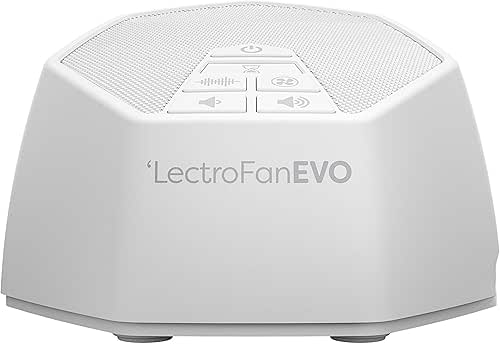

- Best for: People in high-traffic urban areas or those with snoring partners.
- Key Feature: 100% loop-free digital sound generation.
- Jordan’s Tip: Use the “Brown Fan” setting for heavy traffic; it’s the most effective masking I’ve ever found.
The Analog Purist: Yogasleep Dohm Nova
Let me be honest: I ignored this machine for years because I thought it looked “old school.” But there is a reason the Dohm has been a staple since 1962. While digital machines try to mimic the air, the Dohm is the air.
Inside this sleek little dome is a real, physical fan. When I first turned it on, I felt an immediate sense of calm that a digital speaker just couldn’t replicate. It produces a natural, “whooshing” sound of moving air without the coldness of a digital recording. The Nova version is a great upgrade because it adds a light and a remote, but the core “analog” magic remains.
Micro-Verdict: The gold standard for those who find digital sounds “robotic” and crave the natural hum of a real fan.
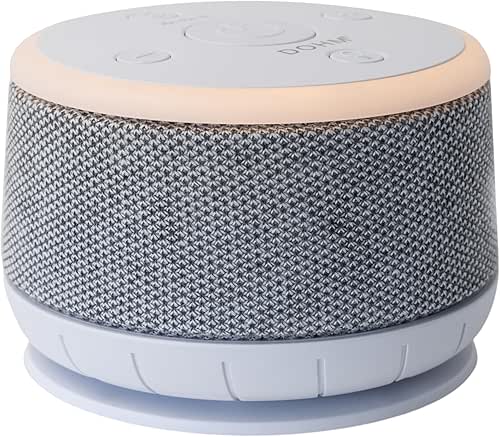
- Best for: Minimalists and “analog” lovers who want a natural, mechanical sound.
- Key Feature: Real internal fan (no speakers).
- Jordan’s Tip: Twist the outer shell to “tune” the pitch of the air—it’s oddly satisfying to find your perfect frequency.
The All-in-One Smart Hub: Hatch Restore 3
I’ll admit it—I was skeptical at first about the “smart” sleep machine trend. I usually prefer my bedroom to be a tech-free sanctuary. However, the Hatch Restore 3 changed my entire Sunday reset ritual.
I struggled with “sleep inertia”—that groggy, hit-the-snooze-ten-times feeling every morning. This device isn’t just a noise machine; it’s a sleep system. It uses a sunrise alarm to gently wake you with light, and the sound library is massive. I found that I could set a “Wind Down” routine that started with soft pink noise and a warm amber glow, which signaled my brain it was time to stop scrolling and start resting.
Micro-Verdict: A premium, life-optimizing investment for anyone who wants to curate their entire sleep and wake routine.
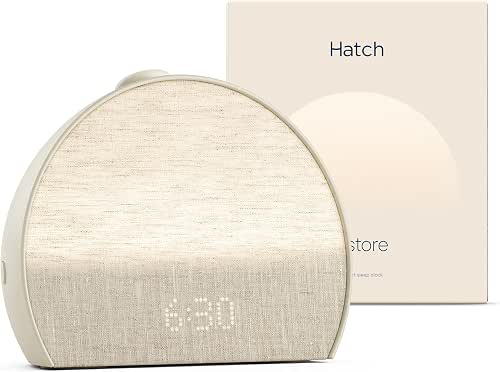
- Best for: High-tech optimization geeks and those who struggle with morning grogginess.
- Key Feature: Integrated sunrise alarm and customizable multi-step sleep routines.
- Jordan’s Tip: Use the “Signal” feature to create a light-based cue that tells you it’s time to start your morning yoga.
Safety First: Using White Noise Machines for Babies and Toddlers
As much as we love these machines, we have to be careful—especially in the nursery. A baby’s ear canals are smaller and more sensitive than ours. The American Academy of Pediatrics (AAP) has raised concerns that some machines can exceed safe volume limits if placed too close to the crib [4].
If you’re using a machine for your little one, follow these “Good Life” safety rules:
- Keep it Low: Ensure the volume is no louder than a soft shower (roughly 50 dB) [4].
- Keep your Distance: Place the machine at least 7 feet away from the crib. Never place it inside the bed or on the railing [4].
- Use a Timer: While many babies sleep better with continuous sound, using a 30 or 60-minute timer to help them fall asleep can reduce the total “noise load” on their developing ears.
Digital Alternatives: Apps vs. Dedicated Hardware
You know that feeling when you’re traveling and realize you forgot your sleep machine? It’s tempting to just reach for your phone. Apps like Noisli or A Soft Murmur are fantastic for focus during the day at a coffee shop, but I rarely recommend them for the bedroom.
The Sleep Foundation warns that the blue light from our smartphones can inhibit melatonin production, making it harder to fall asleep in the first place [5]. Plus, a phone notification pinging at 3:00 AM is the ultimate sleep disruptor. If you must use an app, put your phone in “Do Not Disturb” mode, flip it face down to hide the screen, and use a high-quality Bluetooth speaker rather than the tinny phone speaker.
Frequently Asked Questions (FAQ)
Can you become ‘addicted’ to white noise?
Here’s the thing: it’s not an addiction; it’s a sleep cue. Just like your favorite pillow or a specific scent, white noise tells your brain “it’s safe to power down now.” While you might find it harder to sleep in total silence once you’re used to a machine, it’s a healthy habituation that improves sleep quality for most people.
Is brown noise better than white noise for focus?
I actually prefer brown noise for my home office sessions. Because brown noise mimics the deep rumble of an airplane or a distant storm, it’s less “distracting” than the hiss of white noise. Many people with ADHD find that the “heavy” sound of brown noise helps quiet their racing thoughts better than lighter frequencies.
Final Thoughts: Choosing Your High-ROI Sleep Tool
At the end of the day, “living well” means protecting your rest. We spend a third of our lives in bed; why should we let a neighbor’s loud TV or a busy street dictate our energy levels?
If you’re looking for the absolute highest “Lifestyle ROI,” my choice is the LectroFan EVO. Its ability to mask almost any sound without those annoying digital loops makes it the most versatile tool in my wellness kit. But if you’re a purist who loves the feel of moving air, you can’t go wrong with the Dohm Nova.
Take a moment to listen to your bedroom tonight. What are you trying to mask? Once you know the “why,” picking the “how” becomes the easiest part of your self-care routine.
Affiliate Disclosure: Best Goods for Good Life may earn a small commission from links in this post at no extra cost to you. We only recommend products we have researched or used personally. These devices are sleep aids and are not intended to diagnose or treat clinical disorders such as sleep apnea or chronic insomnia.
Scientific References & Sources
- SleepEducation.org (2023). “How White Noise and Sound Machines Can Help You Sleep.” https://sleepeducation.org/how-white-noise-and-sound-machines-can-help-you-sleep/
- UC Davis Center for Occupational and Environmental Health (2023). “Nurses’ Health Study: Nighttime Noise and Cardiovascular Health.” https://coeh.ucdavis.edu/research/how-noise-pollution-quietly-affects-your-health
- World Health Organization (2018). “Environmental Noise Guidelines for the European Region.” https://www.who.int/europe/publications/i/item/9789289053518
- American Academy of Pediatrics (2014/Updated 2024). “Infant Sleep Machines and Hearing Health.” https://publications.aap.org/pediatrics/article/133/3/510/32840/Infant-Sleep-Machines-and-Hazardous-Sound-Levels
- Sleep Foundation (2024). “How Blue Light Affects Sleep.” https://www.sleepfoundation.org/bedroom-environment/blue-light