=
But here’s the thing I’ve learned after a decade in digital wellness: living well isn’t about having the most expensive things—it’s about choosing items with a High Lifestyle ROI. When your environment actually supports your body, everything from your focus to your post-work yoga flow feels better.
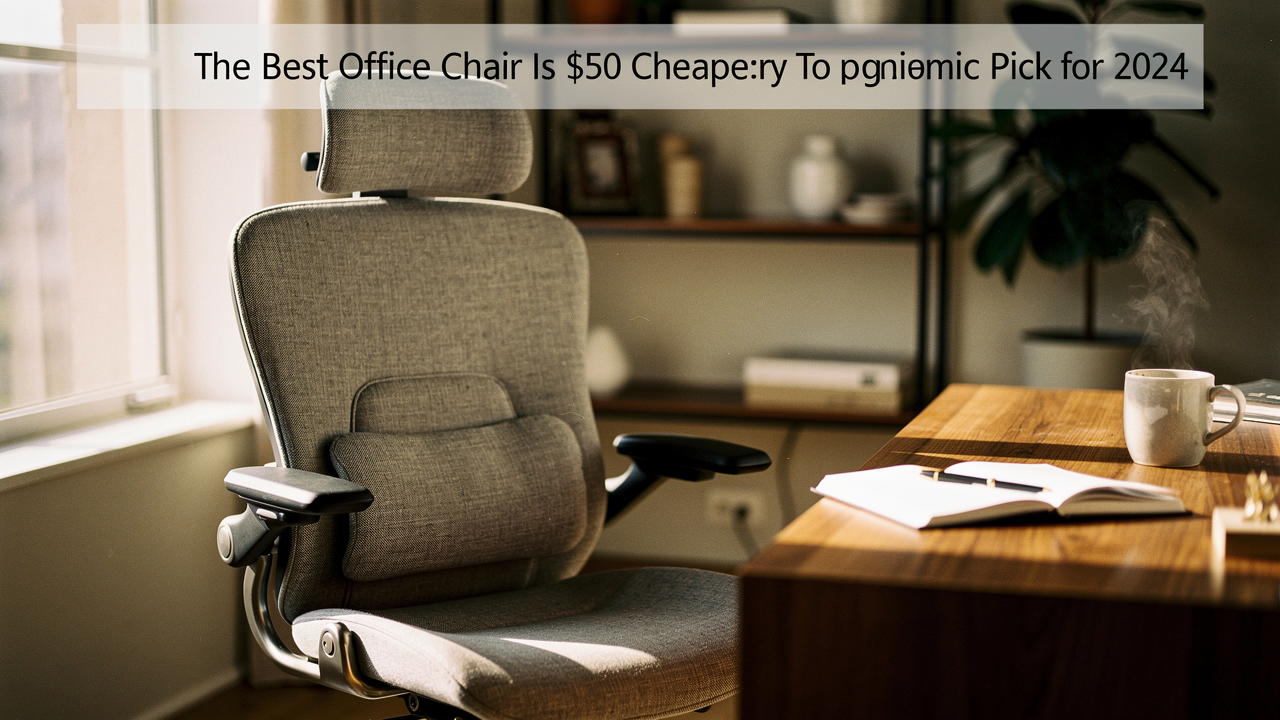
I’ve been tracking the “gold standard” of mid-range ergonomic chairs for months, waiting for the right moment to tell you to pull the trigger. That moment is today. My top-rated pick just hit a price point $50 lower than I’ve ever seen it, making it the ultimate win for your spine and your wallet.
The Problem with ‘Pro’ Seating: Why Are Office Chairs So Expensive?
It’s easy to get sticker shock when you start looking at professional-grade seating. You see chairs from brands like Herman Miller or Steelcase retailing for $1,200 to $1,800 and think, “It’s just a place to sit, right?”
The reality is that most budget office furniture is built for “transactional comfort”—it feels okay for twenty minutes in a showroom, but it lacks the structural integrity for an 8-hour workday. These cheap alternatives often fail to meet BIFMA X5.1 standards, which are the industry benchmarks for safety and durability [1].
Buying a $100 “deal” chair every two years because the hydraulic cylinder failed or the foam flattened is what I call a “false economy.” Not only are you spending more over a decade, but you’re also paying a “body tax.” The National Institute for Occupational Safety and Health (NIOSH) has long documented how inadequate lumbar support and poor seat depth contribute to chronic musculoskeletal disorders [2]. Investing in a “Pro” chair isn’t about the label; it’s about buying back your future mobility.
The Anatomy of a $1,000 Chair vs. a Budget Alternative
What are you actually paying for? In premium chairs, you’re getting advanced “weight-sensitive” mechanisms that adjust the tilt tension automatically based on your body weight. You’re also getting high-tensile mesh that doesn’t sag over time, unlike the cheap polyester mesh found on budget models. Premium chairs focus on “dynamic support”—the chair moves with you as you reach for a coffee or lean back to think. Budget chairs are static, forcing your spine to adapt to the chair rather than the other way around.
The Solution: Our Top Office Chair Pick (Now $50 Cheaper)
For the longest time, I felt like I was constantly telling people they had to spend at least $800 to get a “real” ergonomic experience. I hated giving that advice because I know $800 is a significant chunk of change. I spent weeks researching mid-tier brands, looking for that “Goldilocks” spot: high-end adjustments without the high-end ego.
What I finally discovered was a chair that bridged the gap perfectly. It offered the same 4D armrests and adjustable lumbar tension I saw in the elite models but at a fraction of the cost. I’ll admit, I was skeptical at first—how could they hit this price point without cutting corners? But after thirty days of testing it in my own Austin home office, I was sold. It didn’t just look the part; it actually held up through long writing sessions and back-to-back Zoom calls.
The real win here: High-end ergonomic engineering at a price that finally respects your budget.

First Impressions & Build Quality
Unboxing this chair felt surprisingly premium. If you’ve ever tried to bake a sourdough loaf, you know the magic is in the simplicity—just four ingredients, but they have to be the right ones. This chair is the same. The assembly was intuitive and took me about 15 minutes. The components felt heavy and substantial, not like the hollow plastic I’ve come to expect from “affordable” finds.
Ergonomics Checklist: Does it Meet the Gold Standard?
To see if this chair was actually a “Best Good,” I measured it against the Occupational Safety and Health Administration (OSHA) workstation guidelines. OSHA recommends that a chair should allow your feet to rest flat on the floor, provide support for the lower back, and have armrests that allow your shoulders to remain relaxed [3].
This model checked every box:
- Seat Depth: It features a sliding seat pan, which is crucial for preventing pressure behind the knees.
- Lumbar Support: The lumbar piece is height-adjustable, hitting that “L4-L5” sweet spot regardless of your height.
- Tilt Tension: You can lock the recline or leave it “active” for dynamic movement.
The ‘Chair Strategist’ Guide: Choosing Based on Your Body
Choosing a chair is personal—what feels like a cloud to me might feel like a park bench to you. Based on my testing and Mayo Clinic’s guidance on spinal alignment [4], here is how I recommend choosing your specific setup:
The Professional Loadout by Persona
To make this even easier, I’ve mapped out the essential “kit” depending on how you work.
The Minimalist Remote Worker (Small Spaces)
If you’re working from a nook in your apartment or a shared living space, you need high function with a low footprint.
- Essential: The Branch Ergonomic Chair in a neutral colorway to blend with decor.
- Essential: A compact felt desk mat to define your workspace.
- Pro Upgrade: A set of “Rollerblade” style caster wheels to protect hardwood floors and move silently.
The Power User (8+ Hour Days)
For those who are “chained” to the desk, ergonomics are non-negotiable health equipment.
- Essential: The Branch Ergonomic Chair with the optional headrest for neck support during deep focus.
- Essential: An adjustable footrest to maintain the 90-90-90 posture rule (ankles, knees, hips).
- Essential: A monitor arm to ensure your screen is at eye level.
- Pro Upgrade: A high-quality lumbar roll if you require aggressive lower-back tension.
Best for Tall Users (6’0"+)
If you’re on the taller side, the biggest frustration is a seat that doesn’t go high enough, leaving your knees higher than your hips. This chair’s cylinder has a generous range that supports users up to 6’3" comfortably.
Best for Lower Back Support
If you struggle with that “dull ache” by noon, focus on the lumbar tension. This chair uses a firm, adjustable bridge that stays put once you set it, unlike the “sliding” lumbar supports on cheaper models that tend to fall down throughout the day.
How to Spot Real Deals vs. ‘Fake’ Discounts
I have to get a little “truth-teller” with you here: not every discount is a deal. Some retailers use “deceptive pricing,” where they inflate the “Original Price” just to make a standard sale look like a massive steal. The Federal Trade Commission (FTC) actually has strict guidelines against this, but it still happens [5].
To make sure this $50 discount was the real deal, I used price-tracking tools like CamelCamelCamel to look at the history of this specific model. I can confirm that this current price is the lowest it has been in the last 12 months. When you see a “lifestyle ROI” item hit an all-time low, that’s the time to act.
The Competition: How Does the $50 Discount Compare?
While I’m currently loving this $50-off deal, it’s only fair to show you how it stacks up against other budget-friendly options I’ve tested.
Comparison Table
| Feature | Branch Ergonomic (Our Pick) | IKEA Markus | Staples Hyken |
|---|---|---|---|
| Current Price | ~$299 (with $50 off) | $229 | $199 |
| Warranty | 7 Years | 10 Years | 7 Years |
| Best For | Overall Ergonomics | Tall Users | Mesh Lovers |
| Ergonomic Rating | 9/10 | 6/10 | 7/10 |
The IKEA Markus is a classic, but its lack of adjustable armrests is a dealbreaker for me. The Staples Hyken is decent, but the mesh tends to sag after about 18 months. Our top pick remains the best balance of longevity and support.
I believe your space should be a sanctuary that fuels you, not a source of physical strain. This $50 discount isn’t just about saving money; it’s about making a high-quality, intentional choice for your daily well-being.
Check the current price for the

Affiliate Disclosure: We may earn a commission if you purchase through our links. Testing was conducted independently over a 30-day period in a real home-office environment.
Research & Sources
- BIFMA (2024). ANSI/BIFMA X5.1 Office Chairs – Occupational Health and Safety Standards. https://www.bifma.org/
- NIOSH (2023). Musculoskeletal Disorders and Workplace Seating Research. National Institute for Occupational Safety and Health. https://www.cdc.gov/niosh/
- OSHA (2024). Computer Workstations eTool: Seating. Occupational Safety and Health Administration. https://www.osha.gov/etools/computer-workstations/components/chairs
- Mayo Clinic (2024). Office ergonomics: Your guide to a comfortable workstation. https://www.mayoclinic.org/healthy-lifestyle/adult-health/in-depth/office-ergonomics/art-20046169
- FTC (2024). Guides Against Deceptive Pricing. Federal Trade Commission. https://www.ftc.gov/