=
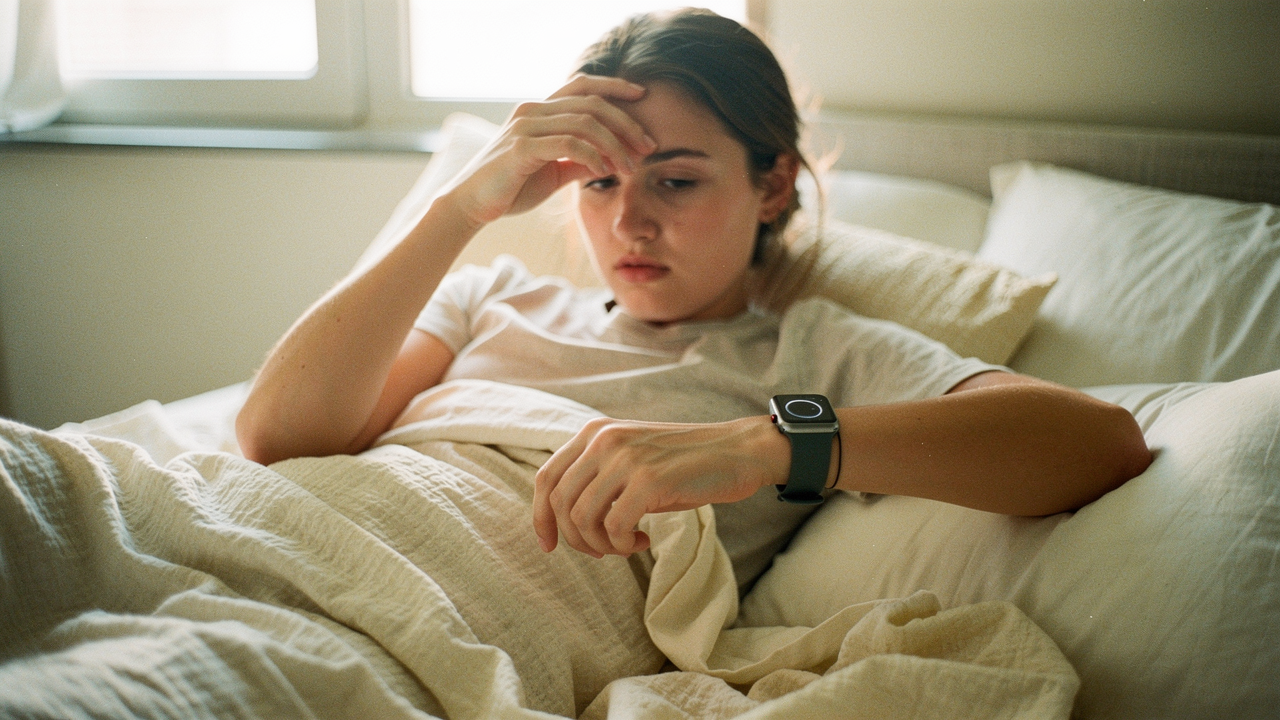
Suddenly, that morning glow vanished. I started second-guessing my energy. Am I actually tired? Is a headache coming on? That was the moment I realized I had let a proprietary algorithm override my own biological intuition.
In my work at Best Goods for Good Life, I talk a lot about “High Lifestyle ROI.” We want products that give back more than they take. But when it comes to sleep tracking, many of us are living in a “Data Debt”—we’re collecting numbers that cause more stress than they solve. The truth is, not all sleep scores are created equal. If you’ve ever been frustrated by inconsistent data or wondered why your watch and your ring can’t seem to agree, this guide is for you. We’re moving past the “black box” of sleep scores and learning how to actually master the data.
Quick Answer: What is a “Good” Sleep Score?
While every brand (Oura, Fitbit, Garmin) uses a different secret recipe, most follow a 0–100 scale. Generally, a score of 80 or above is considered “good” or optimal [1]. However, a single night’s number is less important than your 14-day trend. If you feel rested but your score is low, your personal baseline or the device’s fit might be the culprit—not your health.
The Anatomy of a Sleep Score: What’s Under the Hood?
Here’s the thing about that 0–100 number on your screen: it’s an abstraction. Your device doesn’t “see” you sleeping; it interprets signals like movement, heart rate, and temperature through a “black box” algorithm. While every company guards their recipe like the Colonel’s secret herbs and spices, most sleep scores are built on four main pillars:
- Duration: Total time spent asleep (most adults need 7–9 hours) [5].
- Efficiency: The percentage of time in bed you were actually asleep. A healthy range is typically 85–95% [1].
- Timing: How well your sleep aligns with your circadian rhythm (e.g., sleeping from 11 PM to 7 AM vs. 3 AM to 11 AM).
- Depth/Stages: The ratio of Light, Deep (Slow Wave), and REM sleep.
For instance, the Withings model classifies 75+ as a “high” score, while anything below 50 is considered “low” [3]. Garmin’s Firstbeat-style scoring is even more granular, labeling 80–99 as “good” and 100 as “excellent” [1]. What surprised me was learning that you could sleep for eight hours but still get a mediocre score if your “sleep latency”—the time it takes to fall asleep—was too long or if you were restless throughout the night.
Why Different Devices Give Different Scores
I once tried wearing three different trackers at once for a week. By Thursday, I felt like a science experiment gone wrong. One device told me I had two hours of Deep sleep; another insisted I only had forty minutes.
Why the discrepancy? It comes down to “algorithm noise.” Different devices use different sensors. A wrist-based watch primarily uses an accelerometer to track movement and a PPG sensor to track heart rate through the skin. A ring might have better access to blood flow in the finger, while a bedside “nearable” uses sonar or radar.
According to a large 11-device evaluation, there are significant “proportional biases” between brands [4]. Research in npj Digital Medicine highlights that adding heart rate variability (HRV) and skin temperature to basic motion data can increase the accuracy of sleep staging by about 16% [9]. If your device only tracks movement, it’s essentially guessing your sleep stages based on how much you toss and turn.
Accuracy Reality Check: Can You Trust the Stages?
Let’s be honest: consumer trackers are not medical-grade polysomnography (PSG) machines. While they are surprisingly good at detecting when you are asleep (sensitivity), they struggle to detect when you are awake but still (specificity).
Here is the reality of the data:
- Total Sleep Time: Most top-tier trackers are 90–95% accurate compared to a lab study [2].
- Sleep Stages: Accuracy for REM and Deep sleep drops significantly, often hovering around 70–90% [2].
- The “Five-Stage” Gap: When devices try to differentiate between five detailed stages (Wake, N1, N2, N3, REM), accuracy can plummet to around 65% [10].
There is also a documented “accuracy gap” for different bodies. Research by Colvonen et al. found that PPG sensors (the green lights on your tracker) can be less accurate on darker skin tones or skin with tattoos, as the ink or melanin can absorb the light differently [11]. It’s a reminder that these tools are guides, not absolute truths.
The Best Devices for High-ROI Sleep Tracking
When I look for a tracker, I’m looking for something that fits into a “Good Life” philosophy—it shouldn’t be an eyesore, and it shouldn’t be a nuisance to charge. Here are the tools I’ve found that actually earn their keep.
Best for Accuracy
You know that feeling when you just want the truth, no matter how nerdy the solution looks? I spent months trying to find a way to get “lab-level” data at home without the sticky electrodes. Every wearable I tried felt like it was just guessing when I hit REM sleep. Then I started looking into EEG-based tracking, which actually measures brainwaves rather than just pulse and movement.
The Muse S Athena changed how I viewed my “quiet” nights. Because it’s a soft headband that uses clinical-grade EEG sensors, it doesn’t have to guess if you’re in Deep sleep—it can see the slow-wave activity. It’s the closest you can get to a sleep lab while staying in your own bed.
Micro-Verdict: The gold standard for data geeks who want the highest validated accuracy for sleep staging.


Best for Consistency
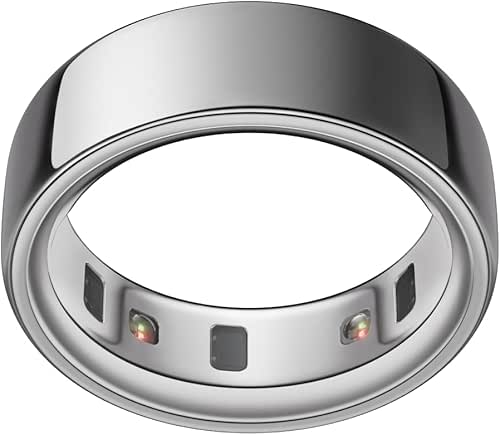
I’ll admit it—I was skeptical at first about wearing a ring to sleep. I’ve never liked the bulk of a smartwatch on my wrist while I’m trying to get cozy. But I kept hearing about the “Oura way” of looking at baselines rather than just nightly scores. I wanted something that felt invisible but acted like a protective older sister, watching my temperature and heart rate for signs of burnout.
The Oura Ring 4 has become a permanent fixture on my hand because it doesn’t just give me a number; it learns what “normal” looks like for me. If I have a glass of wine or a late workout, I can see exactly how it hits my recovery. It’s the ultimate “set it and forget it” tool for the long game.
Micro-Verdict: Best for minimalists who want effortless, long-term trend tracking without the “tech” aesthetic.
Best for Recovery
What finally clicked for me with fitness tracking was realizing that sleep isn’t just about the night before—it’s about the day ahead. I was tired of “Good” scores that didn’t account for the fact that I’d just run a 10k or spent three hours hiking. I needed a system that told me how much “strain” my body could actually handle.
The Whoop 5.0 treats your sleep like a battery recharge. I love the color-coded “Green, Yellow, Red” recovery bands because they are incredibly intuitive. It’s not just about how long you slept; it’s about how much your heart rate variability (HRV) rebounded. It’s transformed my Sunday reset rituals into actual recovery sessions.
Micro-Verdict: The essential choice for active individuals who want to balance their training intensity with their actual recovery.

The Miller Framework: How to Interpret Sleep Score Data
If you want to stop the “morning dread” and start using your data effectively, I recommend what I call the 7-14 Rule.
Stop looking at your nightly score as a grade. Instead, look at your 14-day average. Research summarized by Sleep Cycle suggests that sleep regularity (going to bed and waking up at the same time) is actually a stronger predictor of longevity and health than total duration alone [6].
I also want to share a cautionary tale: The Oxford 2018 “False Feedback” study. Researchers gave participants fake sleep scores. Those who were told they slept poorly—even if they actually slept well—reported feeling more fatigued and performed worse on cognitive tests [12]. The takeaway? Your brain is more powerful than your tracker. If you feel great, you are great, regardless of what the app says.
How to Improve Your Sleep Score (Accuracy and Quality)
Before you overhaul your life to chase a 95 score, make sure your data is actually clean. Improving your score is a two-part process: improving the measurement and improving the sleep.
The High-ROI Sleep Setup
- For Measurement Accuracy: Ensure your device is snug (but not tight) and clean. For rings, make sure the sensors are on the palm side of your finger.
- For Actual Quality: Aim for a consistent “wind-down” window. I’ve found that even 15 minutes of journaling or reading (no screens!) makes a massive difference in my REM sleep.
- The “Morning Light” Hack: AASM-backed protocols suggest that getting 10–30 minutes of natural sunlight within an hour of waking up anchors your circadian rhythm, making it easier to fall asleep 16 hours later [5].
Jordan’s Sunday Reset Loadout
If you’re serious about optimizing your rest, here’s how I structure my environment:
- Essential: A high-quality silk or weighted eye mask to block 100% of ambient light.
- Essential: A magnesium glycinate supplement (check with your doc!) to support muscle relaxation.
- Essential: A dedicated “no-phone” charging station outside the bedroom.
- Pro Upgrade: A smart cooling mattress topper to keep your core temperature at the optimal 65–68 degrees.
When the Numbers Don’t Add Up: Orthosomnia and Anxiety
I’ll be honest: there are weeks when I take my Oura ring off and put it in a drawer. I do this when I notice I’m becoming too obsessed with the numbers—a condition clinicians now call “Orthosomnia.” This is the preoccupation with perfecting your sleep data to the point that it actually causes insomnia.
If your tracker is making you anxious, it has stopped having a “High Lifestyle ROI.” Remember that no device can replace clinical red flags. If you are consistently getting 8+ hours of sleep but still feel exhausted, or if a partner tells you that you snore loudly or stop breathing, skip the app and see a sleep specialist.
Moving Forward with Intent
At the end of the day, a sleep score is a compass, not a GPS. It can tell you if you’re heading in the right direction, but it shouldn’t dictate every step you take. Use your 14-day trends to spot patterns—maybe that late-night sourdough snack is actually wrecking your Deep sleep, or perhaps your Wednesday yoga class is the reason your Thursday score is always a 90.
Prioritize how you feel during your morning trail run or your first meeting of the day over the number on your screen. You are the expert on your own body; the tracker is just a consultant.
Let’s make every night a little better, and every morning a little brighter, together.
Medical Disclaimer: This guide is for informational purposes only and is not a substitute for clinical polysomnography or medical advice from a board-certified sleep specialist. Always consult with a healthcare professional before starting new supplements or health protocols.
References
- Firstbeat (2023). What Does a Good Sleep Score Mean? Garmin Technology Documentation. https://www.firstbeat.com/en/blog/a-good-nights-sleep-what-does-it-mean/
- Zambotti et al. (2019). The Sleep of the Future: Modern Sleep Tracking Technologies. npj Digital Medicine.
- Withings (2024). Sleep Score: How is it Computed? Withings Support. https://www.withings.com/us/en/blog/sleep/sleep-score-how-is-it-computed
- Miller et al. (2024). Accuracy of 11 Wearable, Nearable, and Airable Consumer Sleep Technologies. PMC10654909.
- American Academy of Sleep Medicine (AASM). Healthy Sleep Habits and Circadian Rhythms. Clinical Guidelines.
- Sleep Cycle (2025). Sleep Regularity and Its Impact on Longevity. Sleep Talk Research Blog.
- Bohon Sleep (2025). Understanding Your Sleep Score Thresholds. https://bohonsleep.com/blog/understanding-your-sleep-score-what-it-means-for-your-health/
- Muse (2024). Muse S Athena Validation Study vs. Polysomnography. Interaxon Inc. Technical Whitepaper.
- Kuwula et al. (2024). Evaluating Reliability in Wearable Devices for Sleep Staging. npj Digital Medicine.
- Zhai et al. (2020). A Review of Consumer Sleep-Tracking Devices. Journal of Clinical Sleep Medicine.
- Colvonen et al. (2020). The Impact of Skin Tone on PPG Sensor Accuracy in Wearable Devices. Journal of Medical Internet Research.
- Oxford University (2018). The Cognitive Impact of False Sleep Feedback. Psychological Science.