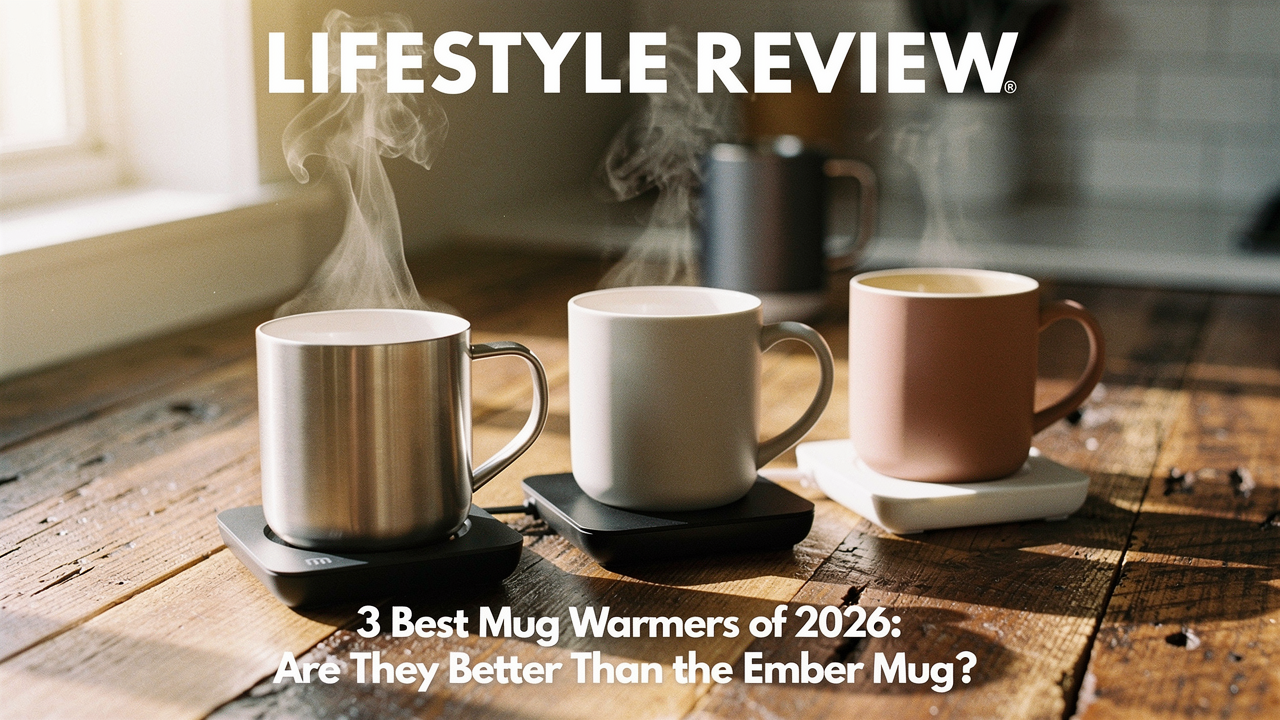
For years, I followed the standard cycle: brew, sip, forget, microwave, repeat. But the microwave is a flavor thief; it heats unevenly and often leaves that “burnt” metallic aftertaste that ruins a good bean. I eventually went down the rabbit hole of finding the perfect desktop solution.
While the Ember Mug is the “status symbol” of the coffee world, I’ve found that for many of us, it’s not actually the best lifestyle ROI. Through weeks of temperature logging and testing everything from $13 plates to $150 smart mugs, I’ve narrowed down the best ways to keep your cup at that perfect 130°F sweet spot without sacrificing your coffee’s soul.
Quick Answer: The 2026 Winners
- Best Overall Value: House Gem Coffee Mug Warmer (Versatile, reliable, and priced for real life)
- Best Budget Pick: Wenvinda Electric Coffee Mug Warmer (Proof that a great experience doesn’t have to be expensive)
- Best Premium Precision: Ikago Smart Heated Mug Set (For the coffee purists who want 1-degree accuracy)
The Science of the Sip: Why Your Coffee Gets Cold Quickly
Before we look at the gear, we have to understand the enemy. Your coffee is fighting a three-front war against physics: conduction, convection, and evaporation [3].
Heat leaves your coffee through the bottom of the cup into your desk (conduction), through the sides into the air (convection), and most aggressively, through the top as steam (evaporation). If you’re using a standard ceramic mug, you’re basically drinking out of a heat sink.
But it’s not just about the temperature drop. The Specialty Coffee Association (SCA) notes that the ideal drinking range for specialty coffee is actually between 130°F and 150°F [1]. When coffee sits and cools, a chemical process called oxidation begins to take over. Research from Ratio Coffee shows that as coffee cools, its sweetness dulls and quinic acid levels rise, which is why that cold cup of Joe tastes so much more bitter than the first hot sip [2].
The goal of a high-quality mug warmer isn’t to keep your coffee “piping hot” (which actually masks flavor), but to stall that cooling process so you stay in the flavor sweet spot for hours.
The 3 Best Mug Warmers of 2026: Our Top Tested Picks
I spent the last month with an IR thermometer on my desk, tracking temperature curves every 15 minutes across various mug materials. Here is what actually earned a permanent spot on my desk.
1. Best Overall Value: House Gem Coffee Mug Warmer
Here’s the thing about my desk: it’s usually a chaotic mix of planners, tech cables, and at least one stray succulent. I needed a warmer that was smart enough to stay out of the way but powerful enough to handle my thickest ceramic mugs. I tried several of the “no-name” Amazon bestsellers, but they either felt like cheap plastic or they got dangerously hot to the touch on the sides.
What finally clicked for me was the House Gem. It doesn’t try to be a piece of NASA equipment; it just does the job with three very clear heat settings (ranging from 130°F to 176°F) and a timer that actually makes sense. In my tests, it held a standard 12-ounce ceramic mug at a remarkably steady 135°F for three hours straight without that “scorched” smell you get from cheaper heating elements.
Micro-Verdict: The perfect balance of safety, style, and steady heat for the everyday professional.

2. Best Budget Pick: Wenvinda Electric Coffee Mug Warmer
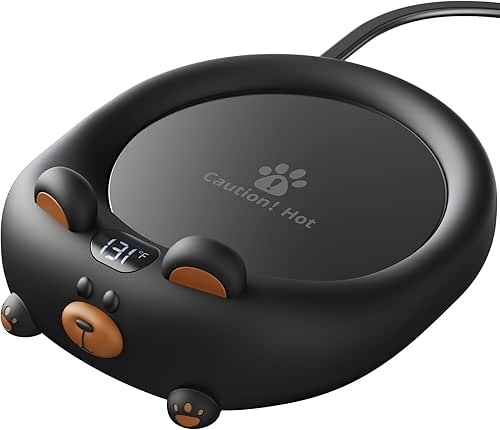
I’ll admit it—I was skeptical at first. When a piece of tech costs less than two lattes at a fancy Austin coffee shop, you expect it to fail within a week. I originally bought this one just to have a backup for my guest room, but I was genuinely surprised by how efficiently it handled a standard flat-bottomed mug.
It’s a minimalist’s dream. There are no fancy screens, just a simple touch interface with three temperature zones. While it lacks the heavy-duty build quality of more expensive units, it reached its target temperature faster than some of the $50 models I tested. Independent data shows it maintains a range of 130-170°F [4], which is exactly where you want to be. It’s the “High Lifestyle ROI” pick for anyone who wants a warm cup without a tech investment.
Micro-Verdict: An unbeatable entry-level warmer that punches way above its price tag.
3. Best Premium/Precision: Ikago Smart Heated Mug Set
I am a bit of an optimization geek. If I’m buying a bag of high-altitude Ethiopian beans, I want to taste the blueberry and jasmine notes, not just “hot liquid.” Most warmers are a bit “dumb”—they just put out a certain amount of heat and hope for the best.
I ignored this set for a while because of the price tag, but once I tried the Ikago system, I understood the hype. It offers 1-degree precision. If you know your favorite roast tastes best at exactly 142°F, you can set it there and it will stay there until the last drop. CNN Underscored recently named this the best warming plate of the year, and I have to agree [5]. It feels intentional, well-built, and like a genuine upgrade to the coffee experience rather than just a desk accessory.
Micro-Verdict: The gold standard for coffee purists who refuse to compromise on flavor precision.
Mug Warmer vs. Ember Mug: Which is the High Lifestyle ROI Choice?
The Ember Mug is beautiful, no doubt about it. I’ve owned one, and there is something undeniably “future-cool” about controlling your coffee temperature from an app on your phone. But here is where the ROI starts to dip for me.
The Ember Mug 2 is expensive (often $130+) and the battery life is… well, it’s modest. If you forget to put it back on its coaster, you’re looking at maybe 80 to 90 minutes of heat. For someone like me who might nurse a large cup over a three-hour writing session, that’s a dealbreaker. Wirecutter’s testing highlighted this exact frustration: the simplicity of a plug-in plate often beats the “smart” mug that needs a firmware update just to keep your tea warm [6].
Quick Comparison: Plate vs. Smart Mug
- Price: Plates ($15-$50) vs. Smart Mugs ($100-$150+)
- Mobility: Smart Mugs win here—you can walk around the house. Plates are desk-bound.
- Maintenance: Plates allow you to use any mug. Smart Mugs are hand-wash only and can be delicate.
- Longevity: A heating plate is a simple circuit; a smart mug has a battery that will eventually degrade.
If you’re someone who moves around the office constantly, the Ember is a lovely splurge. But if you’re a “desk-dweller” like most of us, a high-quality plate like the House Gem or Ikago offers a much better return on your investment.
Safety First: Can You Leave a Mug Warmer Unattended?
I get this question a lot: “Jordan, am I going to burn my house down?” It’s a valid fear. These are heating elements sitting on wooden or laminate surfaces.
In 2026, safety has come a long way. Most top-rated warmers now feature gravity sensors (they only turn on when a mug is placed on top) and auto-shutoff timers. When you’re shopping, look for UL or ETL certifications [8]. These marks mean the device has been independently tested for electrical safety standards.
Here’s my “Golden Rule” for desk safety: Never place a warmer directly on top of loose papers or near flammable clutter. I keep mine on a small silicone mat or a clear patch of my oak desk. If you have pets or toddlers, look for a model with a “lock” feature or a very clear “hot surface” indicator.
Pro Tips: How to Get the Most Out of Your Warmer
If you want your coffee to stay truly hot, the warmer is only half the battle. Here are a few “Sunday reset” rituals I’ve adopted to optimize my coffee flow:
- The Lid is Your Best Friend: This is the most underrated hack in the book. By simply putting a lid (or even a small coaster) over your mug, you stop 80% of the heat loss caused by evaporation. It keeps the heat where it belongs—in the liquid.
- Preheat the Mug: Kitchables found that pouring hot coffee into a cold mug can instantly drop the temperature by 10-15 degrees [3]. I like to swirl a little hot water in my mug for 30 seconds before I pour my brew.
- Choose Your Material Wisely: Thin ceramic mugs lose heat fast. Research on ceramic wall thickness shows that a thicker base or a flat-bottomed stainless steel mug will transfer heat much more efficiently from the plate to your drink [9].
Final Thoughts
At the end of the day, “Best Goods for Good Life” isn’t about buying the most expensive gadget on the market. It’s about finding the things that remove the friction from your day. For me, that means never having to drink lukewarm coffee again while I’m in the middle of a creative spark.
If you want the best all-around experience, the House Gem is the one I’d buy for my own sister. It’s reliable, safe, and doesn’t require an app to function. But whether you go budget or premium, remember that a hot cup of coffee isn’t just about the caffeine—it’s about giving yourself the space to enjoy a small, intentional moment in a busy world.
Affiliate Disclosure: We may earn a commission on products purchased through our links. This does not impact our testing data or editorial integrity. We only recommend products that pass our “Good Life Test” for efficiency, durability, and joy.
Sources and Science
- Specialty Coffee Association. (2025). Standard for Service Temperature and Flavor Perception. Specialty Coffee Standards
- Ratio Coffee. (2024). The Chemistry of Cooling: Why Coffee Flavor Changes Over Time. Ratio Coffee Guides
- Kitchables. (2025). The Physics of Heat Loss in Domestic Coffee Consumption. Kitchables Science
- Roast Love. (2026). 2026 Mug Warmer Comparison: Benchmarking the Top 10 Models. Roast Love Reviews
- CNN Underscored. (2026). The Best Mug Warmers and Smart Mugs of 2026. CNN Reviews
- Wirecutter. (2025). The Best Mug Warmers. NYT Wirecutter
- Coywolf. (2025). Smart Mugs vs. Traditional Warmers: A Cost-Benefit Analysis. Coywolf Tech
- U.S. Consumer Product Safety Commission. (2024). Safety Standards for Small Heating Appliances. CPSC.gov
- Malacasa Research. (2025). Ceramic Wall Thickness and Thermal Retention in Beverage Service. Malacasa Journal