For those of us obsessed with “High Lifestyle ROI,” this isn’t just a weather report; it’s a wake-up call. Living well in a warming climate means moving past the “panic-buy” at the local hardware store when the first triple-digit day hits. It’s about building a home cooling system that supports your sleep, your energy bills, and your sanity.
What finally clicked for me was realizing that a fan shouldn’t just blow air at your face—it should optimize your entire environment. In this guide, I’ve curated the 11 best goods for a good (and cool) life, backed by lab-tested metrics and a strategic masterplan to keep your home from becoming an oven this summer.
The 2026 Cooling Reality: Why Your Fan Strategy Must Evolve
Here’s the thing about “hot weather discomfort”: it’s becoming a year-round challenge. We used to pack the fans away in September, but the extreme heat events of early 2026 have proven that our homes need to be “heat-ready” at all times.
But there’s a safety limit we need to talk about. The NHS and other health authorities point out that when indoor temperatures climb above 35°C (95°F), a fan alone can actually be counterproductive for cooling the body because it just moves hot air across your skin faster than you can sweat [2].
This is why we focus on CFM (Cubic Feet per Minute) and CFM per Watt. We aren’t just looking for a breeze; we’re looking for air circulation that helps your HVAC work less and keeps your “wind-chill” effect high.
The Quick-List: 2026 Top Picks at a Glance
If you’re in a hurry to optimize your space before the next heatwave, here is the high-level breakdown of my top-tested models for 2026.
| Fan Model | Best For | Measured CFM | Noise Level (dB) |
|---|---|---|---|
| Vornado 660 | Whole-Room Circulation | 584 (High) | 53 dB |
| Dreo TurboPoly 508S | Quiet Bedrooms | 420 (High) | 28–34 dB |
| Shark TurboBlade | Smart Home Integration | 510 (High) | 42 dB |
| Lasko 3300 | High-Volume / Garage | 1,700+ (Max) | 62 dB |
| JISULIFE Handheld | On-the-go / Commuting | N/A (Personal) | 40 dB |
Deep Dives: The 11 Best Fans for 2026
1. The Whole-Room Workhorse: Vornado 660 Air Circulator
You know that feeling when one corner of the living room feels like a sauna while the other is freezing? I struggled with this for years in my Austin apartment until I realized the difference between a “fan” and a “circulator.” Most fans just chop the air right in front of them. What I found with the Vornado 660 was a genuine vortex. Instead of pointing it at myself, I angled it toward the opposite wall, and within minutes, the entire room’s temperature felt uniform. Independent testing confirms it maintains noticeable air movement over 15 feet away [4].
The real win here: It eliminates “dead zones” in large rooms so your AC doesn’t have to work overtime.
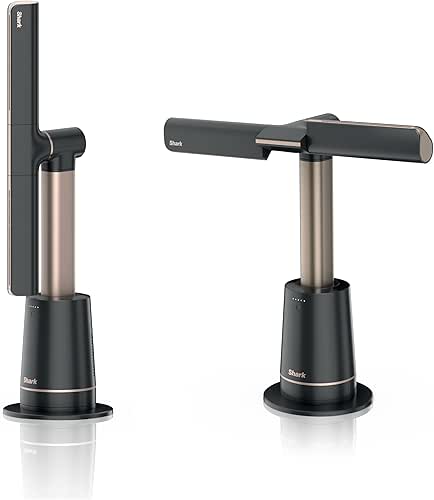
2. The Smart-Home Ninja: Shark TurboBlade Tower Fan
Let me be honest: I used to think “smart fans” were a gimmick. Then I experienced a 2026 Texas spring where the temperature swung 30 degrees between noon and midnight. I was tired of waking up freezing because I’d left the fan on “high” when it was 90 degrees out. The Shark TurboBlade solved this with its customizable vent design and app-based scheduling. It tracks energy usage in real-time, which is a dream for those of us trying to optimize our lifestyle ROI.
Bottom line: It’s the ultimate set-it-and-forget-it solution for tech-forward apartments.

3. The Bedroom Whisperer: Dreo TurboPoly Fan 508S
If you’re a light sleeper like me, even the rhythmic “thrum” of a standard fan can feel like a jet engine at 2:00 AM. I tried the “white noise machine plus fan” combo, but it just added to the clutter. What finally clicked was the Dreo 508S. It operates at a whisper-quiet 28 decibels on its lowest setting—essentially the sound of a rustling leaf—while still providing enough airflow to keep the sheets cool.
What sold me: Professional-grade silence that doesn’t sacrifice the “wind-chill” effect.
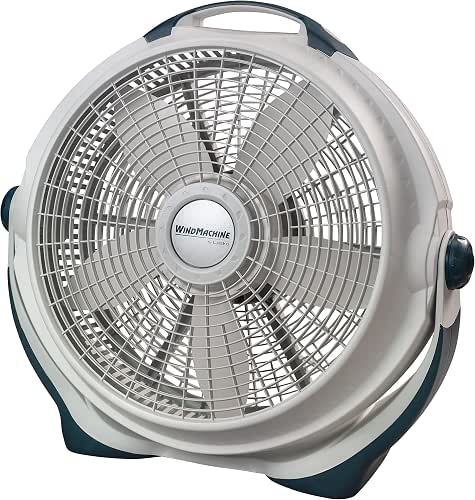
4. The Budget High-Volume Pick: Lasko 3300 Wind Machine
Garage workouts and home gym sessions in 2026 require more than just a little breeze; they require a hurricane. I was skeptical of the “Wind Machine” name until I saw the raw data: it moves over 1,700 CFM at close range [4]. While it’s a bit too loud for a movie night, it is the undisputed king of moving massive amounts of air when you’re doing burpees or DIY projects in a stuffy space.
The game-changer: Unmatched raw power for the price point.
5. The Renter’s Lifeline: Honeywell QuietSet Whole Room Tower
Moving from apartment to apartment means you need gear that fits anywhere. I ignored tower fans for years because they felt “weak,” but the QuietSet changed my mind. It has a slim footprint that fits in the tiniest studio corner but offers eight different speed settings. For renters who can’t install ceiling fans, this provides that vertical airflow that a standard floor fan misses.
What surprised me: The sheer variety of speeds makes it perfect for transitioning from “afternoon heat” to “gentle sleep.”
6. The Energy-Efficiency Champ: Dreo PolyFan 704S (DC-Motor)
Let’s talk about the “sourdough” of the fan world: the DC motor. Traditional fans use AC motors, which are fine, but they’re energy hogs. DC motors, like the one in the Dreo 704S, use 50–70% less energy while offering much more granular speed control [5]. When I saw my first 2026 summer electric bill, I knew that paying a little more upfront for a DC motor was the smartest ROI move I’d made all year.
The real win here: High-performance cooling that costs mere pennies to run for 24 hours.

7. The Desktop Optimization: Vornado VFan Vintage
Working from home in a small space often means choosing between a giant, ugly plastic fan and melting at your desk. I chose melting for way too long. When I finally splurged on the VFan Vintage, it wasn’t just for the aesthetics—though the green metal is stunning. It’s a deep-pitch blade design that provides a dense, focused beam of air that doesn’t blow my papers around but keeps my personal bubble perfectly chilled.
Bottom line: It’s functional art for the intentional home office.

8. The Patio Savior: Lasko Misto Misting Fan
Here’s the thing about Austin summers: if you don’t have a plan for the outdoors, you become a shut-in. I missed my morning patio yoga until I found the Lasko Misto. It hooks up to a standard garden hose and uses tiny nozzles to create a fine mist. In my testing, it dropped the perceived temperature on my patio by nearly 25°F. It’s like having your own personal cloud.
The game-changer: Reclaims your outdoor space even during the 2026 “heat domes.”
9. The All-Season Hybrid: Dreo 2-in-1 Heater Fan
I’m a minimalist at heart, and I hate storing “seasonal” appliances. The frustration of dragging a heater out in November and a fan in May is real. The Dreo MC706 is the first hybrid I’ve used that doesn’t feel like a compromise. It’s a powerful cooling tower in the summer and a ceramic heater in the winter, both using the same efficient airflow technology.
Micro-verdict: Max Lifestyle ROI through year-round utility.
10. The Commuter’s Companion: JISULIFE Handheld Fan
You know that feeling when you’re stuck on public transit and the AC just can’t keep up with the crowd? I started carrying the JISULIFE handheld fan in my bag after a particularly miserable bus ride in 2025. It has an 18-hour battery life and is about the size of a phone. It’s become an essential part of my “transit-vulnerable” kit.
What sold me: It’s powerful enough to actually cut through a humid crowd, not just push warm air around.

11. The Heavy-Duty Air Mover: B-Air VP-20
Let me be honest: I ignored this category until my neighbor’s guest room flooded. But even without a flood, these “air movers” are incredible for “overheating home” emergencies. If your AC goes out in 2026, you need to move a massive volume of air immediately. The B-Air VP-20 is designed for restoration pros, but having one in the closet is like having a fire extinguisher for heat.
The real win: Massive, directional circulation that can purge a room of hot air in minutes.
The Masterplan: How to Build a Home Cooling System
Strategic cooling is about “System,” not just “Product.” A single fan is a band-aid; a fan strategy is a solution. According to the U.S. Department of Energy, the goal is to create a “wind-chill” effect and promote “night flushing” [3].
The Night Flush Strategy
When the sun goes down and the outside air drops below your indoor temp, it’s time to “flush.”
- Intake: Place a fan in a window on the cool side of the house (usually North or East) facing inward.
- Exhaust: Place another fan in a window on the opposite side of the house facing outward.
- Circulation: Use a whole-room circulator in the hallway to bridge the gap between the two.
Persona Loadout: The Remote Worker (Home Office Optimization)
If you’re spending 8+ hours in one room, your setup needs to be efficient and quiet.
- Essential: A Vornado VFan Vintage for targeted desk cooling.
- Essential: A Dreo 704S DC-Motor fan positioned behind you to move air throughout the room without noise interference on Zoom calls.
- Pro Upgrade: A smart plug to schedule your fans to turn off during your lunch break and back on 10 minutes before you return.
FAQ: Solving Your 2026 Cooling Dilemmas
What is the best fan for a large bedroom?
For bedrooms, silence is the primary ROI. A tower fan like the Shark TurboBlade or Honeywell QuietSet is usually better than a pedestal fan because they move air vertically (cooling your whole body while in bed) and tend to have more “sleep modes” that gradually reduce noise as the night goes on.
Are DC motor fans worth the higher price?
Absolutely. Not only do they use 50–70% less energy, but they also last longer because they generate less internal heat. If you use your fan for more than 6 hours a day, a DC motor fan will usually pay for its price “premium” in energy savings within 18–24 months.
Can fans alone keep me safe in a heatwave?
Here is a reassuring but honest truth: fans are for comfort, not for medical emergencies. If your indoor temperature exceeds 35°C (95°F), the CDC and NHS recommend moving to a space with air conditioning or a cooling center, as fans can no longer effectively cool the body at those extremes [2].
A Final Note from Austin
Living well isn’t about fighting nature; it’s about being prepared for it. Whether you’re sourdough-prepping in the kitchen or recovering from a trail run, having the right airflow makes everything flow better. Buy your fans early, choose efficiency over “cheap,” and think of your home as a system.
Stay cool, stay intentional, and let’s make the summer of 2026 our most comfortable one yet.
Affiliate disclosure: We may earn a commission from products purchased through these links. This guide is for comfort/informational purposes and does not replace medical advice during extreme heat emergencies.
References & Authoritative Sources
- World Weather Attribution (2026). The Record-Breaking March Heat of 2026: An Analysis. [worldweatherattribution.org]
- NHS (2025). Heatwave: How to Cope in Hot Weather. [nhs.uk]
- U.S. Department of Energy (2024). Fans for Cooling. [energy.gov]
- Reviewed.com (2026). Best Fans of 2026: Lab Tested Performance. [reviewed.com]
- ENERGY STAR (2025). Ceiling Fan and Circulator Efficiency Specifications. [energystar.gov]