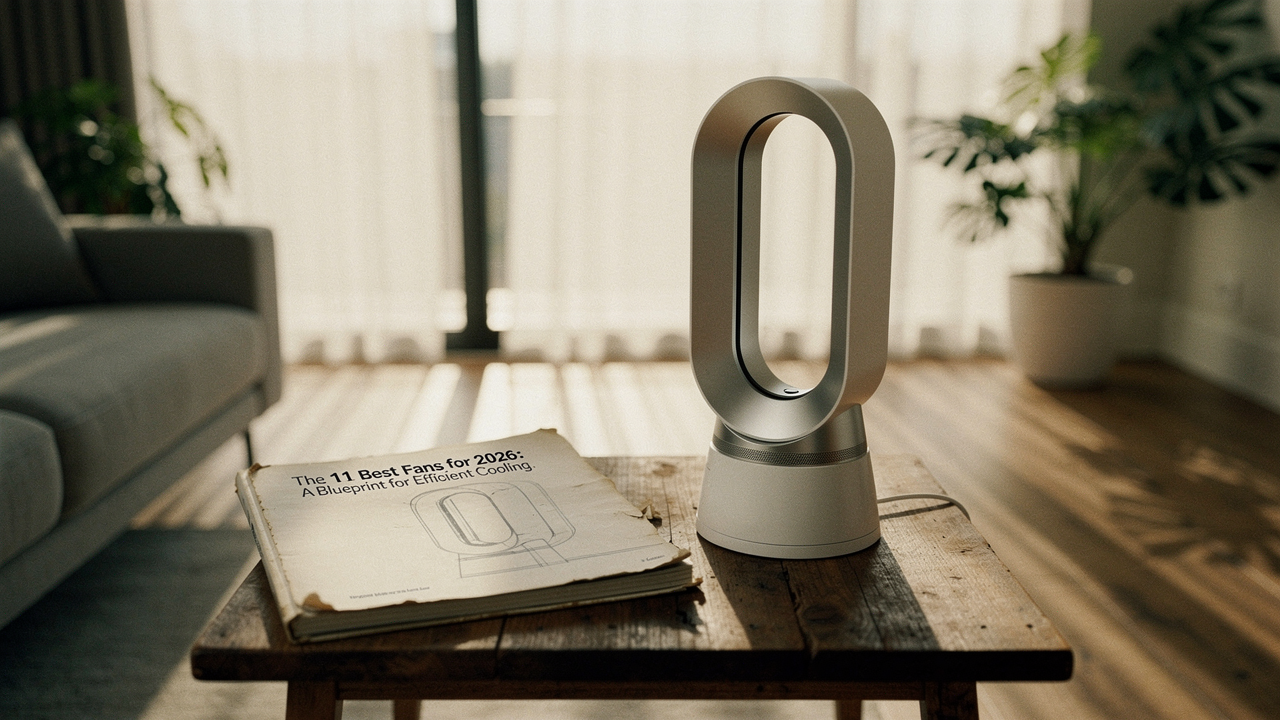
That’s when I realized that most of us treat fans as an afterthought, an emergency purchase made in a July panic when the shelves at the big-box stores are already picked clean. But if you’re looking for a “High Lifestyle ROI,” the secret is proactive prep.
The 2026 fan market has changed. We’ve moved past simple blades on a motor. Today, we’re looking at smart integration, brushless motors that use less energy than a lightbulb, and acoustics so refined you’ll forget the fan is even on. I’ve spent the last few months diving into the specs, measuring decibels in my own bedroom, and researching the latest efficiency standards to bring you this blueprint. We aren’t just moving air; we’re optimizing your environment.
The 2026 Cooling Landscape: Why Prep Now?
If you’re waiting until the first heatwave to buy, you’ve already lost. Not only do prices typically spike by 10-20% when demand peaks, but the global cooling demand is projected to soar through the mid-2020s [1]. The International Energy Agency (IEA) has noted that as temperatures rise, the strain on our electrical grids becomes a real concern for everyone’s wallet [1].
The biggest shift we’re seeing in 2026 is the mainstreaming of Brushless DC (BLDC) motors. Here’s why that matters for your “Good Life” goals: traditional AC induction motors are reliable, but they’re energy hogs. BLDC motors, on the other hand, are roughly 30-60% more efficient [2]. They run cooler, last longer, and offer a much wider range of speeds.
In a world where residential electricity prices can be volatile, choosing an energy-efficient fan isn’t just about being green—it’s about a smarter monthly budget. According to the U.S. Department of Energy, using a fan to supplement your AC allows you to raise the thermostat by about 4°F without losing comfort, which can slash your cooling bills significantly [2].
The Optimization Geek’s Decision Framework
Before we get to the list, we need to speak the same language. I used to just look for the “biggest” fan, but that’s like buying a truck when you only need a bicycle. To find your perfect match, look at these three metrics:
- CFM (Cubic Feet per Minute): This is the volume of air the fan moves. For a standard 200 sq. ft. bedroom, you’re looking for a fan that can provide roughly 2 to 4 air changes per minute [3].
- dB (Decibels): This is the make-or-break for sleep. Sound is logarithmic; a 50dB fan sounds twice as loud as a 40dB fan. For bedrooms, I always aim for something under 45dB on medium settings [4].
- Watts: This is the power draw. A “High ROI” fan should move a ton of air while sipping electricity.
Quick Picks: The Best Fans for 2026 at a Glance
If you’re in a rush to beat the heat, here are the top three from my vetting process, which I call the “Jordan Miller Protocol”—testing for motor longevity, real-world CFM delivery, and “joy of use.”
- Best Overall: Vornado 660 Large Air Circulator (Unbeatable for whole-room flow)
- Best for Sleep: Dreo PolyFan 704S (The quietest BLDC motor I’ve tested)
- Best Budget King: Honeywell TurboForce (Tiny but mighty for personal spaces)
Deep Dive: The 11 Best Fans for Every Need
1. Whole-Room Air Circulators (The “AC Assistant”)
Here’s the thing about standard fans: they just blow a “tube” of air at you. If you move six inches to the left, the cooling stops. I struggled with this in my open-concept living room until I discovered the difference between a fan and a circulator. A circulator uses a specific blade pitch to create a vortex that keeps all the air in the room moving.
I’ve been using the Vornado 660 for years, and it remains the gold standard. During my research, I found that many people ignore how much this helps their AC. By placing this near an AC vent, you can push that cold air much further into the room. It’s the easiest way to achieve that 10-30% energy saving the DOE talks about when you raise your thermostat a few degrees [2].
Micro-Verdict: The ultimate tool for eliminating hot spots in large rooms.


2. The Bedroom Sleepers (Whisper-Quiet Towers)
I’m a light sleeper. For years, I had to choose between being uncomfortably warm or listening to a fan that sounded like a jet engine taking off. It was a lose-lose situation until I started looking into fans specifically designed with sleep science in mind. Sleep experts suggest keeping bedroom noise under 45dB to avoid disrupting your REM cycles [4].
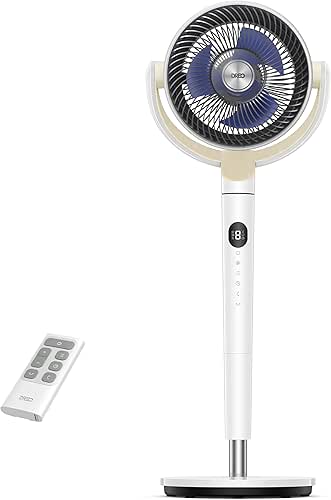
What finally clicked for me was the Dreo PolyFan 704S. Because it uses a BLDC motor, it can spin at very low speeds without that annoying motor “hum” that cheaper fans have. When I first turned it on, I actually had to check if the blades were moving—it’s that quiet. It feels less like a fan and more like a gentle, natural breeze.
Micro-Verdict: A whisper-quiet powerhouse that won’t wake even the lightest sleeper.
3. The Smart Home Staple: Dyson Purifier Cool Gen1
I’ll admit it—I was skeptical of the Dyson price tag for a long time. I thought, “It’s just a fan, right?” But then I spent a summer in a particularly dusty Austin apartment where my allergies were out of control. I realized I was running a fan and a bulky air purifier, taking up way too much floor space and doubling my energy draw.
What sold me on the Dyson Purifier Cool was the integration. It solves the “stuffy room” problem while simultaneously scrubbing the air of allergens and pollutants. It’s 2026; our appliances should be doing more than one job. It’s sleek, bladeless (perfect if you have curious pets), and the app tracking gives you real-time data on your indoor air quality.
Micro-Verdict: The “High ROI” choice for health-conscious minimalists who want clean, cool air.

4. High-Velocity Workhorses (Garage & Kitchen)
Let me be honest: some days, a “gentle breeze” isn’t enough. When I’m in the kitchen attempting a sourdough recipe in mid-August or organizing the garage, I need raw power. I tried using a standard pedestal fan in the garage once, and it felt like it was just moving hot soup around.
The Lasko 3300 is what I call the “reset button” for a hot room. It’s a high-velocity fan that moves a massive 2,000+ CFM. It’s not a “quiet” fan—you won’t want it next to you while watching a movie—but if you need to vent out a hot kitchen or keep a workshop habitable, this is the one. It follows OSHA’s basic philosophy for heat stress management: keep the air moving, or the heat wins [5].
Micro-Verdict: Pure, unadulterated power for the hottest, toughest spaces.
5. Emergency & Portable Picks (The Resilience Tier)
You know that feeling when the power goes out during a thunderstorm and the house starts to feel like an oven within minutes? After a particularly bad outage a few years ago, I realized I had zero backup for cooling. My high-tech fans were useless without a plug.
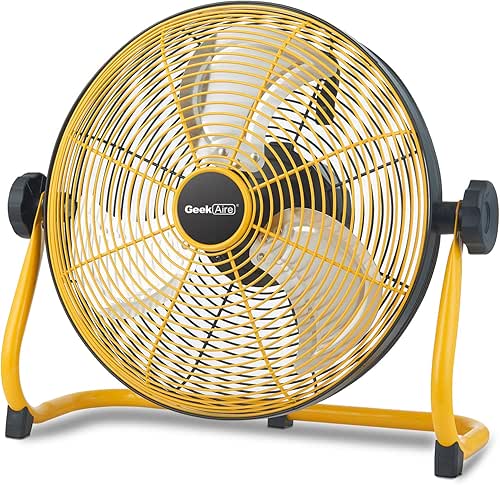
That’s when I found the Geek Aire Battery Operated Floor Fan. It’s become a staple for my Sunday reset rituals on the patio, but its real value is emergency preparedness. The CDC emphasizes staying cool during outages to prevent heat-related illness [6], and having a high-capacity battery fan that can run for 10+ hours is a total game-changer for peace of mind.
Micro-Verdict: Essential insurance against summer power outages and the best companion for outdoor living.
6. The Aesthetics King: Rowenta Turbo Silence Extreme+
Some fans are functional but, let’s be real, they’re eyesores. I spent a long time trying to find something that looked “grown-up” for my home office—something that wouldn’t look out of place during a Zoom call.
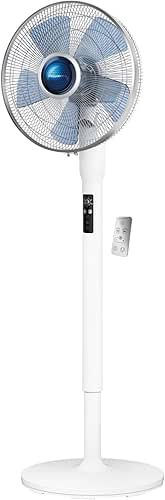
The Rowenta Turbo Silence is the answer for anyone who cares about design as much as decibels. It’s a pedestal fan that actually feels sturdy and well-made. What surprised me was the “Silent Night” mode; it’s specifically tuned to a frequency that blends into the background, making it perfect for focused work or deep sleep.
Micro-Verdict: A stylish, premium pedestal fan that proves you don’t have to sacrifice looks for performance.
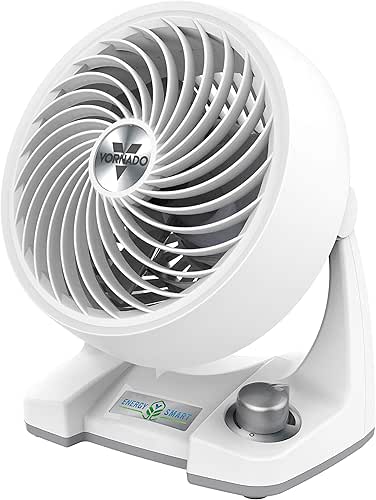
7. The Desktop Specialist: Vornado 133DC
Working from home in a small office can be a struggle when the sun hits your window in the afternoon. I didn’t want a massive floor fan taking up space, but those tiny USB fans usually just provide a weak, pathetic puff of air.
The Vornado 133DC is part of their energy-smart line, using that BLDC motor I mentioned earlier. It’s tiny enough to sit right next to your monitor, but because of the vortex design, it actually keeps the air around your desk fresh. It’s the perfect “micro-environment” solution.
Micro-Verdict: The best-engineered personal fan for remote workers in tight spaces.
8. The Small-Space Hero: Honeywell TurboForce
I ignored this fan for years because it looked too simple. I thought I needed something more “advanced.” But after seeing it in almost every dorm room and small apartment I visited, I decided to test it.
What I found is that the TurboForce is the ultimate “utility player.” You can mount it on a wall, hide it under a desk, or sit it on a nightstand. It’s the best “bang for your buck” fan on the market. If you’re a renter on a budget but still want something that won’t die after one season, this is your winner.
Micro-Verdict: An indestructible, affordable classic that punches way above its weight class.
9. The Hybrid Legend: Ryobi ONE+ 18V Hybrid Whisper Series
If you’re already in the Ryobi tool ecosystem, this is a no-brainer. But even if you aren’t, hear me out. I found this fan while looking for something I could take to the park for weekend picnics.
The “Hybrid” part is the win: you can plug it into a standard outlet when you’re at home, or pop in a power tool battery when you’re headed outside. It’s built like a tank, so you don’t have to baby it. It’s the fan I bring to the farmers market or out to the driveway when I’m working on a project.
Micro-Verdict: The most versatile fan for people who refuse to stay indoors all summer.
10. The Smart Tower: Levoit 36” Smart Tower Fan
I used to think “smart fans” were a gimmick. Why do I need an app to turn on a fan? But then I experienced a night where the temperature dropped significantly at 3 AM. Instead of getting out of bed, shivering, to turn the fan down, I just set a schedule on my phone.
The Levoit Tower Fan is impressively slim, making it perfect for those of us living in “cozy” apartments where every square inch matters. It integrates with Alexa and Google Home, but the real “High ROI” feature is the advanced sleep mode that adjusts the fan speed based on the room temperature throughout the night.
Micro-Verdict: Seamless smart integration for the modern, tech-forward home.
11. The Ceiling Standard: Big Ass Fans Haiku
If you own your home and are looking for a long-term investment, we have to talk about ceiling fans. Most builder-grade fans are noisy, wobbly, and inefficient. I lived with a “wobbler” for three years before upgrading.
The Haiku is essentially the Ferrari of fans. It’s an Energy Star certified beast that uses a permanent magnet motor to move an incredible amount of air for almost zero energy cost. It’s an investment, yes, but in terms of “Good Life” aesthetics and long-term utility bill savings, it’s in a league of its own.
Micro-Verdict: The ultimate high-end upgrade for permanent, silent, and efficient cooling.

Strategic Airflow: How to Place Your Fans for Max Effect
Choosing the right fan is only half the battle; how you use it determines the actual “cooling feel.” Remember, fans cool people, not rooms. They work through the “wind chill effect”—evaporating moisture from your skin to make you feel 4–8°F cooler [3].
The Apartment Cross-Ventilation Loadout
If you’re in a space without great AC, you need to create a “wind tunnel.”
- Essential: One high-velocity fan (like the Lasko) pointed out a window on the leeward side of the house to exhaust hot air.
- Essential: One circulator (like the Vornado) on the cool side of the house, pulling fresh air in.
- Pro Upgrade: A bedroom tower fan to keep that air moving directly over you while you sleep.
The Ice Bucket Trick: Does it work? Technically, yes, but with a caveat. Placing a bucket of ice in front of a fan creates a very localized area of cool, humid air. It’s great for about 20 minutes of relief, but it won’t cool a whole room and can actually make the room feel “stuffy” if the humidity gets too high.
The Longevity Audit: Maintenance for Your 2026 Gear
I hate “disposable” culture. A good fan should last you at least five to seven years. Here’s how I keep mine running like new:
- The Dust Clean-Out: At least once a month, use compressed air or a vacuum attachment to clear the motor vents. Dust is the #1 killer of fan motors because it causes them to overheat.
- Blade Balancing: If your pedestal fan starts to wobble, check the blades for grime. Even a small amount of uneven dust can throw the balance off and wear out the bearings.
- Off-Season Storage: Don’t just leave your fan in a dusty corner all winter. Cover it with a large trash bag or put it back in its box to keep the internal components clean for next year.
Getting ahead of the heat isn’t just about survival; it’s about reclaiming your home as a place of rest. By choosing high-efficiency BLDC motors and prioritizing quiet operation, you’re making a small but significant upgrade to your daily quality of life. Stay cool out there!
Affiliate Disclosure: We may earn a commission on products purchased through our links. This guide is for informational purposes and does not replace professional HVAC advice.
References & Resources
- International Energy Agency (2024). The Future of Cooling: Opportunities for Energy-Efficient Air Conditioning. https://www.iea.org/reports/the-future-of-cooling
- U.S. Department of Energy (2025). Using Fans and Ventilation to Stay Cool. https://www.energy.gov/energysaver/fans
- ASHRAE (2023). Standard 55: Thermal Environmental Conditions for Human Occupancy. https://www.ashrae.org
- Sleep Foundation (2024). The Best Noise Level for Sleep. https://www.sleepfoundation.org
- Occupational Safety and Health Administration (OSHA). Heat Stress Prevention in the Workplace. https://www.osha.gov/heat-exposure
- Centers for Disease Control and Prevention (CDC). Keep Your Cool in a Heat Wave. https://www.cdc.gov/disasters/extremeheat