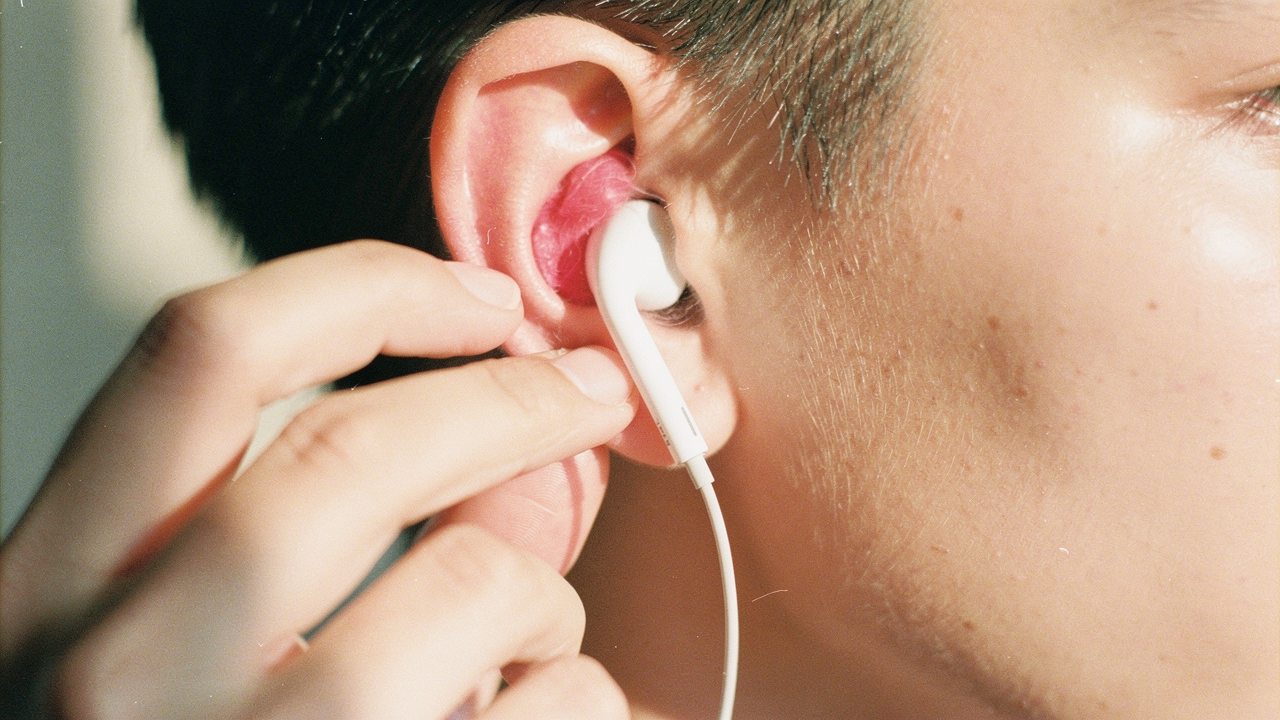
There is nothing quite like a 6:00 AM morning in Austin. The light hitting the Lady Bird Lake trail, the smell of fresh coffee, and that perfect playlist or podcast to get my head in the game. For years, my earbuds were basically an extension of my body. Whether I was kneading sourdough or hitting a personal best on a run, they were always in.
But a few months ago, something shifted. After a long afternoon of work calls, I took my earbuds out and noticed a dull, muffled sensation—like I was underwater. I figured it would go away after a “Sunday reset,” but it lingered. It was a wake-up call that “living well” means making sure our favorite tech doesn’t actually cost us our health.
We talk a lot about “High Lifestyle ROI” here—investing in things that make life better. But if your earbuds are slowly eroding your hearing, that ROI is in the negatives. The World Health Organization estimates that over 1 billion young people are at risk of permanent hearing loss simply because of how we use our personal audio devices [1].
Let’s look at the red flags I wish I’d paid attention to sooner, and how we can keep the music playing without the damage.
The Subtle ‘Muffle’: Identifying Early Hearing Damage
The scariest thing about hearing damage is how quietly it sneaks up on you. Most of us expect hearing loss to be like a light switch—on or off. In reality, it’s a slow fade. Audiologists call this “Noise-Induced Hearing Loss” (NIHL), and it happens when the tiny hair cells in your cochlea are overworked by high-decibel sound until they eventually fail [2].
What I experienced after those work calls is known as a “temporary threshold shift.” It’s your body’s way of saying, “That was too much.” If you find that the world sounds dull or “cotton-wrapped” for an hour or two after you take your buds out, you’re already pushing the limit.
The Tinnitus Check: Is That Ringing Normal?
I used to think that faint ringing after a loud workout was just my “blood pumping.” It wasn’t. That high-pitched hiss or buzz is tinnitus, and it’s one of the most common early warning signs of cochlear stress. If you notice a “phantom sound” in a quiet room after using your earbuds, your ears are literally crying for a break.
The ‘Subtitle’ Effect: Social Signs You’re Losing High-Frequency Clarity
One of the first things to go with earbud-related damage isn’t the volume of sound, but the clarity. You might find yourself turning on subtitles for your favorite Netflix show because the dialogue feels “mushy.” Or maybe you’re at a busy cafe on South Congress and you realize you’re asking your friend to repeat themselves more than usual. This happens because NIHL typically hits high-frequency sounds first—the consonants like “s,” “f,” and “t” that give speech its meaning.
Physical Pain vs. Discomfort: What Your Ears are Telling You
Beyond the hearing itself, we have to talk about the physical “real estate” of your ear canal. I’ve spent way too much money on earbuds that felt like sticking a marble in my ear. But there’s a difference between a bad fit and a medical issue.
Standard in-ear designs are a struggle for about 20–30% of the population because our ear canals are as unique as fingerprints [3]. If you’re feeling sharp pain, it might not just be a fit issue; it could be Otitis Externa, better known as “swimmer’s ear.” Earbuds trap moisture and heat, creating a tropical paradise for bacteria.
Mechanical Soreness: Tips for the Right Fit
If your ears feel sore or “bruised” after an hour, it’s usually mechanical pressure. I used to just power through it, thinking I’d “break them in.” Don’t do that. You’re actually risking contact dermatitis or even small sores in the canal.
I struggled for years with those standard silicone tips that come in the box. They either slid out during my Austin summer runs or felt like they were stretching my ear canal to the limit. I almost gave up on high-end earbuds entirely until I discovered memory foam tips. They compress before you put them in and then expand to fit your specific shape without that “expanding balloon” pressure of silicone.
Micro-Verdict: Memory foam tips are the single best $20 investment you can make for both comfort and a better acoustic seal.
Red Flags: When to See an ENT
It’s okay to troubleshoot fit, but some things aren’t DIY projects. If you experience any of the following, please book an appointment with an ENT (Ear, Nose, and Throat) specialist:
- Fluid discharge or “weeping” from the ear canal
- Sudden, one-sided hearing loss (this is a medical emergency)
- Severe pain that keeps you up at night
- A feeling of “fullness” that doesn’t go away after a day
How to Tell if Your Earbuds are Too Loud (The 60/60 Rule)
Here’s the thing about volume: our ears are terrible at judging what’s safe. We have something called “volume creep.” We start at a reasonable level, then a car honks or the gym music gets louder, so we bump ours up. Ten minutes later, we’ve forgotten we’re at 90% volume.
The CDC warns that exposure to sounds at or above 85 dB for prolonged periods can cause permanent damage [2]. For context, most smartphones can hit 110 dB at max volume. At that level, you can start damaging your hearing in as little as 15 minutes.
The gold standard for safety is the 60/60 Rule: Listen at no more than 60% volume for no more than 60 minutes at a time. After that hour, give your ears at least 15 minutes of “quiet time” to recover.
Hack Your Settings: How to Lock Your Volume Limit
I’m a big fan of “setting it and forgetting it.” You shouldn’t have to rely on your willpower when a great song comes on.
- On iPhone: Go to Settings > Sound & Haptics > Headphone Safety. Turn on “Reduce Loud Sounds” and set the slider to 80 or 85 decibels.
- On Android: Go to Settings > Sounds and vibration > Volume. Tap the three dots in the corner and select “Media volume limiter.” You can even set a PIN so you don’t cheat!
Why Active Noise Cancellation (ANC) is Your Secret Health Weapon
Let me be honest: I ignored Active Noise Cancellation for years, thinking it was just a fancy “pro” feature I didn’t need. I was wrong. The reason we turn our music up to dangerous levels is usually to drown out external noise—the roar of a plane engine or the chatter at the office.
I used to crank my old, non-canceling buds to nearly 100% just to hear my audiobook while commuting. Once I switched to a pair with high-quality ANC, I realized I could hear every word perfectly at just 40% volume.
Micro-Verdict: ANC isn’t just about sound quality; it’s a protective barrier that allows you to listen safely in loud environments.


The Hygiene Routine: Preventing ‘Earbud Itch’ and Infections
If you’re someone who wears your earbuds at the gym, this part is for you. Studies have found that earbuds can harbor a shocking amount of bacteria—sometimes more than a kitchen sink [5]. When we stick those back in our ears, we’re essentially “planting” that bacteria into a warm, dark canal.
Your Weekly Cleaning Protocol
I’ve made this part of my “Sunday Reset” ritual, right alongside my meal prep and plant watering. It takes two minutes but saves a lot of itching and potential infection.
- The Tips: Remove silicone tips and wash them with warm, soapy water. Let them air dry completely before reattaching.
- The Mesh: Use a dry, soft toothbrush to gently brush away earwax from the speaker grilles. Never poke them with a toothpick!
- The Case: Use a cotton swab lightly dampened with 70% isopropyl alcohol to wipe down the inside of the charging case.
The No-Go Zone: Why You Must Stop Using Q-Tips
I know, I know. It feels so satisfying. But here’s the medical reality: your ear is a self-cleaning oven. When you use a Q-tip, you aren’t removing wax; you’re pushing it deeper. When you then insert an earbud, you create a “piston effect” that packs the wax against your eardrum. This leads to wax impaction, which causes that “muffled” feeling and can even lead to infections. If you have excess wax, see a pro or use over-the-counter drops—leave the swabs for your makeup.
The Safe Listener Loadout
If you use earbuds for more than two hours a day, these are the “High Lifestyle ROI” items that will keep your ears healthy for the long haul:
- Essential: Active Noise Cancelling (ANC) earbuds to keep volume levels naturally lower.
- Essential: Memory foam ear tips for a custom, pressure-free seal.
- Essential: A 70% isopropyl alcohol cleaning kit for weekly hygiene.
- Pro Upgrade: A dedicated “Hearing” check app (like Mimi) to baseline your hearing health once a year.
Moving through life with a soundtrack is one of the great joys of modern living. But the “Good Life Test” reminds us that our tools should serve us, not harm us. By following the 60/60 rule and being honest about those early warning signs, you can enjoy your playlists for decades to come.
Take a second right now—audit your volume slider. Your future self will thank you for it.
References
- World Health Organization (WHO). (2022). World Report on Hearing. https://www.who.int/activities/making-listening-safe
- Centers for Disease Control and Prevention (CDC). (2023). What Noises Cause Hearing Loss?. https://www.cdc.gov/nceh/hearing_loss/what_noises_cause_hearing_loss.html
- American Academy of Otolaryngology–Head and Neck Surgery (AAO-HNS). (2024). Ear Health and Personal Listening Devices. https://www.enthealth.org
- National Institute for Occupational Safety and Health (NIOSH). (2023). Noise and Hearing Loss Prevention. https://www.cdc.gov/niosh/topics/noise
- American Speech-Language-Hearing Association (ASHA). (2023). Keep Your Ears Safe from Earbuds. https://www.asha.org/public/hearing
Disclaimer: This article provides educational health information but is not a substitute for professional medical advice from an audiologist or ENT. Always seek the advice of your physician or other qualified health provider with any questions you may have regarding a medical condition.
“`