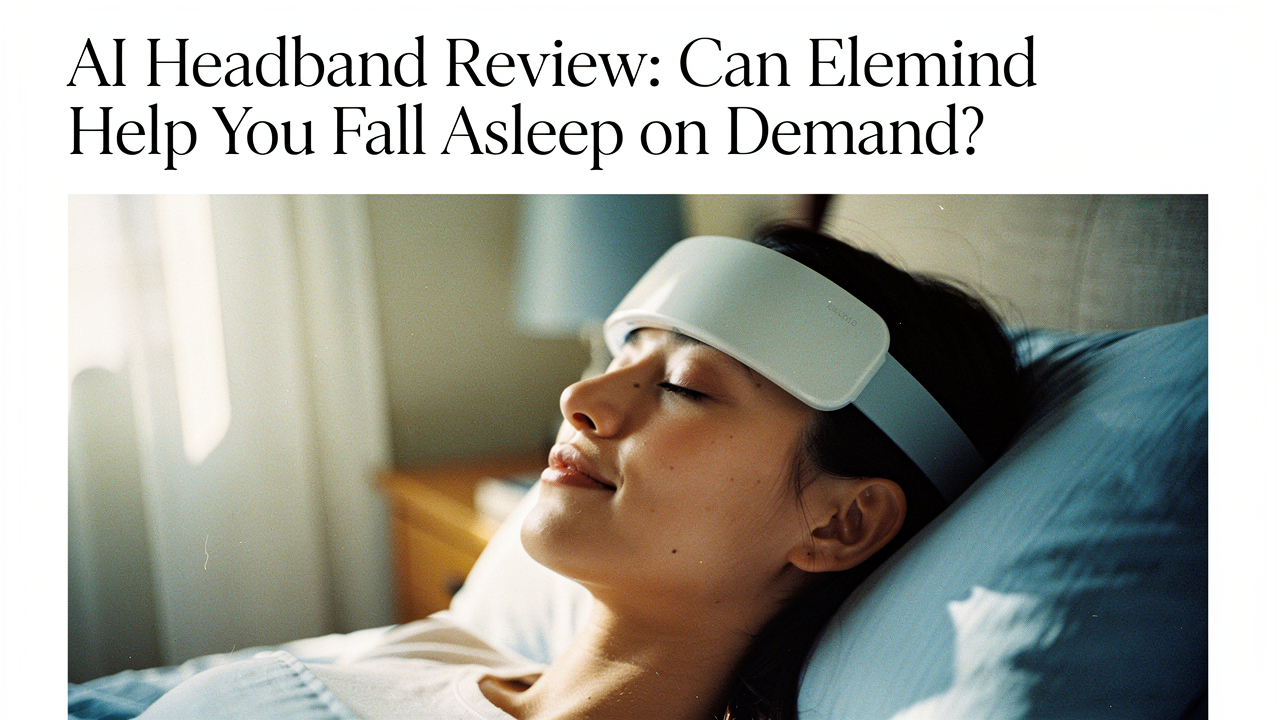
As someone who curates products for a living in Austin—a city that loves its productivity as much as its tacos—I’m always on the hunt for “High Lifestyle ROI.” I don’t want more gadgets; I want solutions that actually move the needle on how I feel when I wake up. When I first heard about a headband that uses MIT-developed AI to help you fall asleep on demand, I’ll admit I was skeptical. It sounds like science fiction, right? But after years of digital wellness research, I knew I had to see if this was the breakthrough we’ve been waiting for or just another expensive accessory for my nightstand.
What Exactly is an AI-Powered Sleep Headband?
Before we dive into the specifics, let’s clear up a common misconception. Most “sleep headbands” you see on Amazon are just thin speakers wrapped in fabric. They’re great for listening to rain sounds, but they aren’t “smart.”
An actual AI-powered sleep headband, like the one from Elemind, is a piece of wearable neurotechnology. It uses Electroencephalogram (EEG) sensors to monitor your brain waves in real-time. Think of it as a tiny, comfortable lab on your forehead. While traditional trackers tell you how you slept after you wake up, AI sleep technology is designed to intervene while you’re trying to drift off.
Recent projects, like Mount Sinai’s Physiology Guided Sleep AI, have shown that AI can analyze complex sleep markers to predict everything from cardiovascular health to sleep apnea [5]. These headbands bring that level of sophistication into your bedroom, using machine learning to personalize the experience based on your specific neural patterns.
The Science of ‘Sleep Tailor’: How Elemind Works
The magic (or rather, the math) behind this tech lies in something called acoustic neuromodulation. Here is the thing: your brain operates at different frequencies. When you’re alert and racing, you’re likely in a high-beta state. To fall asleep, your brain needs to transition into alpha and theta waves.
Alpha Waves and Sleep Onset
Elemind uses its “Sleep Tailor” AI to detect exactly when your brain is struggling to make that shift. Once it senses your brain activity, it delivers precise acoustic pulses—tiny sounds that are phased to match your brain’s natural rhythms. According to research on neurostimulation in sleep medicine, these pulses can essentially “nudge” your brain into the desired state of relaxation [3]. It’s not just playing music; it’s a closed-loop system that adjusts the stimulation in real-time based on how your brain responds.
I’ll be honest: I ignored the idea of brain-wave manipulation for a long time. It felt a bit too “Big Brother.” But then I realized that we already do this naturally with things like white noise or rhythmic breathing. This is just the precision-engineered version of that.
I used to spend forty-five minutes every night staring at the ceiling, my mind cycling through tomorrow’s to-do list like a broken record. I tried every “natural” remedy under the sun, but nothing could quiet the internal noise. When I started testing the Elemind headband, I was fascinated by how it felt. It doesn’t “knock you out”; instead, it feels like the volume on your thoughts is slowly being turned down. Within a few nights, I noticed that the gap between my head hitting the pillow and my last conscious thought was shrinking significantly. It felt like I’d finally found the manual for my own brain’s “power down” sequence.
The real win here: It’s a drug-free “off switch” that actually learns your brain’s unique patterns to get you to sleep faster.
Hands-On with Elemind: My Experience Falling Asleep on Demand
One of my biggest concerns was comfort. I’m a side sleeper, and the thought of wearing a plastic-heavy device on my head all night sounded like a recipe for a neck ache. Surprisingly, the design is quite low-profile. It’s made of soft, breathable materials that didn’t leave me feeling overheated—a major plus for those humid Austin nights.
The setup was relatively seamless through the app. You put it on, it runs a quick check to ensure the EEG sensors are making contact with your skin, and you’re good to go. What surprised me was the flexibility. You don’t have to wear it all night if you don’t want to; you can use it just for the “sleep onset” phase or for a quick 20-minute power nap.
There are some honest drawbacks, though. At $399, it is a significant investment. Plus, there is an optional subscription for deeper data insights, which runs about $7 a month. If you’re just looking for a way to block out a snoring partner, this is definitely overkill. But if your problem is internal—the racing mind, the “on demand” sleep struggle—the ROI starts to make a lot of sense.
AI Headband vs. Traditional Aids: Which is Right for You?
Not everyone needs a neurostimulation device. Sometimes, the best solution is the simplest one. Here’s how I break down the “Lifestyle ROI” for different sleep struggles:
- The Budget Minimalist: If you just need a comfortable way to listen to white noise or the 4-7-8 breathing technique (which the Sleep Foundation still considers a gold standard for relaxation [4]), stick to a simple audio headband.
- The Data Geek: If you want to track your sleep stages and heart rate but don’t need active intervention, a wearable like an Oura Ring or a high-end Garmin is likely a better fit.
- The Chronic “Racing Brain”: If your primary issue is falling asleep because you can’t stop thinking, that’s where the AI-powered neuromodulation of Elemind shines.
The ‘High ROI’ Verdict for Insomnia Relief
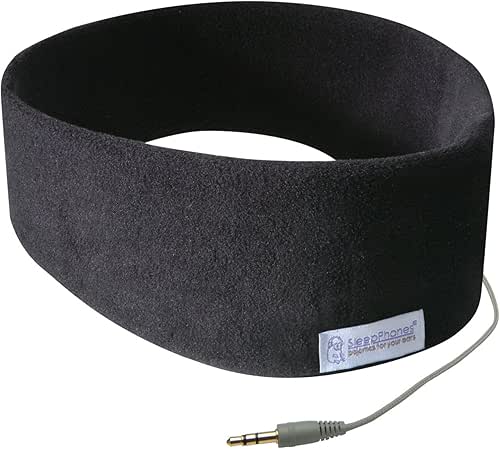
For years, I’ve recommended SleepPhones to friends who just wanted to mask the sound of city traffic or a partner’s snoring without the pain of traditional earbuds. They were my go-to for Sunday reset rituals. But let’s be real: if you’re dealing with deep-seated sleep-onset anxiety, just hearing the sound of rain isn’t always enough to stop the mental wheels from turning. What I found with the AI-driven approach was a level of active help that simple headphones just can’t provide.
Let me be honest: I love the ritual of a sleep story as much as the next person, but some nights my brain is just too loud for a narrator to drown out. I remember one particularly stressful week where even my favorite guided meditations felt like they were just adding to the noise. I switched back to a dedicated audio headband—the AcousticSheep SleepPhones—specifically to pair with clinical CBT-I (Cognitive Behavioral Therapy for Insomnia) exercises. While they don’t have the “brain-reading” AI, the sheer comfort for side sleepers is unmatched. They allowed me to stay consistent with my behavioral routines without the physical distraction of bulky tech.
The real win here: Unbeatable comfort for side sleepers who want to use audio-based therapy or white noise to manage their sleep environment.

Safety, Privacy, and Data: What You Need to Know
Whenever we talk about AI, we have to talk about data. These devices are collecting intimate information—literally your brain waves. Platforms like Sleep.ai have analyzed over 1 billion hours of sleep data to refine their algorithms [2]. While this data is what makes the technology so effective, you should always check the privacy policy of any wearable you buy.
Additionally, neuromodulation isn’t for everyone. While acoustic stimulation is non-invasive and generally considered safe, people with certain conditions—like epilepsy or implanted medical devices (such as pacemakers)—should always consult a doctor before using any device that interacts with brain rhythms or uses electrical components near the head [3].
Frequently Asked Questions
Is it comfortable for side sleepers?
Yes, most high-end sleep headbands (both AI and audio-only) are designed with flat, padded speakers or sensors. In my testing, as long as the band is fitted correctly, there was no significant pressure on my ears while side sleeping.
Can I use it if I have a pacemaker?
This is a “safety first” situation. Because these devices contain electronic components and some may use mild electrical or magnetic fields (though Elemind is primarily acoustic), you must consult your cardiologist. Most manufacturers recommend against use with implanted medical devices.
How long does it take to see results?
While some people feel the “quieting” effect on night one, your brain often needs a few nights to habituate to the sensations. Most behavioral techniques, like 4-7-8 breathing, take about 2-4 weeks of consistent practice to become a reliable trigger for sleep [4].
Living well isn’t about having the most expensive bedroom; it’s about having an environment that supports your flow. Whether you choose the cutting-edge AI of Elemind or the simple, cozy comfort of SleepPhones, the goal is the same: waking up feeling like yourself again. Tech is a powerful tool, but it works best when paired with a cool room, a consistent routine, and a little bit of grace for your busy mind.
Disclaimer: I am not a doctor. This review is based on personal testing and a synthesis of available clinical research. Sleep disorders can be symptoms of underlying medical conditions. Please consult a sleep specialist or healthcare provider for chronic insomnia or before starting new neurostimulation protocols.
References & Scientific Resources
- Elemind Technologies. (2024). The Science of Acoustic Neuromodulation and Sleep Tailor AI. Elemind Tech. https://elemindtech.com/
- Sleep.ai. (2023). AI-Powered Sleep Improvement and Data Validation. Sleep.ai Platform. https://www.sleep.ai/
- MedLink Neurology. (2024). Neurostimulation and Neuromodulation in Sleep Medicine. MedLink. https://www.medlink.com/articles/neurostimulation-in-sleep-medicine
- Sleep Foundation. (2023). How to Fall Asleep Fast: Breathing Techniques and Sleep Hygiene. SleepFoundation.org. https://www.sleepfoundation.org/sleep-hygiene/how-to-fall-asleep-fast
- Mount Sinai Health System. (2025). Physiology Guided Sleep AI: Predicting Cardiovascular Outcomes via Polysomnography. Icahn School of Medicine at Mount Sinai. https://reports.mountsinai.org/article/pulm2025-apnea-and-ai