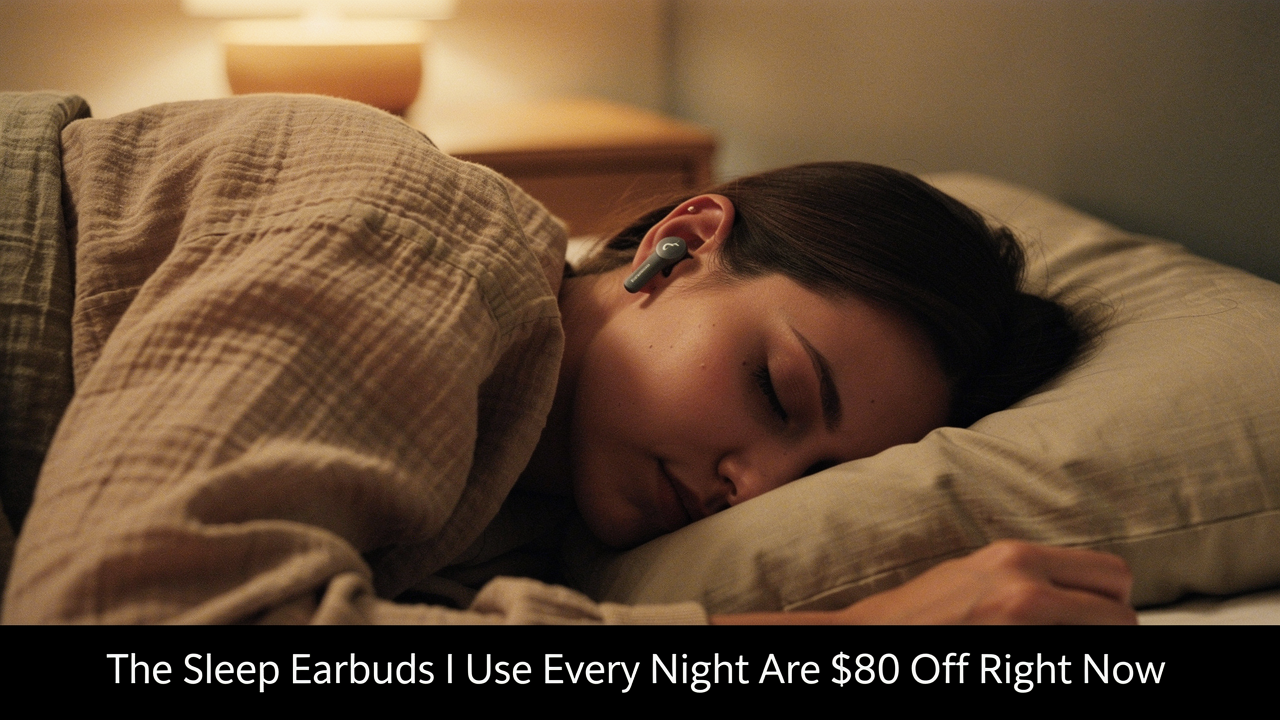
I tried everything. Foam earplugs felt like I was jamming corks into my head. Heavy-duty white noise machines helped, but they didn’t block out the specific, sharp frequencies of sirens or barking dogs. My search for “the one” eventually led me to specialized sleep tech, and specifically, the Soundcore Sleep A30.
Here’s the thing: these earbuds are usually a significant investment, but right now, they’ve hit a price point that makes them an absolute steal. If you’ve been waiting to reclaim your sleep, this $80 discount is the signal you’ve been looking for.
Quick Answer: Is This Deal for You?
If you are a side sleeper struggling with a snoring partner or urban noise, the Soundcore Sleep A30 is the best value-for-money solution on the market right now. With the current $80 discount bringing them down from their $229 MSRP, they offer a low-profile fit, 10+ hours of battery life, and a sophisticated 4-point noise masking system that generic earbuds simply can’t match.
The $80 Discount: Why This Deal Matters for Your ‘Sleep ROI’
Let’s talk numbers, because as a curator of “Best Goods,” I’m obsessed with value. Specialized sleep earbuds aren’t like the standard buds you use for the gym. They require a much smaller footprint and sophisticated sensors to track sleep without draining the battery. Because of that tech, prices usually stay high.
Historically, premium competitors like the Ozlo Sleepbuds or QuietOn 4 sit firmly in the $250 to $300 range. The Soundcore Sleep A30 normally retails for $229, which is already competitive. However, seeing them for $149 (a full $80 off) changes the math entirely. According to historical price-tracking data from sites like CamelCamelCamel, this is a rare “floor” price that we typically only see during major events like Black Friday.
When you look at the “Sleep ROI,” you’re paying roughly 40 cents a night over a single year to essentially delete the sounds of the outside world. To me, that’s a much better investment than another overpriced “sleep gummy” or a fifth cup of coffee to get through a foggy Monday.
The Science of Silence: Why 40 Decibels is the Magic Number
It isn’t just about “annoyance”—noise at night is a physiological stressor. I used to think I was “fine” sleeping through city sounds, but what I didn’t realize was that my brain was still processing them.
The World Health Organization (WHO) Environmental Noise Guidelines are very clear: nighttime noise exposure above 40 dB is associated with sleep disturbance and increased cardiovascular risk [1]. When a sound peaks above that threshold—whether it’s a car door slamming or a partner’s snore—it can trigger “micro-awakenings.”
Even if you don’t fully wake up, these disturbances fragment your sleep architecture. According to research published in the journal Noise & Health, environmental noise is associated with reduced time in deep sleep and REM stages, the very phases we need for physical recovery and cognitive performance [2]. The American Academy of Sleep Medicine (AASM) emphasizes that a quiet environment is a pillar of sleep hygiene, yet most of us are trying to “power through” noise levels that our bodies weren’t evolved to handle [3].
Hands-On with the Soundcore Sleep A30: My Nightly Routine
There is a massive difference between “noise-canceling earbuds” and “sleep earbuds.” I learned this the hard way after trying to sleep in my standard noise-canceling buds and waking up with an aching ear because they pressed against the pillow.
The Soundcore Sleep A30 was my daily reality for months before I decided they were “Best Goods” certified. They use a 4-Point Noise Masking System combined with “Twin-Seal” ear tips. While many standard buds rely on Active Noise Cancellation (ANC) alone, these combine a physically tight seal with a library of masking sounds tailored to drown out snoring (typically in the 200–800 Hz range) [4].
What surprised me was the “Sleep Analytics” feature. Inside these tiny buds are MEMS sensors that track your movement. While they aren’t medical-grade diagnostics (and you shouldn’t use them to treat a condition), they provided me with a clear picture of how much I was tossing and turning before I optimized my room temperature.
The Side-Sleeper Test
I’m a committed side sleeper, which is usually the deal-breaker for most earbuds. The A30 buds are remarkably thin—we’re talking a profile depth that sits almost flush with your ear canal. I found that even on a firm pillow, I didn’t experience the “pressure pain” that usually comes with wearing tech to bed.
Battery Life: Does it actually last 10 hours?
One of the biggest frustrations with wireless sleep earbuds is the “dead bud” phenomenon at 4:00 AM. I’ve tested the A30 through several 8-hour nights, and I’ve consistently woken up with battery to spare. They are rated for up to 10 hours in music mode or 14 hours in sleep mode (using the built-in masking sounds), and the auto-shutoff feature—which detects when you’ve fallen asleep and pauses your audio—is a lifesaver for preserving battery.
The Bridge: Why I Finally Swapped My Foam Plugs
I used to be a “foam earplug only” girl. They were cheap, and I thought they were doing the job. But I found myself waking up in the middle of the night because I could still hear the low-frequency rumble of the HVAC system, and the silence of foam plugs actually made my own tinnitus feel louder. I spent weeks researching white noise machines and “sleep headbands,” but they were either too bulky or didn’t block enough sound. When I finally tried the Soundcore Sleep A30, it was like someone had finally hit the “mute” button on the world. The combination of the snug fit and the gentle “brown noise” soundscape created a cocoon that foam just couldn’t replicate.
Micro-Verdict: The ultimate “set and forget” solution for side sleepers who need total acoustic isolation.
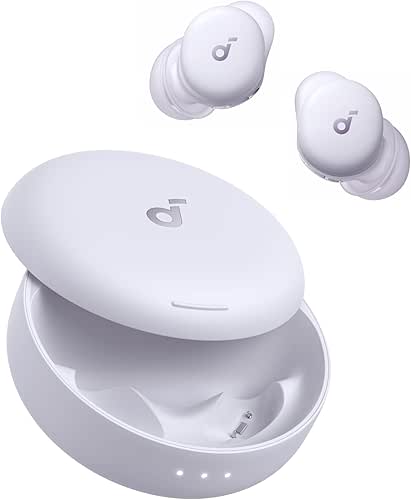

How it Compares: A30 vs. QuietOn 4 vs. Ozlo
When you’re looking at discounted earbuds, you have to ask: what am I giving up? Here is how the A30 stacks up against the “big three” in the sleep space:
- Soundcore Sleep A30 ($149 on sale): Best for those who want custom soundscapes (white noise, rain, etc.) and Bluetooth streaming. Most versatile.
- QuietOn 4 (~$289): Best for “no Bluetooth” purists. They use ANC only and do not stream music. Much more expensive but ultra-tiny.
- Ozlo Sleepbuds (~$299): The spiritual successor to the Bose Sleepbuds. Excellent comfort, but at double the current sale price of the A30, the “Value ROI” is harder to justify for most [5].
What sold me on the A30 over the competitors was the flexibility. If I want to listen to a guided meditation on the Calm app to fall asleep, I can. If I want them to switch to offline white noise once I’m out to save battery, they do that too.
Safety First: An Audiologist’s Take on Sleeping with Buds
I’m always honest with you: putting things in your ears every night requires a little extra care. I consulted with the general guidelines from the American Academy of Otolaryngology (AAO-HNS) to make sure I wasn’t doing more harm than good.
The biggest risks are earwax impaction and moisture buildup. If you’re wearing these 8 hours a night, you’re preventing your ears from “breathing.” To keep your ears healthy, I recommend:
- The 70 dB Rule: Keep the volume of your masking sounds below 70 dB. Anything louder for a continuous 8 hours can lead to long-term hearing fatigue.
- Weekly Sanitization: Use a simple alcohol wipe on the silicone tips every weekend.
- Rest Days: If your ears feel itchy or sensitive, take a night off. Your ear canal needs to maintain its natural microbiome.
Who Should (and Shouldn’t) Buy These?
I want you to love your purchase, so let’s be clear about who these are for.
The “Must-Buy” Personas:
- The Partner of a Snorer: If you’re currently sleeping on the couch or considering “sleep divorce,” these are a $149 relationship saver.
- The Frequent Traveler: For hotel rooms with paper-thin walls or long-haul flights, these are much more packable than a white noise machine.
- The Light Sleeper in a City: If garbage trucks or sirens are your 5:00 AM alarm, the masking tech here is a game-changer.
When to Skip:
If you suspect you have sleep apnea (e.g., you wake up gasping for air or feel exhausted despite 8 hours of sleep), earbuds won’t help. Please see a sleep specialist. These are wellness tools for environmental noise, not a replacement for medical treatment.
Good sleep isn’t a luxury—it’s the foundation for everything else we do. Whether it’s being present for your family, hitting a new PR on your morning run, or just having the mental clarity to enjoy your morning coffee, it all starts with a quiet night. This $80 discount makes that foundation a lot more accessible.
References & Technical Sources
- World Health Organization (2018). Environmental Noise Guidelines for the European Region. [WHO Source]
- Basner, M., & McGuire, S. (2018). “WHO Environmental Noise Guidelines for the European Region: A Systematic Review on Environmental Noise and Effects on Sleep.” International Journal of Environmental Research and Public Health. [Journal of Noise & Health]
- American Academy of Sleep Medicine (AASM). “Healthy Sleep Habits.” [AASM Sleep Hygiene]
- SoundGuys (2024). Soundcore Sleep A30 Review: Technical Frequency Response and Masking Analysis. [SoundGuys Review]
- Wirecutter (2024). The Best Sleep Headphones. [NYT Wirecutter]
Disclaimer: I am a lifestyle curator, not a doctor. These earbuds are consumer wellness devices designed to mask noise. They are not intended to diagnose, treat, or cure sleep disorders like insomnia or sleep apnea. Always consult with a healthcare professional regarding persistent sleep issues.