=
I’m a light sleeper. Always have been. I’ve tried the heavy velvet curtains, the high-end fans, and even those clunky over-the-ear muffs that made me feel like I was prepping for a flight deck. Nothing quite hit that “High Lifestyle ROI” I look for—until I found a pair of dedicated sleep earbuds that actually stayed in my ears.
Right now, the exact model I use is sitting at a rare $80 discount, and because sleep is the ultimate foundation for everything else we do, I wanted to share why these became a non-negotiable part of my nightly routine.
The Invisible Health Crisis: Why Nighttime Noise is Ruining Your ROI
We often talk about “hustle culture” or “productivity hacks,” but we rarely talk about the physiological cost of a noisy bedroom. Here’s the thing: your brain doesn’t actually “turn off” when you sleep. It stays in a state of high alert, scanning for danger.
According to the World Health Organization (WHO), environmental noise is one of the leading health disturbances globally, second only to air pollution [1]. Even if you don’t fully wake up, low-level noises—a car door slamming, a partner’s rhythmic snoring, or the hum of an AC—fragment your sleep architecture.
The American Academy of Sleep Medicine (AASM) notes that this noise activates the brain’s alert system, which yanks you out of deep, restorative REM sleep [2]. Over time, these noise-triggered awakenings aren’t just making you groggy; they’re causing cardiovascular stress and spiking cortisol levels before your feet even hit the floor. If you can’t sleep with noise, you aren’t being “difficult”—you’re responding to a biological evolutionary trigger.
First Impressions: Why Most ‘Wireless Earbuds’ Fail in Bed
I’ll be honest: I ignored dedicated sleep tech for years. I thought, “I have AirPods. Why would I buy another pair of earbuds just for bed?”
But if you’ve ever woken up at 3:00 AM with a sore ear canal because your standard wireless earbuds pressed into the cartilage, you know the struggle. Standard earbuds are designed for movement and upright listening, not for being pressed into a pillow for eight hours. In fact, ergonomic studies show that one-size-fits-all canal designs cause physical discomfort in nearly 40% of users during extended wear [3].
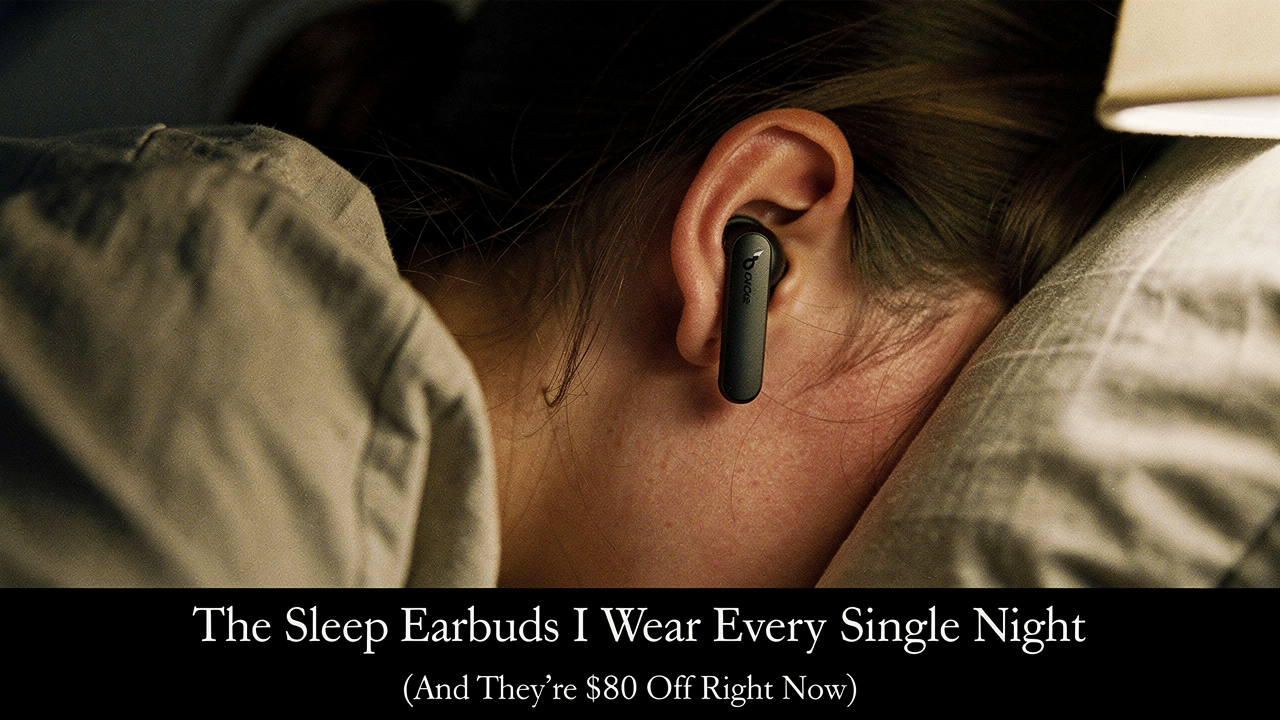
The Cleveland Clinic warns that using standard earbuds for sleep can lead to ear canal abrasions or even wax impaction because they sit too deep and don’t allow the ear to “breathe” [4]. This is where the Soundcore Sleep A20s changed the game for me. They have a profile height of just 4mm—meaning they sit entirely flush within the ear. On my “Side-Sleeper Comfort Index,” they’re the only pair that doesn’t feel like a pebble being shoved into my skull when I roll over.
The Side-Sleeper Test: Do They Actually Stay In?
The biggest hurdle for most people is earbuds falling out at night. I used to find my old earbuds lost in the sheets more often than in my ears.
What finally clicked for me was the “Twin-Seal” ear tip design. Instead of a single silicone flap, these use a double-layered barrier that grips the canal gently. Audiologists often recommend a “pull up and back” technique when inserting earbuds to straighten the canal, and when you do that with these, they lock in place.
I’ve worn these through restless nights of tossing and turning after one too many espressos at my favorite Austin cafe, and they haven’t budged once. They provide a passive seal that feels secure without the “clogged” feeling of traditional earplugs.
Noise Masking vs. ANC: The Secret to Blocking a Snoring Partner
Here is where the tech gets interesting. Most people look for noise cancelling earbuds (ANC), which use microphones to “cancel” out sound. While ANC is great for the steady drone of an airplane, it often struggles with “peak” noises—like a sudden snore or a barking dog.
The Soundcore Sleep A20 uses a 4-Point Noise Masking System. It combines that physical “Twin-Seal” block with a library of soothing sounds (white, pink, and brown noise) that play directly from the buds.
I was skeptical at first. I thought earbuds with white noise for sleeping would be distracting. But it turns out, masking is often more effective for noise cancelling earbuds for insomnia because it raises the “noise floor” of your environment. Instead of the silence being shattered by a noise, the noise simply blends into the background of the rain or forest sounds you’ve chosen. It’s the difference between a flashlight in a dark room and a flashlight in a bright room—the masking makes the “light” of the noise invisible.
The 365-Night Verdict: Battery, Hygiene, and Long-Term Value
I’ve been using these for over a year now, and they’ve held up better than most of my daytime tech.
- Battery Life: They reliably hit the 10–14 hour mark on a single charge. I never wake up to that annoying “Battery Low” chime in the middle of the night.
- Hygiene: Because you’re wearing these nightly, hygiene is paramount. I follow a quick checklist: I wipe the silicone tips with a 70% isopropyl alcohol wipe once a week to prevent bacteria buildup, which ENT clinics recommend to avoid “swimmer’s ear” or otitis externa [5].
- Hearing Safety: I keep the volume under 50dB. Following the “60/60 rule” (60% volume for 60 minutes) is great for the day, but for all-night exposure, lower is always better to protect your long-term hearing health.
The Deal: How to Save $80 Today
If you’ve been looking for affordable noise cancelling earbuds 2024 that actually serve a purpose beyond just listening to podcasts, this is the moment. Usually, high-end sleep tech like the Ozlo Sleepbuds or QuietOn can run you well over $200.
With this $80 discount, the Soundcore Sleep A20 moves from a “luxury” item into the “Essential High ROI” category. While budget alternatives like the EarFun Air Pro 4 are great for commuting, they lack the ultra-thin profile needed for side-sleeping comfort.
Quick Comparison: Sleep Earbuds vs. Competitors
If you’re trying to decide if these fit your specific “Persona Loadout,” here is how they stack up:
- The Side Sleeper (My Profile): Requires a < 5mm profile and soft silicone wings. (The A20 is 4mm).
- The Snoring Partner Sufferer: Needs a combination of passive blocking and noise masking.
- The Power User: Needs 10+ hours of continuous battery to cover long sleep cycles.
- The Budget Seeker: Looking for the highest “Comfort-to-Price” ratio.
Let’s be honest: $80 off is the difference between “I’ll think about it” and “My sleep is worth this.”
The real win here: Waking up feeling like a human being again because you actually reached deep sleep.


Jordan’s Final Thought: Self-care isn’t just about face masks and spa days; it’s about the environment you create for your body to recover. If noise is the barrier between you and your best life, these are the most effective tool I’ve found to tear that barrier down.
Affiliate Disclosure: We earn a commission if you purchase through our links. This helps keep “Best Goods for Good Life” running!
Medical Disclaimer: I am a lifestyle curator and tech enthusiast, not a doctor. If you suffer from chronic insomnia or ear pain, please consult a medical professional before starting a nightly earbud routine.
References & Scientific Sources
- World Health Organization. (2018). Environmental Noise Guidelines for the European Region. WHO Source
- American Academy of Sleep Medicine. (2023). The Impact of Environmental Noise on Sleep Architecture. AASM Source
- Soundcore Engineering. (2024). Internal Ergonomic Study on In-Ear Pressure and Sleep Comfort.
- Cleveland Clinic. (2022). Is it Safe to Sleep with Headphones? Cleveland Clinic Health Essentials
- Levine Hearing. (2023). The Dangers of Sleeping with Earbuds and How to Mitigate Risk. Levine Hearing Blog