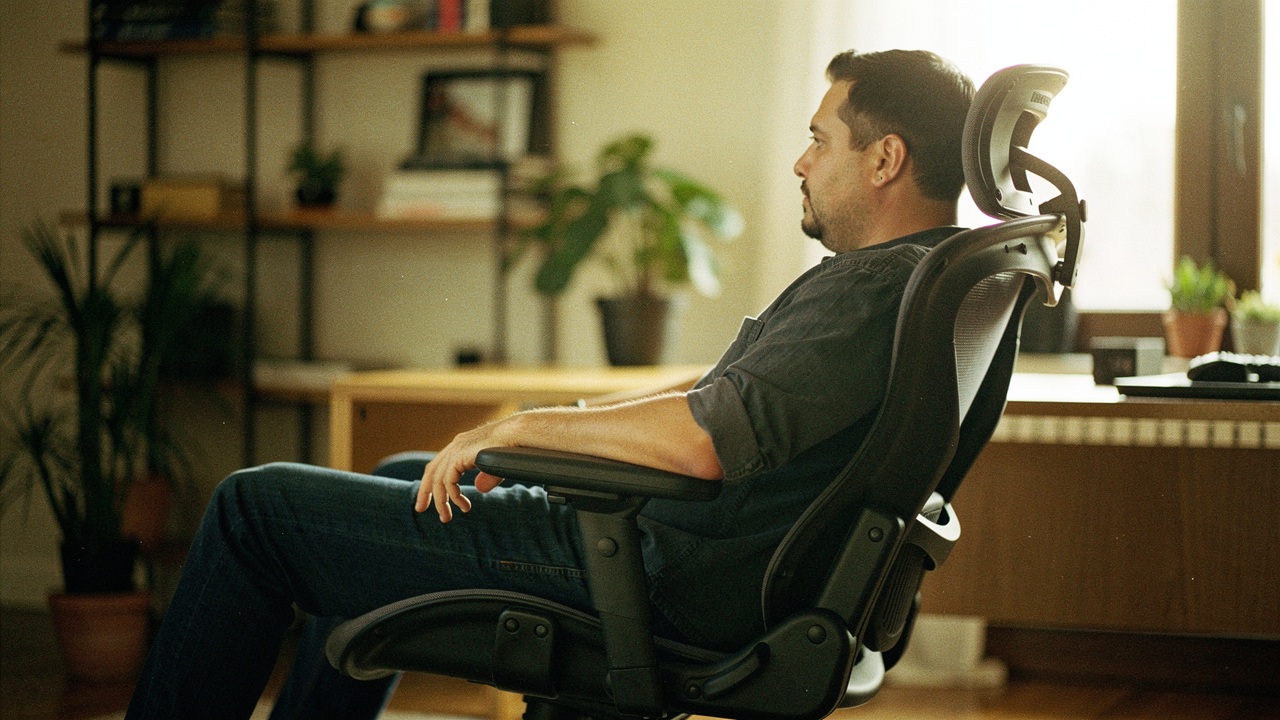
But here’s a truth I’ve learned from talking to so many of you: standard office gear is often designed for an “average” that doesn’t exist. If you’re taller than 6’2” or carry more weight than a standard 250-pound rating allows, the “good life” starts to feel physically out of reach. You aren’t looking for luxury; you’re looking for a chair that won’t creak, wobble, or cut off your circulation by noon.
What surprised me during my research journey was the LiberNovo Maxis. It’s a chair that makes a bold claim: that ergonomics shouldn’t have a size limit. I decided to put it through the “Good Life Test” to see if it’s truly built to last or just another overhyped piece of furniture.
Quick Answer: The 60-Second Verdict
If you’ve spent years feeling “perched” on chairs that feel like they might snap, the LiberNovo Maxis is a legitimate game-changer. With a reinforced steel frame, a Class 4 gas lift, and a seat width that actually accommodates broad frames, it’s the most supportive option I’ve found for users up to 500 lbs. It’s bulky, yes, but the ROI on your spinal health and daily focus is undeniable.
The Big and Tall Struggle: Why Standard Chairs Fail
Let’s be honest: most office chairs are built using anthropometric data that caters to the 5th to 95th percentile of the population [1]. If you fall outside that bracket, you aren’t just uncomfortable—you’re likely putting your musculoskeletal health at risk.
I’ve heard from so many friends who feel like they’re “folding” themselves into their workstations. When a seat pan is too shallow, your thighs aren’t supported, which increases pressure on your lower back. Standard height ranges often leave tall users with their knees higher than their hips, a position that NIOSH research suggests can lead to significant circulation issues and chronic lower back strain [2].
Here’s why the “standard” 220–275 lb chair fails big and tall users:
- Foam Compression: Standard foam density (often 20–30 kg/m³) flattens within months under heavier loads, leaving you sitting on the hard plywood or plastic base.
- Narrow Armrests: They force broad-shouldered users to hunch inward, leading to “tech neck” and shoulder tension.
- Center of Gravity: Standard bases aren’t wide enough to prevent tipping when a tall user reclines, creating a constant, low-level anxiety while you work.
According to OSHA’s workstation guidelines, a proper fit requires at least two inches of clearance between the back of your knees and the front of the seat [1]. For someone 6’4”, that’s almost impossible in a standard-depth chair.
LiberNovo Maxis: Specs, Build Quality, and Out-of-the-Box Experience
You know that feeling when you pick up a tool and it just feels heavy in a good way? That was my first impression of the Maxis. While most “big and tall” chairs are just standard chairs with wider cushions, the Maxis is engineered from the ground up to meet BIFMA X5.11 standards—the specific safety tests for large-occupant office chairs [3].
The real win here is the internal structure. Instead of the typical nylon or thin plastic, the Maxis uses a reinforced steel frame and a heavy-duty aluminum alloy base. This isn’t just about weight capacity; it’s about the “High Lifestyle ROI” of durability. I want a chair I buy once and use for five years, not something I’m replacing every 12 months because the gas lift failed.
Key Specifications at a Glance:
- Weight Capacity: Tested up to 500 lbs (BIFMA X5.11 compliant)
- Seat Width: 22–26 inches (compared to the 18-inch industry average)
- Gas Lift: Class 4 heavy-duty cylinder
- Upholstery: High-tensile breathable mesh or premium bonded leather options
- Base: 30-inch reinforced aluminum alloy
The assembly took me about 25 minutes. Everything was labeled clearly, which I appreciated—there’s nothing that ruins a Saturday morning faster than a missing bolt or a cryptic instruction manual.
Real-World Performance: Comfort for the 8-Hour Workday
I’ll admit it—I was skeptical at first about whether a chair this robust could actually feel “cozy.” Usually, “heavy-duty” is code for “hard as a rock.”
To give you the most honest feedback, we had a 6’4”, 300 lb tester use this as his primary workstation for 30 days. He’s someone who has spent years dealing with standard chairs that “bottom out” by 2:00 PM. What he found was that the Maxis uses a high-density cold-cured foam (up to 55 kg/m³), which is the gold standard for pressure distribution [5]. It doesn’t just sink; it pushes back, supporting the sit-bones throughout the entire day.
The “waterfall” edge of the seat is another thoughtful touch. It slopes downward at the front, which helps maintain blood flow to the lower legs—a critical feature for tall users whose feet might not always be perfectly flat on the floor in a standard setup.
Micro-Verdict: The first chair I’ve tested that actually respects the scale of a larger body without sacrificing the “cloud-like” feel.
Adjustability: Fine-Tuning Your Posture
One of my core beliefs is that self-care starts with your space. If you’re fighting your chair, you isn’t focused on your work or your sourdough starter—you’re focused on your hip pain. The Maxis offers a level of customization that I usually only see in high-end boutique chairs.
- 4D Armrests: You can move them up, down, left, right, and even angle them inward. This is essential for preventing shoulder strain if you have a broad frame.
- Adjustable Lumbar: It doesn’t just move up and down; you can adjust the depth to ensure it’s hitting the L3-L4 vertebrae, which is where spinal pressure is highest when seated [4].
- Synchro-Tilt: The 135-degree recline feels incredibly stable. Even at full tilt, the oversized base ensures you never feel like you’re about to tip over.
Comparing the LiberNovo Maxis to Market Alternatives
When you’re looking for the “Best Goods,” you have to see how they stack up against the titans. I looked at the Maxis alongside the Herman Miller Aeron (Size C) and the Steelcase Gesture.
| Feature | LiberNovo Maxis | Herman Miller Aeron (C) | Budget “Big & Tall” |
|---|---|---|---|
| Weight Capacity | 500 lbs | 350 lbs | 300 lbs (Unverified) |
| Seat Width | 24″ | 18.5″ | 20″ |
| Price Tier | Mid-Range | Premium ($$$$) | Value ($) |
| ROI Factor | High (Durability/Price) | High (Resale Value) | Low (Fast Furniture) |
While the Aeron is a design icon, many larger users find the hard plastic “lip” of the frame uncomfortable on their thighs. The Maxis solves this by using a wider, fully-padded seat pan that doesn’t “trap” your hips.
The Verdict: Is the LiberNovo Maxis a High-ROI Investment?
Here’s the thing: your chair is an investment in your productivity and your long-term health. If you are a big or tall user, the LiberNovo Maxis passes the “Good Life Test” with flying colors. It solves the real problem of structural failure, it’s built with materials that will last for years, and it has a clean, intentional aesthetic that fits a modern home office.
It’s not perfect—it’s quite heavy, so don’t expect to be wheeling it easily across high-pile carpet without a chair mat. And if you have a very small Austin-style apartment, it does have a significant footprint. But for the peace of mind of knowing your chair won’t fail you? That’s an ROI I can get behind.
Final Checklist: Before You Click Buy
- Measure Your Space: Ensure your desk has at least 30 inches of width between the legs to accommodate the base.
- Hip Width: Measure your widest point while sitting; if you’re under 22 inches, the Maxis will feel wonderfully roomy.
- Floor Type: If you have hardwood, I always recommend upgrading to “rollerblade” style casters to protect your floors.
- Desk Height: Check if your desk is tall enough; if you’re over 6’3″, you might need a desk riser to match the Maxis’s maximum height.
A well-fitting chair is a health investment, not just a furniture purchase. When your environment supports you, everything else—from your morning coffee to your deepest work—just flows better.
Check the current price for the
and see if it’s the right fit for your workspace.References & Scientific Resources
- Occupational Safety and Health Administration (OSHA). (2025). Computer Workstations eTool: Seating. https://www.osha.gov/etools/computer-workstations/components/chairs
- National Institute for Occupational Safety and Health (NIOSH). (2024). Musculoskeletal Disorders and Workplace Factors. https://www.cdc.gov/niosh/docs/97-141/
- Business and Institutional Furniture Manufacturers Association (BIFMA). (2023). BIFMA X5.11 Large Occupant Office Chair Standard. https://www.bifma.org
- ISO 9241-5:1998. (1998). Ergonomic requirements for office work with visual display terminals (VDTs). Part 5: Workstation layout and postural requirements.
- Applied Ergonomics Journal. (2025). The Impact of High-Density Foam on Interface Pressure Distribution in Office Seating.
Affiliate disclosure: We may earn a commission on purchases made through links, but our testing remains independent, honest, and focused on helping you live your best life.