=
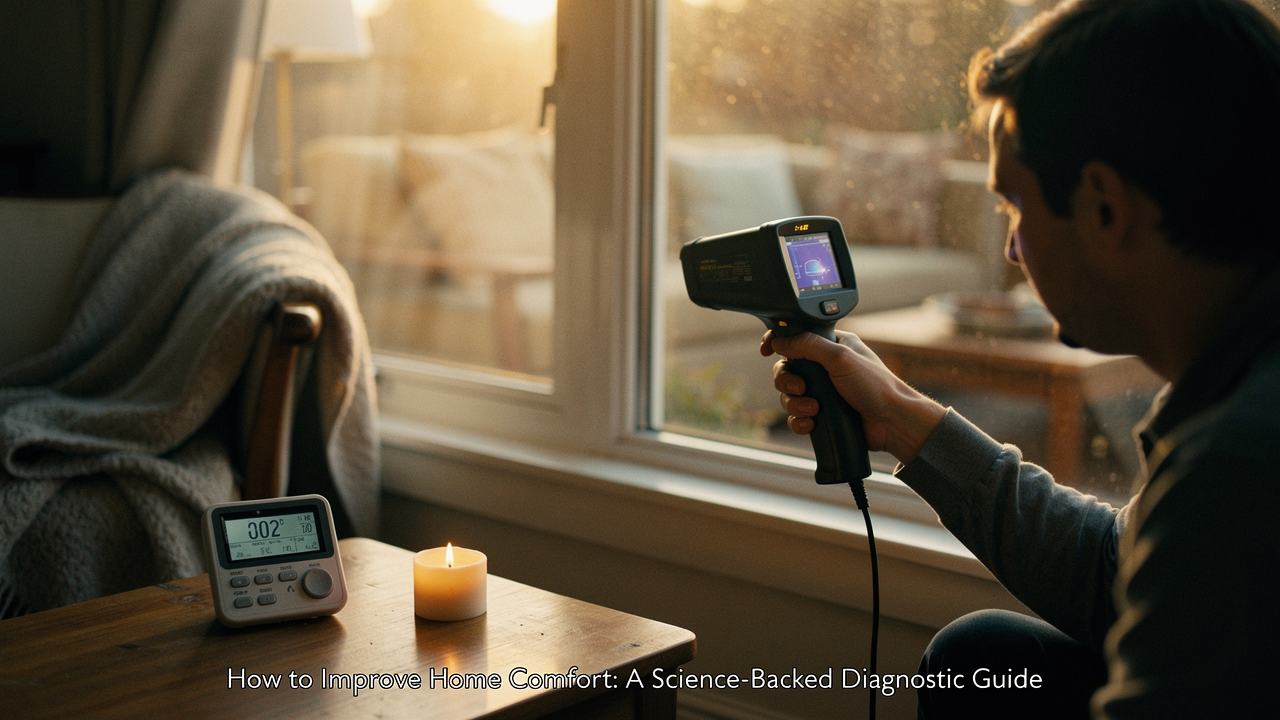
What I didn’t realize then—and what most of us miss—is that a cozy home isn’t just about how many candles you light or how soft your throw pillows are. It’s a literal science.
At Best Goods for Good Life, I talk a lot about “High Lifestyle ROI.” I believe the time and money you invest in your home environment should pay you back in better sleep, lower stress, and a genuine sense of peace. If you’re struggling with drafts, “stuffiness,” or a room that just never feels right, you aren’t alone. Today, I’m walking you through a diagnostic approach to home comfort that bridges the gap between engineering and that “Sunday reset” feeling we all crave.
What Defines ‘Home Comfort’? (Hint: It’s More Than Just Temperature)
Here’s the thing: we usually think “comfort” equals “thermostat setting.” But according to the global standards for thermal environmental conditions (specifically ASHRAE 55), comfort is actually a complex equation involving air temperature, radiant heat, humidity, and even air speed [1].
The World Health Organization (WHO) takes it a step further, noting that our indoor climate is directly tied to our mental wellbeing and respiratory health [4]. To truly improve home comfort, we have to look at the four pillars:
- Thermal Comfort: Consistent temperatures and balanced humidity.
- Acoustic Comfort: Protection from unwanted noise (the hum of the fridge, the neighbor’s leaf blower).
- Visual Comfort: Lighting that aligns with our circadian rhythms.
- Emotional Comfort: A space that feels safe, decluttered, and “you.”
The Comfort Diagnostic: Why Your Home Feels ‘Off’
Before you run out and buy a new HVAC system, we need to find the root cause. I’ve found that most of our home frustrations come from “invisible” issues.
For years, I thought my bedroom was just “stale.” I’d open a window, but then it would get too cold. What I finally discovered through research from the Building Science Corporation is that a temperature swing of just 3-4°F between rooms is enough to trigger a physical discomfort response [5].
The Comfort Symptom Matrix:
- The Symptom: “I’m itchy and my nose is dry every morning.”
The Likely Root: Humidity is too low (below 30%). - The Symptom: “This room feels stuffy even with the AC on.”
The Likely Root: Poor air circulation or a high concentration of VOCs. - The Symptom: “I feel a breeze even when the windows are closed.”
The Likely Root: Air leaks or the “Stack Effect” pulling cold air through the floor. - The Symptom: “I’m tired but I can’t seem to relax in the evening.”
The Likely Root: Blue-light-heavy overhead lighting and high ambient noise.
According to the EPA, when indoor humidity climbs above 60%, it becomes a breeding ground for dust mites and mold [3]. If you’ve been feeling “off” in your own space, it’s rarely just in your head—it’s in your air.
Solving the Temperature Gap: Fixing Drafts and Cold Rooms
If you have a drafty house, you’re fighting a losing battle with your thermostat. I used to think drafts were just something you lived with in older buildings until I learned about the “Stack Effect.” Essentially, warm air rises and escapes through your attic, which creates a vacuum that sucks cold air in through every tiny crack in your windows and baseboards.
The U.S. Department of Energy (DOE) notes that proper air sealing and insulation can cut your heating and cooling costs by about 15% [2]. That is a massive Lifestyle ROI.
DIY vs. Pro: Air Sealing and Insulation Strategies
Let’s be honest: I love a good DIY project, but I also know when to call in the cavalry.
I spent a weekend once trying to “caulk away” my problems, only to realize the real leak was in my attic hatch. For renters or those on a budget, starting with weatherstripping and door snakes is a “High ROI” move. However, if you have a cold room that refuses to warm up, it might be “thermal bridging”—where heat is escaping through the structural studs of your walls. That’s when you call a pro for a blower-door test.
Safety Note: If you decide to go the DIY route and tighten your home significantly, you must ensure your gas-fired appliances (like your water heater) still have enough ventilation. The NFPA warns that “over-sealing” without proper airflow can lead to dangerous back-drafting of carbon monoxide [8].
Air Quality and Humidity: The Invisible Comfort Killers
I’ll admit it—I ignored humidity for years. I just thought Austin was “supposed” to be humid in the summer and dry in the winter. But after waking up with static-electricity hair and a scratchy throat for three weeks straight, I finally did some digging.
The American Lung Association suggests keeping your indoor humidity between 30% and 50% during the winter to prevent respiratory irritation and keep your skin from drying out [9].
Let me share a quick story: I used to buy the most expensive face creams to combat my “dry skin” in January. It wasn’t until I spent $15 on a little gadget to measure my air that I realized my bedroom was at 18% humidity. I didn’t need a new skincare routine; I needed a humidifier.
The real win here: A Digital Hygrometer
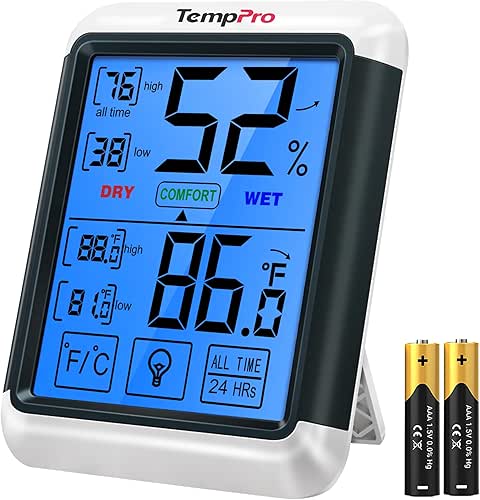

Micro-Verdict: This tiny, inexpensive tool is the only way to know if your air is actually the reason you’re feeling uncomfortable.
The Psychology of a Cozy Home: Light, Texture, and Sound
Once you’ve fixed the “bones” of your comfort—the air and the temp—you get to do the fun part. This is where you create a cozy home.
Environmental psychology tells us that the “color temperature” of our light bulbs changes our brain chemistry. Bulbs in the 2700K to 3000K range (warm white) promote relaxation and signal to your body that it’s time to wind down [6]. If you have “daylight” bulbs in your living room, you’re essentially telling your brain it’s 12:00 PM on a Tuesday, which makes it impossible to relax.
I also swear by biophilic design—the practice of bringing the outdoors in. The International WELL Building Institute has found that even just having a few healthy plants or natural wood textures in a room can measurably reduce stress levels [11].
The High-ROI Action Plan: Tiered Improvements
You don’t have to fix everything at once. Here is how I prioritize improvements based on “Lifestyle ROI”—the effort you put in versus the joy you get back.
Level 1: 10-Minute Comfort Hacks (Renter-Friendly)
You work with what you have. These are the quick wins I recommend to all my friends moving into new Austin apartments.
- Essential: Check your ceiling fan direction. It should run clockwise in winter to pull cool air up and push warm air down.
- Essential: Move furniture away from vents. That beautiful velvet sofa isn’t doing you any favors if it’s blocking the heat.
- Essential: Swap your 5000K “Daylight” bulbs for 2700K “Warm White” bulbs in the bedroom.
- Pro Upgrade: Add a heavy, high-pile rug to any room with hard flooring to dampen sound and insulate your feet.
Level 2: Weekend Comfort Projects
If you own your space or have a long-term lease, these projects take a Saturday but change your daily life for years.
- Essential: Install a Smart Thermostat. The DOE suggests that setting your temp back 7-10°F for 8 hours a day can save you 10% on bills [2].
- Essential: Use clear silicone caulk to seal gaps between window trim and the wall.
- Essential: Hang thermal-lined curtains to create a “buffer zone” at your windows.
What sold me: Google Nest Learning Thermostat
I used to be the person who constantly walked over to the wall to nudge the temp up or down. I’d forget to turn it down when I left for the farmers market, and I’d come home to a freezing house. Switching to a smart system meant the house “learned” when I was actually there.
Micro-Verdict: The ultimate “set it and forget it” upgrade for consistent, effortless comfort.

Level 3: Long-Term Lifestyle Investments
These are for the “forever home” crowd. They require a professional, but the ROI is unmatched.
- Essential: Attic Insulation. Adding blown-in cellulose to reach an R-49 or R-60 rating (depending on your zone) is the #1 way to fix a cold house.
- Essential: HVAC Zoning. If your upstairs is a sauna and your downstairs is a fridge, a zoned system allows you to control them independently.
- Pro Upgrade: Triple-pane window replacements for acoustic and thermal perfection.
Living Well Starts with Your Space
At the end of the day, a comfortable home is a science, but living in one is an art. When you stop fighting your environment—when the air is the right weight, the room is the right temp, and the light is soft—everything else in your life just flows a little better. You sleep deeper, you focus longer, and you actually enjoy the space you’ve worked so hard to create.
Grab a digital hygrometer today. It’s the $10 tool that finally explained why I was itchy every December, and it might just be the first step in your own home comfort journey.
Optimize your space, optimize your life.
Suggested Disclaimer: Always consult a licensed HVAC professional before making structural changes or modifications to your gas-fired heating systems. DIY air sealing requires caution regarding combustion safety.
References & Authoritative Sources
- ASHRAE, 2023. Standard 55: Thermal Environmental Conditions for Human Occupancy. https://www.ashrae.org/
- U.S. Department of Energy, 2024. Why Insulation and Air Sealing Matter. https://www.energy.gov/energysaver/weatherize/insulation
- Environmental Protection Agency (EPA), 2023. A Brief Guide to Mold, Moisture and Your Home. https://www.epa.gov/mold
- World Health Organization (WHO), 2018. Housing and Health Guidelines. https://www.who.int/publications/i/item/9789241550376
- Building Science Corporation, 2022. Thermal Bridges and Comfort. https://www.buildingscience.com
- American Lighting Association, 2024. Lighting for Your Health and Wellbeing. https://alamembers.com/
- International WELL Building Institute, 2023. WELL Building Standard: Light and Mind. https://www.wellcertified.com/
- National Fire Protection Association (NFPA), 2024. Heating Safety Research and Guidelines. https://www.nfpa.org
- American Lung Association, 2023. Indoor Air Pollutants and Health. https://www.lung.org