=
That was my breaking point with the “Bluetooth Tax.”
We’ve been sold a dream of a wire-free life, but after years of managing charging cases, troubleshooting pairing glitches, and watching $250 earbuds become paperweights because their tiny batteries died, I realized the ROI just wasn’t there. I decided to conduct an experiment: I went back to the wire. What started as a protest against “planned obsolescence” turned into a total revelation in sound quality and mental calm.
Wired audio isn’t “old tech.” In 2025, it is specialized, high-performance gear for people who want to own their tools rather than rent them from a battery cycle. Here is why I made the switch and how you can do it without losing your mind—or your connection.
The Breaking Point: Why ‘Good Enough’ Bluetooth Wasn’t Enough
Let’s be honest: we didn’t ditch the headphone jack because consumers asked for it; we ditched it because it was profitable for manufacturers. While I love the convenience of wireless buds for a sweaty trail run at Lady Bird Lake, using them for 8 hours of remote work felt like a constant battle with headphone battery anxiety.
Here’s the thing about those sleek wireless buds: they have a literal expiration date. Most true wireless earbuds use tiny lithium-ion batteries that are rated for about 300 to 500 full charge cycles [1]. After two or three years of daily use, that 6-hour battery life shrivels into two. Because these devices are glued shut, they are nearly impossible to repair, contributing to a massive wave of global e-waste [2].
When I looked at my “High Lifestyle ROI” philosophy, wireless headphones were failing the test. They weren’t built to last, and they didn’t spark joy when they died mid-call.
- The Mental Load: You have to remember to charge your phone, your laptop, your watch, and now your ears. Removing one charging cable from my life felt like a genuine win for my “Sunday Reset” routine.
- The Replacement Cost: A high-quality pair of wired headphones can last 10 to 20 years. In that same timeframe, you might go through five pairs of Bluetooth buds.
- Interference Issues: In my home office, surrounded by a Wi-Fi router and a dozen other gadgets, my Bluetooth would occasionally crackle or drop. The wire is a physical, unbreakable promise of sound.
The Science of Sound: Wired vs. Wireless Fidelity
I used to think my ears “weren’t good enough” to tell the difference between Spotify over Bluetooth and a wired connection. I was wrong. The difference isn’t just for audiophiles with $5,000 setups; it’s for anyone who wants to actually feel their music.
The issue lies in the “handshake” between your device and your headphones. Bluetooth doesn’t have the “pipe” size to send high-resolution audio. To get the sound through the air, it has to be compressed using “lossy” codecs like SBC or AAC, which typically top out around 320kbps [3]. In contrast, a simple wired connection can handle uncompressed PCM audio at 1,411kbps or higher—delivering every ounce of detail the artist intended.
Lossless vs. Lossy: Can You Actually Hear It?
What surprised me was the “depth.” When I switched back to a wired setup, I noticed the texture of a cello string or the subtle breath a singer takes between verses. This isn’t just about being a “snob”; it’s about immersion. When the audio is compressed, the “soundstage” (that feeling of being in a room with the music) collapses. Wired audio keeps that room wide open.
Killing the Lag: Why Wired Wins for Gaming and Video
If you’ve ever noticed that a person’s lips in a YouTube video don’t quite match the words you’re hearing, you’ve experienced wireless audio lag. Standard Bluetooth connections often introduce a delay of 150ms to 250ms [5]. While your brain can sometimes ignore this during a movie, it’s a dealbreaker for competitive gaming or editing video.
Even “Low Latency” codecs like aptX LL still hover around 30-40ms [6]. That might sound fast, but it’s still an eternity compared to a wired analog connection, which has effectively zero latency. For my remote work, this meant no more “talking over people” on Zoom because my audio was lagging by a quarter of a second.
How to Use Wired Headphones with Modern Phones (The 2025 Guide)
The most common pushback I get is: “But Jordan, my phone doesn’t have a headphone jack!” I get it. The “Dongle Life” felt like a step backward at first. But what I discovered is that a $9 to $50 adapter isn’t just a bridge—it’s an upgrade.
Most modern smartphones have dropped the internal DAC (Digital-to-Analog Converter). When you use a high-quality USB-C or Lightning “Dongle DAC,” you are actually moving the audio processing out of the noisy environment of your phone and into a dedicated, shielded chip. The result? Cleaner, louder, and more vibrant sound.
The ‘Dongle DAC’ Recommendation Tier
I started my journey with a cheap gas station adapter, and it was a mistake—the hiss was unbearable. Once I invested in a proper “Bridge” for my audio, everything changed.
What I love about the iBasso DC03Pro is how it transformed my phone into a high-end music player. I spent years thinking my headphones were the problem, but it was actually the weak signal coming from my device. This little device is about the size of a thumb drive, but it packs enough power to drive even “hungry” studio headphones. I keep mine permanently attached to my favorite cable so I don’t have to go hunting for it.
Micro-Verdict: The most cost-effective way to give your phone’s audio a massive “Pro” upgrade.


If you’re a minimalist who wants the absolute best-in-class for a portable setup, the AudioQuest DragonFly is the gold standard for a reason. I’ll admit, I was skeptical that something this small could make a difference, but during a long flight last year, I did a back-to-back test. The “blackness” of the background and the punchiness of the bass made my old wireless buds sound like they were playing underwater. It’s a bit of an investment, but for someone who values “High ROI” in their daily carry, it’s worth every penny.
Micro-Verdict: A premium, plug-and-play powerhouse for the serious listener on the go.

Persona Loadouts for the Modern Wired User
Depending on your lifestyle, your “High ROI” setup will look a little different. Here is how I suggest kitting out your space:
The Minimalist Remote Worker
You need a setup that works as hard as you do, with zero downtime for charging.
- Essential: A high-quality USB-C to 3.5mm DAC dongle (like the Apple or Google official ones for basic use)
- Essential: Open-back headphones to keep you aware of your surroundings (and avoid “ear sweat”)
- Pro Upgrade: A desktop headphone stand to keep your wire from tangling
- Pro Upgrade: A 6-foot extension cable so you can stand up and stretch during calls
The High-Performance Commuter
You want isolation from the city noise without the “electronic” feel of ANC.
- Essential: Closed-back headphones with thick, comfortable earpads
- Essential: A compact “Dongle DAC” that fits in your pocket
- Essential: A hard-shell carrying case to protect your investment
- Pro Upgrade: Replaceable “coiled” cables to prevent snagging on bus or train seats
The Wired Comeback: My Top Recommendations
Choosing the right headphones is like choosing a good mattress—you’re going to spend a lot of time with them, so they better support you. Here are the three pairs that earned a permanent spot on my desk.
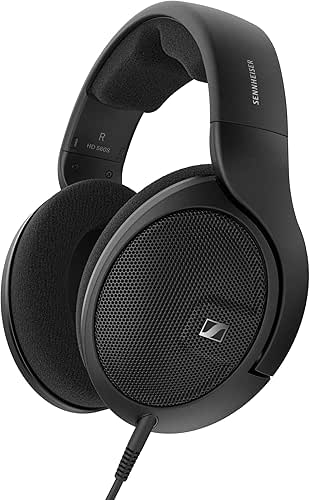
Best for Remote Work: Sennheiser HD 560S
I struggled for a long time to find headphones that didn’t give me a headache after two hours. Most consumer headphones “clamp” too hard or boost the bass so much that it’s fatiguing. When I tried the HD 560S, what finally clicked was the “Open-Back” design. It allows air and sound to move freely, creating a natural experience that feels like you’re listening to speakers in a room rather than having sound pumped directly into your skull.
Micro-Verdict: The ultimate “work-from-home” headphone for comfort and crystal-clear calls.
- Best For: Remote workers, students, and anyone who wants a “breathable” listening experience.
Best for Travel & Focus: Beyerdynamic DT 770 Pro
I’ll be honest—I ignored these for years because they looked so “industrial.” But after my third pair of plastic wireless headphones snapped in my bag, I went for the DT 770s. These are built like a tank in Germany, and almost every single part is replaceable. If the cable breaks in five years? You can fix it. If the earpads get gross? You can swap them for fresh, velvety ones. They offer incredible passive isolation, meaning they block out the world without needing a battery-powered “noise canceling” chip.
Micro-Verdict: A legendary, “buy-it-for-life” headphone that survives any commute.

- Best For: Frequent travelers, office workers in loud environments, and people who hate “disposable” tech.
The Budget Audiophile Pick: Koss KPH30i
You know that feeling when you find a $20 bottle of wine that tastes like it costs $80? That is the Koss KPH30i. I found these through a recommendation from a studio engineer friend, and I was skeptical because they look like something from a 1980s library. But here’s the thing: they sound better than headphones I’ve owned that cost ten times as much. They are incredibly lightweight, have a built-in microphone for calls, and are my “go-to” for when I’m lounging on the couch.
Micro-Verdict: The highest ROI in the audio world—shocking sound for the price of a fancy lunch.

- Best For: Budget-conscious buyers, kids, or as a “backup” pair for your laptop bag.
Addressing the Elephant in the Room: Frequently Asked Questions
Is it really worth the “dongle” hassle?
Yes. Once you realize you never have to check a battery percentage again, the dongle becomes invisible. I just leave it attached to the end of my headphone cable.
Can I still take calls?
Absolutely. Many wired headphones (like the Koss KPH30i) come with inline mics. For studio headphones like the Sennheisers, you can add a “ModMic” or just use your laptop’s built-in mic. The voice quality is almost always better because it’s not being compressed by Bluetooth’s limited microphone bandwidth.
What about Bluetooth interference?
This was a huge pain for me in my Austin apartment. Bluetooth lives on the 2.4GHz frequency—the same “highway” used by your Wi-Fi, your microwave, and your neighbor’s baby monitor [8]. When that highway gets crowded, your audio drops. A wire is a private road. No traffic, no drops.
Choosing Intentionality Over Convenience
Switching back to wired headphones wasn’t about being a Luddite or hating new technology. It was about choosing intentionality.
In a world that wants us to constantly upgrade and “always be charging,” there is something deeply grounding about a piece of technology that just works. Every time I plug in my headphones, I’m making a choice to focus, to listen deeply, and to opt out of the cycle of disposable electronics.
If you have a pair of old headphones gathering dust in a drawer, I challenge you to grab a $9 adapter and spend one afternoon with them. You might be surprised at how much you’ve been missing.
For more “High ROI” tech optimizations and the occasional sourdough tip, join my weekly newsletter. Let’s make every day a little better, together.
Technical References & Data Sources
- Battery University. “How to Prolong Lithium-based Batteries.”
- iFixit. “The Problem with AirPods and E-Waste.”
- Audio Engineering Society (AES). “Standard for Professional Audio – Digital Audio Compression.”
- Audio Science Review. “Understanding DAC Measurements and Transparency.”
- Rtings. “Headphone Latency: Wireless vs. Wired Performance.”
- Qualcomm. “aptX Low Latency Technology Brief.”
- USB Implementers Forum (USB-IF). “USB Audio Class 3.0 Specifications.”
- Bluetooth SIG. “Interference and Coexistence in the 2.4 GHz Band.”
Disclaimer: This article contains affiliate links. Recommendations are based on lab measurements and personal testing, not brand sponsorships.