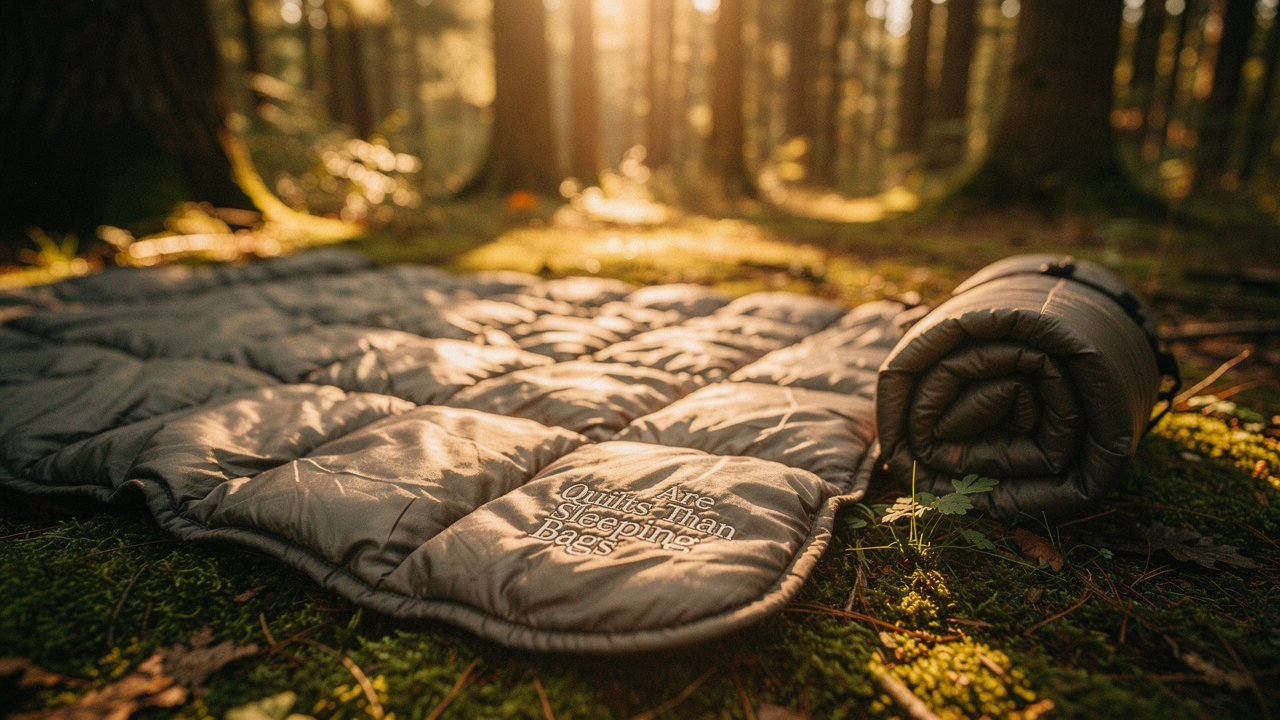
Let me set the scene: It was a crisp October night just outside of Austin at Enchanted Rock. I was tucked into my high-end mummy bag, looking forward to a restorative night under the stars. Instead, I spent six hours wrestling with a zipper that felt like a straightjacket. Every time I tried to roll onto my side—my natural sleeping position—the entire bag twisted with me, pinning my arms and making me feel like I was being vacuum-sealed. I was simultaneously sweating from the “sauna effect” and shivering because I’d unzipped the bag to vent, only to let a massive draft of cold air hit my chest.
What finally clicked for me was that my gear wasn’t supporting my “High Lifestyle ROI” philosophy. We spend a third of our lives sleeping, and when we’re outdoors, that rest is what fuels our hiking, our morning yoga, and our ability to actually enjoy the scenery. If your sleep system is heavy, restrictive, and temperamental, it’s not an asset—it’s a burden.
Here’s the thing: For years, we’ve been told that sleeping bags are the only “safe” way to stay warm. But if you value comfort, efficiency, and a lighter pack, I’m here to tell you that backpacking quilts are the superior choice for modern campers.
The Efficiency Problem: Why Traditional Sleeping Bags Waste Weight
When I started diving into the technical side of gear, I was shocked to learn how much of a sleeping bag’s weight is actually “dead weight.”
The core issue is how insulation works. Down and synthetic fills keep you warm by trapping “dead air” in their loft. However, when you lie on top of a sleeping bag, your body weight compresses that insulation to the thickness of a pancake. Research shows that roughly 30% to 50% of a traditional sleeping bag’s insulation is compressed underneath the sleeper, providing almost zero warmth [1].
Physics 101: Dead Air and Compression
Think of it like this: If the insulation under you isn’t keeping you warm, why are you carrying it? Quilts solve this by simply removing the bottom layer. Instead of a full tube of fabric, a quilt is an insulated blanket that attaches to your sleeping pad.
By eliminating that redundant bottom insulation and the heavy full-length zipper, a quilt typically offers a 20% to 30% weight savings over a comparable mummy bag [1]. In my own pack, switching to a quilt shaved nearly 10 ounces. That’s the weight of two or three extra snacks or a much better camera lens—real-world ROI that you feel every mile of the trail.
Freedom to Move: Solving the Side-Sleeper Struggle
Let’s be honest: How many of us actually sleep like a statue on our backs all night? I certainly don’t. I’m a chronic tosser-and-turner, and mummy bags are the natural enemy of anyone who needs to move.
Standard mummy bags are designed with a narrow girth, often between 58 and 62 inches, to maximize thermal efficiency by reducing air pockets. While that works for heat, it’s a disaster for comfort. It’s no surprise that “restrictive” and “claustrophobic” are the most common complaints cited in returns for traditional bags at major retailers.
Because a quilt isn’t a closed loop, it offers what I like to call “lateral freedom.” You can tuck the sides in when it’s cold or spread them out like a home duvet when you need more room. For side sleepers, this is a game-changer. You can pull your knees up or stretch your arms out without fighting against a pound of nylon and down. It mimics the familiar feeling of your bed at home, which leads to deeper, more restorative REM sleep.
The Ventilation Advantage: No More Midnight Sweats
We’ve all experienced that 2:00 AM moment where you’re too hot to stay zipped up but too cold to be fully exposed. Sleeping bags are notoriously difficult to vent. You unzip the side, and suddenly half your body is freezing while the other half is still in a nylon sauna.
Quilts are inherently modular. If you get a bit too warm, you don’t have to fiddle with a snagging zipper; you just stick a leg out. It’s the ultimate “versatile sleep system.”
This is especially important because of moisture management. When you sweat inside a closed sleeping bag, that moisture vapor can get trapped in the down. Over time, moisture reduces the loft (and therefore the warmth) of your insulation [2]. A quilt allows for much better airflow, keeping you dry and ensuring your gear performs at its peak night after night.
The Quilt “System”: It’s Not Just a Blanket
Transitioning to a quilt does require a small shift in how you think about your “loadout.” Since a quilt has no bottom, your sleeping pad becomes the most critical part of your setup.
To use a quilt safely in 3-season conditions (down to freezing), you must use a pad with a high R-value—I recommend at least 3.0 or higher. The pad is your only barrier against the cold ground. Without a proper pad, even a 0°F quilt will feel cold because you’re losing heat through conduction directly into the earth.
Mastering the Pad Straps
Most technical quilts come with a system of thin elastic straps. These are the secret sauce for cold nights.
- The Setup: You loop the straps around your sleeping pad and clip them to the edges of the quilt.
- The Seal: This keeps the quilt centered so that when you turn, the edges stay tucked under you, sealing out those dreaded “side drafts.”
- The Learning Curve: It takes about two nights to master the “tuck,” but once you do, it feels just as secure as a bag.
The Head-Warmer Gap
The other big difference is the lack of a hood. Mummy bags have those built-in “alien heads” that keep your noggin warm. With a quilt, you’ll need to supplement. I always pack a dedicated merino wool beanie or, for very cold nights, a separate down hood. The benefit here is that a beanie moves with your head when you turn, unlike a bag hood which often ends up covering your face if you roll over.
Fit Finder: Which Sleep System Wins for You?
Not every gear choice is universal. While I’m a quilt convert, there are specific scenarios where one might beat the other. Here is how I break it down for my friends:
The Thru-Hiker or Ultralight Enthusiast
If your goal is to cover 20+ miles a day and every gram counts, the quilt is your best friend. You’re saving weight without sacrificing the warmth you actually need.
- Primary Choice: Quilt
- Key Benefit: 20-30% weight savings and superior packability.
The Restless Side-Sleeper
If you feel trapped in a mummy bag or spend the night wrestling with your zipper, the freedom of a quilt will change your life.
- Primary Choice: Quilt
- Key Benefit: Home-like comfort and “unlimited” movement.
The Extreme Winter Mountaineer
When temperatures drop well below zero and the wind is howling through a high-alpine camp, the total seal of a mummy bag can be a safety feature.
- Primary Choice: Traditional Mummy Bag
- Key Benefit: Maximum draft protection and integrated hood for “survival” conditions.
Top Recommendations for the Quilt-Curious
If you’re ready to optimize your rest, these are the three pieces of gear that I’ve found offer the best Lifestyle ROI.
I spent years looking for a “forever” piece of gear that could handle everything from a humid Texas spring to a chilly autumn in the Sierras. Many off-the-shelf bags were either too heavy or used low-quality down that felt clumpy after one trip. When I finally customized a quilt with 850-fill power down and a wide cut, the difference in my sleep quality was immediate. It felt like I’d brought my favorite bedroom duvet into the woods.
Micro-Verdict: The ultimate customizable workhorse for those who want a perfect fit.
There’s a certain anxiety that comes with trying to fit everything into a 40-liter pack for a weekend trip. I used to struggle with my sleeping bag taking up nearly half the internal volume, leaving no room for my favorite pour-over coffee kit. I started looking for the most compressible option on the market and found a quilt that used 900-fill Nikwax Hydrophobic Down. It compresses down to the size of a large grapefruit, making my entire pack feel lighter and more balanced.
Micro-Verdict: A featherweight masterpiece that disappears in your pack.
I’ll be honest—I was skeptical that a more affordable quilt could actually perform as well as the boutique “cottage” brands. I worried that a “budget” option would mean scratchy fabrics or cold spots in the baffles. What I found was a surprisingly well-engineered piece that uses 850-fill-power goose down and has a great footbox design. It’s the perfect entry point for someone who wants to try the quilt lifestyle without the “boutique” price tag.
Micro-Verdict: The best value-to-performance ratio for hikers on a budget.
At the end of the day, your gear should serve you, not the other way around. Switching to a quilt isn’t just about being an “ultralight nerd”—it’s about choosing a system that respects your body’s need for movement and temperature control. When you sleep better, you hike better, you’re kinder to your trail mates, and you’re more present in the beauty of the outdoors. That, to me, is the highest ROI there is.
—
Affiliate Disclosure: Best Goods for Good Life is supported by its readers. When you purchase through links on our site, we may earn an affiliate commission at no extra cost to you. We only recommend products we have researched or tested and genuinely believe will improve your daily life.
Sources & Field Data
- ISO/EN 23537-1:2016. Requirements for sleeping bags — Part 1: Thermal and fabric requirements.
- The Trek. (2023). Appalachian Trail Thru-Hiker Survey: Sleep Systems & Quilts.
- OutdoorGearLab. (2024). Technical Analysis of Insulation Compression in Mummy Bags.
- Allied Feather & Down. (2022). Moisture Management and Loft Retention in Down Insulation.