
=
I thought I was being a “multitasking queen.” I was checking emails while timing the stretch-and-folds for my bread. What actually happened? I sent a half-finished reply to a major brand partner, and I ended up with a burnt, flat loaf of sourdough that looked more like a hockey puck than artisanal bread.
That morning wasn’t a failure of willpower or talent. It was a failure of biology. I had hit a ceiling I didn’t even know existed: Cognitive Overload.
What I’ve learned over a decade of lifestyle curation is that living well isn’t just about having the right gadgets; it’s about understanding the “hardware” of our own brains. We are trying to run 2026 software on 50,000-year-old biological processors. Here’s how we can stop the crash and reclaim that mental clarity we’re all chasing.
Quick Answer: How to Fix Cognitive Overload
If you’re feeling “fried,” start with these three high-ROI shifts:
- Reduce Input: Use the “Ivy Lee Method”—pick exactly six tasks for tomorrow and ignore everything else until they’re done.
- Architect Your Digital Filter: Batch your notifications to only appear three times a day.
- Respect the Biological Limit: Take a 5-minute “non-sleep deep rest” or micro-break every 90 minutes to flush your working memory.
The Science of the ‘Fried’ Brain: What is Cognitive Overload?
Here’s the thing about our brains: they have a very strict “storage” limit for what’s happening right now. In cognitive psychology, we call this Working Memory. Back in 1956, researcher George Miller famously noted that the average person can only hold about seven “chunks” of information in their mind at once [1]. Think of it like a small kitchen counter—if you try to prep a five-course meal on a space the size of a cutting board, things are going to fall off.
When we talk about Cognitive Overload, we’re usually looking at John Sweller’s Cognitive Load Theory. He broke it down into three types [2]:
- Intrinsic Load: The inherent difficulty of the task (e.g., learning a new language).
- Extraneous Load: The “noise” around the task (e.g., a messy desk or Slack notifications).
- Germane Load: The actual processing and “filing” of the information into long-term memory.
What surprised me was discovering the “Inverted U-Curve.” Research by Eppler and Mengis shows that up to a certain point, more information helps us make better decisions. But once we pass that peak, our performance doesn’t just plateau—it falls off a cliff [3]. We start making more mistakes, feeling more irritable, and eventually, we just… stop.
Warning Signs: Is Your Productivity Hitting a Ceiling?
I’ll be honest—for a long time, I thought “Brain Fog” was just a lack of caffeine. But if you’re finding yourself staring at a blinking cursor for ten minutes, it might be more than just a slow morning.
According to HR research and clinical summaries, there are five major red flags that your brain is hitting its limit:
- Low Concentration: You find yourself reading the same paragraph four times.
- Decision Fatigue: Choosing what to have for dinner feels as heavy as a quarterly business review.
- Irritability: That small notification sound suddenly feels like a personal attack.
- Forgetfulness: You walk into a room and have zero clue why you’re there.
- Physical Tension: Headaches or a tight jaw that doesn’t go away with a stretch.
The Cleveland Clinic describes “brain fog” as a symptom cluster often linked to chronic stress [5]. It’s your brain’s way of saying, “I’m full; please stop feeding me data.” This leads to what researchers call “choice overload,” where having too many options actually causes us to avoid making any decision at all [6].
The Modern Culprits: Why We Feel Overwhelmed
Let’s talk about the “Multitasking Myth.” I used to pride myself on having 50 browser tabs open. I thought it meant I was fast. What it actually meant was that I was constantly paying a “switching cost.”
Every time you flip from a deep-work task to a “quick” Slack message, your brain has to re-orient. Recent studies in Frontiers in Psychology found a direct link between chronic multitasking and reduced workplace wellbeing [4]. It’s not just that we’re less productive; it’s that the constant context-switching elevates our heart rate and blood pressure, putting us in a state of low-grade “fight or flight” all day.
Then there’s what Clay Shirky calls “Filter Failure.” The problem isn’t that there’s too much information in the world—it’s that our filters are broken. We’ve invited the entire world into our pockets, and we haven’t set any house rules.
The Fix: A 3-Step Cognitive Load Management System
What finally clicked for me was realizing that I couldn’t “willpower” my way out of a biological limit. I had to architect my environment to protect my brain. Here is the system I use to maintain a “High Lifestyle ROI” on my mental energy.
Step 1: Offload Your Priorities (The Eisenhower & Ivy Lee Methods)
The most exhausting thing you can do is try to remember what you’re supposed to be doing. I’m a huge fan of the Ivy Lee Method. At the end of each day, write down the six most important things you need to achieve tomorrow. Rank them. When you start work, you only look at task number one. You don’t even think about task two until number one is done. This prevents the “open loops” that clog up your working memory.
Step 2: Architect Your Digital Filter
You have to make it harder for the world to distract you. I’ll admit it—I was skeptical at first about “Grayscale Mode” on my phone. But removing the “red” notification bubbles makes them feel significantly less urgent.
- The “Batch” Rule: Check email at 10 AM, 1 PM, and 4 PM. Close the tab in between.
- The Physical Buffer: Place your phone in a different room during deep work. If it’s in your line of sight, your brain is actually using energy to ignore it.
Step 3: Mental Ergonomics (Mindfulness and Micro-breaks)
Self-care isn’t just bubble baths; it’s giving your working memory a chance to clear the cache. Research suggests we work best in 60-to-90-minute cycles [6]. After that, the “extrinsic load” builds up too much. A 5-minute break where you just look out a window (no screens!) acts like a reset button for your focus.
Jordan’s Optimization Stack: Tools for a Clear Head
I’ve tested hundreds of products in my quest for a “High Lifestyle ROI.” These are the ones that actually made the cut because they solve the problem of overload rather than adding to it.
The “Analog Anchor” (Physical Timer)
I used to use the timer on my phone for Pomodoro sessions, but here’s the thing: every time I picked up my phone to check the time, I’d see a notification and get sucked into a 20-minute Instagram rabbit hole. I realized that my “solution” was actually part of the problem. I went on a hunt for something that didn’t have a screen and eventually found the Time Timer.
It’s a simple, red visual disk that disappears as time elapses. There’s something so calming about seeing the time move physically without any digital noise. It turned my “ticking clock” anxiety into a focused “flow” state.
Micro-Verdict: The ultimate tool for people who get distracted by their own phone timers.


The “Thought Offloader” (Premium Paper Journal)
I spent years trying every digital task manager under the sun—Notion, Trello, Todoist. What I found was that the infinite nature of digital tools made my cognitive overload worse. I kept adding tasks because I had “unlimited space.” Moving back to a high-quality physical journal was a game-changer.
What sold me on the Baronfig Confidant was the tactile experience. When I write something down with a nice pen, it feels “fixed” and offloaded from my brain. The physical limit of the page forces me to prioritize only what truly matters. It’s my Sunday reset ritual: clearing the digital clutter and nesting it into these pages.
Micro-Verdict: A beautiful, tangible way to force prioritization and reduce digital eye strain.
The “Sensory Shield” (Noise-Cancelling Gear)
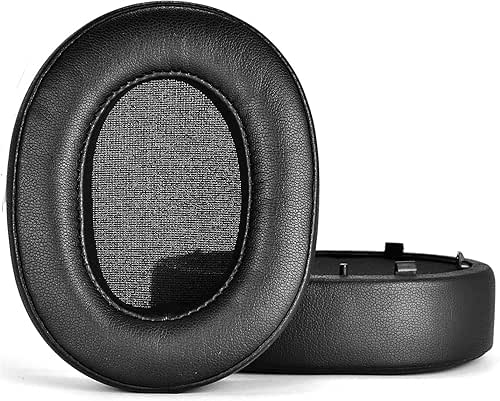
Austin can be a noisy place, and I found that “auditory clutter” was a massive source of extraneous cognitive load for me. I’d be trying to write, and the sound of a leaf blower or a neighbor’s dog would derail my train of thought. I ignored the high price tag on the Sony WH-1000XM5 for a long time, thinking my basic earbuds were fine.
I was wrong. The first time I put these on and hit the “Noise Cancelling” button, it felt like my brain finally took a deep breath. By removing the background noise, I wasn’t wasting “counter space” in my working memory trying to filter out the world.
Micro-Verdict: An essential investment for anyone working in a shared or noisy environment.
Persona Loadouts: How to Equip Your Brain
The Minimalist Remote Worker (Small Spaces)
You’re working from a dining table or a corner of the bedroom. You need to “close” the office at the end of the day.
- Essential: A physical Time Timer to define “work blocks.”
- Essential: A high-quality paper planner to keep your to-do list off the screen.
- Pro Upgrade: A tech-pouch to hide all your cables and dongles when the workday is over, reducing visual clutter.
The “Power User” (High Stakes/Deep Work)
You spend 8+ hours a day on complex tasks and feel “fried” by 3 PM.
- Essential: High-end noise-cancelling headphones to shield your focus.
- Essential: A website blocker like Freedom.to to engineer your digital environment.
- Pro Upgrade: A standing desk to encourage “movement breaks” that refresh cognitive energy.
A Final Thought from Jordan
At the end of the day, remember this: your brain is a finite resource. You wouldn’t try to run a marathon while carrying 50 pounds of luggage, so don’t expect your mind to perform at its peak while carrying the weight of a thousand unread emails and half-finished thoughts.
Start with a “7-Day Cognitive Audit.” Notice where you’re leaking energy. Is it the morning scroll? The mid-day multitasking? Choose one small shift this week. Maybe it’s putting your phone in a drawer for an hour of deep work. Maybe it’s buying that analog timer.
When your environment supports you, everything flows better. Let’s make every day a little more intentional, together.
References
- Miller, G. A. (1956). The Magical Number Seven, Plus or Minus Two: Some Limits on Our Capacity for Processing Information. The Psychological Review.
- Sweller, J. (1988). Cognitive Load During Problem Solving: Effects on Learning. Cognitive Science.
- Eppler, M. J., & Mengis, J. (2004). The Concept of Information Overload: A Review of Literature from Organization Science, Marketing, Advertising, MIS, and Psychology. Journal of Business Communication.
- Frontiers in Psychology (2025). The Impact of Multitasking on Workplace Wellbeing and Job Stress: A Longitudinal Study.
- Cleveland Clinic (2024). Brain Fog: What It Is, Causes & Treatment. https://my.clevelandclinic.org/health/symptoms/brain-fog
- Iyengar, S. S., & Lepper, M. R. (2000). When Choice is Demotivating: Can One Desire Too Much of a Good Thing? Journal of Personality and Social Psychology.
Disclaimer: This article provides educational information on cognitive health and productivity. It is not a substitute for professional medical advice, diagnosis, or treatment for clinical conditions like chronic fatigue syndrome or clinical depression. Always seek the advice of your physician or other qualified health provider with any questions you may have regarding a medical condition.