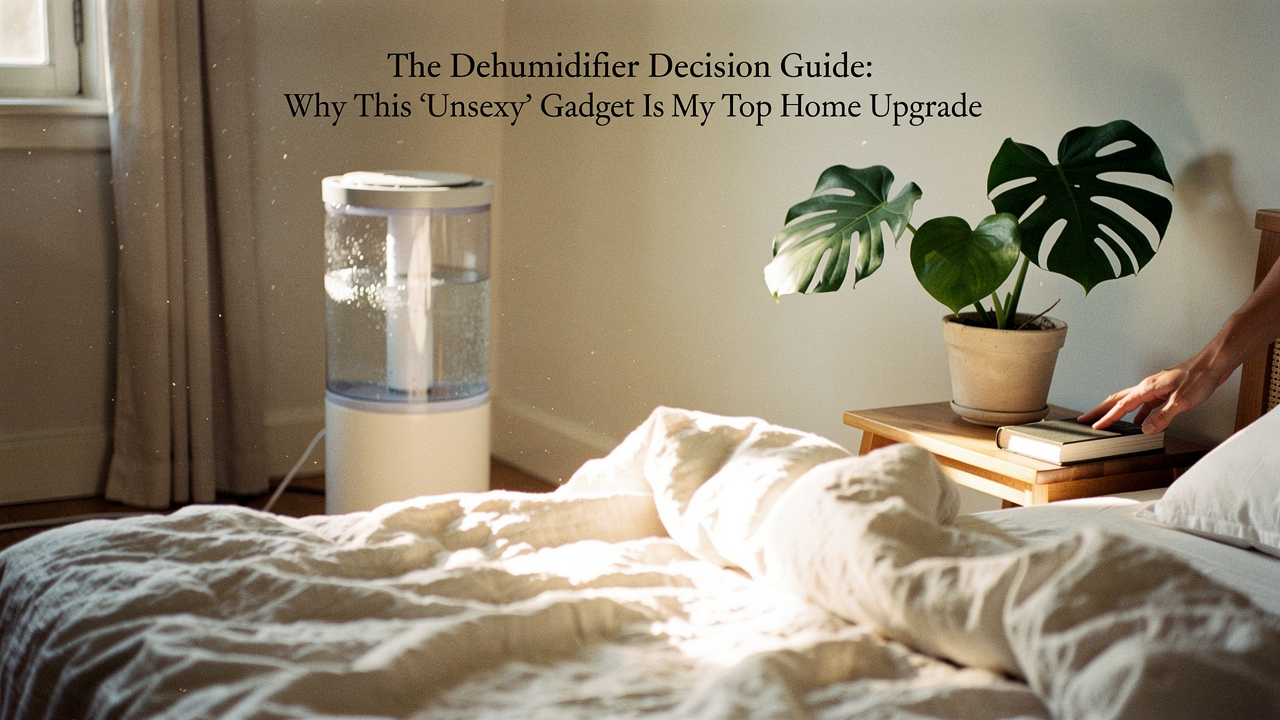
Here in Austin, our summers don’t just bring heat; they bring a “thick” air that makes your skin feel tacky and your sourdough starter go fuzzy before its time. I spent years thinking that just cranking the AC was enough to handle the mugginess. It wasn’t until I woke up to condensation on my bedroom windows and a faint, musty scent in my closet that I realized my home environment was working against me, not for me.
Self-care starts with your space. When the air is heavy and damp, your sleep suffers, your allergens flare up, and your home literally begins to degrade. I’ve spent months researching the “Dehumidifier Decision Engine”—a science-backed way to diagnose if your air is “thirsty” and how to find the perfect solution that doesn’t sound like a jet engine in your living room.
The ‘Decision Engine’: Do You Actually Need a Dehumidifier?
Before you run out and buy another appliance, let’s get honest about your air. There is a massive difference between a rainy week and a chronic moisture problem. According to ASHRAE (the global authority on building standards), the “sweet spot” for indoor relative humidity (RH) is between 30% and 50% [1].
Once you cross that 60% threshold, you’re no longer just “uncomfortable”—you’re inviting unwanted guests like dust mites and mold spores into your sanctuary. The EPA suggests that keeping moisture in check is actually the single most important step for maintaining healthy indoor air quality [2].
5 Signs Your Home Is ‘Thirsty’ for Drier Air
If you aren’t sure where you stand, keep an eye out for these red flags:
- The “Old Library” Scent: That musty, damp odor is usually a sign of mildew hiding in porous surfaces like carpets or drywall.
- Window Sweating: If you see fog or water droplets on the inside of your glass, your indoor air is hitting its dew point, and that moisture has nowhere to go.
- The Sticky Floor Test: If your hardwood or tile feels slightly tacky even after cleaning, the humidity is likely over 60%.
- Morning Congestion: High humidity is a playground for dust mites. If you wake up with a stuffy nose that clears once you leave the house, your bedroom air might be the culprit.
- Slow-Drying Laundry: If your towels take 24 hours to air dry and still smell “funky,” the air is too saturated to take on more moisture.
The Science of Better Air: Dehumidifier Benefits Explained
I used to think mold and mildew were the same thing. They’re not. Mildew is like that annoying surface guest—gray or white and relatively easy to wipe away. Mold, however, is the invasive relative that moves into your walls and doesn’t want to leave.
Beyond protecting your home’s structure, the health benefits of drier air are real. Healthline notes that dehumidifiers are powerful tools for reducing triggers for asthma and allergies because they neutralize the damp environments these irritants need to survive [3]. WebMD and the Mayo Clinic both emphasize that indoor mold exposure can lead to persistent coughing, wheezing, and skin irritation [4]. By controlling the moisture, you aren’t just cleaning the air; you’re preventing the problem from growing in the first place.
The real win here is comfort. Drier air feels cooler at higher temperatures. This means you can often nudge your thermostat up a few degrees in the summer without feeling like you’re wilting, which is a massive win for your energy bill.
Choosing Your Weapon: Compressor vs. Desiccant vs. Whole-House
When I started looking for my own unit, I was overwhelmed by the jargon. As an optimization geek, I wanted the “best,” but I realized the “best” depends entirely on your climate.
- Compressor Dehumidifiers: These are the most common. They work like a tiny refrigerator, cooling a metal plate to condense moisture out of the air. They are incredible for warm, humid climates like Texas.
- Desiccant Dehumidifiers: These use a chemical “sorbent” material to soak up water. They are much quieter and work better in cold spaces (like a chilly basement in the Pacific Northwest).
- Whole-House Systems: These are integrated into your HVAC. They are the ultimate “set it and forget it” solution but come with a significant price tag and professional installation requirements.
Sizing It Right: The Pint-Per-Day Formula
Don’t let the “square footage” on the box be your only guide. You need to look at the “Pint Capacity,” which refers to how much water the machine can pull from the air in 24 hours. Based on 2020 Energy Star standards, a “50-pint” unit is actually equivalent to what used to be called a 70-pint unit [5].
- Small/Damp (500 sq ft): 20–25 pints.
- Medium/Very Damp (1,000–1,500 sq ft): 30–35 pints.
- Large/Wet (Basements or 2,000+ sq ft): 50 pints.
The Best Goods for a Good Life: Top Dehumidifier Picks
Here’s the thing about dehumidifiers: they can be loud, ugly, and a total chore to empty. I’ve narrowed down the ones that actually pass the “Good Life Test”—meaning they solve the problem efficiently, are built to last, and won’t ruin your room’s aesthetic.
Best for Basements
For years, I ignored the dampness in my storage area until I found a box of cherished photos that had started to warp. I tried those tiny “disposable” moisture bags, but they were like bringing a squirt gun to a forest fire. I needed something heavy-duty that I didn’t have to babysit. I eventually settled on a high-capacity compressor model with a built-in pump. It was a total game-changer because I could run a tiny hose directly into my floor drain, meaning I never had to lift a heavy water bucket again.
Micro-Verdict: The ultimate set-it-and-forget-it powerhouse for large, wet spaces.
Best for Bedrooms and Apartments
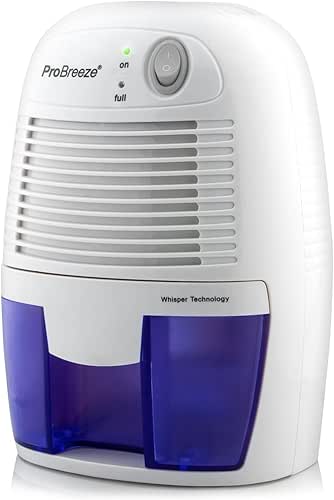
If you’re a light sleeper like me, the “thrum” of a compressor can be a dealbreaker. I spent a few weeks testing units in my home office and bedroom, looking for that elusive balance of power and peace. I found a mid-range unit that features a “sleep mode”—it keeps the humidity at a steady 45% but drops the fan speed to a whisper. It doesn’t look like a piece of industrial equipment, either; it has a clean, minimalist white finish that blends into the corner.
Micro-Verdict: Perfect for keeping your sleeping sanctuary crisp and quiet.
The ‘Budget ROI’ Pick
I’ll be honest—I was skeptical about these tiny “Peltier” units at first. They don’t have a compressor, so they can’t handle a whole room, but they are surprisingly effective for those tiny “micro-climates” like a reach-in closet or a windowless guest bathroom. I tucked one of these into my laundry closet where the air always felt stagnant, and it made a noticeable difference in preventing that “sour” towel smell.
Micro-Verdict: A low-cost, silent solution for closets and tiny bathrooms only.

Jordan’s Pro-Tips: Optimizing Your Indoor Climate
Buying the machine is only half the battle. To get that “High Lifestyle ROI,” you need to operate it like a pro.
The Continuous Drain Hack
Most people give up on their dehumidifiers because they get tired of emptying the tank. Here is the secret: almost every mid-to-large unit has a small threaded outlet on the back. Buy a standard $10 garden hose, cut it to length, and run it to a floor drain or out a low window. You will never have to carry a sloshing bucket of water across your carpet again.
Placement Matters
I see people tucking their dehumidifiers behind sofas or in tight corners. Don’t do that. These machines need “breathability.” Keep them at least 6 to 12 inches away from walls and furniture to ensure the intake isn’t blocked. Centrally located is always better than hidden away.
FAQ: Everything You Still Want to Know
How much does it cost to run a dehumidifier?
It depends on your local kWh rate, but an Energy Star-certified unit usually costs between $5 and $15 a month if run frequently. It’s an investment, but it’s significantly cheaper than a $3,000 mold remediation bill [5].
Is it better to get a dehumidifier or an air purifier?
I call this the “IAQ Stack.” An air purifier is for particles (dust, pollen, smoke). A dehumidifier is for moisture. If you have mold, you actually need both: the dehumidifier to stop the growth and the purifier to catch the spores already in the air. According to the EPA, indoor pollutants can be 2 to 5 times higher than outdoor levels, so combining these two is the gold standard for home wellness [2].
References
- ASHRAE (2023). “Standard 55: Thermal Environmental Conditions for Human Occupancy.”
- U.S. Environmental Protection Agency (EPA). “A Brief Guide to Mold, Moisture, and Your Home.” https://www.epa.gov/mold
- Healthline (2024). “Dehumidifier Benefits and Side Effects.”
- WebMD. “Mold in the House: Is it a Health Risk?”
- Energy Star. “Dehumidifier Sizing and Efficiency Standards.” https://www.energystar.gov
- University of Minnesota Extension. “Controlling Moisture Problems in Your Home.”
Affiliate Disclosure: We may earn a commission from products mentioned in this post. This helps support the “Best Goods for Good Life” mission. Medical disclaimer: This guide is for informational purposes and not a substitute for professional mold remediation or medical advice.