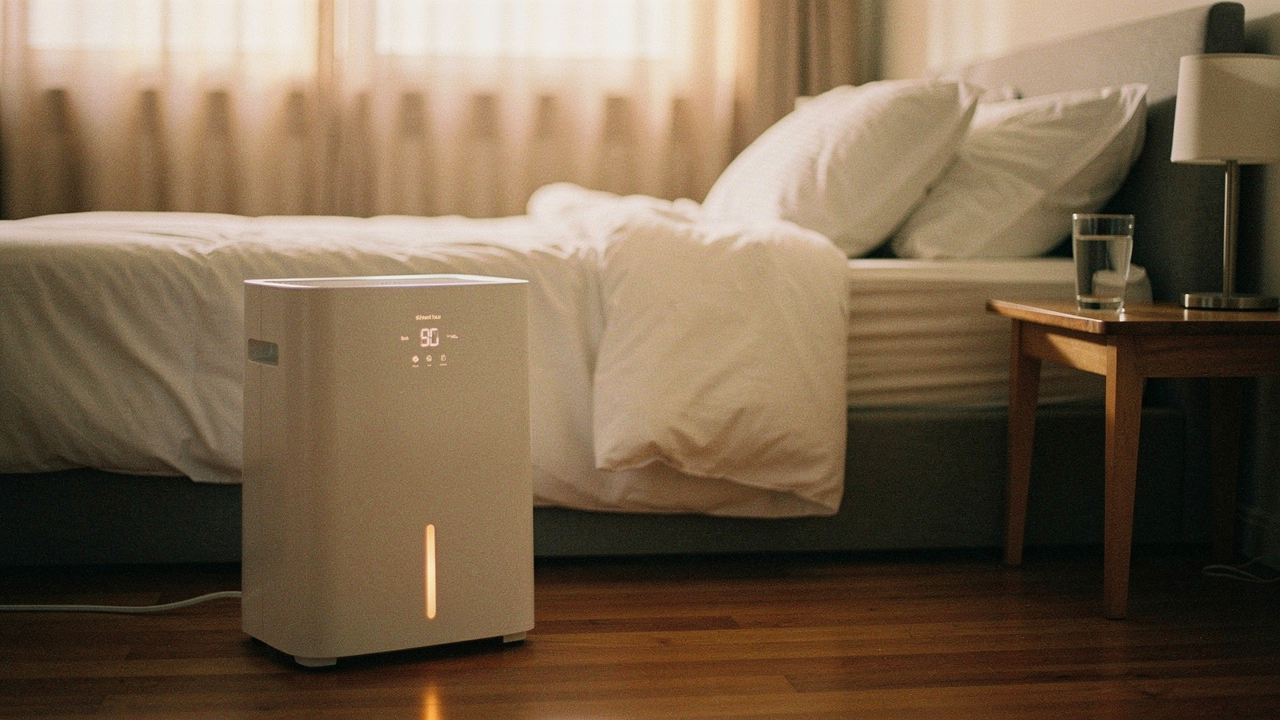
For years, I viewed dehumidifiers as clunky, noisy machines relegated to dark, unfinished Midwest basements. But as I started diving deeper into home optimization and digital wellness, I realized that air quality is the foundation of everything else. If your environment is working against you, your morning yoga feels harder, your sleep feels heavy, and your space never truly feels clean.
Here’s the thing: after a decade of curating products with a High Lifestyle ROI, I’ve found that few things improve your daily quality of life more than controlling your indoor climate. It’s not just about comfort; it’s about preserving your home and your health.
The Invisible Problem: Why Excess Humidity Is Your Home’s Secret Enemy
Most of us don’t realize that our homes are constantly “breathing.” Moisture enters through open doors, showers, cooking, and even our own breath. When that moisture has nowhere to go, it creates what building scientists call “vapor drive”—a fancy way of saying moisture is trying to push its way into your walls and furniture.
The U.S. Environmental Protection Agency (EPA) suggests that the “sweet spot” for indoor relative humidity (RH) is between 30% and 50% [1]. Once you cross that 50% threshold, you aren’t just living in “sticky” air; you’re providing an all-you-can-eat buffet for mold and dust mites.
What surprised me during my research was the ASHRAE standards for indoor environmental conditions, which emphasize that even if the temperature is 72°F, high humidity can make it feel significantly warmer and more oppressive [2]. That musty smell we often ignore in closets or guest rooms? That’s actually the off-gassing of microbial volatile organic compounds. It’s your home’s way of saying it’s struggling.
The Lifestyle ROI: Health and Comfort Benefits of Staying Dry
When I talk about “High Lifestyle ROI,” I’m looking for the biggest win for the least effort. A dehumidifier fits this perfectly. By simply plugging in a well-designed unit, you’re hitting three major pillars of wellness: sleep, respiratory health, and property protection.
Better Sleep and Respiratory Health
Have you ever woken up feeling clammy, even with the fan on? High humidity interferes with your body’s ability to cool itself through evaporation. Research from Healthline indicates that maintaining lower humidity can significantly ease the burden on people with asthma or COPD by making the air “lighter” and easier to process [3].
Furthermore, the American Lung Association points out that dust mite populations—the number one trigger for indoor allergies—literally cannot survive when the RH stays below 50% [4]. For me, the win wasn’t just fewer sneezes; it was waking up feeling crisp and recovered.
Protecting Your Infrastructure (and Your Tech)
We spend so much time decorating our spaces, but humidity is the silent destroyer of aesthetics. It warps hardwood floors, causes “bubbling” in wallpaper, and can even ruin expensive electronics through internal corrosion. According to the CPSC, controlling humidity also reduces the off-gassing of formaldehyde from furniture and building materials, which happens more aggressively in damp, warm environments [5].
Choosing Your Solution: Compressor vs. Desiccant vs. Whole-Home
Before you run out and buy the first unit you see, you need to match the tech to your struggle. Here’s the breakdown of what I found during my deep dive:
- Compressor (Refrigerant) Dehumidifiers: These are the workhorses. They use a fan to pull air over cold coils, condensing the water into a tank. They are incredibly efficient in warm, humid climates like Texas or the Southeast.
- Desiccant Dehumidifiers: These use a chemical “adsorption” material (like a giant version of those silica gel packets) to soak up water. They are much quieter and work better in cold environments, like an unheated basement in the Northeast.
- Whole-Home Systems: These are integrated into your HVAC. While they have the highest upfront cost, they offer the highest ROI for large homes because they treat every room simultaneously with zero floor space required.
When shopping, always look for the Energy Star label. The Department of Energy updated their standards recently, and newer models are significantly cheaper to run than the energy hogs from five years ago [6].
Jordan’s Quick Picks: Dehumidifiers That Actually Deliver
I’ve spent weeks looking at testing data from sources like Consumer Reports and CNN Underscored to see which units actually live up to their “pints-per-day” claims [7]. Here are the two I recommend most often.
Best for Large Basements
I’ll be honest: I ignored the dampness in my storage area for way too long. I tried those little moisture-absorbing bags, but they were like trying to empty the ocean with a teaspoon. I finally realized I needed something that could handle a “heavy lift” without me having to baby it every four hours.
After looking at the data, the speed at which this unit pulls moisture out of the air is staggering. In independent testing, it was one of the few models that could take a room from 80% humidity down to a healthy 50% in under four hours [8]. If you have a large open space or a basement that smells like an old gym bag, this is the heavy hitter you need.
Micro-Verdict: The ultimate “set it and forget it” solution for serious moisture problems.
Best for Bedrooms
The biggest hurdle for me with dehumidifiers was the noise. I’m a light sleeper, and the “hum” of a standard compressor felt like sleeping next to an idling truck. I went on a quest to find something that looked like it belonged in a modern home rather than an industrial warehouse.
I found this unique “nested” design that completely changed my perspective. It’s incredibly quiet, but what I love most is the “Cube” design—it’s compact enough to sit in a corner without being an eyesore, yet it has a massive water tank so you aren’t emptying it constantly. It even links to your phone so you can check your RH levels while you’re out at the farmers market.
Micro-Verdict: The most aesthetic and quietest option for light sleepers and small apartments.
Optimization Protocol: How to Use a Dehumidifier Effectively
Buying the gear is only half the battle. To get that “High Lifestyle ROI,” you have to set it up for success. I’ve learned these “pro tips” the hard way so you don’t have to:
- The 12-Inch Rule: Never push your dehumidifier against a wall. Most units need at least a foot of clearance for the intake and exhaust vents to work properly. Blocking them is the fastest way to burn out the motor.
- Seal the Space: Running a dehumidifier with the windows open is like running your AC with the front door wide open. You’re trying to dehumidify the whole neighborhood. Close the doors and windows to let the machine do its job.
- Level Your Unit: If the unit isn’t level, the internal float switch might not work, leading to a tank that overflows or a machine that shuts off when it’s only half full.
- Monthly Maintenance: Every 30 days, I do a “Sunday Reset” for my machine. I vacuum the intake filter and wipe down the water bucket with a little vinegar to prevent any “biofilm” (aka slime) from growing.
The Holistic Approach: What a Dehumidifier Can’t Fix
Here’s a bit of Jordan-honesty: A dehumidifier is a management tool, not a miracle worker. It’s excellent for controlling atmospheric moisture, but it won’t fix a structural failure.
If you have water actively seeping through your foundation or a leaky roof, you need a contractor, not a gadget. The EPA is very clear that you must fix the source of the water within 24–48 hours to prevent permanent mold damage [1]. Think of the dehumidifier as the “maintenance crew” that keeps your air crisp, but make sure your “defense crew” (gutters, seals, and roof) is in good shape first.
I always recommend starting with a simple $15 hygrometer. If your home consistently reads above 55% RH even when the weather is mild, it’s time to invest in a dedicated unit.
The transformation from a “heavy,” musty house to a crisp, breathable home is one of those upgrades you don’t realize you needed until you experience it. It’s about more than just the air; it’s about creating a space that actually supports your best life.
Affiliate Disclosure: We may earn a commission on products purchased through our links.
Medical Disclaimer: This content is for informational purposes and not a substitute for professional medical advice. Always consult a professional regarding respiratory issues or mold-related health concerns.
References & Resources
- U.S. Environmental Protection Agency (2023). A Brief Guide to Mold, Moisture and Your Home. EPA.gov. https://www.epa.gov/mold
- ASHRAE (2021). Standard 55: Thermal Environmental Conditions for Human Occupancy. ASHRAE.org.
- Healthline (2022). The Health Benefits of Using a Dehumidifier. Healthline Media. https://www.healthline.com/health/dehumidifier-benefits
- American Lung Association (2024). Dust Mites and Indoor Air Quality. Lung.org.
- U.S. Consumer Product Safety Commission (2023). The Inside Story: A Guide to Indoor Air Quality. CPSC.gov.
- Energy Star (2025). Dehumidifiers Key Product Criteria. EnergyStar.gov.
- Consumer Reports (2024). Dehumidifier Buying Guide. ConsumerReports.org.
- CNN Underscored (2024). The Best Dehumidifiers of 2024, Tested and Reviewed. CNN.com.