
=
Then, it almost happened. A cyclist coming up fast behind me shouted, “On your left!” but I didn’t hear a thing. I veered slightly to the left to avoid a puddle, and we nearly collided. It was a wake-up call. I realized that my quest for “immersion” had become a safety liability.
As someone who obsesses over High Lifestyle ROI—the idea that the things we own should pay us back in comfort, efficiency, and joy—I knew my audio setup needed a reset. I spent the last decade in digital wellness, and I’ve learned that the best tools shouldn’t cut you off from the world; they should help you navigate it better.
That’s how I found open earbuds. They don’t go inside your ear canal. They sit just outside or bone-conduct sound through your cheekbones. It sounds like sci-fi, but after living with them for months—from sourdough baking sessions in my kitchen to long morning treks—I’m never going back.
The Problem: Why Traditional Earbuds Are Killing Your Vibe (and Your Ears)
We’ve been conditioned to think that “sealing” our ears is the only way to get good sound. But let’s be honest: shoving silicone tips into your ear canal for eight hours a day isn’t exactly natural.
The ‘Plugged’ Feeling and Ear Fatigue
Have you ever experienced that “underwater” feeling after wearing buds all morning? That’s the occlusion effect. Beyond just being annoying, it can actually be a health concern. Dr. Mary Williams, an audiologist at Houston Methodist, points out that sealed earbuds can trap moisture and bacteria, increasing the risk of ear infections [5].
What surprised me during my research was the “red flag” symptoms. If you’re experiencing persistent in-ear discomfort or fluid discharge, it’s a sign your ears are begging for a break [7]. We ignore it because we want our music, but there’s a better way to listen without the literal headache.
The Safety Gap: Why Total Isolation is a Liability
The phrase “blocking ambient sound” sounds like a feature until you’re a woman running solo or a commuter trying to hear a train platform announcement. Total isolation creates a sensory vacuum. In a busy city like Austin, being able to hear a car horn or a neighbor saying “hello” isn’t a distraction—it’s essential situational awareness.
Then there’s the “falling out” factor. I can’t tell you how many times I’ve had earbuds falling out during a yoga flow because my ear canals are apparently “not the right shape” for standard tips. It’s the opposite of High ROI; it’s high frustration.
What Exactly are Open Earbuds? (Tech for the Optimization Geek)
If you’re new to this category, you’re probably wondering how you hear the music if nothing is in your ear. There are two main flavors of open ear headphones:
- Air Conduction: These use tiny, highly directional speakers that “beam” sound into your ear from a few millimeters away. They use clever phase-cancellation tech to ensure only you hear the music, not the person sitting next to you [10].
- Bone Conduction: These don’t use speakers at all. They send vibrations through your cheekbones directly to your inner ear. It’s a game-changer for people with certain types of hearing issues or those who need 100% ear-canal transparency.
While open ear vs bone conduction is a common debate, the choice usually comes down to audio quality versus total transparency. Air conduction generally offers richer bass, while bone conduction feels more like “background music” for your life.
Why I Made the Switch: The High-ROI Benefits
The transition felt weird for about two days. Then, it clicked. I started noticing “Micro-Wins” in my daily routine:
- The Sourdough Test: I can listen to a focused business book while still hearing the subtle ping of my oven timer or the doorbell.
- The Yoga Test: Because many open designs use an earhook, they stay put during a downward dog. No more chasing a rogue earbud across the studio floor.
- Hygiene ROI: Since they sit outside the canal, my ears feel “fresh” even after a four-hour deep-work session. Cleer Audio notes that this design significantly reduces heat and sweat buildup, which is a massive win for skin health [6].
The Open Earbuds Winner’s Circle: My Top Picks for 2025
I’ve put dozens of pairs through the “Good Life Test.” Here are the ones that actually earned a spot in my gear bag.
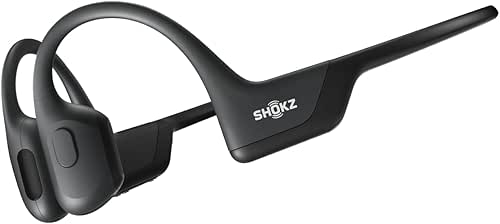
Best for Runners: Shokz OpenRun Pro 2
Let me be honest: I ignored bone conduction for years because I thought it sounded “tinny.” But the reality of running near traffic made me reconsider. I finally tried the Shokz during a particularly windy afternoon run. What finally clicked for me was the weight—at only 30 grams, you genuinely forget you’re wearing them [4]. The OpenRun Pro 2 finally added enough bass to make my “Running Power Mix” actually sound motivating.
Micro-Verdict: The gold standard for athletes who need to stay safe without sacrificing the beat.

Best for All-Day Office Comfort: Bose Ultra Open Earbuds
Here’s the thing about office life: you want your music, but you don’t want to be the person who can’t hear their boss standing right behind them. I struggled with “office isolation” for a long time until I found these. They don’t look like headphones; they look like a chic cuff earring. There’s zero canal pressure, meaning I can wear them from my 9 AM coffee until my 5 PM Sunday reset ritual without a hint of in-ear discomfort.
Micro-Verdict: Stunning aesthetics meet incredible comfort for the hybrid professional.
Best for the Jobsite (NRR Rated): ISOtunes FREE Aware
I’ll admit it—I was skeptical at first about “smart” earplugs. But if you spend time in a woodshop or a loud garage, these are a revelation. They use something called “Aware Technology” that acts like a digital filter. It blocks the deafening screech of a miter saw but amplifies the sound of someone speaking to you. They carry a Noise Reduction Rating (NRR) of 25, which is proper industrial-grade protection [11].
Micro-Verdict: Essential gear for anyone who needs to protect their hearing while staying connected to their environment.
Open Earbuds vs. In-Ear Headphones: The Decision Matrix
Are open earbuds for everyone? Not necessarily. Here is how I break down the choice based on your specific lifestyle needs:
- The Commuter: If you spend 2 hours a day on a loud subway, stick with in-ears. Open earbuds let in too much noise for high-decibel public transit.
- The Outdoor Athlete: Open earbuds are a non-negotiable. The safety ROI of hearing a car or an off-leash dog is worth every penny.
- The Focus-Worker: If you work in a noisy open office and need “Deep Work” mode, traditional ANC (Active Noise Cancelling) is better. But if you’re a hybrid worker who needs to be approachable, open-ear is the winner.
- The Minimalist: If you hate carrying multiple pairs of buds, a high-quality air-conduction pair like the Bose Ultra can handle about 90% of life’s scenarios.
Are open earbuds good for work?
In my experience, yes—specifically for collaborative roles. I’ve found that my team feels more comfortable “bothering” me with a quick question when they see I’m not physically plugged into a private world. It keeps the “flow” of the office moving.
Final Thoughts: Choosing Better Over More
Living well isn’t about having the loudest, most isolating gear. It’s about choosing items that support your lifestyle without creating new problems. Open earbuds solved my ear fatigue, improved my safety on Austin’s trails, and actually made me feel more present in my daily life.
While the “bass-heads” might still prefer the thumping seal of an in-ear bud, those of us looking for High Lifestyle ROI will find that the freedom of an open ear is hard to beat.
What’s your earbud-pain story? Have you ever had a “close call” because you couldn’t hear your surroundings? Let’s chat in the comments!
—
This article provides audio gear recommendations and general ear health information. It is not medical advice. Consult an ENT for persistent ear pain.
References
- Bose. (2025). Open-Ear vs. In-Ear Headphones: Choosing the Right Fit for Focus and Comfort. Bose Stories. https://www.bose.com/stories/open-ear-vs-in-ear-headphones
- Cleer Audio. (2024). Switching to Open-Ear Headphones: Hygiene and Awareness Benefits. https://cleeraudio.com/switching-to-open-ear-headphones/
- Healthdirect Australia. (2025). Earache: Causes, Symptoms, and Management. https://www.healthdirect.gov.au/earache
- iRunFar. (2025). Best Running Headphones: 2025 Lab and Trail Test Results. https://www.irunfar.com/best-running-headphones
- Mary Williams, Au.D. (2025). Ask an Audiologist: What Type of Headphones Are Best for Your Hearing? Houston Methodist. https://www.houstonmethodist.org/blog/articles/2025/may/ask-an-audiologist-what-type-of-headphones-are-best-for-your-hearing/
- SoundGuys. (2026). The Best Bone Conduction Headphones: Stay Aware in Any Environment. https://www.soundguys.com/best-bone-conduction-headphones-30293/
- TechRadar. (2025). The Best Open Earbuds: Real-World Tested by Our Audio Experts. https://www.techradar.com/audio/earbuds-airpods/the-best-open-ear-headphones
- The Run Testers. (2025). Bose Ultra Open Earbuds Review: Are They the Ultimate Running Accessory? https://theruntesters.com/running-headphones/
- WebMD. (2025). Ear Pain Home Treatment: When to See a Doctor. https://www.webmd.com/cold-and-flu/ear-infection/ear-pain-home-treatment
- Wikipedia. (2025). Active Noise Control. https://en.wikipedia.org/wiki/Active_noise_control
- ISOtunes. (2025). FREE Aware: Hearing Protection with Aware Technology. https://isotunes.com/products/isotunes-free-aware