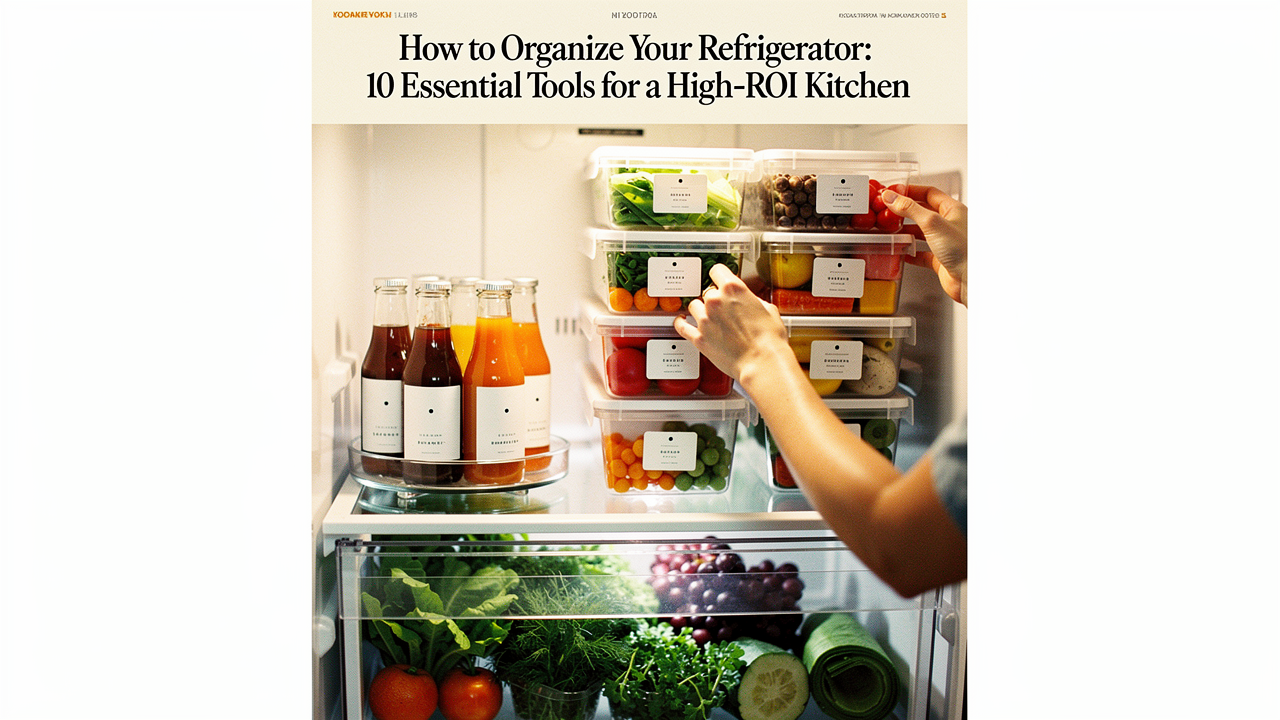
In my Austin kitchen, I treat my refrigerator like a high-stakes ecosystem. Between my sourdough starter (affectionately named “The Beast”) and my weekly hauls from the Barton Creek farmers market, space is at a premium. But here’s the thing: fridge organization isn’t just about making your shelves look like a curated Pinterest board. It’s about “High Lifestyle ROI.”
When you organize your refrigerator effectively, you aren’t just tidying up; you’re performing a 60-minute reset that can save you upwards of $500 a year in prevented food waste [1]. It’s about ending the “what’s for dinner” panic and ensuring your environment actually supports your wellness goals. Let’s build your “Fridge GPS” using ten essential tools and a little bit of food science.
The Refrigerator Reset: Why Most Systems Fail
We’ve all seen the “fridgescaping” trend—the beautiful, color-coordinated rows of produce and vintage juice carafes. While they look stunning, many of these systems fail because they prioritize aesthetics over the actual physics of refrigeration.
I used to be guilty of this too. I’d buy matching bins that were too deep for my shelves or block the air vents with bulky containers, leading to “hot spots” where food would spoil prematurely. According to the USDA Food Safety and Inspection Service (FSIS), keeping your fridge at or below 40°F is the baseline for safety, but how you arrange items within that temperature zone determines how long they actually last [1].
Most systems fail because they don’t follow the “Edit, Categorize, Contain” framework used by members of the National Association of Productivity & Organizing Professionals (NAPO). You can’t just buy bins and hope for the best; you have to edit out the expired “science projects” first and then categorize based on how you actually cook.
The ‘Fridge GPS’ System: Mapping Your Zones
Before we talk about the tools, we have to talk about the map. Heat rises, and in a refrigerator, the temperature can vary significantly from the top shelf to the bottom drawers.
The FDA and USDA have very specific “zoning” suggestions that I follow religiously to prevent cross-contamination [2]:
- The Top Shelves: These have the most consistent temperatures. This is where I keep ready-to-eat foods, leftovers, and my sourdough starter.
- The Bottom Shelves: This is the coldest part of the fridge. It’s the mandatory home for raw meat and poultry to prevent any drips from contaminating other foods.
- The Door: Let’s call this the “Danger Zone.” It’s the warmest part of the fridge because it’s exposed to room air every time you open it. Use it for condiments and high-acid juices only—never milk or eggs.
- The Crisper Drawers: These are designed to manage humidity. One should be high-humidity (for leafy greens) and one low-humidity (for fruits and veggies that rot easily).
Step 1: The One-Hour Purge
Before you introduce a single bin, you need a clean slate. I like to do this on a Sunday morning while my coffee is brewing. Empty everything—yes, everything—onto your counters. Wipe down the shelves with a mixture of water and white vinegar. Check every expiration date. If that salad dressing has moved with you through two apartments, it’s time to let it go.
10 Essential Items to Better Organize Your Fridge
Once your space is clean and you understand your zones, it’s time to containerize. Here are the ten items I’ve tested that offer the highest “Lifestyle ROI.”
1. Modular Stackable Bins
I’ll be honest: I ignored clear bins for years because I thought they were an unnecessary expense. Then I realized I was constantly losing smaller items like yogurts and citrus at the back of my deep shelves. The struggle was real until I invested in a set of clear, BPA-free bins that essentially act as drawers for my shelves.
What sold me was the “pull-out” factor. Instead of moving six jars to reach one item, I just slide the bin out. I personally use the iDesign Linus line because they are incredibly durable and fit standard fridge depths perfectly.
Micro-Verdict: The ultimate tool for turning deep, dark shelves into accessible drawers.
2. The Turntable / Lazy Susan
You know that feeling when you have ten different jars of hot sauce and half-empty jam, and they all seem to congregate in the “back-of-the-fridge black hole”? I used to knock over three things just trying to find the pesto. I finally added a turntable to my top shelf, and it changed the game. It brings everything from the back to the front with a simple flick of the wrist.
Micro-Verdict: Ends the “hidden jar” syndrome and prevents accidental spills.
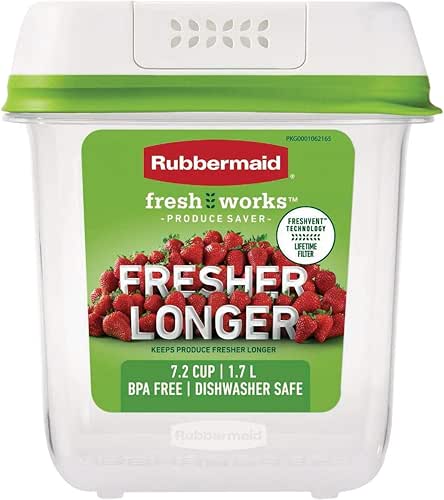
3. Ventilated Produce Bins with Colanders
There is nothing more heartbreaking than buying a $7 flat of organic raspberries on Saturday only to find them fuzzy and grey by Tuesday. Produce needs to breathe, but it also needs moisture control. I went through a phase of trying every “hack” in the book (paper towels in bags, glass jars with water), but the most consistent results came from bins with built-in ventilation and elevated colanders.
The Rubbermaid FreshWorks bins are my personal favorite. They use a filter to regulate the flow of oxygen and carbon dioxide, which I’ve found keeps my berries fresh up to three times longer than the original plastic clamshell.
Micro-Verdict: A must-have for anyone tired of throwing away “slimy” greens and moldy berries.

4. Glass Food Storage Sets
I made the switch from plastic to glass a few years ago and never looked back. Plastic containers tend to stain (especially if you’re a fan of Austin-style chili like I am) and can retain odors that affect your next meal.
When Wirecutter tested food storage, they found that glass sets with locking lids were the most airtight and leakproof [3]. I use Pyrex Freshlock sets because they stack beautifully, allow me to see exactly what’s inside, and can go straight from the fridge to the oven (minus the lid).
Micro-Verdict: The most hygienic and aesthetic way to store leftovers while keeping them visible.
5. Under-Shelf Hanging Baskets
In many standard fridges, there’s a lot of “dead air” space between the top of your items and the shelf above them. I used to find that deli meats and cheese slices would get buried under heavy cartons. These clip-on hanging baskets utilize that vertical space. They’re perfect for small, flat items that otherwise disappear into the chaos.
Micro-Verdict: Creates “bonus” storage in small fridges by utilizing unused vertical space.
6. Magnetic Side Racks
If you live in a studio or have a tiny kitchen with zero pantry space, your fridge is actually a giant magnetic canvas. I realized I could relieve my internal fridge clutter by moving non-perishables that I use at the fridge—like paper towels, oils, or even my kitchen timer—to the exterior.
Micro-Verdict: A literal space-saver that turns the outside of your fridge into a functional pantry.
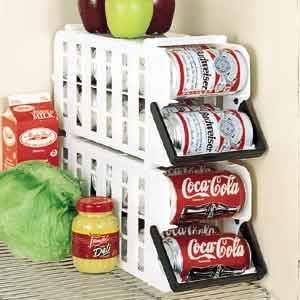
7. Soda/Can Gravity Dispensers
I’ll admit it—I was skeptical at first. I thought can dispensers were for “extreme organizers” only. But after one too many sparkling water cans rolled out and hit my toes, I gave in. These dispensers use a gravity-fed “First-In, First-Out” (FIFO) system. When you take a can from the front, the next one rolls down. It keeps your beverages contained and ensures you’re always drinking the oldest one first.
Micro-Verdict: Prevents “can avalanches” and keeps your drink zone perfectly contained.
8. Specialty Lidded Egg Holders
The cardboard cartons eggs come in are flimsy, and you can’t stack anything on top of them without risking a mess. I switched to a clear, lidded egg holder made of heavy-duty plastic. Not only does it protect the eggs, but it also creates a flat, sturdy surface so I can stack my deli bin or a small container right on top of it.
Micro-Verdict: Protects your eggs while reclaiming the vertical space above the carton.
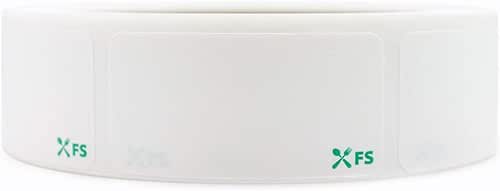
9. Washable Labeling System
“What is this and when did I cook it?” is a question that leads directly to food waste. I keep a chalk marker or a roll of dissolvable labels right in my kitchen drawer. Labeling your glass containers with the contents and the “Date Cooked” is the single most effective habit for reducing “mystery rot.”
Micro-Verdict: The “mental load” reducer that ensures you never have to play the guessing game with leftovers.
10. The ‘Eat First’ Bin
Here’s the thing about organization: it’s a behavior, not just a set of products. This is my favorite low-tech tool. I have one designated bin (usually a bright color or labeled clearly) that sits at eye level. Anything that is expiring within 48 hours goes in here—half an onion, the last of the rotisserie chicken, that yogurt that expires tomorrow. It’s my “Zero Waste” command center.
Micro-Verdict: The most important tool for actually reducing your grocery bill.
Maintenance: The 5-Minute Friday Reset
Even the best systems can slide back into chaos if you don’t maintain them. I’ve found that “habit stacking”—resetting the fridge while my morning coffee brews on Fridays—is the key.
Every Friday, I do a “5-minute triage.” I move anything nearing its end into the “Eat First” bin, wipe down any sticky rings from condiment bottles, and check my inventory before I head to the grocery store. This ensures I don’t buy a second jar of mayo when I already have one hidden in the back. Architectural Digest experts suggest that a quick weekly check prevents the need for those massive, three-hour deep cleans [4].
Which System Fits Your Life?
To help you decide where to start, I’ve categorized these tools by persona:
The Minimalist (Small Space) Loadout
If you’re working with a studio apartment fridge, focus on these high-impact items:
- Essential: Magnetic Side Rack for paper towels and spices
- Essential: Under-shelf hanging basket for deli items
- Essential: One “Eat First” bin to maximize what you have
- Pro Upgrade: A single turntable for the top shelf
The Meal-Prep Power User Loadout
If you spend your Sundays batch-cooking for the week:
- Essential: 10-piece Glass Food Storage set (uniform sizes stack better!)
- Essential: Washable Labeling System
- Essential: Modular Stackable Bins for prepped ingredients
- Pro Upgrade: Ventilated Produce Bins for bulk greens
Organizing your fridge is a micro-system with a macro-impact. It reduces the static in your daily routine, saves you real money, and makes the simple act of opening the fridge feel like a breath of fresh air rather than a chore. Start small—grab a Lazy Susan and an “Eat First” bin this weekend. You’ll be surprised at how much better your kitchen (and your life) flows.
Disclaimers: This post contains affiliate links. Recommendations are based on hands-on testing and food safety standards from the USDA and FDA.
References
- USDA Food Safety and Inspection Service (FSIS). (2024). Refrigeration and Food Safety. https://www.fsis.usda.gov/food-safety/safe-food-handling-and-preparation/food-safety-basics/refrigeration
- U.S. Food & Drug Administration (FDA). (2023). Refrigerator Thermometers: Cold Facts about Food Safety. https://www.fda.gov/food/buy-store-serve-safe-food/refrigerator-thermometers-cold-facts-about-food-safety
- NYT Wirecutter. (2024). The Best Food Storage Containers. https://www.nytimes.com/wirecutter/reviews/best-food-storage-containers/
- National Association of Productivity & Organizing Professionals (NAPO). (2025). Organizing Principles for the Home. https://www.napo.net/