It turns out I wasn’t alone. Research shows that approximately three out of every four Americans are chronically dehydrated [1]. We know we should drink more, but the friction of a leaky lid, a bottle that’s a pain to clean, or something that just feels like a “gym accessory” rather than a lifestyle tool often gets in the way.
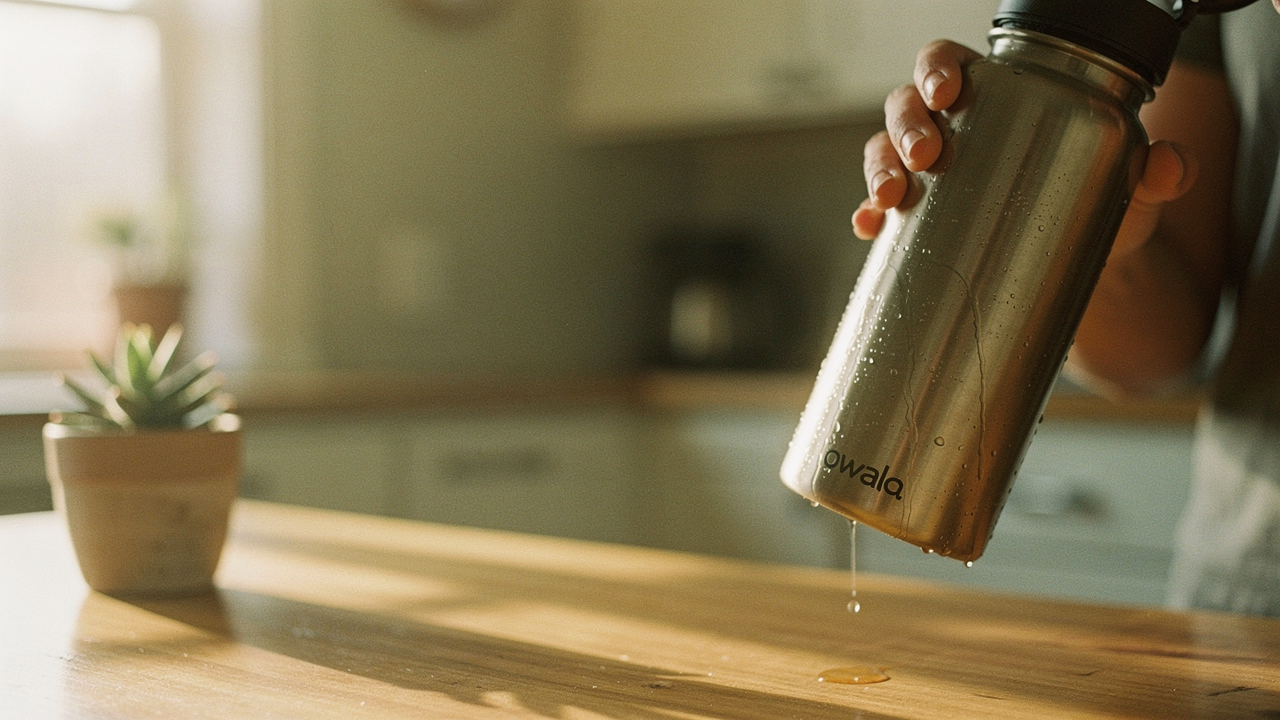
Lately, my social feeds and my Sunday morning farmers market runs have been dominated by one specific piece of gear: the Owala FreeSip. I’ve spent the last three months putting this bottle through the “Good Life Test” to see if it’s actually a health upgrade or just another trendy container destined for the back of the pantry.
The Hydration Gap: Why a Bottle Matters for Your Health
Most of us treat hydration as an afterthought, but the science is pretty clear: water is the ultimate ROI for your body. The Academy of Nutrition and Dietetics suggests about 9 cups of fluid daily for women and 13 cups for men [2]. When we fall short, our heart has to work harder to pump blood, and we start feeling the “brain fog” that many of us blame on a lack of caffeine [3].
The American Heart Association even points out that monitoring your urine color—looking for that pale, clear straw color—is one of the easiest ways to check your status [3]. But here’s the thing: knowing you need water isn’t the same as actually drinking it. This is where “behavior design” comes in. A bottle that makes drinking water enjoyable—and frankly, a bit of a fidget-toy experience—is more than a vessel; it’s a nudge toward a healthier life.
The Owala FreeSip: First Impressions and ‘The Lid’ Engineering
Here’s the thing about water bottles: I’ve spent years struggling with the “straw versus chug” debate. I wanted the ease of a straw while driving or at my desk, but I missed the “big gulp” feeling after a workout. I went through a drawer full of bottles that did one or the other, often resulting in me carrying two different containers or, more often, just not drinking enough because I didn’t want to deal with a screw-top lid while multitasking.
I finally decided to see if the hype around the FreeSip lid was real. What I found was a design that felt like it was actually made for someone with a busy, intentional life. The lid features a built-in straw for upright sipping and a wide-mouth opening for tilting back. It sounds simple, but the tactile “click” of the push-button and the smooth transition between the two modes removed that tiny bit of friction that used to keep me from reaching for my water.
What really surprised me was the pressure equalization. Many straw bottles tend to “spit” or leak when you open them after a change in altitude or temperature, but testing has shown that Owala’s design manages this better than most, making it a favorite for flying or those long Texas road trips [4].
Micro-Verdict: The dual-function lid is the ultimate friction-reducer for anyone who fluctuates between desk work and high-intensity movement.
The ‘Leak-Proof’ Reality Check
We’ve all been there: you toss your bottle into your favorite work bag next to your laptop, only to find a slow seep has turned your planner into a soggy mess. I’m incredibly protective of my space and my gear, so I was skeptical of the “leak-proof” claim.
While engineering standards like NASA-STD-7012A define “leak-proof” with extreme precision for space hardware, for us, it means “can I trust this in my backpack?” [5]. I’ve spent months tossing the 32oz Owala into my gym bag and onto the passenger seat of my car. Because the lid uses a secure locking carry loop that doubles as a latch, the button won’t accidentally depress.
I did find that maintenance is key. Like any high-performance gear, the rubber gaskets need to be seated correctly. If you start to notice a seep, it’s usually one of two failure points: the rubber stopper or the base ring [6]. A quick adjustment usually fixes it instantly.
Is It Safe? Hygiene, Microplastics, and the Cleaning Conundrum
If you’re choosing a bottle for your health, the material matters just as much as the water inside. I made the switch to stainless steel years ago after learning that a single liter of water in a plastic bottle can contain an average of 240,000 plastic particles [7]. Using a reusable stainless bottle is one of the easiest ways to slash your microplastic exposure.
However, a bottle is only “healthy” if it’s clean. NYT Wirecutter famously critiqued the Owala lid for having many “nooks and crannies,” making it potentially difficult to clean [4]. They aren’t wrong—if you just toss it in the dishwasher and hope for the best, you might run into trouble. Experts suggest that for true hygiene, you need to clean your bottle with water over 140°F (60°C) to effectively kill bacteria [8].
Jordan’s 3-Step Deep Clean Protocol
To keep my space and my body feeling good, I use this ritual every Sunday:
- Step 1: The Disassembly. I pop out the silicone gasket and the straw. Don’t skip this—mold loves to hide behind those seals.
- Step 2: The Soak. I use hot, soapy water and a splash of white vinegar. I let the lid components soak for at least 10 minutes.
- Step 3: The Scrub. I use a small straw brush for the internal paths. Owala’s design is actually one of the easiest “complex” lids to scrub because the spout doesn’t rotate [9].
Owala vs. The Big Three: Stanley, Hydro Flask, and Yeti
I know the question on everyone’s mind: “Is it better than a Stanley?” I love a good comparison, especially when it comes to High Lifestyle ROI gear. Here is how they stack up for different personas:
The Austin Commuter (Most Cupholder Friendly)
If you spend a lot of time in your car, cupholder compatibility is a dealbreaker.
- Owala FreeSip (24oz/32oz): Generally fits standard cupholders, though the 32oz can be snug.
- Stanley Quencher: The tapered base is the gold standard for cupholders, but it’s much more prone to leaking if it tips [10].
- Verdict: Owala wins for “bag-friendly” security; Stanley wins for “on-the-go” volume.
The Performance Purist (Best Insulation)
If you need your ice to stay frozen for 48 hours in the Texas summer heat, the specs matter.
- Hydro Flask & Yeti: These consistently outperform Owala in raw insulation tests. Owala’s insulation is “good enough” for a work day, but it’s not a vacuum-sealed tank [9].
- Owala: Keeps water cold all day, but you will see ice melt faster than in a Yeti.
- Verdict: Choose Hydro Flask for long hikes; Owala for daily lifestyle use.
Stacking Your Habits: Hydration Tracking
One of my favorite “health upgrades” this year has been habit stacking. I pair my Owala with a hydration tracking app to ensure I’m hitting my goals without having to think about it.
Healthline recommends apps like Waterllama or WaterMinder for their simple interfaces and reminders [11]. I personally love the “math” of it:
- Goal: 96 oz of water per day.
- Tool: 32oz Owala FreeSip.
- The Habit: I just need to finish three bottles. One by noon, one by 4 PM, and one by dinner.
This visual cue—knowing I just have to empty this beautiful, easy-to-carry bottle three times—is much more effective for me than trying to track individual glasses.
Final Verdict: Should You Buy It?
At the end of the day, the best water bottle is the one that actually makes you want to drink water. For me, the Owala FreeSip is a clear winner because it balances aesthetics, genuine leak-proof engineering, and a lid design that feels intuitive. It has a 4.7-star rating with over 42,000 reviews for a reason—it solves the daily annoyances that usually make hydration feel like a chore [9].
If you are a minimalist who wants one bottle that can go from a yoga mat to a board meeting without leaking or looking like “camping gear,” this is the one.
Recommended Specs
For most people, the 32oz FreeSip is the sweet spot. It’s large enough that you aren’t constantly refilling it, but it’s not so heavy that it feels like a burden to carry on a walk.
Whether I’m testing out a new sourdough recipe in my kitchen or heading out for a Sunday reset, my Owala has become a permanent fixture in my “Good Life” toolkit. It’s a small change, but when your environment—and your gear—supports you, everything else just flows a little better.
Disclaimer: This review is based on 3 months of daily use in the Austin, TX heat. Affiliate links are present, which help support “Best Goods for Good Life,” but all opinions on mold risk and insulation are objective and based on my personal testing.
References & Scientific Sources
- UCLA Health. (2024). Hydration Hacks: How to Drink More Water Every Day. https://www.uclahealth.org/news/article/hydration-hacks-how-drink-more-water-every-day
- Academy of Nutrition and Dietetics. (2023). How Much Water Do You Need?
- American Heart Association. (2023). Staying Hydrated – Staying Healthy. https://www.heart.org/en/healthy-living/fitness/fitness-basics/staying-hydrated-staying-healthy
- NYT Wirecutter. (2024). Owala FreeSip Review. https://www.nytimes.com/wirecutter/reviews/owala-freesip-review/
- NASA. (2023). NASA-STD-7012A: Leak Test Requirements.
- Diller Bottle. (2023). Reasons and Solutions for Water Bottle Leakage. https://www.dillerbottle.com/info/reasons-and-solutions-for-water-bottle-leakage.html
- National Institutes of Health (NIH). (2024). Microplastics in Bottled Water Study.
- BBC Future. (2025). How Often Should You Clean Your Water Bottle? https://www.bbc.com/future/article/20250317-how-often-should-you-clean-your-water-bottle-and-what-is-the-best-way
- BottlePro Hydration Blog. (2024). Why Are Owala Bottles Popular? https://www.bottlepro.net/hydration-blog/why-are-owala-bottles-popular-and-are-they-actually-good
- Paige DiTullio. (2024). Stanley vs Owala Review. https://www.paigeditullio.com/blog/stanley-vs-owala-review
- Healthline. (2024). The Best Hydration Apps for 2024. https://www.healthline.com/health/hydration-top-iphone-android-apps-drinking-water