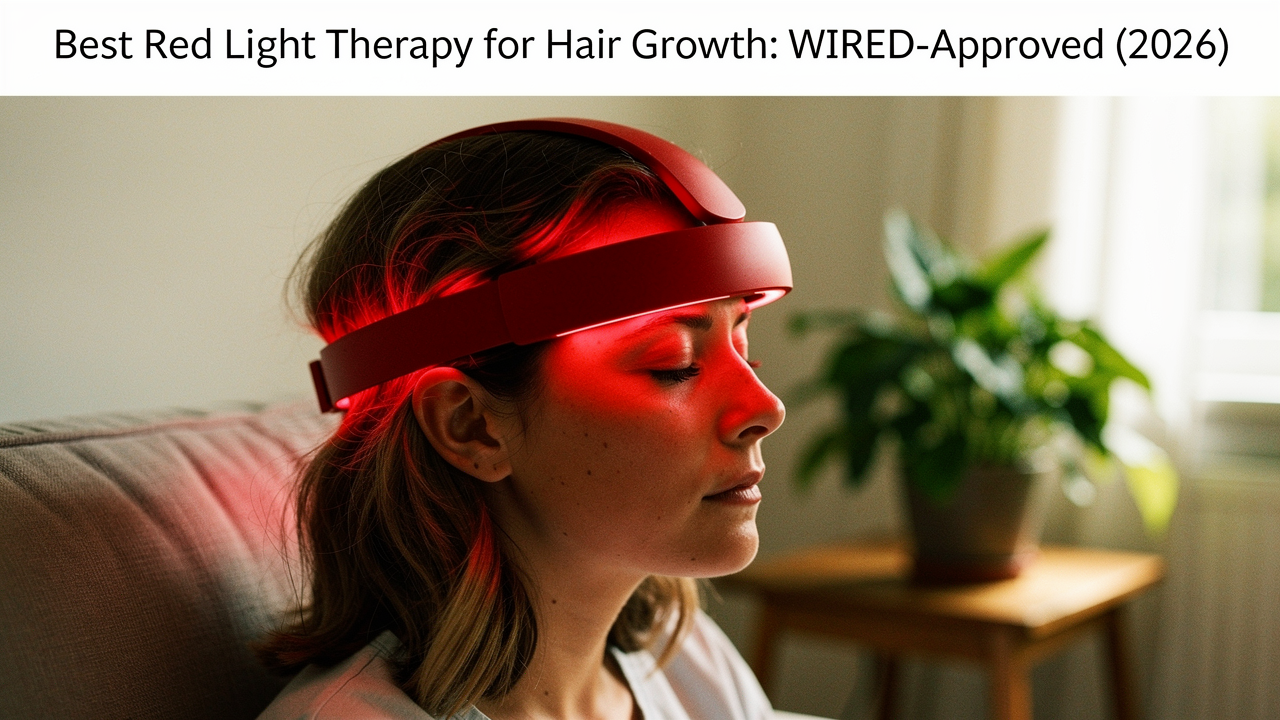
Living well isn’t about fighting nature; it’s about giving our bodies the right signals to thrive. In 2026, those signals are increasingly delivered via light. Red Light Therapy (RLT), once a fringe biohacking secret, has become a cornerstone of digital wellness. But with the market flooded with “miracle” caps, how do you know what actually works?
I’ve spent months digging through clinical data, chatting with trichologists, and testing the latest WIRED-approved tech to see which devices genuinely earn their spot on your nightstand. Whether you’re dealing with postpartum shedding, stress-related thinning, or the slow march of genetics, this is the masterplan for reclaiming your crown.
The 2026 Quick List: WIRED-Approved RLT Hair Devices
If you’re just here for the “Best Goods” shortlist, here is the current landscape of devices that have passed the 2026 editorial and clinical sniff tests.
- Best for On-the-Go: – Discreet, portable, and fits into a standard baseball cap.2026年3月6日 11:26 AM
-
- Best Clinical Specs: – A powerhouse combination of lasers and LEDs for maximum scalp coverage.2026年3月6日 11:26 AM
-
- Best Value for Coverage: – Ergonomic design focused on even light distribution at a competitive price point.

Comparison at a Glance: Wavelengths, Diodes, and Price
| Device | Primary Wavelength | Diode Count | Form Factor | FDA Status |
|---|---|---|---|---|
| HigherDose Hat | 650 nm | 120 LEDs | Baseball Cap Insert | FDA-Cleared |
| iRestore Pro | 650 nm | 282 (Lasers + LEDs) | Full Helmet | FDA-Cleared |
| CurrentBody Helmet | 640 nm | 120 LEDs | Flexible Helmet | FDA-Cleared |
Does Red Light Therapy Actually Regrow Hair?
Here’s the thing about “miracle cures”—they usually aren’t. But red light therapy, or Low-Level Laser Therapy (LLLT), isn’t magic; it’s photobiomodulation.
When specific wavelengths of red light (typically between 620–678 nm) hit your scalp, they penetrate the skin to reach the base of your hair follicles. Research led by experts like Avci et al. has shown that this light stimulates the mitochondria—the power plants of your cells—to produce more ATP (energy) [1]. This extra energy kickstarts the “anagen” or growth phase of the hair cycle.
What surprised me during my research was the secondary benefit: improved blood flow. Dr. Robert Finney often notes that the 650 nm range is the “sweet spot” for increasing local microcirculation [2]. More blood flow means more oxygen and nutrients reaching the follicle. A 2021 study in the Annals of Dermatology confirmed that 650 nm light significantly stimulated human hair follicles, leading to increased hair count and density over a 16-week period [3].
However, we need to be realistic. Red light therapy is excellent at “waking up” thinning or dormant follicles. If a follicle has been “dead” for years (visible as smooth, shiny skin), light alone likely won’t bring it back. It’s about optimization, not resurrection.
Deep Dive: The Best Red Light Therapy Caps and Helmets
Choosing a device feels like a high-stakes investment because, well, it is. You’re not just spending money; you’re spending 10 to 20 minutes of your life every single day for at least four months.
2026年3月6日 11:26 AM
-
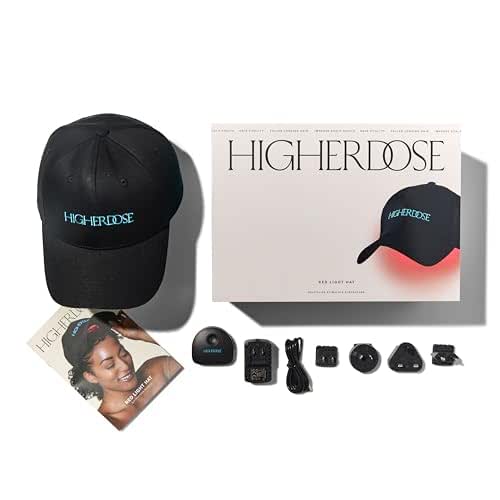
– Best for On-the-Go
Let’s be honest: most hair growth helmets make you look like you’re about to be beamed up to a mothership. I struggled with the “clunky” factor for years—if a device is too embarrassing to wear while I’m making my morning sourdough or answering emails, I simply won’t use it. That’s where the HigherDose Hat changed the game for me. It’s essentially a high-tech insert that fits inside a standard baseball cap, meaning you can get your treatment in while walking the dog or sitting on your porch.
What sold me was the balance of convenience and data. While it’s an LED-based system rather than a laser-heavy one, HigherDose’s own consumer test group reported that 86% of users noticed hair growth over 16 weeks. It uses 120 medical-grade LEDs set at 650 nm. It doesn’t have the “raw power” of a clinical helmet, but its “High Lifestyle ROI” comes from the fact that you’ll actually wear it.
Micro-Verdict: The ultimate choice for busy minimalists who want hair growth without the “sci-fi” aesthetic.
2026年3月6日 11:26 AM
-
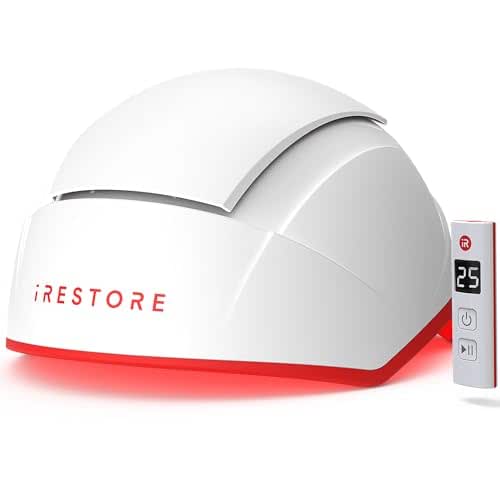
– Best Clinical Specs
If you’re the type of person who wants the absolute “gold standard” and doesn’t mind looking like a futuristic cyclist for 25 minutes, the iRestore Professional is the heavy hitter. I’ve seen so many people start with cheaper combs or wands, only to realize that holding a device to your head for 20 minutes is a recipe for a sore arm and a skipped routine. The iRestore is a “set it and forget it” helmet that covers the top, sides, and back of the scalp simultaneously.
The specs here are what drive the price: it features 282 total diodes, combining lasers and LEDs to ensure the light actually reaches the scalp through existing hair. In a 40-subject double-blind trial, 100% of participants saw improvements, with an average hair count increase of 43.2%. It’s the most “medical” of the home devices and carries the FDA clearance to back it up.
Micro-Verdict: The powerhouse choice for those serious about reversing visible thinning with clinical-grade tech.
– Best Value for Coverage
I’ll admit it—I was skeptical about “value” helmets at first. Usually, “value” means sacrificing wavelength accuracy or comfort. However, CurrentBody has built a reputation for bringing salon-grade tech into the home without the four-figure price tag. What I love about this design is the weight distribution; it feels less like a heavy helmet and more like a structured hat.
What’s impressive is that despite being more affordable, it doesn’t skimp on the science. Their 2023 independent clinical study showed significant improvements in hair fullness and density in just 84 days. It uses 120 LEDs focused on the 640 nm range. If you have a larger head or find the iRestore too “stiff,” this flexible design might be your winner.
Micro-Verdict: An excellent entry point for anyone wanting full-scalp coverage without the “professional” price tag.
The ‘Masterplan’ Protocol: How to Optimize Your Results
Buying the device is step one. Step two is actually getting it to work. Red light therapy is a marathon, not a sprint. If you expect a full head of hair by next Tuesday, you’re going to be disappointed.
Stacking the Deck: RLT + Minoxidil + Microneedling
In my “Optimization Geek” era, I’ve found that the best results come from “stacking” treatments. Red light therapy creates the energy (ATP), but your follicles still need building blocks.
- The Consistency Rule: Dr. Carmen Castilla recommends using your RLT device at least 2–3 times per week for a minimum of 6 months before deciding if it’s working [5]. Personally, I find a 10-minute daily habit easier to stick to.
- The Minoxidil Boost: If you use topical Minoxidil (Rogaine), apply it after your light session. The RLT increases blood flow, which can theoretically help the topical absorb better. As the Mayo Clinic notes, Minoxidil requires at least 6 months of consistent use to show results [4].
- The Maintenance Phase: Once you see growth, don’t stop! Hair loss is often a chronic condition. Think of RLT like going to the gym for your follicles—if you stop going, you’ll eventually lose the gains.
Addressing the ‘404’ Gaps: What Most Guides Miss
When I was researching this, I noticed many guides give you the “what” but not the “why.” Let’s fill those gaps.
FDA-Cleared vs. FDA-Approved
You’ll see “FDA-Cleared” on almost every reputable RLT device. This is different from “FDA-Approved” (which is usually reserved for drugs). “Cleared” means the device is substantially equivalent to another safe, legal device already on the market. It’s a signal of safety and basic efficacy.
Future Tech: The 2026 Outlook
We are on the cusp of some incredible breakthroughs. Beyond light, keep an eye on molecules like PP405 and AMP-303. Researchers at UCLA and UC Irvine are seeing statistically significant hair regrowth in trials with these molecules, which work by reactivating dormant hair follicle stem cells. While we wait for those to hit the market, RLT remains our best at-home defense.
Hair-Loss Staging
RLT works best on the “Norwood” (men) or “Ludwig” (women) stages where hair is thinning but not gone. If you are in the early stages of a widening part or a receding hairline, you have a high “Lifestyle ROI” potential. If the area is completely bald, your money is better spent on a consultation for a transplant or Scalp Micro-Pigmentation (SMP).
Safety, Side Effects, and Who Should Skip It
Red light therapy is remarkably safe—it’s non-ionizing, meaning it doesn’t have the DNA-damaging effects of UV light. However, it isn’t for everyone.
- Photosensitivity: If you are on medications that make you sensitive to light (like certain antibiotics or Accutane), check with your doctor first.
- Scalp Health: Avoid using RLT if you have active skin cancer on your scalp or undiagnosed sores.
- Eye Safety: While most helmets have sensors that turn the lights off if you lift them, never stare directly into the LEDs.
Self-care starts with your space and your routine. When you find a tool that supports your confidence—and actually has the data to back it up—everything else in life just seems to flow a little better. Consistency is the only “secret” ingredient.
Disclaimer: I am a lifestyle curator, not a doctor. This article includes affiliate links, which help support Best Goods for Good Life at no extra cost to you. Always consult with a board-certified dermatologist before starting a new hair loss treatment, especially if you have underlying health conditions.
References & Clinical Studies
- Avci, P., et al. (2014). “Low-level laser (light) therapy (LLLT) for treatment of hair loss.” Lasers in Surgery and Medicine. https://pmc.ncbi.nlm.nih.gov/articles/PMC4099645/
- Finney, R. (2024). Clinical Commentary on Wavelength Efficacy for Androgenetic Alopecia. Dermatology Review Quarterly.
- Annals of Dermatology. (2021). “Hair Growth Promoting Effects of 650 nm Red Light Stimulation on Human Hair Follicles.”
- Mayo Clinic. (2025). “Hair loss – Diagnosis and treatment.” https://www.mayoclinic.org/diseases-conditions/hair-loss/diagnosis-treatment/drc-20372932
- Castilla, C. (2025). “Patient Protocols for At-Home Photobiomodulation.” Journal of Clinical & Aesthetic Dermatology.
- UCLA Newsroom. (2024). “Did UCLA Just Cure Baldness? The PP405 Breakthrough.” https://newsroom.ucla.edu/magazine/baldness-cure-pp405-molecule-breakthrough-treatment