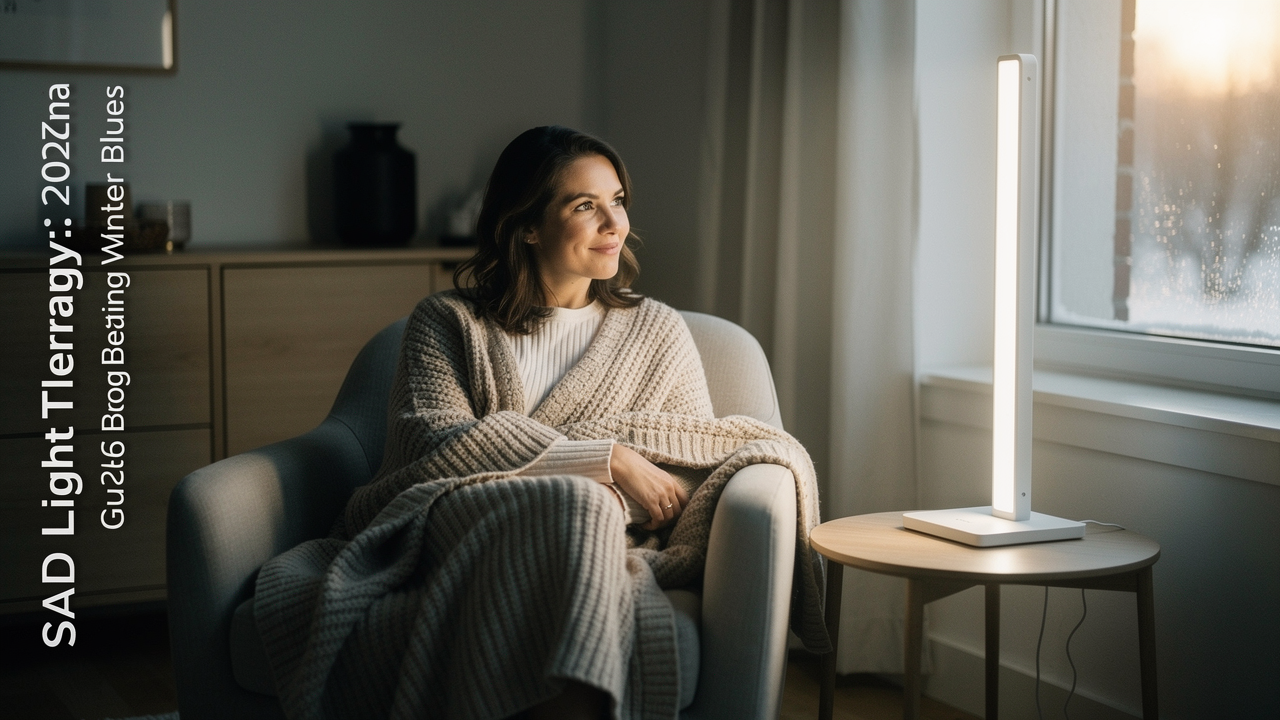
In my world of lifestyle curation, I’m obsessed with “High Lifestyle ROI”—those small, thoughtful changes that yield massive improvements in how we actually feel. Light therapy is the ultimate example. When the sun won’t cooperate, we have to optimize our biology manually. This guide is my deep dive into the science of resetting your internal clock, the clinician-backed protocols that actually work, and the best SAD light therapy lamps of 2026 that have earned a permanent spot on my desk.
Is it Just ‘Winter Blues’ or Seasonal Affective Disorder?
It’s easy to dismiss a bad mood as “just the season,” but there is a distinct line between feeling a little sluggish and clinical Seasonal Affective Disorder (SAD). According to the Cleveland Clinic, about 10% to 20% of Americans experience a milder form of the “winter blues” [2]. You might feel a bit more tired or find yourself reaching for an extra piece of toast, but you’re still functioning.
However, SAD is officially classified by the American Psychiatric Association as Major Depressive Disorder with a seasonal pattern [1]. It’s a recurring cycle where symptoms usually kick in during late autumn and don’t lift until the spring thaw. Here is how it often shows up in real life:
- The Energy Drain: Feeling exhausted despite sleeping 9 or 10 hours.
- The “Carb Coma”: An intense, almost biological craving for starches and sweets [4].
- Social Withdrawal: That “hibernation” instinct where even a coffee date feels like a marathon.
- Functional Impact: When your work performance or relationships start to feel the strain of your low mood.
If you find that your “sluggishness” is actually preventing you from living your life, it’s time to look at light as a legitimate tool for recovery.
The Science of Sunlight: How Light Therapy Resets Your Brain
The reason we feel so “off” during winter isn’t just about the cold—it’s about the lack of specific light wavelengths hitting our eyes. Inside our brains, there’s a tiny master clock called the suprachiasmatic nucleus (SCN) [2]. When it doesn’t get enough bright light in the morning, our internal rhythm gets “drifty.”
What surprised me during my research was how specific the biological response is. Without that morning light signal, our bodies keep producing melatonin (the sleep hormone) well into the morning while our serotonin (the mood-stabilizer) drops. It’s a recipe for a “walking ghost” feeling.
Bright light therapy works as a biological reset button. By mimicking the intensity of a spring morning, these lamps tell your SCN to stop melatonin production and kickstart your day. The data is hard to ignore: the Ohio State Wexner Medical Center reports that approximately 60% of people with SAD experience significant symptom improvement with light therapy [5]. Furthermore, a 2024 JAMA Psychiatry meta-analysis found that bright light therapy showed a 41% remission rate for depression—a massive win for a non-invasive tool [10].
How to Use a SAD Lamp: The Clinician-Backed Protocol
I’ll be honest: when I first bought a light box, I just turned it on whenever I felt tired. That was a mistake. To get that “High Lifestyle ROI,” you have to follow the clinical protocol. It’s not about just “having the light on”—it’s about the dose, timing, and distance.
Here’s the thing about the “10,000 lux” standard: it only works if you use it correctly.
- The Morning Window: You need to use the lamp within the first hour of waking up. This is when your circadian rhythm is most sensitive to the reset signal [6].
- The 10,000 Lux Standard: Most clinical studies use 10,000 lux. If your lamp is weaker, you’ll have to sit in front of it for hours, which none of us have time for [6].
- Distance Matters: Per the Mayo Clinic, you should be about 16 to 24 inches away from the light source [1]. If you’re too far away, the “lux” (light intensity) drops off exponentially.
- Eyes Open, But Don’t Stare: The light needs to reach your retinas to work, so keep your eyes open. However, do not stare directly into the LEDs; just let the light bathe your face while you read or check emails.
Troubleshooting Your Sessions
If you start experiencing headaches or eye strain, don’t give up. The University of Wisconsin’s patient guidelines suggest starting with just 10–15 minutes and gradually building up to 30 or 60 minutes [11]. If you find yourself feeling “wired” or having trouble sleeping at night, you might be using the lamp too late in the day. Always aim for before 10:00 AM.
The Best SAD Light Therapy Lamps of 2026
When I started looking for a lamp that didn’t look like a piece of hospital equipment, I realized how many “scam” lamps are out there. A tiny tablet-sized light might claim 10,000 lux, but you’d have to hold it two inches from your nose to get that intensity. I’ve narrowed it down to three choices that balance clinical efficacy with real-world usability.
The Best Overall
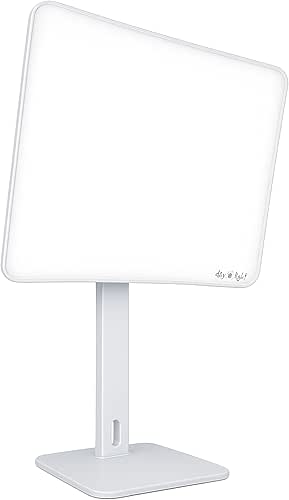
For years, I struggled with small, flickery lamps that felt more like a chore than a ritual. I needed something that actually covered my field of vision so I could move my head while drinking my coffee. After seeing it consistently recommended by experts at Wirecutter and sleep researchers, I finally invested in a larger panel that sits at the proper height [7]. It doesn’t just provide the light; it provides the right kind of light—a soft, broad glow that doesn’t feel like a spotlight in your eyes.
Micro-Verdict: The gold standard for those who want a clinical-grade experience without the glare.

The Powerhouse for Quick Sessions
I’ll admit it—some mornings in Austin, I’m running behind on my Sunday reset or sourdough prep. On those days, a 30-minute session feels impossible. I went looking for something with a higher output and found a device that delivers over 20,000 lux at a foot away [8]. Because it’s so powerful, you can either sit further back or cut your session time down significantly. It’s the ultimate “optimization geek” tool for anyone who wants maximum efficiency.
Micro-Verdict: The best choice for busy professionals who need results in 15 minutes flat.
Best for Small Desks
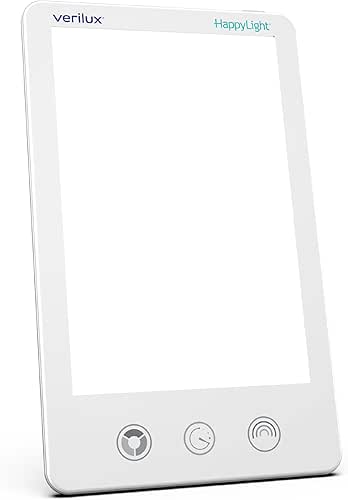
If you’re working from a corner of your living room or have a tiny apartment desk, a giant light panel is a non-starter. I ignored this category for a long time until I tested a compact model that actually felt intentional. It has an adjustable color temperature, so you can use it as a standard task light when you aren’t doing your “therapy” session. It’s sleek, portable, and fits right next to a laptop without cluttering the space.
Micro-Verdict: A stylish, space-saving win for apartment dwellers and remote workers.
Persona Loadout: Choosing Your Light
- The Home Office Resident: Go for the Carex Day-Light Elite. You have the desk space, and the large panel is much more comfortable for long-term use.
- The “On-the-Go” Optimizer: Choose the SOL PhotoVites. If you only have 15 minutes while you eat breakfast, you need the extra power.
- The Minimalist: The Verilux HappyLight Luxe is your best bet. It tucks away easily and doubles as a clean-looking desk lamp.
The SAD Lamp Buyer’s Checklist: 4 Things to Check Before You Buy
Not all “light therapy” lamps are created equal. In an unregulated market, it’s easy to buy a glorified flashlight. Here is exactly what I look for to ensure a lamp has a High Lifestyle ROI:
- Strictly UV-Free: This is non-negotiable. You want the benefits of light without the skin damage or eye risks associated with UV rays [3]. Look for a label that explicitly states “UV-filtered” or “10,000 lux UV-free.”
- The Distance Spec: If a box says “10,000 lux” but doesn’t tell you the distance, keep moving. A good lamp will provide 10,000 lux at 12–16 inches [9].
- Large Surface Area: Small “spotlight” style lamps are hard on the eyes because of the high contrast. A larger diffusing lens creates a softer, more effective field of light.
- Flicker-Free Technology: Cheap LEDs have a subtle flicker that can trigger migraines. Always check for “flicker-free” or “electronic ballast” descriptions.
Safety First: When to Avoid Light Therapy
While light therapy is incredibly safe for most people, it is a biological intervention. There are a few situations where you should definitely talk to your doctor before hitting the “on” switch:
- Bipolar Disorder: There is a documented risk that bright light therapy can trigger hypomania or mania in individuals with bipolar disorder [1]. This must be managed by a psychiatrist.
- Retinal Conditions: If you have glaucoma, macular degeneration, or other eye issues, check with an ophthalmologist first.
- Photosensitizing Meds: Certain antibiotics, anti-inflammatories, or herbal supplements like St. John’s Wort can make your skin and eyes more sensitive to light [11].
- The Vitamin D Myth: Standard SAD lamps filter out UV light, which means they do NOT help your body produce Vitamin D [3]. You’ll still need to look at your diet or supplements for that!
Self-care starts with your space, but it also starts with being smart about your health. Light therapy is a support tool, not a replacement for professional medical care.
Living well isn’t about having more gadgets; it’s about choosing the ones that genuinely support the flow of your life. 2026 has brought us some incredible tech, but the real “magic” of light therapy is the consistency. If you commit to those 30 minutes every morning for two weeks, I think you’ll be surprised at how much easier it is to wake up and how much more “you” you feel, even when the Austin sky stays gray.
Start small, track your mood in your journal, and let the light do the heavy lifting this winter.
Disclaimer: I am an optimization enthusiast and lifestyle curator, not a doctor. This guide is for informational purposes and should not replace professional medical advice. Always consult with a clinician before starting light therapy, especially if you have bipolar disorder or eye conditions.
References & Further Reading
- Mayo Clinic (2025). Seasonal affective disorder treatment: Choosing a light box. https://www.mayoclinic.org/diseases-conditions/seasonal-affective-disorder-treatment/art-20048298
- Cleveland Clinic (2024). Seasonal Depression (SAD). https://my.clevelandclinic.org/health/diseases/9293-seasonal-depression
- National Alliance on Mental Illness (NAMI) (2024). Seasonal Affective Disorder. https://namidetroit.org/seasonal-affective-disorder
- NewYork-Presbyterian (2024). What to Know About Seasonal Affective Disorder. https://healthmatters.nyp.org/what-to-know-about-seasonal-affective-disorder/
- Ohio State University Wexner Medical Center (2024). SAD Light Therapy. https://health.osu.edu/health/mental-health/sad-light-therapy
- American Academy of Family Physicians (AAFP) (2023). Phototherapy for Seasonal Affective Disorder. https://www.aafp.org/pubs/afp/afp-community-blog/entry/phototherapy-for-seasonal-affective-disorder.html
- NYT Wirecutter (2025). The Best Light Therapy Lamp. https://www.nytimes.com/wirecutter/reviews/best-light-therapy-lamp/
- OptimizeYourBiology (2025). Best SAD Light Therapy Lamps. https://optimizeyourbiology.com/best-sad-light-therapy-lamps
- Healthline (2024). How to Choose and Use a SAD Lamp. https://www.healthline.com/health/sad-lamp
- American Psychiatric Association (APA) Blog (2024). Bright Light Therapy Beyond Seasonal Depression. https://www.psychiatry.org/news-room/apa-blogs/bright-light-therapy-beyond-seasonal-depression
- University of Wisconsin Integrative Medicine (2023). Patient Handout: Light Therapy. https://www.fammed.wisc.edu/files/webfm-uploads/documents/outreach/im/handout_light_therapy.pdf