=
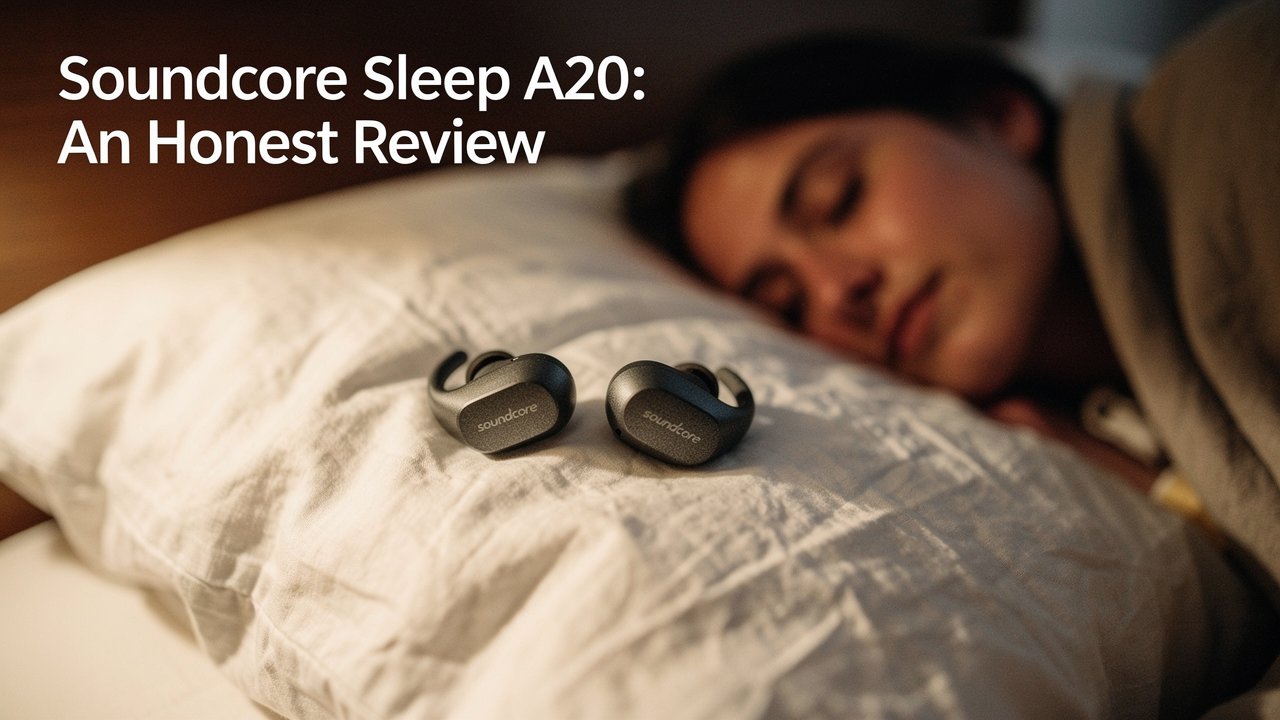
When I started my journey with “Best Goods for Good Life,” I developed the Good Life Test: Does a product solve a real problem, is it built to last, and does it spark joy in the daily routine? I call this “High Lifestyle ROI.” Today, I’m diving into a product that has been sitting in my ears for the last 30 nights: the Soundcore Sleep A20. With the current Soundcore Sleep A20 Amazon deal making waves, I wanted to see if this discount is a genuine win for your wellness or just another piece of tech destined for the “junk drawer” of failed resolutions.
The Amazon Deal: Is the Soundcore Sleep A20 Pricing Legitimate?
Here’s the thing about Amazon: “40% off” can sometimes be a bit of a mirage. We’ve all seen those listings where the MSRP is artificially inflated just to make a standard price look like a steal. However, when I dug into the price history for the Sleep A20, something interesting clicked.
Looking at historical data from price-tracking tools like Keepa and CamelCamelCamel, the Soundcore Sleep A20 usually floats around the $150 mark, with occasional dips. The current Amazon deal today bringing them into the $107–$137 range is actually a legitimate record-low or near-low price. This isn’t just “MSRP bloat.”
What surprised me was how often these deals rotate. While it’s tempting to wait for Black Friday or Prime Day, if you’re currently suffering from sleep deprivation, the cost-per-night of waiting often outweighs the $10 you might save three months from now. If you can snag these for under $130, you’re looking at a genuine Amazon deal on earbuds that provides high ROI on your sanity.
The Science of Sleep Disturbance: Why Noise Masking Matters
I’ll admit it—I used to think I could just “tough it out” with noise. But the science tells a much scarier story. Noise isn’t just an annoyance; it’s a physiological stressor.
According to research published in Environmental Epidemiology, nighttime environmental noise is directly linked to “cortical awakenings”—those micro-interruptions that pull you out of deep, restorative sleep without you even realizing it [1]. These interruptions aren’t just making you cranky; they are associated with increased risks of cardiovascular disease and mental health struggles.
The World Health Organization (WHO) suggests that for healthy sleep architecture, nighttime noise should stay below 40–45 dB [1]. When your partner is snoring at 60 dB, your brain stays on “high alert.” Yale Medicine has even noted that just two weeks of this kind of fragmented sleep can impair your memory and critical thinking to the same level as staying awake for two days straight [2]. That’s why a solution like the A20 isn’t just a gadget—it’s a health intervention.
Soundcore Sleep A20 Deep Dive: Design vs. Discomfort
Let me be honest: I ignored sleep earbuds for years because I’m a dedicated side sleeper. Every pair I tried felt like a marble being pressed into my ear canal by my pillow. It was a choice between the noise of the world or the pain of the plastic.
I’ve been running my own “30-Night Protocol” with the A20, testing them against various pillows (from my favorite buckwheat hull to standard memory foam). I was skeptical at first, but the low profile is the real deal. They sit flush within the concha of the ear, meaning there’s no “stem” to catch on your pillowcase. Soundcore uses a 4-point masking system that pairs twin-seal ear tips with smart volume control. While it doesn’t have the active “silence” of high-end ANC, it creates a consistent sound floor that makes those sudden spikes—like a car door slamming outside—fade into the background.
Passive Masking vs. ANC: Which is Better for Snoring?
You know that feeling when you’re trying to ignore a repetitive noise, and the more you focus on it, the louder it gets? That was my reality with snoring until I understood the difference between Active Noise Cancellation (ANC) and masking.
ANC is incredible for the low, steady hum of an airplane engine, but it often struggles with the erratic, “peaky” frequencies of a human snore. The A20 relies on noise masking. Instead of trying to cancel the sound wave, it covers it with soothing, curated sounds (like white noise or rainfall) that your brain eventually “tunes out.” CNN Underscored actually found that many testers “barely noticed” they were wearing the A20s upon waking, which aligns with my experience [3]. By the third night, they felt as natural as wearing a sleep mask.
Micro-Verdict: The ultimate “set-it-and-forget-it” solution for side sleepers who need consistent noise coverage.


The Strategy: A20 vs. A30 vs. QuietOn 3.1
Choosing the right sleep tool depends entirely on your specific “noise enemy.” I’ve broken down how these stack up so you don’t waste money on the wrong tech.
- Soundcore Sleep A20: The “Battery King.” Best for those who need a full 10-14 hours of masking and priority comfort for side-sleeping. Uses passive masking.
- Soundcore Sleep A30: The “Power Player.” Features actual ANC and adaptive snore masking. It’s slimmer but has slightly less battery life than the A20. Best for heavy snorers.
- QuietOn 3.1: The “Minimalist.” These are essentially high-tech ANC earplugs. No Bluetooth, no music—just silence. Best for those who hate the idea of “playing” sounds to sleep.
Who Should NOT Buy the Soundcore Sleep A20?
I want to be very clear: this isn’t a magic bullet for everyone. If you’re a “music lover” looking for high-fidelity audio to listen to podcasts or Spotify, these will disappoint you. They are tuned for sleep sounds, not Taylor Swift.
Also, we need to talk about “orthosomnia”—the anxiety that comes from obsessively tracking your sleep data [4]. The A20 has built-in sleep tracking, but if seeing a “poor” score on your phone makes you more stressed, turn that feature off.
Lastly, if you have chronic ear infections or very small ear canals that are easily irritated, any in-ear device might be a struggle. In those cases, I usually recommend looking at a headband-style headphone like SleepPhones, though you’ll sacrifice the noise-blocking seal.
The Perfect Sleep Tech Stack
If you’re ready to reclaim your mornings, I recommend building a “Lifestyle ROI” stack. Here is how I’ve organized my environment to support a deep, Austin-style reset:
The High-ROI Sleep Stack
You don’t need every gadget, but these three together create a “fortress of solitude” for your rest.
- Essential: Soundcore Sleep A20 Earbuds for direct noise masking and side-sleeper comfort.
- Essential: A 100% blackout sleep mask to signal to your brain that it’s time for melatonin production.
- Pro Upgrade: A dedicated sleep tracking app (if not using the Soundcore app) to identify which habits (like late-night snacks) are ruining your sleep quality.
- Environment: Blackout curtains and a cool room temperature (65-68°F) to complement the earbuds.
Final Verdict: Is the Deal Worth It?
What finally clicked for me was calculating the cost of my “junk sleep.” If the Soundcore Sleep A20 Amazon deal saves you $50 and provides a year of better rest, you’re paying pennies per night for cognitive clarity. For me, being able to wake up and actually enjoy my sourdough routine without a “sleep hangover” is worth the investment.
If you are a side sleeper struggling with a snoring partner or city noise, the A20 is the most balanced “high-ROI” choice on the market today. It’s comfortable, the battery is reliable, and the current price makes it a very smart time to buy.
Check the current price and grab the deal here:
Scientific References & Trusted Sources
- Environmental Epidemiology (2019). “Environmental noise, sleep and mental health.” https://journals.lww.com/environepidem/fulltext/2019/08000/environmental_noise_and_sleep_and_mental_health.4.aspx
- Yale Medicine (2024). “The Effects of Poor Sleep on Cognitive Performance.” https://www.yalemedicine.org/news/effects-of-poor-sleep
- CNN Underscored (2024). “The Best Headphones for Sleeping of 2024.” https://www.cnn.com/cnn-underscored/reviews/best-headphones-for-sleeping
- Hospital for Special Surgery (2023). “How to Improve Sleep Quality and Avoid Orthosomnia.” https://www.hss.edu/health-library/move-better/improve-sleep-quality
- Sleep Foundation (2024). “How to Determine Poor Quality Sleep.” https://www.sleepfoundation.org/sleep-hygiene/how-to-determine-poor-quality-sleep
Disclaimer: This review reflects my personal experience and research. I may earn a commission from purchases made through affiliate links at no extra cost to you. Always consult with an ENT or sleep specialist if you have chronic ear or sleep issues.