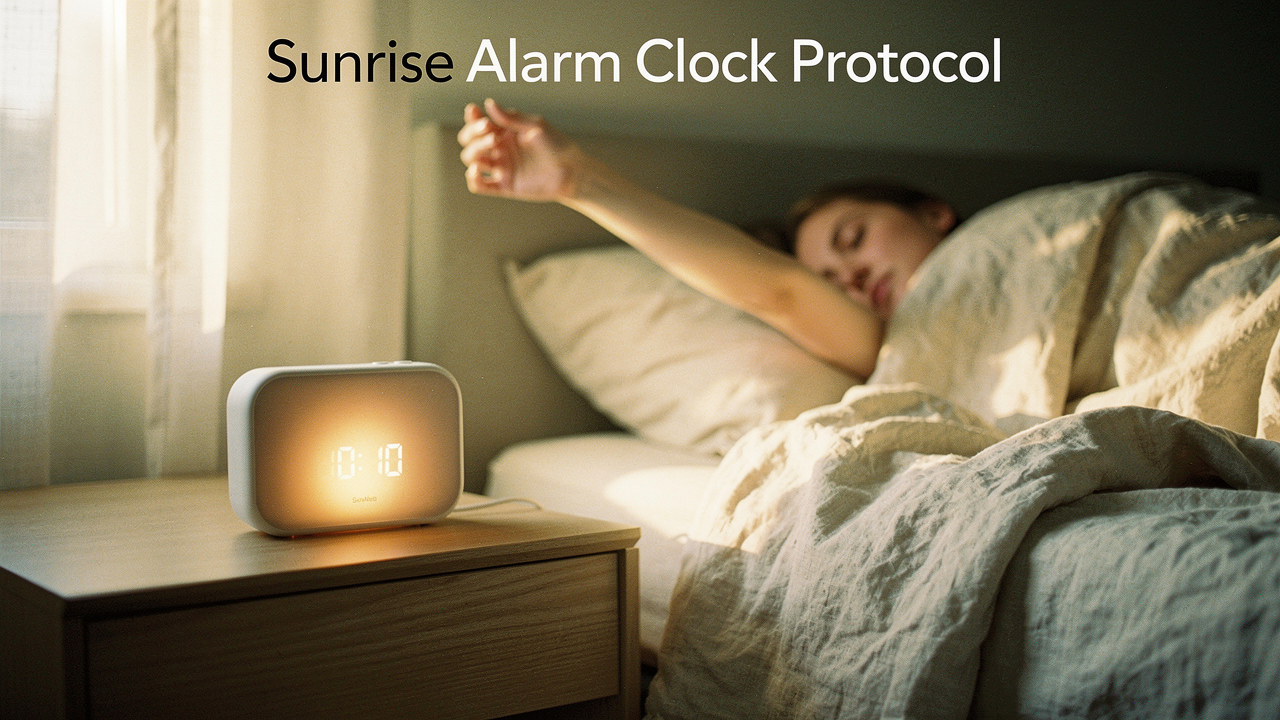
As a lifestyle curator at Best Goods for Good Life, I’m obsessed with what I call “High Lifestyle ROI.” These are the small, thoughtful changes that pay massive dividends in how you feel. And let me tell you: how you wake up dictates the trajectory of your entire day. If you start your morning in a state of physiological stress, you’re playing catch-up until lunch.
For years, I struggled with that heavy, “drunken” feeling upon waking—what scientists call sleep inertia. It didn’t matter if I had my favorite local roast waiting in the kitchen or a yoga mat calling my name; the transition from sleep to “human” felt like wading through molasses.
What finally clicked for me was realizing that our bodies aren’t designed to be jolted awake by noise. We’re designed to be coaxed awake by light. By switching to a sunrise alarm clock protocol, I’ve managed to turn my “Sunday Reset” energy into a daily reality. Here is how you can do the same.
The Science of the ‘Morning Fog’: Why Your Alarm is Failing You
Here’s the thing about that groggy feeling: it isn’t just you being “not a morning person.” It’s a biological state. According to the Sleep Foundation, sleep inertia is the transitional state between sleep and wakefulness, characterized by impaired performance and a desire to return to sleep [1]. It can last anywhere from a few minutes to—in frustrating cases—several hours.
When a loud alarm goes off, it often catches you in the middle of a deep sleep cycle. This abrupt shift causes a spike in morning anxiety and cortisol, the body’s primary stress hormone [3]. Research published in the PMC review “Waking up is the hardest thing I do all day” highlights that this sudden awakening can lead to significant cognitive impairment, making you feel more like a zombie than a high-functioning adult [2].
Light is the biological “off switch” for melatonin (the sleep hormone) and the “on switch” for cortisol and serotonin (the alertness and mood hormones). By simulating a natural dawn, you allow your brain to exit deep sleep cycles gradually. You aren’t being shocked awake; you’re being invited to wake up.
The Sunrise Protocol: How to Calibrate Your Wake-Up Light
Buying the clock is only half the battle. To get that High Lifestyle ROI, you need to set it up correctly. I’ve spent months tweaking my bedside environment, and here is what I found actually works:
- The 30-Minute Ramp: Most devices allow you to choose how long the “sunrise” lasts. I recommend a 30-minute window. This mimics the natural rhythm of the sun and gives your brain enough time to shift gears.
- The Golden Distance: Don’t hide your clock behind a pile of books. For the light to be effective, it needs to reach your eyes. Stanford Health Care suggests that for light therapy to influence circadian rhythms, the light needs to be within your field of vision [4]. I keep mine about 2 to 3 feet from my face on my nightstand.
- Lux Levels Matter: While a clinical SAD lamp might use 10,000 lux, a sunrise alarm is gentler. The American Academy of Sleep Medicine (AASM) notes that even lower-intensity dawn simulators can be effective at reducing that morning fog [5].
Our 5 Favorite Sunrise Alarm Clocks for 2024
I’ve tested dozens of products in my search for the perfect Austin morning. Here are the five that earned a permanent spot on my “Best Goods” list.
1. The Gold Standard: Philips SmartSleep HF3520
I’ll admit it—I was skeptical at first about spending over $100 on an alarm clock. I’d tried the cheap $20 versions from big-box stores, and they always felt like a flashlight being blinked in my face. But when I finally tried the Philips SmartSleep, the difference was immediate. The light doesn’t just get “brighter”; it shifts from a deep, warm red to a soft orange, and finally to a bright morning yellow.
It felt less like an “alarm” and more like someone had gently opened the curtains on a perfect spring day. This color-spectrum shift is what sets premium models apart. The NYT Wirecutter lab tests confirmed that the HF3520 offers one of the smoothest lux ramps on the market, avoiding the “stuttering” light increases found in cheaper models.
Micro-Verdict: The most reliable, scientifically-calibrated sunrise on the market.
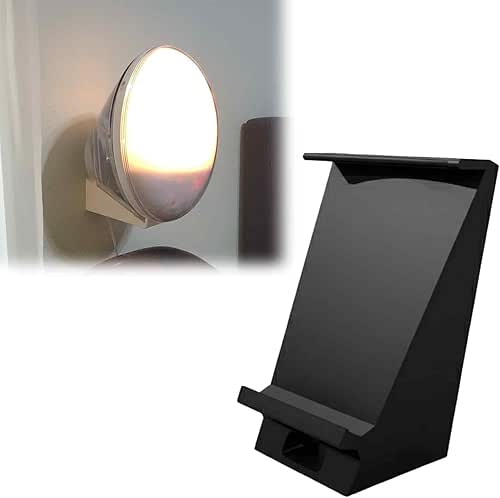

2. Best for High-Design Homes: Hatch Restore 2
Morning anxiety used to be my daily reality until I started focusing on my “wind-down” just as much as my “wake-up.” I found the Hatch Restore 2 during a particularly stressful month when I was struggling to disconnect from my phone at night. What makes the Restore 2 special isn’t just the sunrise; it’s the entire “sleep sandwich” it creates.
The aesthetic is beautiful—it looks like a piece of modern decor rather than a piece of tech—but the real win is the integrated app experience. You can curate a “Rise” routine that starts with a soft light and ends with a guided morning stretch. Just a heads up: many of the best soundscapes and routines require a “Hatch+” subscription ($4.99/month), which is worth it if you’re a fan of high-quality audio and variety.
Micro-Verdict: A beautiful, all-in-one routine builder for the mindfulness-obsessed.
3. The High-Performance Choice: Lumie Bodyclock Luxe 750D
Here’s the thing about living a balanced life: evening habits are the foundation of morning success. I discovered the Lumie brand while researching light therapy for those dark, rainy Austin winters. The Luxe 750D is a powerhouse because it prioritizes “low blue light” features.
Most electronics keep us awake with blue light, but the Lumie has a dedicated setting that removes blue light from the spectrum in the evening, casting a gorgeous, sunset-inspired glow that helps you naturally produce melatonin. When morning comes, the high-quality speakers play birdsong that actually sounds like it’s coming from your window, not a tinny computer chip.
Micro-Verdict: The ultimate choice for those who want medical-grade light quality and premium audio.
4. Best Budget Hero: Dreamegg Sunrise Alarm
You know that feeling when you want the upgrade but the budget says “not today”? I wanted to find a solution for my readers who are curious about light therapy but aren’t ready to drop $150. I tested the Dreamegg after seeing it pop up in several minimalist communities.
While the light transition isn’t quite as “painterly” as the Philips (it doesn’t have that deep red start), it is remarkably effective. It’s compact, easy to program without an app, and the “warm white” light is surprisingly pleasant. It’s proof that you don’t need a massive investment to start improving your circadian health.
Micro-Verdict: An impressive, no-nonsense “entry-level” light that gets the job done.

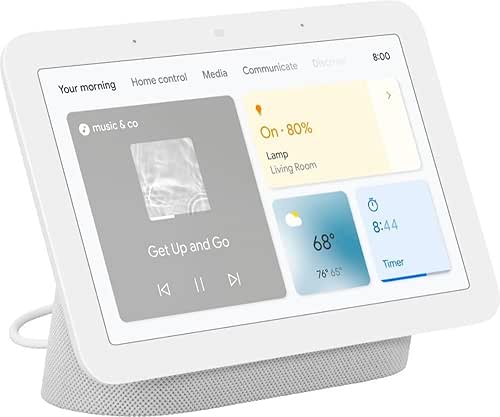
5. Best for Smart Home Geeks: Google Nest Hub (2nd Gen)
Let me be honest: I’m a bit of a nerd when it comes to my smart home setup. If you already have a Nest Hub on your nightstand, you might already have a sunrise alarm and not even know it. Using a feature called “Gentle Wake Up,” the Nest Hub can sync with any compatible smart bulbs in your room.
I tried this by pairing it with my overhead dimmable lights. Instead of just a small clock on my desk, my entire room gradually brightened over 30 minutes. It also uses “Soli” radar technology to track your sleep stages without you having to wear a watch. If you love data and integration, this is a brilliant way to leverage the tech you already own.
Micro-Verdict: The best choice for data-driven sleepers who want a whole-room experience.
Quick Comparison: Which Clock Wins Your Bedside Table?
To help you decide, I’ve broken down the “Good Life Test” metrics for each:
- The Gold Standard (Philips HF3520):
- Price Tier: Mid-Range
- Sunrise Realism: 10/10 (Red-to-Yellow shift)
- Partner Friendliness: High (Directional light)
- The Design Icon (Hatch Restore 2):
- Price Tier: Premium
- Sunrise Realism: 9/10 (Very smooth)
- Partner Friendliness: Medium (Bright ambient glow)
- The Performance Pro (Lumie Luxe 750D):
- Price Tier: High-End
- Sunrise Realism: 9/10
- Partner Friendliness: High (Low-blue light mode)
- The Budget Hero (Dreamegg):
- Price Tier: Budget
- Sunrise Realism: 7/10 (Mostly White/Yellow)
- Partner Friendliness: Medium
Common Questions About Natural Waking
Is a sunrise alarm the same as a SAD lamp?
Not exactly. According to the Cleveland Clinic, a SAD lamp (light therapy box) is designed to treat Seasonal Affective Disorder and usually requires 10,000 lux of brightness to be effective in short, 30-minute sessions [6]. A sunrise alarm is much dimmer (usually 200-300 lux) and is meant for gradual waking, not clinical mood treatment.
Will this work for deep sleepers?
I get this question all the time. If you’re worried light won’t be enough, don’t worry—every model on this list includes a “backup” audio alarm. Most people find that by the time the birds start chirping, the light has already brought them into a light enough sleep stage that even a soft sound is enough to wake them.
What if I share a bed with someone on a different schedule?
This is the one “con” of sunrise lights. If your partner stays in bed an hour later, they will see the light. In this case, I recommend the Philips HF3520, as its shape allows you to angle the light more directly toward your side of the bed.
Final Thoughts: The ROI of a Peaceful Morning
At the end of the day, your environment should support your best self. If you’re tired of the “biological jump-scare” of your phone, making the switch to light-based waking is one of the highest-ROI moves you can make.
If you want the most reliable experience, go with the Philips HF3520. If you want a device that helps you build a holistic morning and evening routine, the Hatch Restore 2 is my personal favorite.
Start small, calibrate your ramp time, and give your body two weeks to adjust. I think you’ll find—as I did—that the world looks a lot better when you aren’t waking up in a fog.
Affiliate Disclosure: We may earn a commission from links in this post. This helps us keep the Austin office fueled by caffeine!
Medical Disclaimer: I’m a lifestyle optimization curator, not a doctor. If you struggle with chronic insomnia, severe depression, or sleep apnea, please consult a medical professional.
References & Scientific Sources
- Sleep Foundation (2024). Sleep Inertia: Symptoms, Causes, and Treatment. https://www.sleepfoundation.org/how-sleep-works/sleep-inertia
- Hilditch, C. J., & McHill, A. W. (2017). Waking up is the hardest thing I do all day: Sleep inertia and its effects on performance. PMC Research. https://pmc.ncbi.nlm.nih.gov/articles/PMC5337178/
- Wake Forest University (2023). Understanding Morning Anxiety and Cortisol. https://counseling.online.wfu.edu/blog/morning-anxiety-tips
- Stanford Health Care (2024). Bright Light Therapy for Circadian Disorders. https://stanfordhealthcare.org/medical-conditions/sleep/advanced-sleep-phase-syndrome/treatments/bright-light-therapy.html
- American Academy of Sleep Medicine (AASM). Dawn Simulators and Sleep Quality. https://sleepeducation.org/patients/bright-light-therapy/
- Cleveland Clinic (2023). Light Therapy: Is it Right for You? https://health.clevelandclinic.org/light-therapy