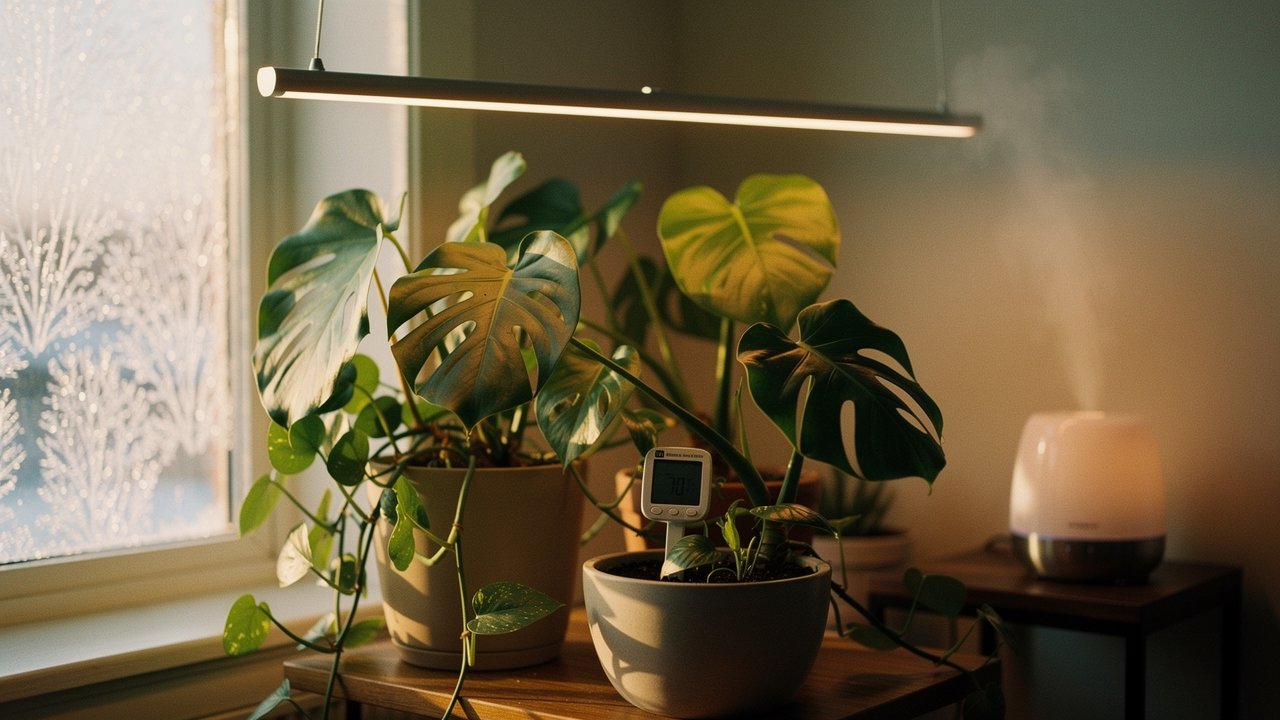
For years, I treated winter plant care like a guessing game. I’d poke the soil, mist the leaves with a spray bottle, and cross my fingers that my “green girls” would survive until March. But here’s the thing: hope isn’t a strategy. As someone who obsesses over High Lifestyle ROI, I realized that the time and money I spent replacing dead plants every spring was a massive drain on my daily joy.
What finally clicked for me was shifting from guesswork to data. We live in an era where we can measure exactly what our plants are feeling. By using a few smart tools—what I call my “Winter Survival Protocol”—I’ve turned my home into a year-round sanctuary where the plants don’t just survive; they actually thrive.
The Winter Growth Slump: Why Your Home Is a Plant’s Worst Enemy in December
Before we dive into the gadgets, we need to understand the science of why winter is so brutal. According to the Oregon State University Extension, light quantity and duration reach their annual minimum in winter, which directly stunts a plant’s ability to produce food through photosynthesis [1].
But it’s not just the dark. Your home’s HVAC system is essentially a giant dehydrator. When we crank the heat, the humidity drops to levels that would make a cactus uncomfortable. On top of that, we have “microclimates.” Your living room might feel a cozy 70°F, but the air two inches away from your window pane could be a lethal 50°F. The Illinois Extension notes that these sudden temperature extremes can damage a plant’s cellular structure, especially if they haven’t had time to “harden” to the cold [2].
Problem 1: The Low Light Crisis (And the LED Solution)
Insufficient light is the most common winter killer. You’ll notice your plants undergoing “etiolation”—that’s the scientific term for when they get leggy and spindly as they stretch for light [6]. Their chlorophyll production drops, leading to yellowing leaves and a weakened root system.
Benchmarking Your Light: From Lux to PPFD
I used to think my living room was “bright.” Then I downloaded a light meter app and realized that even a foot away from a north-facing window, my plants were receiving less than 10% of the light they needed.
If you want to be precise, you’re looking for two metrics:
- Lux: A measure of brightness seen by the human eye.
- PPFD (Photosynthetic Photon Flux Density): A measure of the light your plants actually “eat.”
For most tropicals, you want to aim for at least 400–600 lux just to maintain health during the winter slump.
The High-ROI Hardware: LED Recommendations
I’ll be honest: I ignored grow lights for years because I hated the “purple haze” aesthetic. But modern LED technology has changed everything. Research from Savvy Gardening shows that LED grow lights run about 80% cooler than old-school fluorescent bulbs [4]. This means you can keep them close to your plants without worrying about leaf burn.
What surprised me was how much a simple shelf upgrade could change the vibe of my home. I was struggling with a dark corner in my hallway where every plant I placed eventually withered. I decided to install a sleek, modular lighting system that didn’t look like a science experiment.
[JOURNEY: I spent weeks researching efficiency ratings because I didn’t want my electric bill to skyrocket. I found that high-quality LEDs, like those with a system efficiency of around 2.5 μmol/J, provide the most “food” for the least energy [10]. I finally settled on a unit that balanced aesthetics with power.]
Micro-Verdict: The ultimate high-efficiency glow-up for mid-range shelving.
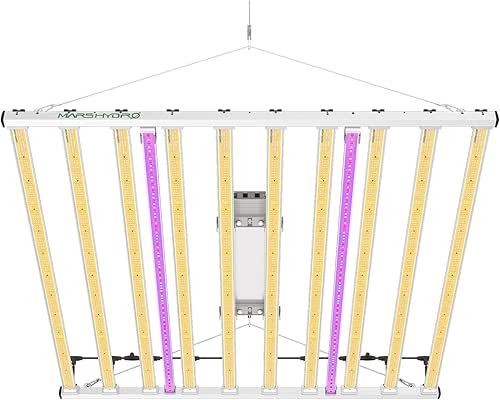
If you have a larger “indoor jungle” or a dedicated sunroom that turns into a dark cave in December, you need more coverage. I’ve found that professional-grade bars provide much more even light distribution than single bulbs.
[JOURNEY: I tried the “single bulb in a desk lamp” approach, but it only helped the top three leaves of my Fiddle Leaf Fig while the bottom turned yellow. I needed a solution that covered the entire 4×4 area of my plant corner. After looking at PAR maps (which show light intensity across a surface), I moved to a high-output bar system.]
Micro-Verdict: Professional-grade power that ensures every leaf in your collection gets its fair share of “sun.”

Problem 2: The ‘Sahara Effect’ of Indoor Heating
If you’ve ever noticed the tips of your Calathea turning crispy and brown, you’re witnessing the “Sahara Effect.” Most tropical plants prefer a humidity “sweet spot” of 40–60% [7]. In a heated Austin home in January, that number can easily plumet to 20%.
Here’s the thing: misting does almost nothing. It raises the humidity for about five minutes and can actually encourage fungal growth on the leaves. To solve the problem, you need to manage the air itself. WebMD recommends keeping your home between 30–50% for human health anyway, so this is a win for your skin and sinuses, too [8].
The Optimization Pick: Smart Humidifiers
The “High Lifestyle ROI” approach here is automation. I don’t want to be refilling a tiny tank every four hours. I also don’t want to run it all night, which The Crystal Plant notes can lead to mold and nighttime fungus issues [7].
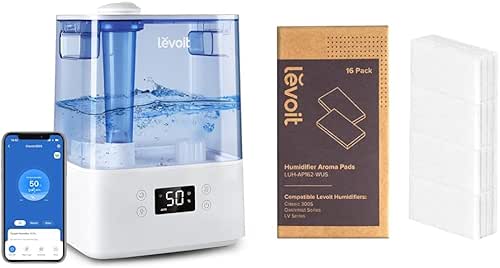
I used to wake up every morning to a dry throat and crispy plants, trekking to the kitchen to refill a clunky, loud humidifier. What finally clicked was finding a unit I could control from my phone. I set it to run for 5 hours every morning—the optimal window for plant transpiration—and then shut off automatically when it hits 55% humidity.
Micro-Verdict: A whisper-quiet essential that balances your home’s climate while you’re still in bed.
For those with rare, high-maintenance collections like Orchids or Alocasia, you need even tighter control.
[JOURNEY: I realized some of my more expensive tropicals needed a consistent 60% humidity that my big room humidifier couldn’t maintain without making the walls sweat. I looked for a unit with its own external sensor that could talk to an app, giving me real-time alerts if the air got too dry.]
Micro-Verdict: Set-it-and-forget-it moisture for the high-maintenance plant parent.
Problem 3: The Silent Killer—Cold Drafts and Microclimates
Temperature is a primary factor in plant development, but we often overlook the “microclimates” near our windows. A drafty single-pane window can drop a plant’s temperature by 10 degrees in an hour, causing sudden leaf drop [11].
Mapping Your Microclimates
Instead of guessing where the “cold spots” are, I started using smart sensors. These tiny devices stay in the soil or hang near the plant and log data 24/7. When Sensorist reported they’ve collected over 5.8 billion measurements, I realized that data is the only way to truly understand what happens when the sun goes down [9].
I’ll admit it—I was skeptical at first. I thought my finger was a perfectly good “sensor.” But my finger can’t tell me that my Ficus was hitting 52°F at 3:00 AM. I started placing these sensors around my “riskier” windowsills to map the danger zones.
Micro-Verdict: The early-warning system that sends a “frost alert” to your phone before your plants even feel the chill.
Thermostat Integration: High-Tech Insulation
The final piece of the puzzle is your home’s thermostat. Maintaining a stable 60°F minimum is vital for tropical species [11]. ENERGY STAR-certified smart thermostats are a game-changer here because they don’t just keep the house warm; they do it efficiently.
Micro-Verdict: The foundation of a stable winter climate that pays for itself in energy savings.
The Jordan Miller ‘Winter Protocol’
If you’re ready to stop the winter wilt, here is the tech stack I recommend based on your persona:
The “Studio Apartment” Minimalist
You have a few prized plants in a small space and want the most impact with the least clutter.
- Essential: One high-quality LED grow bulb (Full Spectrum)
- Essential: A compact 2.5L humidifier like the Levoit
- Essential: A basic hygrometer to track room humidity
- Pro Upgrade: A single OKO smart sensor for your most expensive plant
The “Indoor Jungle” Collector
You have 20+ plants across multiple rooms and are tired of the “winter panic” every year.
- Essential: Modular LED bar lights (like the Vivosun)
- Essential: A 6L humidifier with an external sensor and app control
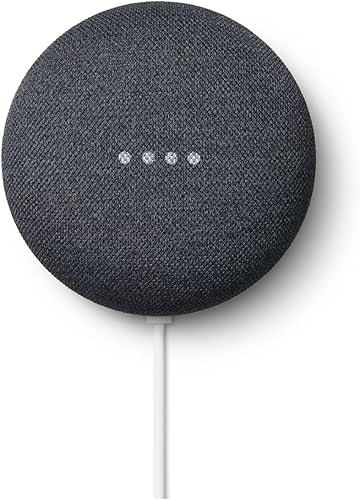
- Essential: A smart thermostat (Google Nest) to prevent night-time temperature dips
- Pro Upgrade: A multi-sensor network to map microclimates in every room
Winter Threshold Reference Guide
| Metric | Safe Range | Critical Threshold | Tech Solution |
|---|---|---|---|
| Light (Lux) | 400 – 1,500 | < 200 | LED Grow Lights |
| Humidity (RH%) | 40% – 60% | < 30% | Smart Humidifier |
| Temp (F) | 65°F – 75°F | < 55°F | Smart Thermostat / Sensors |
Investing in these tools has a massive Lifestyle ROI. It removes the stress of “will they make it?” and replaces it with the quiet joy of seeing a new leaf unfurl in the middle of January.
Start with one sensor or one light, and build your stack over time. Your plants—and your Sunday morning coffee rituals—will thank you for it.
Affiliate disclosure: I only recommend tech I’ve personally benchmarked in my Austin home.
References & Authoritative Sources
- Oregon State University Extension. (2023). Environmental factors affecting plant growth. https://extension.oregonstate.edu/gardening/techniques/environmental-factors-affecting-plant-growth
- Illinois Extension. (2025). How does cold weather affect garden plants? https://extension.illinois.edu/blogs/good-growing/2025-01-24-how-does-cold-weather-affect-garden-plants
- Savvy Gardening. (2024). LED grow lights guide. https://savvygardening.com/led-grow-lights/
- MigroLight. (2023). Comparative reviews: The best value grow light for a 4′ x 4′ area. https://migrolight.com/blogs/grow-light-news/the-best-value-grow-light-for-a-4-x-4-grow-tent
- ScienceDirect. (2018). The mystery of dry indoor air – An overview. https://www.sciencedirect.com/science/article/pii/S0160412018320725
- Mars Hydro. (2024). How to Deal with Insufficient Light Exposure for Plants in Winter? https://marshydroled.co.uk/blog/how-to-deal-with-insufficient-light-exposure-for-plants-in-winter/
- The Crystal Plant. (2024). Complete Guide to Use a Humidifier for Houseplants. https://thecrystalplant.com/blogs/houseplant-care/complete-guide-to-use-a-humidifier-for-houseplants
- WebMD. (2024). Manage Dry Indoor Air This Winter. https://www.webmd.com/women/dry-indoor-air
- Sensorist. (2024). Greenhouse Monitoring Solutions. https://sensorist.com/greenhouse
- ENERGY STAR. (2024). Smart Thermostats and Energy Efficiency. https://www.energystar.gov/products/smart_thermostats
- CANNA Gardening USA. (2023). How air temperature affects plants. https://www.cannagardening.com/articles/how-air-temperature-affects-plants