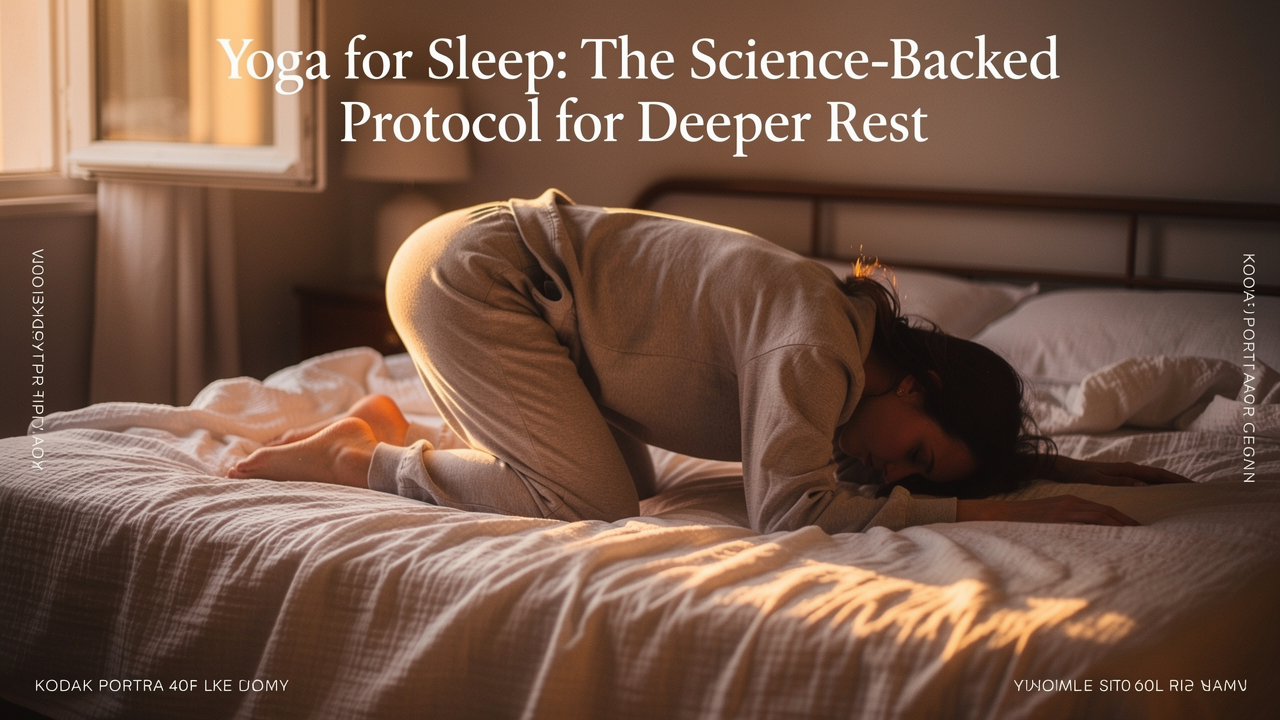
That restless night was my breaking point. It’s what led me down a rabbit hole of sleep physiology, eventually discovering that my “High Lifestyle ROI” philosophy applied to my evening routine just as much as my home office setup. I realized that if I didn’t find a way to manually flip the switch from “fight or flight” to “rest and digest,” no amount of expensive linen sheets would save me.
What I found was a specific, science-backed yoga protocol that doesn’t require you to be a “yoga person.” It’s a system to lower your heart rate, quiet the mental chatter, and prepare your body for the kind of slow-wave sleep that actually leaves you feeling refreshed.
The Science of the Wind-Down: Why Yoga for Sleep Works
Here’s the thing about sleep problems: they’re rarely just about what happens in the bedroom. They’re a symptom of a nervous system that’s stuck in high gear. Most of us spend our days in a state of sympathetic nervous system dominance (the “fight or flight” response). When we try to jump straight from answering emails to deep sleep, our bodies aren’t ready for the transition.
Yoga for sleep works because it acts as a physiological bridge. By using gentle movement and focused breath, we can stimulate the vagus nerve and activate the parasympathetic nervous system [1]. This isn’t just “woo-woo” wellness talk; the data is pretty staggering. A national survey summarized by Harvard Health reported that over 55% of people who practice yoga say it helps them get better sleep, and over 85% reported reduced stress levels [1].
When we hold specific, restorative poses, we’re essentially telling our heart rate and breathing rate to slow down. This helps us meet the 7–9 hours of sleep requirement recommended by the NIH for healthy adult functioning [2]. By lowering our core arousal levels, we make it significantly easier for the brain to enter the deeper stages of the sleep cycle.
The Sleep Scientist’s Protocol: Best Yoga Poses for Deeper Sleep
When I started curating this list for “Best Goods for Good Life,” I wanted the highest ROI possible. I don’t want you doing a 60-minute flow at 10:00 PM. I want the few, high-impact moves that give you the most restorative benefit for the least amount of effort.
1. Legs-Up-the-Wall (Viparita Karani)
I’ll be honest: I ignored this pose for years because it seemed too simple to be effective. But after a long day of standing at farmers markets or sitting at my desk, my legs often felt heavy and restless. I found myself tossing and turning, trying to find a comfortable position for my lower body.
What finally clicked for me was learning how this pose facilitates venous drainage and shifts the body into a state of total receptive calm. It’s the ultimate “system reset.” By elevating the legs, you’re encouraging blood flow back to the heart and signaling to your brain that the day’s “doing” is done. I now consider this the cornerstone of my nightly routine.
Micro-Verdict: The single best pose for lowering heart rate and quieting a buzzing brain.

2. Child’s Pose (Balasana)
You know that feeling when the world just feels a little too “loud”? Maybe you’ve spent too much time on Zoom, or the Austin traffic was particularly draining. I used to find that my “racing mind” was actually a result of sensory overload. I needed a way to physically withdraw and find a moment of quiet.
I tried doing this on my hardwood floors with a thin, cheap mat I’d had since college, and it was a disaster—my knees were screaming, which is the opposite of relaxing. Once I invested in proper padding, Child’s Pose became my sanctuary. It gently stretches the low back and hips while the forehead-to-floor connection provides a grounding sensation that tells the nervous system it is safe to let go.
Micro-Verdict: An essential “reset button” for physical tension and mental overstimulation.
3. Reclining Bound Angle (Supta Baddha Konasana)
If you spend eight hours a day at a desk like I do, your hips are likely holding onto a lot of “stored” stress. I used to wake up at 3:00 AM with a dull ache in my lower back, and I couldn’t figure out why. It turns out, tight hip flexors can tug on the spine, making it impossible to stay in a deep sleep.
This pose is my favorite “passive” opener. By lying on your back with the soles of your feet together and knees falling open, you’re allowing gravity to do the work. It’s incredibly relaxing and helps open the chest for deeper, diaphragmatic breathing. For anyone with knee sensitivity, Harvard Health and other experts suggest placing pillows or blocks under the outer thighs for support [1].
Targeted Bedtime Yoga Routines for Every Schedule
I’m a big believer that your routine should adapt to your life, not the other way around. Here are two ways to approach your sleep yoga practice, depending on how much “gas” you have left in the tank.
The 5-Minute ‘In-Bed’ Emergency Routine
For those nights when you’re utterly exhausted but your brain is still spinning, don’t even bother getting out of bed.
- Minute 1: Simple Seated Twist (gentle rotation to each side).
- Minutes 2-3: Knees-to-Chest (Apanasana) while lying on your back.
- Minutes 4-5: Reclining Bound Angle (use your bed pillows for support).
The 20-Minute ‘Full Recovery’ Protocol
This is my Sunday reset ritual. It’s for when you want to maximize your sleep ROI and wake up feeling like a new person.
- Legs-Up-the-Wall (5 mins): Stay here and focus on making your exhales longer than your inhales.
- Child’s Pose (5 mins): Breathe into the back of your ribcage.
- Supported Bridge Pose (5 mins): Place a block or firm pillow under your sacrum to gently lift the hips.
- Savasana with Ujjayi Breath (5 mins): Focus on the “ocean” sound in the back of your throat to anchor your attention.
The “Sleep Optimizer” Persona Loadouts
Depending on your lifestyle, your needs might differ. Here is how I’d curate the experience for three common archetypes:
The Desk-Bound Professional
You spend your day in a chair, leading to tight hips, a rounded back, and “tech neck.”
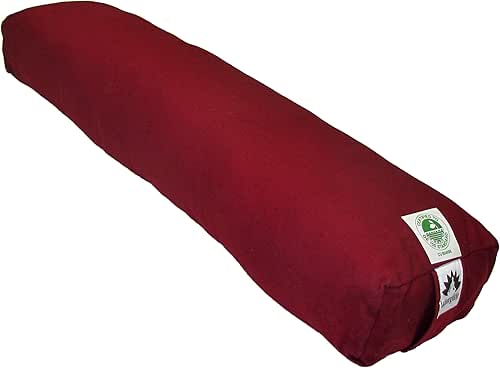
- Essential: A firm yoga bolster to support the spine in heart-opening poses.
- Essential: A strap or long towel to assist in gentle hamstring stretches before bed.
- Pro Upgrade: A weighted eye pillow to help trigger the oculocardiac reflex, lowering heart rate instantly.
The Restless Overthinker
Your body is tired, but your mind is running a marathon. You need sensory grounding.
- Essential: High-density mat to provide a sense of “groundedness” and stability.
- Essential: A dedicated notebook nearby for a “brain dump” before starting your yoga.
- Pro Upgrade: A high-quality essential oil diffuser with lavender or cedarwood to anchor the practice in scent.
Optimizing the Environment: Integrating Yoga with Sleep Hygiene
Here’s the thing: you can do all the yoga in the world, but if you’re doing it in a room that’s 75 degrees with the TV on, it’s not going to stick. Yoga is most effective when it’s part of a holistic “sleep hygiene” framework.
The Sleep Foundation suggests that the ideal bedroom temperature is between 65–68°F [3]. I’ve found that doing my yoga in a cool, dim room helps my body temperature drop, which is a key biological signal that it’s time for sleep. I also treat my yoga practice as a “screen-free buffer.” Once I step onto the mat, my phone is in another room. This helps mitigate the blue light exposure that the NHLBI warns can disrupt our natural circadian rhythms [4].
Clinician’s Corner: When Yoga Isn’t Enough
As much as I love a good restorative flow, I want to be honest: yoga is a tool, not a cure-all for clinical disorders. It’s great for “restless nights” caused by a busy lifestyle or temporary stress, but it shouldn’t replace professional medical advice.
The American Academy of Sleep Medicine (AASM) identifies several “red flags” that suggest your sleep problems might need a specialist’s look:
- Loud snoring accompanied by gasping or choking sounds.
- Excessive daytime sleepiness that interferes with work or driving.
- Chronic insomnia (difficulty sleeping 3+ nights a week for 3 months) [5].
If you’re struggling with chronic insomnia, the gold-standard treatment is often Cognitive Behavioral Therapy for Insomnia (CBT-I), which addresses the thoughts and behaviors around sleep [3]. Yoga can be a wonderful *adjunct* to CBT-I, helping you relax, but it’s important to know when to bring in the pros.
Making Better Sleep a Skill
Better sleep isn’t something that just happens to you; it’s a skill you build through intentional choices. My “High Lifestyle ROI” approach is all about finding those small, 10-minute levers that yield the biggest results in how you feel the next morning.
Tonight, I challenge you to try just one thing. Before you climb under the covers, put your legs up the wall for five minutes. Don’t scroll, don’t plan your grocery list—just breathe. You might be surprised at how much easier the rest of the night flows.
Let’s make every day (and every night) a little better, together.
Medical Disclaimer: This guide is for educational purposes and reflects personal experience and research. It is not a substitute for professional medical advice, diagnosis, or treatment. Always seek the advice of your physician or other qualified health provider with any questions you may have regarding a medical condition, chronic insomnia, or potential sleep apnea.
Scientific References & Sources
- Harvard Health Publishing. (2021). “Yoga for better sleep.” Harvard Medical School. https://www.health.harvard.edu/blog/yoga-for-better-sleep-20151204961
- MedlinePlus. (2023). “Sleep Disorders.” U.S. National Library of Medicine. https://medlineplus.gov/sleepdisorders.html
- Sleep Foundation. (2023). “Natural Cures for Insomnia.” SleepFoundation.org. https://www.sleepfoundation.org/insomnia/treatment/natural-cures-for-insomnia
- National Heart, Lung, and Blood Institute (NHLBI). (2022). “Insomnia Treatment.” National Institutes of Health. https://www.nhlbi.nih.gov/health/insomnia/treatment
- American Academy of Family Physicians (AAFP). (2022). “Common Sleep Disorders in Adults: Diagnosis and Management.” American Family Physician. https://www.aafp.org/pubs/afp/issues/2022/0400/p397.html