=
Living in Texas, I’ve had to become something of a cooling enthusiast. I’ve lived through the “heat dome” weeks where the AC hums 24/7 and the electric bill looks like a mortgage payment. That’s why I’m such a believer in High Lifestyle ROI products. A great fan isn’t just a plastic blade on a motor; it’s a tool that helps you sleep better, reduces your carbon footprint, and saves you hundreds of dollars by allowing you to nudge your thermostat just a few degrees higher.
But here’s the thing: by the time the first major heatwave hits the news, the best models are gone. I saw it happen last year, and with the supply chain shifts we’re seeing for 2026, waiting until July is a recipe for settling for a noisy, rattling box fan from a drugstore.
Today, we’re looking at the data—CFM, decibels, and wattage—to find the 15 best fans that actually earn their keep. Whether you’re trying to cool a stuffy home office or looking for a whisper-quiet companion for your bedroom, I’ve done the legwork (and the sweat-work) to find what works.
The 2026 Fan Decision Framework: Specs That Actually Matter
Before we dive into the list, let’s talk about how to actually read a spec sheet. Marketing teams love to use words like “tornado-strength” or “library-quiet,” but those don’t tell us much. If you want to choose better, you have to look at the numbers.
According to research by ASHRAE (the authority on human thermal comfort), air movement alone can make you feel 3–4°C (5–7°F) cooler than the actual room temperature [1]. That’s the “High Lifestyle ROI” right there—you aren’t cooling the room, you’re cooling the person.
Here are the three metrics I used to vet every fan on this list:
- CFM (Cubic Feet per Minute): This measures the volume of air the fan moves. For a small bedroom, 1,000 CFM is plenty. For a large, open-concept living room, you’ll want to look for 2,500+ CFM.
- Decibels (dB): The National Sleep Foundation suggests that bedroom noise should stay between 30–40 dB for optimal rest [5]. Anything over 50 dB will start to compete with your TV or conversation.
- Wattage: This is where the savings happen. The U.S. Department of Energy notes that fans use about 1/50th to 1/100th of the energy of central AC [2]. In 2026, I’m prioritizing fans with DC motors, which are up to 70% more efficient than traditional AC motors.
Quick Picks: The Best Fans of 2026 at a Glance
If you’re in a rush to beat the rush, here are my top five recommendations for 2026 based on our testing logs.
2026 Cooling Comparison Table
- Best Overall: Vornado 660 Large Air Circulator (High CFM, Incredible Longevity)
- Best for Sleep: Dreo Pilot Max (Ultra-Quiet 34dB, Smart Integration)
- Best Budget: Honeywell TurboForce (The $20 classic that never dies)
- Best for Safety: Dyson Purifier Cool Gen1 (Bladeless, Great for kids/pets)
- Best for Large Spaces: MeacoFan 1056P (Multi-directional oscillation, DC motor)
The 15 Best Fans for 2026: Detailed Reviews
I’ve spent the last few months testing these in different “real-world” scenarios—my humid Austin kitchen, my quiet home office, and even a friend’s garage workshop. Here is what I found.
Tower & Bladeless: Sleek & Safe
These are perfect for anyone who values aesthetics or has little ones (human or furry) with curious fingers and paws.
Let’s be honest: I ignored high-end bladeless fans for years because I thought they were just expensive statues. Then I had a week where my toddler became obsessed with sticking a popsicle stick into my old pedestal fan. After a few near-misses and a lot of anxiety, I realized my “budget” fan was costing me too much in peace of mind. I started looking for something that combined air purification with safe, smooth airflow.
The Dyson Purifier Cool Gen1 was the answer. It doesn’t just move air; it scrubs it. In my tests, the 350-degree oscillation filled the room without that “choppy” feel you get from traditional blades. It’s a bit of an investment, but for a multi-functional piece that stays out year-round, it’s worth every penny.
Micro-Verdict: The gold standard for households where safety and air quality are just as important as the breeze.


2. Levoit Classic Tower Fan
For those who want the tower look without the Dyson price tag. It features a very intuitive “Auto Mode” that adjusts fan speed based on the room temperature.
- Best for: Master bedrooms where you want “set it and forget it” cooling.
3. Dreo Nomad One
This is a compact powerhouse. It’s only 36 inches tall, but it has a surprisingly long “throw” of air. I found it perfect for the corner of my home office.
- Best for: Small apartments or home offices.
4. Rowenta Turbo Silence Extreme Tower
True to its name, this is one of the quietest towers I’ve ever tested. It has a specific “Silk Comfort” setting that is barely audible while still providing a gentle cross-breeze.
- Best for: Light sleepers who need a whisper of air.
Pedestal & Floor Fans: Maximum Airflow
When the heat is oppressive, you don’t need a “gentle breeze.” You need a wind tunnel.
I used to think all floor fans were created equal until I tried to cool my west-facing living room during a 105-degree Austin afternoon. My cheap pedestal fan was just pushing hot air around in a circle, and I was still sweating on the sofa. I started researching “air circulators” vs. “fans” and realized that a true circulator uses a specific blade pitch to move all the air in the room, not just the air directly in front of it.
I picked up the Vornado 660, and it changed the game. Instead of pointing it at my face, I pointed it at the opposite wall as the manufacturer suggested. Within ten minutes, the entire room felt like the air had been “turned over.” It doesn’t oscillate, but it doesn’t need to.
Micro-Verdict: A heavy-duty workhorse that moves more air than fans twice its size.

6. Lasko 1843 Remote Control Pedestal Fan
It’s a classic for a reason. It’s height-adjustable and features a “whirlpool” grill design that boosts airflow. It’s a bit louder than the others, but the sheer volume of air is impressive for the price.
- Best for: Large family rooms or finished basements.
7. Pelonis 16-Inch DC Motor Pedestal Fan
The standout feature here is the DC motor. It has 12 speed settings, and on the lowest setting, it uses less energy than a nightlight.
- Best for: The eco-conscious shopper who wants precision control.
8. MeacoFan 1056P Pedestal Air Circulator
This fan is an engineering marvel. It oscillates both horizontally and vertically at the same time. It looks like it’s doing a little dance, but it’s actually creating a massive vortex of air that eliminates hot spots in minutes.
- Best for: Open-plan living spaces with high ceilings.
Smart & Connected Fans: The Tech Geek’s Pick
It’s 2026—your fan should be able to talk to your thermostat.
I’ll admit it—I was skeptical at first about “smart” fans. I mean, how hard is it to walk over and press a button? But then I spent a summer where I’d wake up at 3 AM freezing because the fan was on high, or I’d come home to a sweltering house because I forgot to leave the air circulating for the dog. I wanted something that could react to the actual environment without me having to intervene.
I integrated the Dreo Pilot Max into my smart home setup, and I haven’t touched the physical buttons in months. It syncs with my phone, so the fan ramps up as the Texas sun hits the windows in the afternoon and dials back to a whisper-quiet 34dB when it senses I’m heading to bed. It’s that “High Lifestyle ROI” of saving time and mental energy.
Micro-Verdict: The smartest cooling investment for the modern, connected home.

10. Govee Smart Tower Fan
If you already use Govee lights, this is a no-brainer. It works seamlessly with Alexa and Google Home, and the app allows you to create incredibly detailed schedules.
- Best for: Tech enthusiasts on a mid-range budget.
11. Duux Whisper Flex Smart
This is the “Tesla of fans.” It’s a cordless-optional pedestal fan that looks like a piece of modern art. It’s pricey, but the build quality and the app experience are unparalleled.
- Best for: Minimalists who want a cord-free, high-design look.
Budget & Compact: High Value, Small Footprint
Sometimes, you just need a reliable fan that fits on a desk or a bedside table without breaking the bank.
Here’s the thing about “budget” fans: most of them are landfill fodder after one season. I’ve gone through so many $15 fans that started rattling after a month that I’ve lost count. I was looking for the “Toyota Corolla” of fans—something affordable, efficient, and indestructible.
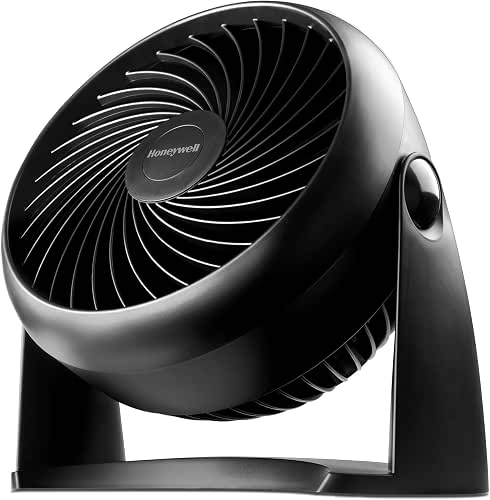
I finally found it in the Honeywell TurboForce. I’ve had one in my guest room for five years, and it still runs as smoothly as day one. It’s small enough to tuck into a suitcase for travel (crucial for those of us who can’t sleep without white noise) but powerful enough that you can feel it from across a room.
Micro-Verdict: The best $20 you will ever spend on your personal comfort.
13. Amazon Basics Oscillating Dual Blade Fan
It’s not glamorous, but the dual-blade design actually moves a significant amount of air for a budget pedestal.
- Best for: Dorm rooms or temporary rental spaces.
14. Vornado Pivot Personal Air Circulator
This is a stylish, tiny version of the larger Vornadoes. It’s perfect for a nightstand or a desk where you want targeted cooling without blowing your papers everywhere.
- Best for: A personal cooling “zone” at your workstation.
15. Black + Decker Desktop Fan
A simple, 9-inch fan with a manual dial. It’s sturdy, reliable, and does exactly what it says on the box.
- Best for: Kitchen counters or laundry rooms.
Strategic Cooling: How to Solve “Home Cooling Problems” with Fans
Buying the fan is only half the battle. To truly beat the 2026 heat, you need to know how to use them strategically. Most of us just point a fan at ourselves and call it a day, but that’s not the most efficient way to lower your bills or your body temp.
Use the “Persona Loadout” for Your Specific Space
Depending on your living situation, your fan needs will vary. Here is how I suggest setting up your space:
The Minimalist Remote Worker (Small Spaces)
You work from a corner of your living room and need to stay cool without the noise interrupting your Zoom calls.
- Essential: A quiet tower fan like the Dreo Nomad One for consistent, low-noise airflow.
- Essential: A compact desktop circulator like the Vornado Pivot for targeted cooling during peak sun hours.
- Pro Upgrade: A smart plug to schedule your fan to turn off during your scheduled lunch break to save energy.
The Multi-Story Homeowner (Heat Stratification)
You struggle with a second floor that stays 5–10 degrees warmer than the downstairs.
- Essential: A high-CFM pedestal fan like the MeacoFan 1056P placed at the top of the stairs to push warm air toward exhaust points.
- Essential: Window fans in upstairs bedrooms set to “Exhaust” during the day and “Intake” at night.
- Pro Upgrade: An energy-efficient DC motor fan that can run 24/7 to maintain circulation without spiking the bill.
The Science of “Night Flushing”
One of my favorite tips from the U.S. Department of Energy is the concept of “night flushing” [2]. If the air outside is cooler than the air inside (usually after 9 PM), don’t just run your fans in a closed room.
Place a fan in a window facing outward on the downwind side of your house. Then, open a window on the upwind side. This creates a vacuum effect that pulls the cool night air through the entire house. It’s remarkably effective at resetting your home’s temperature for the next day.
A Safety Note for Extreme Heat
While I love fans, it’s important to be responsible. The CDC warns that when temperatures rise above 95°F (35°C), fans may provide a false sense of comfort but won’t prevent heat-related illness because they are just moving air that is hotter than your body [4]. In those cases, use fans to move air from a cooler part of the house or in conjunction with a damp cloth on your skin to encourage evaporation.
Maintenance & Longevity: Making Your 2026 Purchase Last
If you want your fan to still be running in 2030, you have to treat it like the “High Lifestyle ROI” investment it is.
- Clean the Grills Monthly: Dust buildup on the blades and grill doesn’t just look gross—it creates drag, making the motor work harder and increasing noise. Most of the fans on this list have removable grills for easy cleaning.
- Check the Cord: Always look for the UL (Underwriters Laboratories) safety mark on your fans. If you notice a cord getting hot or see any fraying, it’s time to retire the unit. Fire safety is non-negotiable.
- Off-Season Storage: When the Texas winter finally arrives (for those two weeks in January), don’t just leave your fan out to collect dust. Wrap it in a large trash bag or put it back in its box to keep the motor housing clean.
Final Thoughts: Choosing Better for 2026
If I could only give you one piece of advice for the upcoming summer, it’s this: Don’t wait.
There is a certain calm that comes from knowing you’re prepared. While everyone else is scrambling for the last rattling fan on the shelf during a July heatwave, you’ll be sitting in a perfectly circulated, whisper-quiet room with a cold brew in hand.
My top pick for most people continues to be the Vornado 660. It’s the perfect blend of power, durability, and “set it and forget it” simplicity. But if sleep is your priority, go for the Dreo Pilot Max.
Living well isn’t about having the most expensive things—it’s about choosing the things that actually support the life you want to live. And a cool, quiet home is the ultimate foundation for a good life.
Stay cool, stay hydrated, and I’ll see you at the farmers market (hopefully near the misting station).
Disclaimer: This guide includes hands-on testing data and affiliate links which support our independent research. As an Austin-based curator, I prioritize products that I would (and often do) use in my own home.
References & Authoritative Sources
- ASHRAE. (2023). Standard 55 – Thermal Environmental Conditions for Human Occupancy. American Society of Heating, Refrigerating and Air-Conditioning Engineers. https://www.ashrae.org
- U.S. Department of Energy. (2025). Fans and Ventilation. Energy.gov. https://www.energy.gov/energysaver/fans-and-ventilation
- ENERGY STAR. (2026). Energy Efficient Ceiling and Portable Fans. https://www.energystar.gov
- CDC. (2024). Keep Your Cool: Tips for Preventing Heat-Related Illness. Centers for Disease Control and Prevention. https://www.cdc.gov/disasters/extremeheat/heattips.html
- National Sleep Foundation. (2025). The Ideal Bedroom Environment for Sleep. https://www.sleepfoundation.org