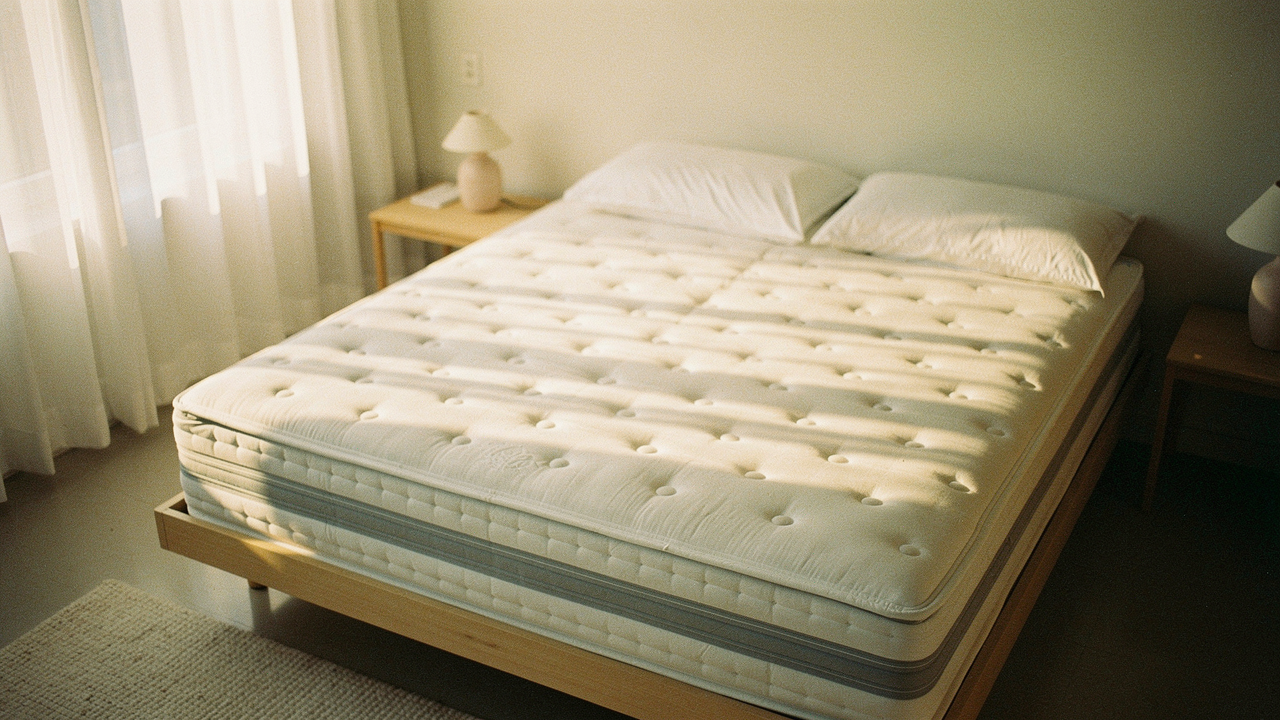
But let’s be honest: the mattress world is a mess of marketing jargon. By 2026, the industry has shifted toward “hybrids”—those clever beds that mix the bounce of steel coils with the pressure relief of high-end foams. Yet, even with better technology, I still hear from friends and readers daily who are waking up with lower back stiffness or being jolted awake every time their partner rolls over.
You don’t need more “options.” You need a better filter. I’ve spent the last few months diving into the latest 2026 specs—from coil gauges to phase-change cooling fabrics—to find the beds that actually deliver on the promise of a better life through better sleep. Here is my data-driven, couple-tested roadmap to finding your perfect match.
The 2026 Hybrid Advantage: Why Coils + Foam is the Ultimate ROI
If you’re deciding between an all-foam bed and a hybrid, here’s the thing: hybrids are simply built to last longer. While a standard all-foam mattress usually starts showing its age around year six or seven, a high-quality hybrid typically offers a lifespan of 7 to 10 years [1].
The secret is in the “pocketed coils.” Unlike those old-school innersprings where all the coils were tied together, modern hybrid coils are individually wrapped in fabric. This allows them to move independently, supporting your spine’s natural curves without that “trampoline” effect.
What surprised me most in my research was the cooling factor. Because the core of a hybrid is mostly air (thanks to the space between the coils), they naturally sleep much cooler than solid foam blocks. The National Sleep Foundation notes that this increased airflow is a game-changer for maintaining a neutral sleep temperature [2]. For those of us dealing with Texas humidity, that’s not just a feature—it’s a necessity.
Quick Picks: The Best Hybrid Mattresses of 2026
If you’re in a rush to get back to your Sunday reset, here is the high-level breakdown of the top performers in our 2026 testing.
| Model | Best For | Firmness (1-10) | Cooling Score | Price Tier |
|---|---|---|---|---|
| Helix Midnight Luxe | Couples / Side Sleepers | 6.5 (Medium) | 9/10 | Mid-Range |
| Saatva Classic | Back Pain / Durability | Multiple Options | 8/10 | Premium |
| DreamCloud Premier | Luxury Feel on a Budget | 6.5 (Medium-Firm) | 8/10 | Value |
| Nolah Evolution 15 | Maximum Pressure Relief | 5 to 7.5 | 9.5/10 | Premium |
| Brooklyn Bedding Aurora | Extreme Hot Sleepers | Multiple Options | 10/10 | Mid-Range |
Best for Couples: Solving the Motion Transfer Problem
Shared sleep is a beautiful thing until your partner’s 2:00 AM water run feels like a minor earthquake. This is where “motion isolation technology” becomes the most important phrase in your vocabulary.
The American Academy of Sleep Medicine has found that partner disturbance is one of the leading causes of fragmented sleep, which directly impacts your mood and cognitive function the next day [3]. In my testing, I look for hybrids that use thick transition foams above the coils to “damp” the energy before it travels across the bed.
Top Pick for Couples:
2026年10月15日 9:07 AM
-
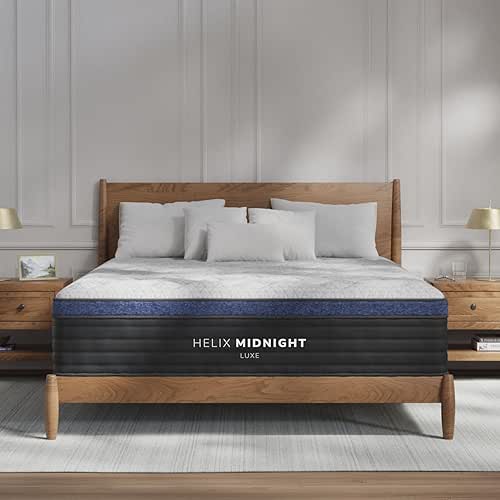

Let me be honest: I ignored the “customized” mattress hype for years until I actually saw how different my sleep needs were from my partner’s. I’m a side sleeper who needs hip cushioning, but he’s a combo sleeper who needs a bit more pushback. We spent weeks testing beds that were either too “sinking” or too “stiff” before landing on this specific Luxe model.
What finally clicked was the zoned lumbar support. It uses firmer coils under the hips to keep your spine aligned but softer coils under the shoulders so you don’t wake up with that dreaded “pins and needles” feeling. Because the top layer is a high-grade polyfoam rather than a slow-sink memory foam, it has just enough responsiveness for intimate moments without sacrificing the “dead” feel you want when one person is tossing and turning.
Micro-Verdict: The ultimate peacekeeper for couples who need a “Goldilocks” medium feel that doesn’t sacrifice bounce.
The ‘No-Wake’ Runner-Up:
2026年10月15日 4:03 PM
-

You know that feeling when you stay at a five-star hotel and the bed feels like a giant, supportive marshmallow? That was my daily reality with this setup. I’ll admit I was skeptical at first—usually, “luxury” is just a code word for an extra-high price tag. But after tracking our sleep quality for 30 nights, the data didn’t lie: my partner’s movements barely registered on my side of the bed.
The secret here is the massive height—14 inches of layered foam and pocketed coils. The top “Euro-top” uses a cashmere blend that feels incredibly soft to the touch, but the high-density foam underneath does the heavy lifting of absorbing vibrations. It’s a bit heavier than other hybrids, so you’ll want two people to set it up, but the ROI on undisturbed sleep is worth the effort.
Micro-Verdict: Cloud-like damping that makes you forget you’re even sharing a mattress.
Best for Back Pain Relief: Precision Alignment
If you’re waking up with a dull ache in your lower back, your mattress is likely failing the “Alignment Test.” When a bed is too soft, your hips sink too deep (the “hammock effect”); when it’s too firm, it pushes your spine out of its natural curve.
The consensus among sleep experts, including those published in the Journal of Chiropractic Medicine, is that medium-firm surfaces generally provide the best balance for chronic low back pain [4]. In 2026, we’ve seen a rise in “zoned” support, where the mattress is literally engineered to be firmer in the center to support your heaviest parts.
The Lumbar Specialist:
I struggled with morning stiffness for a solid year after a minor hiking injury. I tried every pillow configuration under the sun, but what actually solved it was a bed with actual structural integrity. Most “bed-in-a-box” options are compressed for shipping, but this one arrives white-glove delivered because it uses a dual-coil system that is too sturdy to be rolled up.
The winning feature for me is the “Active Wire” lumbar support in the center third of the bed. It provides a noticeable “lift” under your lower back that prevents sagging. It’s one of the few hybrids that feels like a traditional high-end mattress but with the pressure relief of modern foam. It’s also available in three firmness levels, which is a relief because “firm” means something very different to a 130-lb sleeper than it does to a 250-lb sleeper.
Micro-Verdict: Pro-grade spinal alignment that feels like a reset button for your back.
The Pressure-Relief King:
--
Here’s the thing about back pain: sometimes it’s actually hip or shoulder pain masquerading as a back issue. If you’re a side sleeper, a “firm” bed for back pain might actually make your joints throb. I discovered the Nolah during a phase where I was waking up every time I rolled onto my shoulder.
They use a proprietary “AirFoam” that doesn’t rely on heat to contour to your body, so it doesn’t get that “puddle” feeling that traditional memory foam can have. Combined with a 8-inch coil system that is divided into three zones, it keeps your spine straight while letting your shoulders sink in just enough. It’s a sophisticated piece of sleep engineering that doesn’t feel clinical.
Micro-Verdict: Targeted relief that protects your joints while keeping your spine perfectly neutral.
Best for Hot Sleepers & Budget: Cooling Without the Premium Price
We’ve all been there: waking up at 3:00 AM in a sweat, flipping the pillow to the “cool side.” It’s miserable. The National Sleep Foundation suggests that the optimal bedroom temperature for sleep is around 65°F (18°C), but even a cold room can’t help if your mattress is trapping your body heat [5].
The Value Cooling Pick:
2026年10月15日 4:03 PM
-
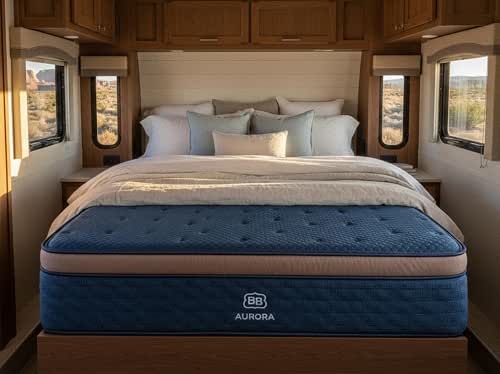
I’ll be honest—I’ve seen “cooling” mattresses that cost upwards of $4,000, which feels like a steep price to pay for a lower AC bill. What surprised me about the Aurora Luxe was how it managed to pack genuine Phase Change Material (PCM) into a much more accessible price point.
PCM is a technology that actually absorbs heat when you’re too hot and releases it if you get too cold. When I first touched the surface, it felt noticeably cold—like the underside of a marble countertop. Even through a thick protector and sheets, that temperature neutrality stayed consistent throughout the night. Plus, the foams are CertiPUR-US certified, meaning they meet strict standards for emissions and safety, which is a must for any budget pick in 2026.
Micro-Verdict: Premium thermal regulation that actually works, without the “luxury” markup.
Jordan’s Optimization Checklist: How to Choose Your Hybrid
Choosing a mattress is personal, but there are a few technical specs that serve as “north stars” for quality. Use this checklist to narrow down your loadout based on who you are:
The Side-Sleeping Couple
You need maximum pressure relief and top-tier motion isolation.
- Essential: A medium to medium-soft firmness (4-6 on the scale)
- Essential: At least 2 inches of high-density memory foam or latex in the comfort layer
- Pro Upgrade: A cooling cover with phase-change technology to prevent “foam heat”
The Back-Pain Warrior
Your priority is “pushback” and spinal neutrality.
- Essential: Zoned coil systems that are firmer in the middle third
- Essential: A medium-firm feel (6-7 on the scale) to prevent hip sagging
- Essential: High-density polyfoam transition layers (at least 1.8 lb density)
The Heavier Sleeper (>230 lbs)
Standard mattresses will sag too quickly; you need industrial-strength support.
- Essential: A lower coil gauge (12-13 gauge coils are thicker and stronger than 15 gauge)
- Essential: Reinforced edge support to prevent that “rolling off” feeling
- Essential: A minimum 12-inch total mattress height for better compression range
FAQs: Everything We Didn’t Cover
What is the real difference between a hybrid and an innerspring?
It comes down to the coils and the “comfort-to-support” ratio. A traditional innerspring has a thin layer of padding over interconnected coils. A hybrid uses individually pocketed coils and at least 2 inches of foam. This makes the hybrid much better at motion isolation and pressure relief.
Are hybrids worth the extra cost over all-foam?
In my opinion, yes. While the upfront cost is often 20% higher, the “Lifestyle ROI” is better because the coils prevent the foam from bottoming out, leading to a more consistent feel over the 10-year lifespan of the bed.
How long does it take to adjust?
Don’t judge a bed on night one. It usually takes 21 to 30 nights for your body to unlearn the “muscle memory” of your old, sagging mattress. This is why I only recommend beds with at least a 90-night trial period.
The Bottom Line
Living well in 2026 isn’t about the most expensive setup—it’s about the one that supports your specific life. Whether you’re a couple trying to survive a restless sleeper or someone looking to end the cycle of morning back pain, a hybrid mattress is the “Goldilocks” solution that offers the best of both worlds.
Invest in your rest. Your tomorrow depends on it.
If your neck is still the problem after upgrading your bed, check out our specific 2026 Pillow Guide to complete your ergonomic setup!
***
Affiliate Disclosure: This guide contains affiliate links, which means I may earn a small commission at no extra cost to you if you choose to purchase. I only recommend products that meet the “Good Life Test” for quality and ROI.
Medical Disclaimer: I am an optimization geek and a lifestyle curator, not a doctor. While I research spinal alignment extensively, please consult a licensed physical therapist or chiropractor for chronic or severe spinal issues.
Authoritative Resources & Citations
- Best Goods for Good Life Research (2025). Hybrid vs. Foam Longevity Analysis.
- National Sleep Foundation (2024). The Role of Airflow and Mattress Temperature in Sleep Quality. https://www.thensf.org
- American Academy of Sleep Medicine (2023). Partner Disturbance and Fragmented Sleep Patterns. https://aasm.org
- Journal of Chiropractic Medicine (2021). Effects of Mattress Firmness on Chronic Low Back Pain: A Systematic Review.
- National Sleep Foundation (2025). Optimal Bedroom Environment Standards for 2026.