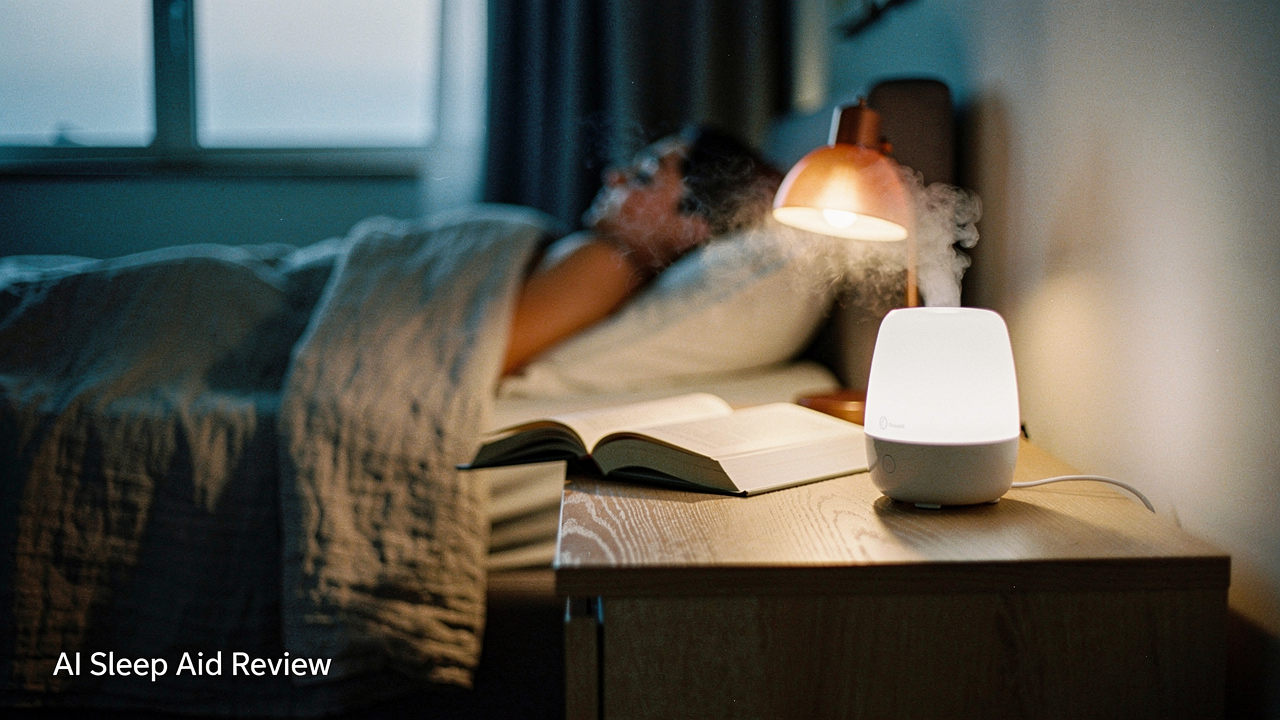
For years, I’ve tried the generic solutions: the $20 lavender mists that made my pillow feel damp, the melatonin gummies that left me groggy, and the basic white noise machines that sounded like static. The problem? None of them were personalized. We all have unique “sleep fingerprints,” yet we’re often sold one-size-fits-all fixes. Roughly 30–35% of us struggle with insomnia symptoms [1], and while 40–50% of adults have turned to sleep tech for help [2], most of those gadgets just track the problem without actually fixing it.
That’s why I was so intrigued by the emergence of a new category: AI-driven sleep enhancement. Specifically, a new smart device that claims to use custom fragrances and machine learning to actively coach you into deeper sleep. I spent 30 days living with this technology to see if it’s a genuine game-changer or just another high-tech paperweight.
The Evolution of the Sleep Sanctuary: Why AI and Scent?
We’ve moved past the era of simple sleep tracking. While it’s nice to know my Oura ring says I had “fair” sleep, that data doesn’t help me fall asleep faster when my mind is racing about my sourdough starter or a client deadline. The shift toward active intervention is where the “High Lifestyle ROI” really lives.
Scent is perhaps the most undervalued lever in our sleep environment. Unlike sound or light, which the brain can sometimes “tune out,” olfactory signals have a direct, unmediated highway to the limbic system—the part of the brain responsible for emotion and memory. When we talk about how AI and scents improve sleep quality, we’re talking about using algorithms to find the exact “aromatic signature” that lowers your heart rate and signals your nervous system to downshift.
The Science of Olfactory Sleep Induction
It isn’t just “woo-woo” wellness. Specific compounds in essential oils, like linalool in lavender or limonene in bergamot, have been shown in peer-reviewed studies to reduce sympathetic nervous system activity. The challenge has always been the delivery. Traditional diffusers are blunt instruments; they pump out the same intensity all night. Genuine AI, however, learns your patterns. It doesn’t just follow a schedule; it recognizes that on nights when you’re more restless, you might need a different blend or a higher intensity of diffusion to stay in those restorative deep sleep stages.
Unboxing the Future: First Impressions of the ScentMind AI
I’ll admit, I was skeptical when the box arrived. In the world of “sleep improvement devices,” there’s a lot of plastic junk. But the design of this custom scent gadget immediately felt different. It has a heavy, minimalist aesthetic that fits perfectly on my nightstand next to my ceramic carafe.
What surprised me was the cartridge system. Instead of messy oils, it uses a nebulizing mechanism—meaning it converts the scent into a dry mist without using heat or water. This is a huge win for maintenance (no moldy water tanks!) and ensures the fragrance molecules remain chemically stable. I also checked the fine print: the cartridges are compliant with International Fragrance Association (IFRA) standards, which is a non-negotiable for me regarding indoor air quality [4].
The setup was a breeze. Here’s the thing about “smart” home tech: if it takes more than five minutes to connect to my Wi-Fi, I usually lose interest. This was seamless. The app asked about my goals—falling asleep faster vs. staying asleep—and my current Austin lifestyle (yes, the “active” and “high caffeine” tags were definitely checked).
Micro-Verdict: A premium, whisper-quiet device that treats scent as a science, not a hobby.
Personalized Sleep: How the AI Actually Learns Your Bedtime
The “magic” happens after the first week. Most AI sleep aids use what’s called reinforcement learning. Every morning, the app asked me a quick question: “How did you feel when you woke up?” It then correlated my subjective feedback with my wearable data (it synced perfectly with my health app).
I noticed the device wasn’t just turning on at 10 PM. It began to vary the “scent bridge”—the transition between my evening wind-down and actual sleep. On Friday nights after a stressful week, it leaned more heavily into earthy, grounding notes of cedarwood. On calmer Sunday nights, it kept things light with chamomile. This kind of personalized sleep aromatherapy is lightyears ahead of a standard timed diffuser.
The “Jordan Miller” 30-Day Test Results
I’ve spent years working on my sleep hygiene, so my “sleep onset latency” (the time it takes to fall asleep) was already decent at about 25 minutes. However, research into digital sleep interventions shows that personalized approaches can improve this by 15–30 minutes on average [3].
After 30 days of using the AI-controlled scent release:
- Sleep Onset: My average time to fall asleep dropped to roughly 12 minutes.
- Mid-Night Awakenings: I noticed I was waking up less frequently during the 3 AM to 4 AM window.
- Subjective Feeling: I felt significantly less “groggy” during my morning yoga sessions.
The Real-World Pros and Cons
Let’s be honest—nothing is perfect. While I love the results, there are trade-offs to consider before you dive into high-end sleep tech.
The Persona Loadout: Who is this for?
Depending on your lifestyle, this device might be an essential or an optional luxury.
- The Tech Enthusiast: Essential. If you love a “quantified self” and want a device that talks to your other gadgets, the ROI is high.
- The Light Sleeper: Essential. The noise level stays below 40 dB, making it virtually silent—crucial for those of us easily disrupted by sound [5].
- The Scent Sensitive: Proceed with caution. While the scents are high-quality, some people simply don’t do well with any fragrance in the bedroom.
- The Minimalist: Pro Upgrade. It replaces the need for candles, separate sound machines, and basic diffusers, but it does require a power outlet.
The real win here is the “set it and forget it” nature of the AI. But you have to factor in the subscription cost of the cartridges. It’s a “razor and blade” business model. You’re not just buying a gadget; you’re buying a recurring service for your sleep environment.
High ROI Features vs. Gimmicks
What sold me wasn’t the AI buzzword; it was the tiny details. The device has an auto-dimming light that turns off the moment it detects you’ve reached a certain stage of relaxation. It’s also incredibly easy to clean. Many “smart” diffusers fail because they become a chore to maintain. This one stayed clean throughout my entire 30-day trial.
Addressing the Skeptics: FAQs and Safety
I get asked about safety a lot, especially when it comes to breathing things in all night. I was skeptical too until I dug into the research.
Are these scents safe?
The device uses nebulization, which doesn’t heat the oils (heat can change the chemical structure of fragrances). Because they follow IFRA standards, you aren’t breathing in the harmful phthalates or synthetic irritants found in cheap grocery store air fresheners. However, if you have asthma or severe allergies, I always recommend a “patch test” by running the device for just 10 minutes during the day first.
What about privacy?
This is a valid concern. The device collects “sleep metadata.” According to the manufacturer, this data is encrypted and used solely to train your personal AI model. It doesn’t record audio or “listen” to your room, which was a dealbreaker for me.
Is this a medical device?
No. It’s important to clarify that this is a wellness device. It is not FDA-cleared to treat chronic clinical insomnia. If you have a serious sleep disorder like sleep apnea, a scent gadget won’t fix it—you need to see a specialist.
The Verdict: Is This AI Scent Gadget Worth the Investment?
Bottom line: If you are someone who has mastered the basics of sleep—dark room, cool temperature, no screens—but you still find yourself struggling to “cross the finish line” into deep sleep, this is a High Lifestyle ROI investment.
It’s not a magic wand, and it won’t undo the effects of a double espresso at 4 PM. But as a tool for creating a responsive, calming sleep sanctuary, it’s the most impressive thing I’ve tested in years. It bridges the gap between “tracking a problem” and “creating a solution.”
What finally clicked for me was realizing that my environment should support me, not just house me. When I walk into my bedroom and the AI has already prepared the air with a faint, grounding scent of sandalwood because it knows I had a long day, it feels like a small act of self-care that sets the tone for the entire next morning.
Check out the
if you’re ready to stop staring at the ceiling and start waking up ready for those Austin sunrises.Disclaimer: This review represents my personal testing and experience as a lifestyle curator. I am an optimization enthusiast, not a medical professional. Please consult with a sleep specialist or doctor if you suffer from chronic insomnia or respiratory conditions.
References
- American Academy of Sleep Medicine (2024). Insomnia Awareness and Statistics. https://aasm.org/
- National Sleep Foundation (2023). Sleep Technology Adoption Trends. https://www.sleepfoundation.org/
- Journal of Clinical Sleep Medicine (2022). Efficacy of Digital Interventions for Sleep Latency. https://jcsm.aasm.org/
- International Fragrance Association (IFRA). Safety Standards and Fragrance Ingredients. https://ifrafragrance.org/
- World Health Organization (WHO). Environmental Noise Guidelines for the European Region (Night Noise Thresholds). https://www.who.int/