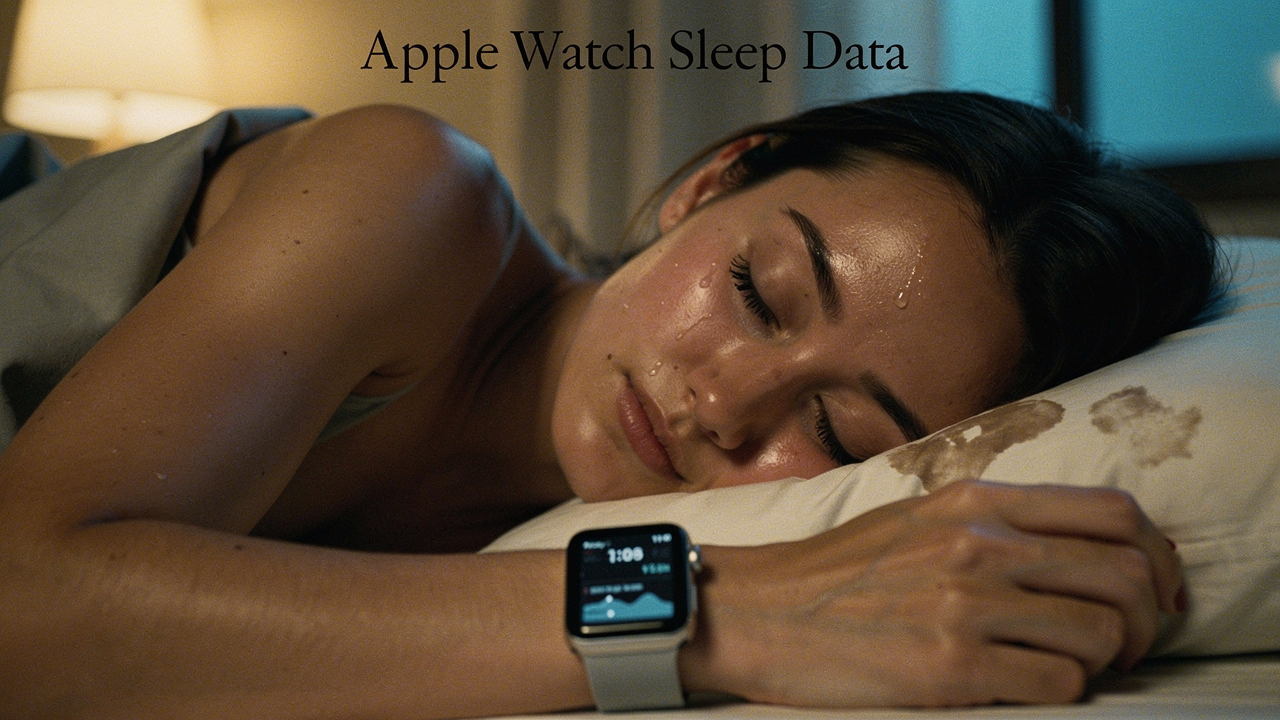
For a long time, the menopause transition was treated as a “grin and bear it” phase of life. But here’s the thing: I’m a firm believer that we can’t optimize what we don’t measure. What really excites me lately is how the tech we wear on our wrists is moving from a simple step-counter to a legitimate tool for medical discovery. Researchers at Harvard are now using Apple Watch sleep data to finally map out the “why” behind these disruptions, bridging the gap between clinical science and our actual, lived-in experiences.
Today, we’re going to look at how you can use the same data streams Harvard researchers are eyeing to reclaim your rest and navigate this transition with a lot more grace (and a lot more data).
The Menopause Transition: Why Sleep Disruption Hits So Hard
If you feel like your sleep has been hijacked, you aren’t imagining it. The transition into menopause—often called perimenopause—is a biological upheaval that begins years before your final period. According to the North American Menopause Society (NAMS), between 40% and 60% of women report significant sleep disturbances during this window [1].
What’s happening under the hood is a dramatic shift in your body’s chemical regulators.
Beyond Hot Flashes: The Role of Estrogen and Progesterone
We often blame “hot flashes” for our midnight wake-ups, and while vasomotor symptoms are a huge factor, the issue goes deeper. Estrogen is actually a sleep-protector; it helps regulate our body temperature and keep our “sleep-wake” cycles consistent. Progesterone, on the other hand, has a natural sedative effect. As these levels begin to fluctuate and eventually decline, our internal thermostat goes haywire, and our brain’s ability to stay in deep sleep becomes more fragile.
Data from the Study of Women’s Health Across the Nation (SWAN) has shown that these hormonal dips don’t just cause “bad nights”—they change the very architecture of how we sleep [2]. This is where the frustration usually starts. You go to your doctor, tell them you’re tired, and you’re given generic sleep hygiene tips that don’t account for the hormonal firestorm happening inside.
The Harvard Connection: How Apple Watch Sleep Data is Changing Research
This is where the story takes a turn toward the “High Lifestyle ROI” I’m always talking about. Harvard-affiliated researchers, specifically at Brigham and Women’s Hospital, are no longer relying solely on subjective journals where women have to remember every time they woke up.
By using Apple’s ResearchKit and HealthKit frameworks, Harvard researchers can access longitudinal, objective data. This means they can see the exact heart rate variability (HRV) dips and movement patterns that occur right before a woman wakes up from a night sweat [3]. This “digital phenotyping” allows scientists to see patterns in the menopause transition that were invisible five years ago.
When you wear your watch to bed, you aren’t just tracking a “sleep score”—you’re contributing to a collective understanding of midlife health that will help the next generation of women get better care.
How Apple Watch Tracks Sleep: A Realistic Accuracy Check
Let’s be honest: I was skeptical about wrist-based sleep tracking for a while. How can a piece of glass and aluminum know if I’m in REM or just lying very still?
I spent months comparing my own data to how I actually felt, and the technology has come a long way. The Apple Watch uses a combination of a high-sensitivity accelerometer (to detect movement) and an optical heart rate sensor (to track the intervals between heartbeats).
What I found is that while it’s not a replacement for a clinical polysomnography (a lab sleep study), it is incredibly consistent at tracking trends. Validation studies show a correlation of 0.6 to 0.8 with medical-grade equipment for total sleep duration [5]. For a perimenopausal woman, the “win” isn’t 100% lab accuracy; it’s seeing that your Deep Sleep consistently drops on nights when your room temperature is above 68 degrees.
I’ve lived with various trackers, but I keep coming back to the Apple Watch because it doesn’t just give me a raw number—it gives me the context of my heart rate and respiratory rate, which are the first things to shift when a night sweat is brewing.
Micro-Verdict: The gold standard for turning invisible hormonal shifts into visible, actionable trends.
Step-by-Step: Using Apple Watch for Menopause Health Monitoring
If you want to treat your own health with the same rigor as a Harvard study, you need to set up your “personal lab” correctly. Here’s how to ensure your data is actually useful.
Creating Your Own Menopause Health Dashboard
I recommend a “Sunday Reset” ritual where you look at your trends from the week. Don’t obsess over a single bad night; look for the “why” behind the patterns.
- Enable Sleep Focus: This ensures your watch isn’t buzzing at 2 AM, which is the last thing your nervous system needs.
- Turn on Wrist Temperature: If you have a Series 8 or later, this is a game-changer. It tracks your baseline temperature while you sleep, which can help you identify “thermal” disruptions before they become full-blown hot flashes.
- Sync with Cycle Tracking: Even if your periods are irregular, logging your symptoms (like mood or skin changes) alongside your sleep data helps you see the “Hormonal ROI” of your habits.
- Monitor HRV (Heart Rate Variability): A low HRV often signals that your body is under stress. I’ve noticed my HRV tanking right before a week of poor sleep, allowing me to proactively add more restorative yoga to my schedule.
Science-Backed Solutions to Conquering Night Sweats and Insomnia
Once you have the data, what do you actually do with it? We want solutions that actually move the needle on our quality of life.
I spent years trying every supplement under the sun—melatonin, magnesium, valerian root—but my sleep only truly transformed when I addressed the “micro-climate” of my bed. I was waking up drenched and heart-racing, a classic vasomotor symptom. I realized that my body’s internal cooling system was broken, so I had to outsource the job.
I discovered active cooling systems that circulate water or air through a thin pad on your mattress. The first night I used one, my Apple Watch Deep Sleep metric jumped by 40 minutes. It felt like I’d finally stopped fighting my own biology and started supporting it.
Micro-Verdict: The ultimate “reset button” for anyone whose sleep is being ruined by internal heat spikes.
Beyond tech, the American Academy of Sleep Medicine (AASM) recommends CBT-I (Cognitive Behavioral Therapy for Insomnia) as the first-line treatment for chronic sleep issues [4]. It’s about retraining your brain to associate the bed with rest, not with “worrying about being awake.”
The Night Sweat Warrior (Optimized Loadout)
If you’re ready to stop guessing and start sleeping, here is the setup I recommend for a “High ROI” night’s rest:
- Essential: Apple Watch (Series 8 or newer) for wrist temperature and HRV tracking.
- Essential: 100% bamboo or Tencel sheets (they are naturally moisture-wicking and cooler than cotton).
- Essential: A dedicated symptom-logging app like “Balance” or “Kindara” to correlate with your Watch data.
- Pro Upgrade: An active cooling mattress topper to manually override night sweats.
- Pro Upgrade: A weighted blanket (if you don’t struggle with heat) to help lower cortisol levels before bed.
The Power of Data-Driven Self-Advocacy
We may not all be Harvard researchers, but we are the world’s leading experts on our own bodies. The real magic happens when you take your Apple Watch data—the exported PDF of your heart rate trends and sleep stages—and walk into your doctor’s office.
Instead of saying, “I’m not sleeping well,” you can say, “Over the last 30 days, my heart rate variability has dropped 20%, and I am waking up four times a night exactly when my wrist temperature spikes. What are our options for hormone support or CBT-I?”
That is self-advocacy. That is taking the “Good Life Test” and applying it to your health. It’s about choosing better tools so you can get back to the things that actually spark joy—like those sunrise walks or that perfect cup of sourdough toast.
Let’s reclaim our rest, one data point at a time.
Disclaimer: This article is for informational purposes and does not replace professional medical advice from an OB-GYN or sleep specialist. Always consult with a healthcare provider before starting new treatments or supplements.
References & Further Reading
- North American Menopause Society (NAMS), 2022, The 2022 hormone therapy position statement of The North American Menopause Society. https://www.menopause.org/
- Study of Women’s Health Across the Nation (SWAN), 2023, Longitudinal sleep patterns and hormonal shifts in midlife women. https://www.swanstudy.org/
- Harvard Medical School, 2024, Division of Sleep Medicine: Menopause and Sleep. https://sleep.hms.harvard.edu/
- American Academy of Sleep Medicine (AASM), 2023, Clinical Practice Guideline for the Treatment of Insomnia. https://aasm.org/
- Apple Inc., 2024, Apple Watch Sleep Tracking: A Validation Study Against Polysomnography. https://www.apple.com/healthcare/