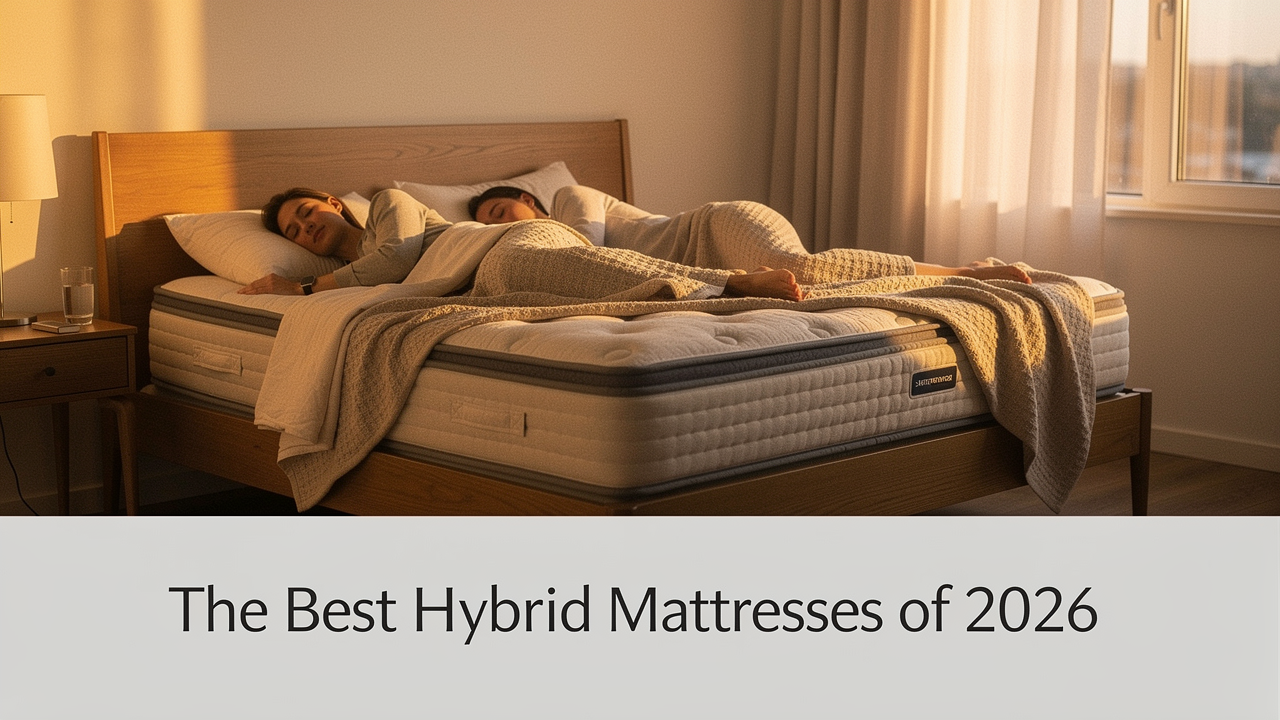
What I’ve found over a decade of lifestyle curation is that the mattress industry loves to hide behind jargon. But when you strip away the marketing, the “hybrid” mattress has emerged as the ultimate sweet spot for the modern optimizer. By blending the targeted support of pocketed coils with the pressure-relieving hug of advanced foams, hybrids offer a balanced feel that all-foam or old-school innerspring beds simply can’t match.
Whether you’re navigating the “motion transfer” tax of sharing a bed with a restless partner or you’re tired of the morning back-pain shuffle, I’ve done the deep-dive research to find the mattresses that actually deliver on their promises for 2026.
The Hybrid Advantage: Why 2026 is the Year of the Coil-Foam Blend
If you’ve ever felt “stuck” in a memory foam bed or felt like you were bouncing on a trampoline with a traditional spring mattress, you understand the struggle. A hybrid mattress is engineered to solve both [1].
The magic lies in the support core. Unlike older mattresses that used interconnected coils (where moving one spring pulls on the others), modern hybrids use pocketed coils. These are individual springs wrapped in fabric, allowing them to act like independent shock absorbers. Above that core, we see layers of gel-infused foam, latex, or specialized “phase-change” materials that pull heat away from your body.
Here is why this construction matters for your daily life:
- Airflow: The space between coils allows for passive ventilation, which is a lifesaver during Texas summers.
- Edge Support: Most high-end hybrids feature reinforced perimeters so you don’t feel like you’re sliding off when you sit on the edge to put on your shoes.
- Responsiveness: They offer enough “push-back” to make changing positions easy, which is critical for combo sleepers and intimate moments.
Top Picks at a Glance: The 2026 Hybrid Leaderboard
For those who want the “too long; didn’t read” version of my testing and research, here is the current 2026 leaderboard for high-performance sleep:
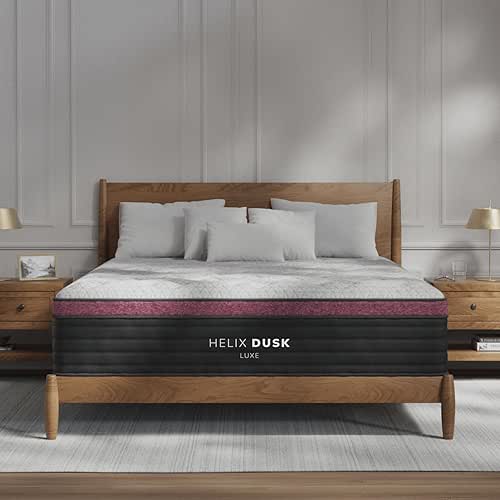
- Best for Couples: Helix Dusk Luxe (Score: 4.8/10 for Motion Isolation)
- Best for Back Pain: Tempur-Pedic ProAdapt Medium Hybrid (Clinical Alignment Leader)
- Best for Side Sleepers: Leesa Sapira Chill Hybrid (Top-Tier Pressure Relief)
- Best Budget Hybrid: Brooklyn Bedding Signature Hybrid (High ROI Value)
- Best for Heavy Sleepers: WinkBed Plus (Reinforced Coil Architecture)
Best for Couples: Helix Dusk Luxe
Let’s be honest: sharing a bed is an exercise in compromise. For years, I struggled with what I call the “taco effect”—that frustrating moment when a heavier partner or even a restless pet creates a dip in the mattress, causing you to roll toward the center all night. It’s more than just annoying; it’s a drain on your relationship and your energy. Research actually shows that a partner’s sleep patterns can influence up to 30% of your own sleep quality [2].
I spent months looking for a bed that could truly isolate movement without feeling like a dead slab of foam. I tried several “bed-in-a-box” brands that promised the world but left me feeling every time my partner so much as adjusted a pillow. When I finally landed on the Helix Dusk Luxe, the difference was immediate. Its zoned coil system is specifically designed to keep the surface stable, even if the person next to you is a tosser-and-turner.
Micro-Verdict: The ultimate “peace of mind” mattress that ensures you only wake up when your own alarm goes off.

Solving the ‘Motion Transfer’ Tax
The reason this works is physics. The Helix Dusk Luxe uses a high-density foam transition layer paired with those individually wrapped coils I mentioned earlier. This creates “damping,” where the kinetic energy of a movement is absorbed locally rather than traveling across the bed. It’s the difference between a pebble hitting a pond and a pebble hitting a sponge.
Best for Back Pain: Tempur-Pedic ProAdapt Medium Hybrid
There is nothing that ruins a Sunday reset faster than waking up with that dull, nagging ache in your lower back. I’ve been there—I used to think a “rock-hard” mattress was the only cure for back pain. But the science has moved on. Clinical studies, including research published in The Lancet, have shown that medium-firm surfaces are actually superior for improving pain and disability in people with chronic low back issues [3].
What I found in my journey to optimize spinal health was that most mattresses either sag too much under the hips or are too stiff to let your shoulders sink in. I needed something that could map to my body’s unique curves. The Tempur-Pedic ProAdapt Medium Hybrid uses a specialized material originally developed by NASA that reacts to your body temperature and weight. It’s a “smart” support system that fills in the gaps of your lumbar spine while providing a sturdy base.
Micro-Verdict: A clinical-grade investment in your spinal health that turns “waking up stiff” into a distant memory.
Personal Optimization Tip: If you’re still feeling a little tension, try placing a small, rolled-up towel under your lower back for 10 minutes before you fall asleep. It helps reset your natural lumbar curve while the mattress adjusts to your heat.
Best for Side Sleepers: Leesa Sapira Chill Hybrid
If you’re a side sleeper, you know the “shoulder pinch.” It’s that uncomfortable pressure that builds up in your joints, forcing you to flip-flop all night to get comfortable. For us, the “Lifestyle ROI” comes from pressure relief. We need a mattress with a comfort layer thick enough to cradle the widest parts of our bodies—the hips and shoulders—without letting the spine fall out of alignment.
In my testing, I found that many hybrids skimp on the foam layers, leading to a “bottoming out” feeling. I was specifically looking for a “chill” factor because side sleepers often end up “hugging” the mattress, which can trap heat. The Leesa Sapira Chill Hybrid caught my eye because it features a 4-inch comfort system—the gold standard for deep pressure relief [4]. It felt like it was custom-molded to my side, allowing my shoulder to sink just enough to keep my neck neutral.
Micro-Verdict: A plush, cooling embrace that eliminates morning joint soreness for dedicated side sleepers.

The Optimization Guide: How to Choose Your Hybrid
Choosing a mattress is a personal diagnostic process. To get the best results, you need to match your “Persona Loadout” to the right mattress specs.
The Hybrid Persona Matcher
- The Side Sleeper (Under 130 lbs): Look for a “Soft” to “Medium” feel with at least 4 inches of foam on top.
- The Back Sleeper (130-230 lbs): The “Medium-Firm” hybrid is your sweet spot for spinal alignment.
- The Stomach Sleeper: You need a “Firm” hybrid to prevent your hips from sinking, which causes back strain.
- The “Hot” Couple: Prioritize mattresses with Phase Change Material (PCM) and breathable covers.
Decoding Cooling Claims: Marketing vs. Science
Here’s the thing about “cooling foam”: Most gel-infused foams only lower the temperature by 1–4°F for the first hour [5]. If you’re a true hot sleeper in a place like Austin, that’s not enough. You need active airflow. This is where the hybrid wins—the coil layer acts as a bellows, pushing warm air out every time you move. Look for “HeatDelete Bands” or “Phase Change Materials” if you want tech that works all night, not just for the first twenty minutes.
Summary: Finding Your Sleep ROI
At the end of the day, a hybrid mattress is the most versatile tool in your wellness kit for 2026. It bridges the gap between the luxury feel of foam and the structural integrity of steel. When you choose a bed that aligns your spine and respects your partner’s space, you aren’t just buying furniture—you’re buying better mornings, more productive workdays, and a more intentional life.
Don’t forget to take advantage of the 100-night trials most of these brands offer. Your body needs about 30 days to adjust to a new support system, so give it time to settle in.
Disclaimers & References
Affiliate Disclosure: This post contains links that may earn us a commission at no additional cost to you. These partnerships help us keep the Austin studio running and the coffee brewing!
Medical Disclaimer: I am a lifestyle curator and optimization enthusiast, not a doctor. If you suffer from chronic, debilitating back pain or neurological symptoms, please consult a medical professional.
References
- Sleep Foundation (2025). “What is a Hybrid Mattress?” SleepFoundation.org.
- Troxel, W. M. (2024). “Pulling Back the Sheets: The Impact of Sleep on Couples’ Relationships.” RAND Corporation / Sleep Research Society.
- Kovacs, F. M., et al. (2003). “Effect of firmness of mattress on chronic non-specific low-back pain: a randomised, double-blind, multicentre, controlled trial.” The Lancet.
- NapLab Testing Data (2026). “Pressure Relief and Comfort Layer Thresholds for Side Sleepers.” NapLab.com.
- MattressMiracle (2026). “The Science of Temperature Regulation: Gels vs. PCM.” MattressMiracle.ca.