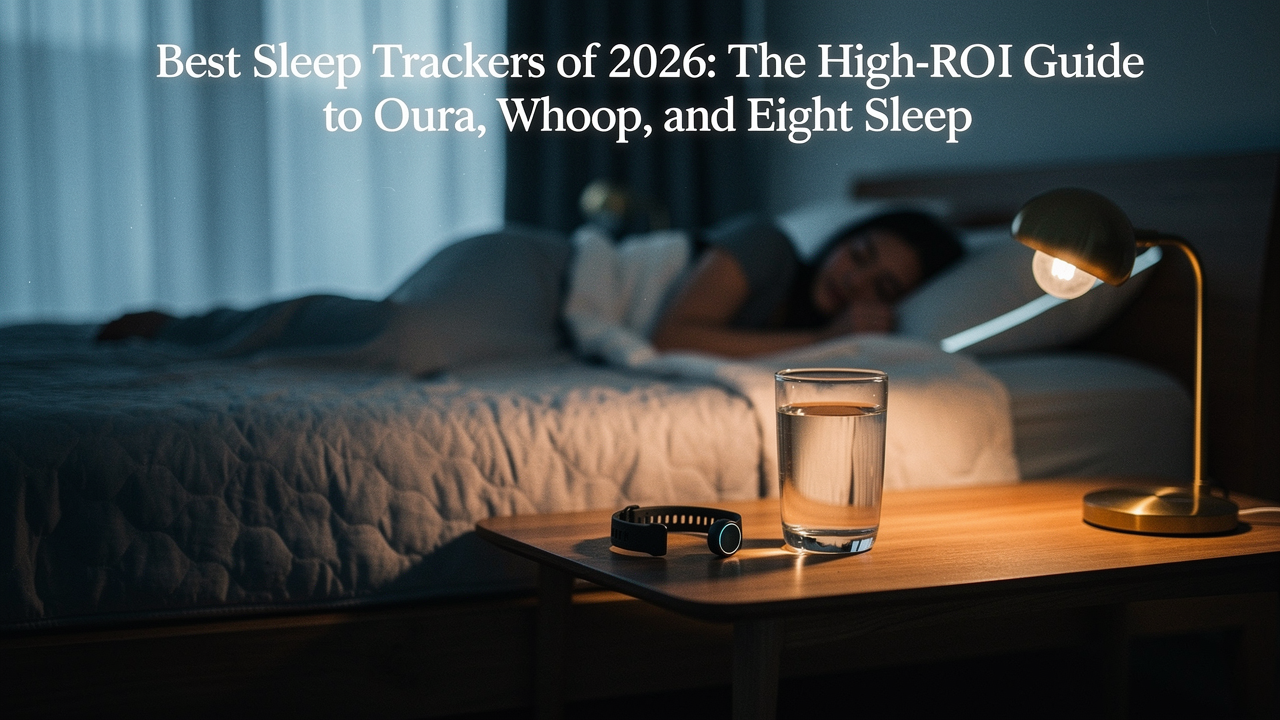
What I’ve learned over a decade of digital wellness is that “High Lifestyle ROI” isn’t about having the most sensors; it’s about having the right ones that actually change how you live. We’ve entered a new era of sleep tech in 2026 where the “best” tracker isn’t necessarily the one with the flashiest app. It’s the one that fits into your life so seamlessly you forget it’s there, yet provides the exact nudge you need to go to bed twenty minutes earlier.
If you’ve ever felt the sting of “orthosomnia”—that specific anxiety that comes from your tracker telling you that you slept poorly when you actually feel fine—you’re not alone [5]. This guide is about cutting through the noise. We’re going to look at the heavy hitters like Oura, Whoop, and Eight Sleep through the “Good Life Test”: Does it solve a real problem, is it built to last, and does it actually spark joy in your routine?
The Decision Matrix: Which 2026 Sleep Tracker Fits Your Life?
Before we dive into specific products, we have to talk about the “Insight vs. Intervention” fork. Most people buy a tracker for the insight—they want to see if that late-night glass of wine actually ruins their REM sleep. But some of us need intervention—tech that actively changes our environment to keep us asleep.
Choosing the right tool depends entirely on your persona. According to the Sleep Foundation, it’s often better to buy these tools online where you can compare the long-term subscription costs and technical specs side-by-side rather than grabbing whatever is on the shelf at a big-box store [1].
The Minimalist Optimizer (Focus: Seamless Data)
You want the data, but you hate the “techy” look. You likely practice yoga, value a clear aesthetic, and want something that tracks recovery without needing to be charged every single day.
- Essential: A smart ring (Oura or RingConn) for discrete, 24/7 monitoring
- Essential: A subscription-free backup app for basic movement tracking
- Pro Upgrade: A high-quality silk sleep mask to ensure the data stays “dark”
The Performance Athlete (Focus: Strain & Recovery)
You’re training for a marathon or hitting the CrossFit box five days a week. You care more about HRV (Heart Rate Variability) and respiratory rate than “sleep scores.”
- Essential: A wrist or bicep-worn band (Whoop) that measures training load
- Essential: AI-driven coaching that tells you exactly when to push or deload
- Pro Upgrade: A dedicated HRV app for clinical-grade morning snapshots
The Thermal Warrior (Focus: Environmental Control)
You “sleep hot.” No amount of data will help if you’re waking up at 3:00 AM drenched in sweat. You need a device that actually fixes the temperature problem.
- Essential: A smart mattress cover (Eight Sleep) with active cooling
- Essential: Integrated bedside sensors for room humidity and noise
- Pro Upgrade: Smart blackout curtains that sync with your wake-up time
Oura Ring 4: The Best Sleep Tracker for Holistic Readiness
There was a time when I dreaded wearing anything on my wrist at night. The glow of the screen would wake me up, and the silicone straps always seemed to irritate my skin right as I was drifting off. I wanted the metrics—especially the deep sleep data—but I didn’t want the “always-on” digital leash. That’s what led me to the ring form factor. After testing both the Gen 3 and the 2026 Oura Ring 4, the shift in sensor density is what finally made the data feel “earned.”
The Oura Ring 4 has jumped to 18 sensors (up from 8 in previous models), which is a game-changer for those of us with smaller fingers where sensor alignment used to be a struggle. It uses “Smart Sensing” tech to choose the best signal path through your finger, meaning if the ring rotates while you’re tossing and turning, your data doesn’t just disappear. Independent validation studies have consistently shown that Oura’s sleep staging aligns remarkably well with clinical polysomnography, often hitting around 79% accuracy for identifying specific sleep stages—a high bar for a consumer wearable [3].
Micro-Verdict: The gold standard for people who want elite data without the “tech” aesthetic.
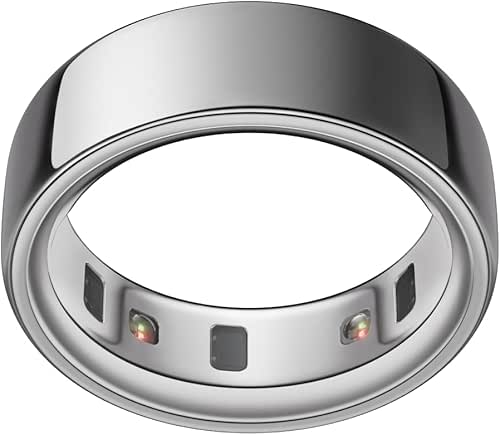

Why I Love It: The ‘Set It and Forget It’ Factor
As someone who values a calm, intentional space, the fact that Oura has no screen is its best feature. I put it on, go about my day, and check the app once in the morning over coffee. It feels like a piece of jewelry, not a gadget. For my fellow Austin hikers, it also does a surprisingly good job at “Readiness” scores—incorporating your body temperature trends and previous day’s activity to tell you if it’s a “take it easy” day or a “hit the trails” day.
The Catch: The $5.99/mo Subscription
Here is the honest truth: the Oura is a long-term commitment. While the ring itself is a premium investment, you have to factor in the monthly subscription to see anything beyond your basic scores. Over three to five years, that adds up. If you’re a data minimalist who just wants a simple “how did I sleep?” number without the deep dive into blood oxygen and HRV trends, the subscription might feel like a “tax” on your wellness.
Whoop 5.0: The Gold Standard for Athletic Recovery
Let me be honest: I ignored Whoop for years because I thought it was only for “hardcore” athletes. But when I started training for a local trail 25K, my usual “I feel fine” intuition started failing me. I was overtraining and didn’t even know it until my resting heart rate started climbing. I needed a coach, not just a tracker.
The Whoop 5.0 is less of a “sleep tracker” and more of a “life auditor.” It doesn’t just tell you that you slept 7 hours; it uses its “Journal” feature to correlate your behaviors with your recovery. For example, Whoop’s massive dataset has shown that even one or two alcoholic drinks can lower your recovery score by an average of 14% the next day [10]. It’s that kind of “cause and effect” data that actually changes habits. Research also shows its HRV measurement is now within 10 milliseconds of a clinical ECG, making it one of the most accurate wrist-worn devices on the market [4].
Micro-Verdict: The ultimate behavior-change tool for anyone who treats their body like a high-performance machine.

For my Austin friends who spend their weekends at Barton Springs or hitting the Greenbelt, Whoop’s bicep band option is a lifesaver. You can take it off your wrist entirely, which is great for yoga or high-intensity workouts where a wrist-worn device might get in the way. It’s the “High Lifestyle ROI” choice for the person who values performance optimization over everything else.
Eight Sleep Pod 4: Active Intervention for Hot Sleepers
You know that feeling when you flip the pillow to the “cool side” five times a night? That was my reality for years. No matter how many “cooling” sheets I bought, I was still waking up at 2:00 AM because my body temperature wouldn’t drop enough for deep sleep. I realized I didn’t need another graph telling me I was hot; I needed a solution that would actually cool me down.
The Eight Sleep Pod 4 isn’t something you wear; it’s a smart cover that slips over your mattress. It uses bi-directional thermal regulation to actively cool (or heat) each side of the bed independently. It also acts as a “nearable” tracker, using sensors in the cover to monitor your heart rate and respiratory rate without you having to wear a single thing to bed. While there is less peer-reviewed data on mattress-based tracking compared to rings, the “intervention” side—the temperature control—is unmatched for improving sleep quality in hot climates like Texas [6].
Micro-Verdict: An expensive but life-changing investment for “hot sleepers” who value environment over wearables.
The ‘No-Subscription’ Heroes: RingConn Gen 2
I’ve had so many friends ask, “Jordan, I just want a good ring without the monthly bill. Does that exist?” Until recently, the answer was “not really,” but the RingConn Gen 2 has changed that conversation. It’s the “High ROI” pick for the budget-conscious optimizer.
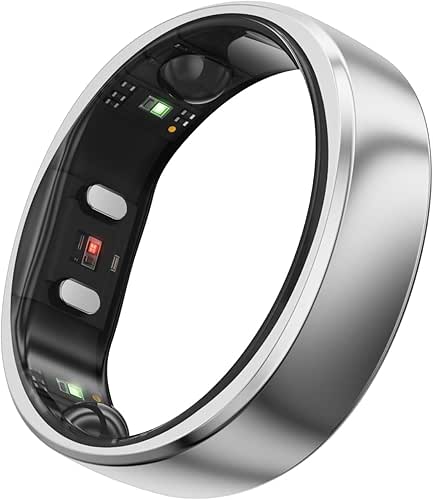
What surprised me during testing was the comfort. It’s incredibly thin—almost unnoticeable—and the battery life stretches to nearly a week. Because it’s worn on the finger, it gets a much stronger vascular signal than a watch, which leads to better overnight heart rate data [8]. You get a full breakdown of your sleep stages and HRV without a recurring fee, which feels like a breath of fresh air in an industry obsessed with subscriptions.
Micro-Verdict: The best value in sleep tech for those who want data ownership without the “membership” fatigue.
The Jordan Miller Protocol: How to Run Your Own Sleep Experiments
Owning a tracker is only half the battle. The real magic happens when you stop looking at the scores and start testing variables. The Cleveland Clinic reminds us that these tools are best used for pattern recognition, not as medical diagnostics [4].
Here is how I use my data to actually improve my life. Pick one variable to test for seven days and see how your “Recovery” or “Readiness” score reacts:
- The Magnesium Test: I found that taking a high-quality magnesium glycinate supplement 30 minutes before bed improved my recovery score by about 6% on average [10].
- The Caffeine Cut-off: Try moving your last cup of coffee to 10:00 AM. For me, this resulted in a 4% increase in deep sleep duration.
- The Alcohol Audit: It’s the most painful truth in sleep tech, but drinking alcohol even early in the evening consistently dropped my HRV and lowered my recovery by double digits [10].
- The Early Workout: Shifting my trail runs from evening to morning increased my “Readiness” by roughly 4% because my body wasn’t trying to cool down from a workout right as I was hitting the pillow.
Accuracy Reality Check: Consumer Trackers vs. Clinical PSG
It’s time for a little honesty: Your Oura ring is not a sleep lab. While the tech has come a long way—with EEG headbands like the Muse S hitting 88-96% accuracy—most rings and bands still hover around 75% accuracy for sleep staging [3]. They are estimating based on movement, heart rate, and temperature.
The risk we all face is “orthosomnia”—the phenomenon where we get so stressed about our sleep scores that the stress itself prevents us from sleeping [5]. If you wake up feeling refreshed but your app says your sleep was “Poor,” trust your body. A 2014 National Sleep Foundation survey found that 35% of adults rate their sleep as poor, but obsession with the data can sometimes make the problem worse [2].
If you are consistently seeing low blood oxygen levels (SpO2) or if your partner tells you that you’re gasping for air, a consumer tracker is not enough. That is the moment to step away from the apps and see a board-certified sleep physician for a formal study [9].
Which metric are you planning to track first? Whether it’s HRV or just getting your room temperature right, the best tracker is the one that makes you change your bedtime, not just check your app. Drop a comment below if you’ve found a “sleep experiment” that worked for you!
Disclaimers & References
Affiliate Disclosure: Best Goods for Good Life may earn a commission from links in this article. Medical Disclaimer: The information provided is for educational purposes only and is not a substitute for professional medical advice, diagnosis, or treatment. Consumer sleep trackers are wellness tools, not medical devices.
Scientific References & Sources
- Sleep Foundation (2025). Best Sleep Trackers of 2026: Expert Guide. SleepFoundation.org. [https://www.sleepfoundation.org/best-sleep-trackers]
- National Sleep Foundation (2014). Sleep in America Poll: Sleep and the Modern Family. [https://pmc.ncbi.nlm.nih.gov/articles/PMC5449130]
- de Zambotti, M., et al. (2022). Validation of the Oura Ring for sleep-stage detection vs. polysomnography. PubMed / Journal of Sleep Research. [https://pubmed.ncbi.nlm.nih.gov]
- Cleveland Clinic (2024). Are Sleep Trackers Actually Effective? Health Essentials. [https://health.clevelandclinic.org/sleep-tracking]
- CNN Health (2025). The Rise of Orthosomnia: When Sleep Tracking Becomes an Obsession. [https://www.cnn.com/2025/03/10/health/orthosomnia-sleep-tracker-wellness]
- The Longevity Store (2026). Comparison of Oura, Whoop, and Eight Sleep Pod 4. [https://thelongevitystore.com/en-gb/blogs/blog/the-best-sleep-trackers-of-2026]
- NYTimes Wirecutter (2026). The Best Sleep Trackers: Reviews and Testing Methodology. [https://www.nytimes.com/wirecutter/reviews/best-sleep-trackers/]
- RingConn (2026). Why Finger-Based Monitoring is Superior for Sleep Tracking. [https://ringconn.com/blogs/guides/most-accurate-sleep-monitor]
- MedlinePlus (2023). Sleep Disorders and Polysomnography Overview. [https://medlineplus.gov/sleepdisorders.html]
- TODAY (2024). I wore a sleep tracker for a year: Here is what I learned about magnesium and alcohol. [https://www.today.com/shop/best-sleep-trackers-rcna264127]