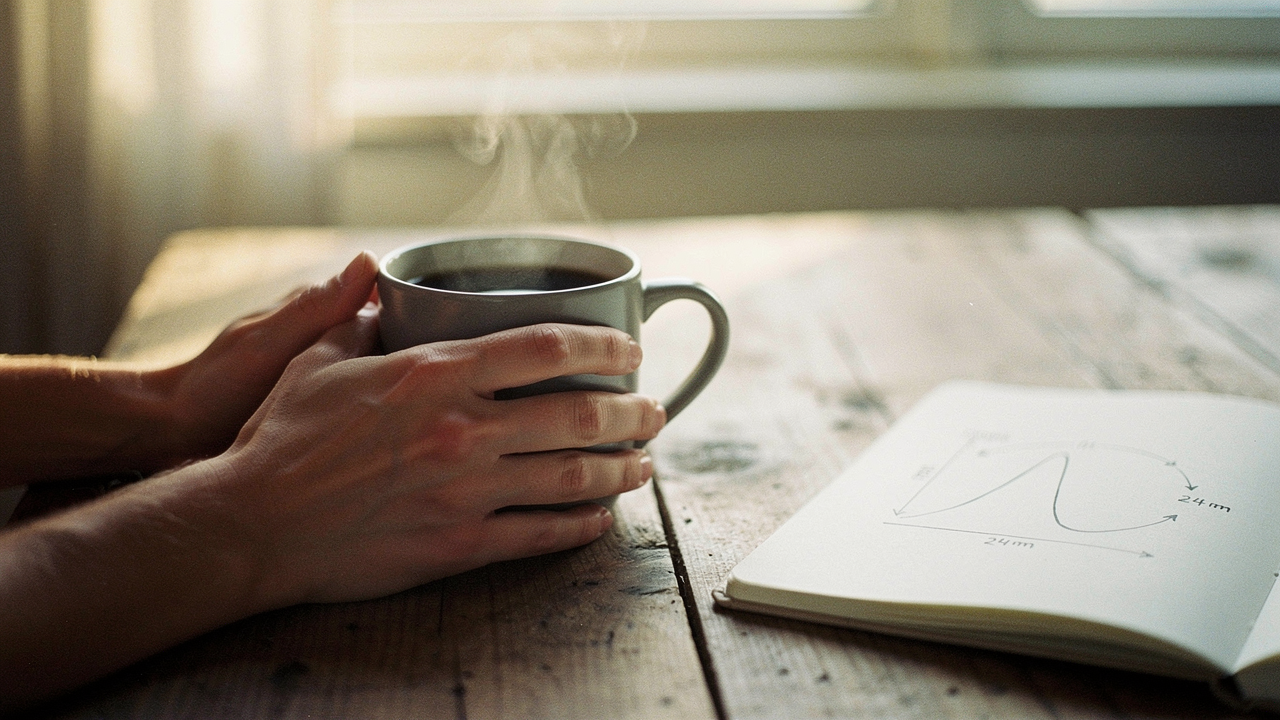
What I eventually realized is that coffee isn’t just a beverage; it’s a productivity pharmaceutical. When we use it as a blunt instrument the moment we open our eyes, we’re actually working against our body’s natural rhythm. Living a “high lifestyle ROI” life means choosing better, not just having more. By shifting when we sip, we can turn coffee from a jittery crutch into a precision tool for deep work.
Today, we’re looking at the 24-hour protocol: the science of cortisol, the “90-minute rule,” and the hard 2:00 PM last call that protected my sleep—and my sanity.
The Biology of the Brew: Cortisol, Adenosine, and You
To understand why timing matters, we have to look at the “sleep pressure” in our brains. Throughout the day, a molecule called adenosine builds up, making us feel increasingly drowsy. Caffeine doesn’t actually “give” you energy; it simply parks itself in your adenosine receptors, blocking the “I’m tired” signal [2].
At the same time, your body has its own internal alarm clock. When you wake up, your brain triggers the Cortisol Awakening Response (CAR). Cortisol—often called the “stress hormone”—is actually what makes you feel alert and awake. Research shows that cortisol levels naturally peak about 30 to 45 minutes after you wake up [1].
If you drink coffee during this natural peak, you’re essentially adding a stimulant to a system that’s already at maximum throttle. This can lead to increased tolerance, higher anxiety, and that dreaded mid-morning crash when both the caffeine and the cortisol drop at once. Plus, we have to consider the “half-life.” Caffeine stays in your system far longer than most realize—averaging 5 to 6 hours for most adults [3]. That 3:00 PM latte? Half of it is still circulating in your brain at 9:00 PM.
The 90-Minute Rule: Why Your First Cup Should Wait
Here is the thing that finally clicked for me: if you wait just 90 to 120 minutes after waking to have your first cup, you allow your natural cortisol levels to begin their descent. By “lining up” your caffeine intake with the start of your cortisol decline (around 9:30 AM to 11:30 AM for a 6:30 AM riser), you create a much smoother energy curve [4].
I’ll admit, I was skeptical at first. The idea of facing the first hour of the day without my latte felt impossible. But after three days of delaying, the “wall” I used to hit at 10:30 AM simply disappeared.
Managing the ‘Morning Gap’ Without Caffeine
If you’re worried about how to function during that 90-minute window, focus on “natural” wake-up calls. I’ve found that my morning routine in Austin—even just a quick walk on the trail or ten minutes of stretching in the sunlight—clears the morning fog better than an immediate double shot ever did.
- Hydrate first: Drink 16oz of water with a pinch of sea salt before your coffee to counteract overnight dehydration.
- Seek light: Get 5-10 minutes of direct sunlight into your eyes to signal your brain to stop producing melatonin.
- Movement: A quick walk or some light yoga helps circulate the cortisol your body is already producing.
The Productivity Protocol: Timing Your Sips for Workday Focus
Once you’ve cleared the morning gap, it’s time to use coffee as a tactical tool for focus. Instead of mindlessly sipping a giant mug all morning, think about your “Focus Windows.”
The Mid-Morning Focus Window
The sweet spot for most knowledge workers is the 10:00 AM to 12:00 PM block. This is when your cortisol has dipped, but your brain is primed for deep work. Having your primary serving of caffeine about 20 to 30 minutes before your most demanding task ensures peak blood levels exactly when you need to concentrate [4].
The ‘Micro-Dosing’ Strategy
I used to drink one 16-ounce pour-over and wonder why I felt “wired but tired.” What changed the game for me was switching to smaller, spaced-out servings.
I spent months frustrated by the “jitters-to-crash” cycle, trying every supplement under the sun to stay steady. It wasn’t until I started measuring my intake with a precision scale and splitting my morning brew into two smaller 6-ounce servings that I found the “flow state” I was looking for. Now, I brew once and keep the second half in a high-quality thermal carafe to enjoy an hour later.
Micro-Verdict: Steady, sustained alertness without the heart-pounding spikes.
The Afternoon Slump: Coffee Naps and the ‘Last Call’ Rule
We’ve all been there—2:30 PM hits, and the brain fog rolls in. While it’s tempting to head back to the breakroom, this is where most people ruin their sleep. A 2023 study published in the European Heart Journal even suggested that limiting coffee to the morning hours is linked to better heart health outcomes, likely because it prevents the circadian disruption caused by late-day caffeine [6].
The Coffee Nap Hack
If you’re truly struggling, try a “Coffee Nap.” Drink a small cup of coffee (or a shot of espresso) and immediately lie down for a 15-20 minute nap. Because caffeine takes about 20-30 minutes to hit your system, you’ll wake up just as the stimulant kicks in, while the nap itself has helped clear out some of that built-up adenosine [5].
The Hard ‘Last Call’
For most of us, a 2:00 PM cut-off is essential. If you plan to be in bed by 10:00 PM, an eight-hour window gives your body enough time to metabolize the bulk of the caffeine so it won’t interfere with your deep, slow-wave sleep [7].
Problem Solving: Crashes, Jitters, and Sleep Issues
If you’re following the timing rules but still feel off, it might be a dosage or sensitivity issue.
- The Crash: Usually caused by adenosine “flooding” your receptors once the caffeine wears off. Solution: Ensure you’re sleeping 7+ hours and staying hydrated.
- The Jitters: Often a sign of “Caffeine-Induced Anxiety.” UCLA Health notes that consuming over 400mg a day (about 4 cups) significantly increases anxiety risks [8].
- The Sleep Struggle: Even if you can fall asleep after late coffee, the quality of your deep sleep is often compromised [7]. If you wake up feeling unrefreshed, move your “last call” to 12:00 PM.
Your Personalized Coffee Schedules
Because we all have different “chronotypes” (internal clocks), one schedule doesn’t fit everyone. Here are three “High Lifestyle ROI” protocols to try.
The 9-to-5 Corporate Athlete (Typical 6:30 AM Wake)
You need to be “on” for meetings but want to avoid the 3:00 PM slump.
- 6:30 AM: Wake & Hydrate (No Coffee)
- 8:30 AM: First Focus Cup (Enjoy with breakfast to blunt jitters)
- 10:30 AM: Optional Micro-Dose (Small 6oz cup for deep work)
- 1:30 PM: Hard “Last Call” Cut-off
The Early Bird Creative (Typical 5:00 AM Wake)
You do your best work while the world is quiet.
- 5:00 AM: Wake & Sunlight/Movement
- 7:00 AM: First Cup (Your “Deep Work” fuel)
- 12:30 PM: Last Call
- 2:00 PM: Switch to herbal tea or magnesium-infused water
The Afternoon Shift Worker (Adjusting the Clock)
You need to be alert when others are winding down.
- The Rule: Still wait 90 minutes after your personal wake time.
- The Cut-off: Stop all caffeine at least 8 hours before your intended bedtime.
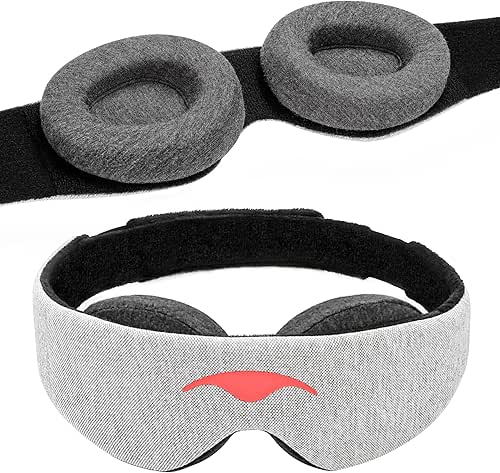
- Essential: Use a high-quality sleep mask to ensure your “last call” actually leads to rest.
I used to think my bedroom was dark enough, but I was still waking up groggy every single day. I tried blackout curtains and various supplements, but nothing worked until I found a contoured sleep mask that actually stayed put. It was the missing piece that allowed my brain to fully recharge, even if I’d pushed my caffeine window a little too late the day before.
Micro-Verdict: Total darkness for the deep, restorative sleep caffeine often tries to steal.

Coffee is a wonderful, soul-warming ritual, but it’s also a tool. When we respect our body’s natural rhythms—waiting for the 90-minute mark and honoring the afternoon cut-off—we don’t just get more done; we feel better doing it.
Try the 90-minute delay for just three days this week. I’d love to hear if your 11:00 AM focus feels as sharp as mine did when I finally made the switch. Let’s make every sip count.
***
Disclaimer: This guide is for informational purposes only. Consult a healthcare provider if you have heart conditions, anxiety disorders, or are pregnant before making significant changes to caffeine intake.
References & Scientific Sources
- Clow, A., et al. (2010). The Cortisol Awakening Response: Nature and Significance. Psychoneuroendocrinology.
- Fredholm, B. B., et al. (1999). Actions of Caffeine in the Brain with Special Reference to Adenosine Receptors. Pharmacological Reviews.
- FDA (2023). Spilling the Beans: How Much Caffeine is Too Much? U.S. Food and Drug Administration.
- Healthline (2023). When Is the Best Time to Drink Coffee? Nutrition Evidence-Based Summary.
- University of Sydney (2017). What are ‘Coffee Naps’ and Can They Help You Power Through the Day?
- Tulane University (2023). Skip Evening Espresso: Study Links Morning Coffee Drinking to Fewer Heart Problems. European Heart Journal.
- Knight-Hennessy Scholars, Stanford (2022). The Hidden Cost of Caffeine on Sleep Quality.
- UCLA Health (2023). Caffeine and Anxiety: 5 Things to Know.