I stopped, huffing, and bent down to double-knot them again, feeling my momentum evaporate. It’s a tiny friction point, right? But when you’re trying to build a Good Life centered on flow and intentionality, these small annoyances add up. I started wondering why, in an age of smart homes and AI, we’re still relying on a technology from the 1790s to keep our shoes on.
That’s when I went down the rabbit hole of High Lifestyle ROI upgrades. I wanted something that cost less than a lunch at the farmers market but solved this daily frustration forever. I discovered that there’s actually a deep science to why our laces fail us—and a $10 solution that has genuinely changed how I move through the world.
The Science of Frustration: Why Your Shoelaces Actually Come Untied
Before I found the fix, I wanted to understand the enemy. It turns out, your laces aren’t just slippery. There is a legitimate mechanical reason they fail. Researchers at UC Berkeley used high-speed cameras (filming at 900 frames per second) to study the Shoestring Theory.
They found that when you run, your foot hits the ground with seven times the force of gravity. This impact acts like a hammer, loosening the knot. Simultaneously, the swinging of your leg creates a whipping force on the ends of the laces.
The “Invisible Hand” Effect
This combination is what the researchers call the invisible hand effect. The impact loosens the center of the knot, and the whipping force pulls the ends until the whole thing collapses.
What’s even more interesting is that not all knots are created equal. The study distinguished between two common ways we tie our shoes:
- The Reef Knot: A strong, square knot that stays horizontal across the shoe.
- The Granny Knot: A weaker version where the bow sits vertically; this one is significantly more likely to fail under the dynamic forces of walking or running.
Even if you’ve mastered the reef knot, that whipping force is eventually going to win. This is where the shift to elastic systems moves from a lazy choice to a scientifically superior one.
The $10 Solution: Why Elastic Shoelaces Are a Lifestyle Game-Changer
When I first heard about no-tie shoelaces, I thought they were just for kids who hadn’t mastered their bunny ears yet. I was wrong. For anyone seeking High Lifestyle ROI, these are a masterclass in efficiency.
By replacing static cotton or polyester with high-tension elastic, you’re not just stopping the knot from untying—you’re turning your favorite sneakers into high-performance slip-ons. Experts at 220 Triathlon gave certain speed-lace systems a 92% performance score, noting that they are hard to fault for both comfort and security during intense activity.
What really sold me, though, was the health aspect. I reached out to a podiatrist friend who explained that elastic laces offer a dynamic fit. Unlike traditional laces that stay at one tension, elastic expands as your feet naturally swell throughout the day. This prevents hot spots and pressure points on the top of the foot.
Finding Your Fit: The Best No-Tie Shoelaces for Every Persona
Not all elastic laces are the same. Depending on whether you’re hitting the trails, heading to the office, or helping a loved one with limited dexterity, you’ll want a specific loadout.
For the Optimization Geek
Here’s the thing about my morning routine: I want zero friction. I used to spend thirty seconds every morning tugging at my laces to get the tension just right before a workout. I tried double-knotting, I tried different lace materials, but nothing felt truly secure without being too tight. I finally grabbed a pair of these original locking laces, and the difference was immediate. I set the tension once, and it hasn’t moved in six months.
Micro-Verdict: The ultimate set-it-and-forget-it security for runners and high-energy days.
For the Clean Aesthetic
Let’s be honest: I love the look of my classic white sneakers, but the plastic toggle of a standard sports lace can look a bit… well, sporty. I ignored no-tie options for my casual shoes for a long time because I didn’t want to ruin the vibe. Then I found flat elastic laces that use a hidden anchor system. You get the perfectly laced look without the messy bow, and nobody even knows they’re elastic until you slip them on like a pro.
Micro-Verdict: The best way to keep your sneakerhead style while ditching the bow forever.
For Heavy Duty
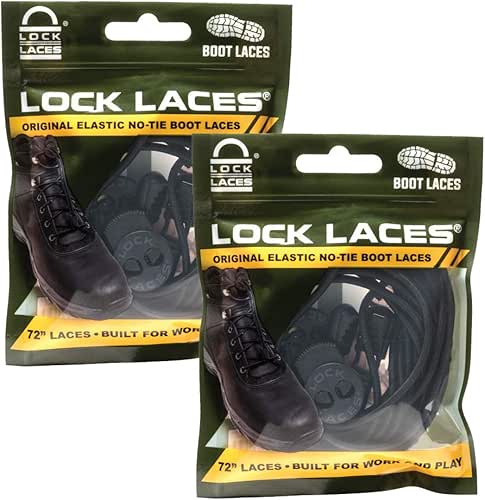
I’ll admit it—I was skeptical about whether elastic could handle my hiking boots. I was worried about ankle support on the rocky trails around Austin. But traditional laces in heavy boots always seem to loosen at the worst possible moment. What finally clicked for me was finding an extra-long, heavy-duty version designed specifically for rugged footwear. These use a reinforced locking mechanism that hasn’t budged even on steep inclines.
Micro-Verdict: Heavy-duty tension that keeps your boots snug without the constant retying.

Persona Loadouts
Depending on your lifestyle, here is how I recommend setting up your footwear:
- The Daily Athlete: Standard 48-inch round elastic laces with a cord-lock system for maximum security.
- The Modern Professional: Flat elastic laces with no-show anchors for a clean, bow-free look on dress sneakers.
- The Active Senior: Magnetic closure systems or oversized toggles that are easy to manipulate for those with arthritis or limited hand strength.
- The Weekend Hiker: 72-inch reinforced elastic laces designed to handle the high-top height of work or hiking boots.
Step-by-Step: How to Install Your Elastic Shoelaces
If you’ve never used these before, the installation can feel a little permanent—mostly because you usually have to trim the excess. Don’t let that intimidate you! Here is my Sunday Reset guide to getting it right the first time.
- Step 1 – The Setup: Remove your old laces. Thread the new elastic laces through the eyelets just like you would normally.
- Step 2 – The “Foot-In” Rule: This is the most important part. Always put your foot in the shoe before you tighten anything. Your foot needs to occupy the space to ensure the tension is correct.
- Step 3 – Thread the Lock: Slide the locking device onto the laces while your foot is still inside. Adjust the tension until it feels snug but comfortable.
- Step 4 – The “Wait and See” Trim: Don’t cut the laces yet! Walk around your house for five minutes. If they feel good, trim the excess lace about 2-3 inches below the lock.
- Step 5 – Seal it Up: Snap the cord clips onto the ends to prevent fraying. If you’re using a quick-lace system like Salomon’s, tuck the excess into the tongue pocket for safety.
Beyond the Product: Lacing Techniques for a Custom Fit
Sometimes the problem isn’t the lace—it’s the pattern. If you’re not ready to spend $10 yet, or if you have specific foot pain, you can use traditional laces with specialized techniques. Major brands like ASICS and Nike have spent years researching these to improve gait and comfort.
- The Heel-Lock (Runner’s Loop): If your heel constantly slips out of your shoe, use the extra eyelets at the very top to create a loop. Thread the opposite lace through the loop to lock your heel in place.
- Wide Foot Relief: If your shoes feel too tight across the middle, try parallel lacing. Instead of crossing the laces over each other, run them straight up the sides of the eyelets. This removes pressure from the top of the foot.
- Teaching the Next Generation: If you’re helping a child, the Bunny Ears method is often easier for small hands to grasp than the traditional Loop-Swoop-Pull.
Why This Matters for a “Good Life”
At Best Goods for Good Life, I talk a lot about intentionality. We often think intentional living means big, sweeping changes—meditation retreats or moving to a cabin in the woods. But more often, it’s about removing the micro-frictions that grate on our nerves.
Investing $10 in a pair of laces might seem trivial. But when you realize it saves you 30 seconds every morning, prevents a trip-and-fall hazard, and ensures your feet feel supported all day long, the ROI becomes clear. It’s one less thing to worry about, one more way to keep your flow.
Try a pair this week and see if you ever want to go back to a traditional bow. I suspect you won’t.
Affiliate Disclosure: We may earn a commission on products purchased through our links at no extra cost to you. These recommendations are based on our own testing and High Lifestyle ROI philosophy.
Resources & Citations
- UC Berkeley News, 2017. “The Science of Why Shoelaces Come Untied.”
- 220 Triathlon, 2024. “Best Elastic Shoe Laces for Triathletes.”
- Dr. Suzanne Fuchs, Podiatric Surgeon. “Expert Guidance on Foot Health and Lacing Tension.”
- Lock Laces, 2025. “Official Installation and Tensioning Guide.”
- Salomon, 2024. “How to Use the Salomon Quicklace System.”
- ASICS, 2025. “Lacing Techniques for Personalized Fit and Comfort.”
- Nike, 2024. “How to Tie Shoelaces: 4 Common Methods for All Ages.”