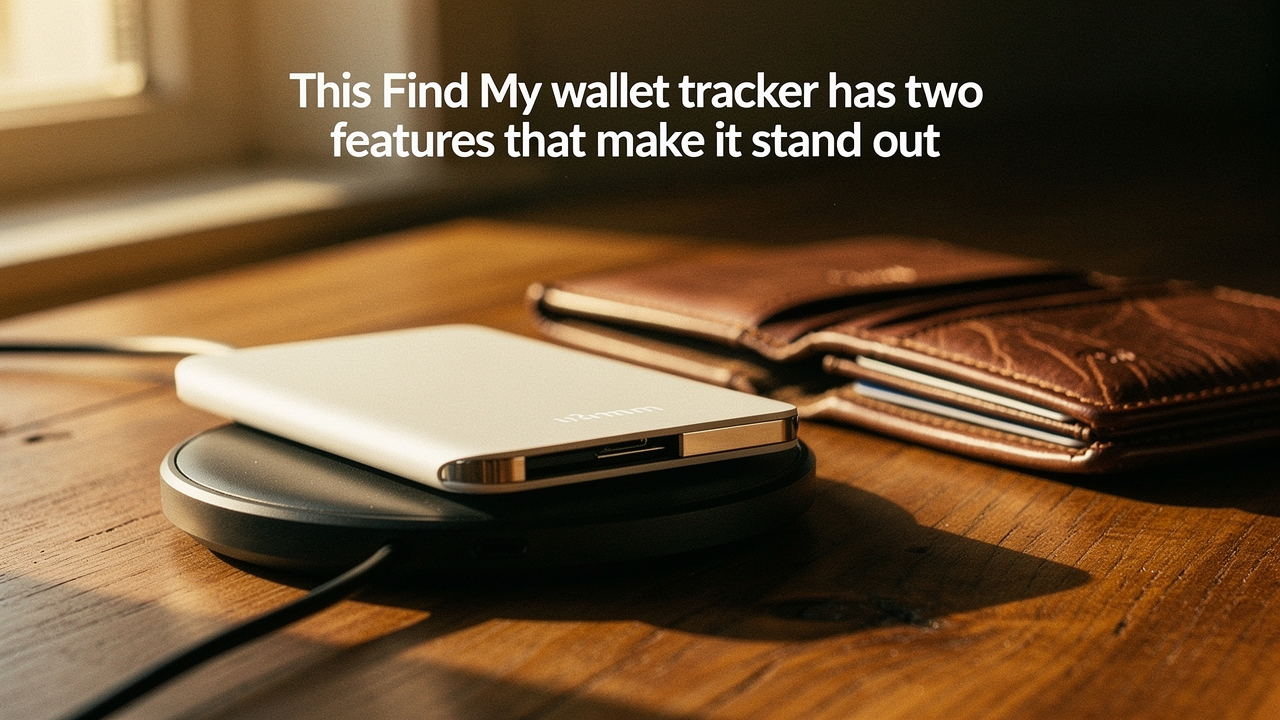
=
Silence. My heart dropped.
I spent forty-five minutes retracing my steps in the dark, wondering if it fell out by the trailhead or, worse, if someone had already picked it up. In that moment, I realized my “minimalist” setup had a massive flaw: my wallet was essentially a ghost in the machine. It had no way of telling me where it was.
That night, I went down a rabbit hole of Bluetooth trackers. Most people default to AirTags, but let’s be honest: putting an AirTag in a slim leather wallet is like trying to hide a marble in a sandwich. It creates a weird, unsightly bulge that eventually ruins the leather. I wanted something that felt like part of the wallet, not an afterthought.
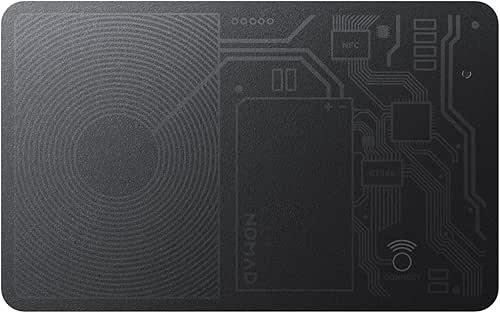
What I found was a new generation of card-style trackers, but one in particular—the Nomad Tracking Card—caught my eye because of two specific features that solved my biggest gripes with tech accessories: battery anxiety and physical bulk.
Quick Summary: High Lifestyle ROI
If you’re an iPhone user who values a slim silhouette and hates disposable batteries, the Nomad Tracking Card is the gold standard. It leverages Apple’s massive “Find My” network of over 1 billion devices [1], fits into a standard credit card slot without stretching it, and recharges wirelessly. It is the definition of a “set it and forget it” lifestyle upgrade.
The Anatomy of the Perfect Wallet Tracker: Two Standout Features
Here is the thing about most wallet trackers: they are usually “one-and-done” devices. You buy them, they last a year, and then you throw the whole plastic card in the trash because the battery isn’t replaceable. That always felt like a waste to me, both for my wallet (literally) and the planet.
When I started looking for a better way, I realized I needed a solution that was as sustainable as it was slim. I had tried some of the cheaper “Find My” cards from Amazon, but they were often thicker than advertised or felt like flimsy toys. I wanted something that felt like a premium piece of EDC (Every Day Carry).
I eventually discovered the Nomad Tracking Card, and it completely changed my setup. What makes it stand out aren’t just the basics, but two specific design choices. First, it is incredibly thin—just 2mm, which is roughly the thickness of two credit cards stacked together [2]. It slides into a card slot and disappears. Second, it features Qi wireless charging. Instead of tossing it when the battery dies, I just drop it on my MagSafe charger every five months or so.
Micro-Verdict: The ultimate blend of sustainability and slim design for the minimalist who hates clutter.

Best For:
- The Minimalist: Who refuses to carry a bulky bifold.
- The Eco-Conscious: Who is tired of disposable “single-use” electronics.
- The Forgetful Commuter: Who needs a “Left Behind” alert before they even leave the coffee shop.
Why the Apple ‘Find My’ Network is Non-Negotiable
You might wonder if you really need a “Find My” compatible device or if a proprietary brand like Tile is enough. In my experience living in a city like Austin, the network scale is everything.
Apple’s Find My network is a crowdsourced powerhouse. It uses the Bluetooth signals of over a billion active iOS devices to pinpoint your lost item [1]. If I leave my wallet at a busy restaurant on South Congress, any iPhone that passes within thirty feet of it will securely and privately update its location on my map.
When I compared this to proprietary networks, the difference was night and day. With other brands, you’re relying only on people who have that specific app installed on their phone. It’s a much smaller safety net. MacRumors community members often point out that while AirTags offer “Precision Finding” (the arrow that points you to the exact inch), card-style trackers are more than accurate enough to tell you which room or store your wallet is in [1].
The Competition: How Other Cards Stack Up
While I’m partial to the Nomad for its charging tech, I know that everyone’s “Good Life” requirements are different. Some people want the absolute loudest alert possible, while others need a battery that lasts for years without a single charge.
I’ve spent time looking at the two other heavy hitters in this space: the Pebblebee Card and the Chipolo CARD.
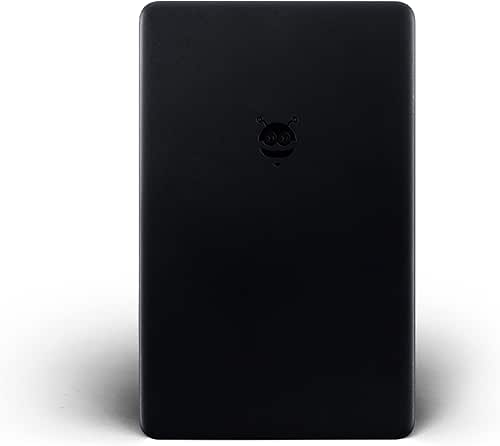
Let’s start with the Pebblebee. If you are the type of person who forgets to charge your toothbrush, let alone your wallet, this is your winner. It boasts a staggering 18-month battery life per charge [3]. I tested a friend’s Pebblebee, and while it’s a hair thicker than the Nomad, that extra battery peace of mind is a real draw for travelers.
Micro-Verdict: The marathon runner of trackers with a battery that outlasts almost everything else on your desk.
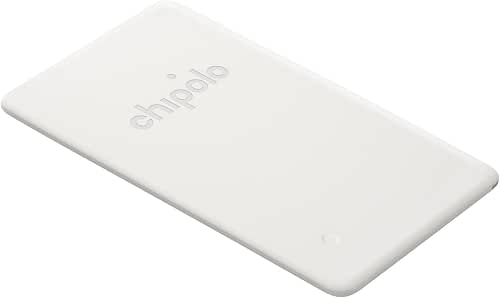
Then there’s the Chipolo CARD. I’ll be honest: my apartment is sometimes a mess of sourdough starters and yoga mats. If my wallet is buried under a pile of laundry, I need to hear it. Chipolo is famous for its volume, often hitting 97 dB in independent tests [4]. It’s loud enough to hear through a leather bag and a closed door.
Micro-Verdict: The loudest voice in the room, perfect for chronic “it’s somewhere in the house” misplacers.
Comparison Matrix: Finding Your Perfect Fit
Choosing a tracker depends entirely on your personal “pain points.” Here is how the top three stack up:
- Nomad Tracking Card: 2mm thick, Wireless (Qi) Charging, 5-month battery, IP67 Water Resistance.
- Pebblebee Card: 2.8mm thick, Magnetic USB Charging, 18-month battery, IP66 Water Resistance.
- Chipolo CARD (Find My): 2.15mm thick, Non-rechargeable (2-year life), Loudest alert (97dB), IPX5 Water Resistance.
The Jordan Miller ‘Never Lose It’ System: Habits vs. Tech
Even the best tech is just a safety net. After my Lady Bird Lake scare, I realized I couldn’t just buy a gadget and call it a day. I needed to change how I interacted with my space.
I started what I call the “14-Day Pocket Pat Challenge.” Research suggests that a ritual—like the classic “phone, keys, wallet” tap—can become an unconscious habit in about two weeks [7]. Every time I stand up from a chair or leave a building, I do the tap. It sounds simple, but it’s prevented at least three potential losses this year.
I also follow the “Defense in Depth” strategy used by professional travelers. According to a 2024 Global Rescue survey, one of the most effective ways to prevent a total loss is splitting your valuables [5]. I never keep all my cash and cards in one place.
The Persona Loadouts
- The Minimalist Remote Worker: Uses a slim card holder + Nomad Tracking Card. Keeps a “landing tray” by the front door where the wallet must live when at home.
- The Urban Commuter: Uses the Chipolo CARD for its high volume. Has “Left Behind” alerts enabled to trigger the second they walk 30 feet away from their bag.
- The International Traveler: Uses the Pebblebee for battery longevity. Follows the “1/3 Rule”—one card in the wallet, one in a hidden luggage pocket, and one digital copy on a secure cloud.
Emergency Protocol: What to Do If Your Wallet is Already Gone
If you’re reading this because your wallet is currently missing, take a deep breath. Panic is the enemy of a successful search.
Start with a “Context Search.” Instead of just looking under the couch, try to recreate the feeling of when you last had it. Were you wearing a specific jacket? Were you holding a grocery bag? Often, we “dump” our wallets in unusual places because our hands were full.
If the search fails, follow this prioritized timeline based on banking and security best practices [6]:
- Immediate (First 15 Mins): Use the Find My app to Mark as Lost. This locks the tracker and allows you to leave a phone number for anyone who finds it.
- Hour 1: Freeze your cards via your mobile banking apps. “Freezing” is better than “Canceling” because it’s reversible if you find the wallet in your car ten minutes later.
- Hour 2: Check your “Last Known Location” in the Find My app. If it’s at a business, call them immediately.
- Within 24 Hours: If it’s truly gone, notify the DMV to replace your license and file a police report. This is a crucial paper trail if identity theft occurs later [6].
Living a “Good Life” isn’t about being perfect; it’s about building systems that support you when things go wrong. Adding a Find My tracker to your wallet isn’t just about the tech—it’s about the peace of mind that comes from knowing you’re prepared.
Ready to secure your EDC? Check out the Nomad Tracking Card and start your own 14-day pocket-pat challenge today. Your future, less-stressed self will thank you.
Expert Sources & Technical References
Affiliate disclosure: This post contains links to products I use and recommend. My Austin-based sourdough habit is funded by these small commissions at no cost to you.
- Apple Support (2024). “How the Find My network protects your privacy.” Apple.com. https://support.apple.com/en-us/102648
- Nomad Goods (2024). “Tracking Card – Technical Specifications.” Nomadgoods.com. https://nomadgoods.com/products/tracking-card
- CNN Underscored (2024). “The Best Bluetooth Trackers of 2024: Tested and Reviewed.” CNN.com. https://www.cnn.com/cnn-underscored/reviews/best-bluetooth-trackers
- Chipolo Support (2024). “Chipolo CARD Specifications and Loudness.” Chipolo.net.
- Global Rescue (2024). “Traveler Sentiment and Safety Survey: Valuables Management.” Globalrescue.com. https://www.globalrescue.com/common/blog/detail/traveler-tips-prevention-pickpockets-thieves
- Regions Bank (2023). “10 steps to take immediately if you lose your wallet.” Regions.com. https://www.regions.com/insights/personal/article/10-steps-to-take-immediately-if-you-lose-your-wallet
- Bull Guard (2024). “Losing Wallet? The Ultimate Guide to Recovery & Prevention.” My-bullguard.com. https://my-bullguard.com/blogs/resources/losing-wallet