
=
In my years as a lifestyle curator, I’ve realized that we often treat home comfort as a purely aesthetic goal. We buy more candles or thicker pillows, hoping to mask the underlying “house-shivers.” But at Best Goods for Good Life, I advocate for High Lifestyle ROI. This means we look for solutions that solve the real problem, not just the symptom. True household comfort is a delicate balance of building science and sensory joy. It’s about understanding why your home is losing heat, how air moves through your walls, and then layering in those cozy, intentional touches that make a space feel like a retreat.
Here’s the good news: you don’t always need a $20,000 renovation to fix a drafty house. Whether you’re a renter trying to survive a cold snap or a homeowner looking to lower those climbing energy bills, this blueprint will help you diagnose the root causes of discomfort and provide a prioritized roadmap to a truly cozy home.
The Comfort Audit: Why Your Home Feels Off
Before we start buying wool throws, we need to talk about why your home feels uncomfortable in the first place. Think of your house as a living, breathing system. When one part of that system is out of sync, it affects the whole “body” of the home.
Many of us assume that a drafty room is just part of an older home’s charm, but according to data from the International Association of Certified Home Inspectors (InterNACHI), many common “uncomfortable home issues” stem from structural or maintenance defects that we often overlook [1]. For instance, InterNACHI reports that about 35.8% of home problems are actually related to grading and drainage, while 19.9% are tied to improper electrical wiring—issues that can lead to moisture, musty smells, or flickering lights that quietly chip away at your sense of peace [1].
Symptoms vs. Root Causes
If you feel a draft near the floor, your instinct might be to blame the window. But here’s a building science secret: the air you feel at your ankles is often caused by the Stack Effect.
Think of your house like a giant chimney. Warm air is lighter than cold air, so it naturally rises. In the winter, that expensive heat you’re paying for escapes through tiny, invisible holes in your attic or upper-floor ceilings (these are called “bypasses”). As that warm air exits the top of the house, it creates a vacuum that sucks cold air in through the lower levels—like under your front door or through basement rim joists.
What you perceive as a “window problem” is often actually an “attic problem.” By identifying these root causes, you stop throwing money at temporary fixes and start investing in solutions that actually move the needle on your daily comfort.
Stopping the Chill: Best Home Comfort Tips for Winter
When the temperature drops, our thermal comfort becomes the top priority. It’s also where we see the biggest impact on our wallets. The U.S. Department of Energy (DOE) notes that space heating and cooling account for roughly 50% of the average household’s annual energy bills [2]. If you’re feeling chilly, you’re likely losing money alongside that heat.
The Attic: Your Home’s “Golden Key”
If I could give you only one tip for a warmer home, it would be this: look up. Building performance experts often call the attic the “Golden Key” to home comfort. NYSERDA research shows that proper air sealing and insulation can reduce home energy use by about 10% while significantly improving year-round comfort [3].
Here is the thing about drafts: I used to spend every winter taping plastic over my windows, assuming the glass was the culprit. I was still cold, and my house looked like a construction site. What finally clicked for me was learning about attic penetrations—the spots where pipes, wires, and light fixtures “poke” through your ceiling into the attic. Once those were sealed with professional-grade foam and the insulation was leveled out, the drafts at my feet vanished almost overnight.
If you aren’t ready to crawl into your attic yet, you can at least find where the heat is escaping with a simple tool.
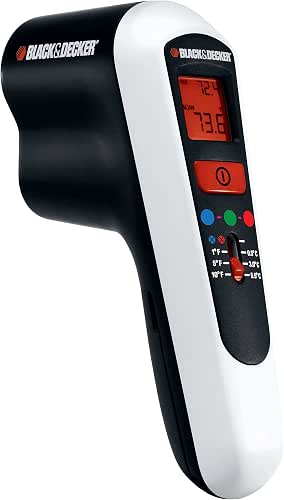
I used to wander around my living room like a detective, holding my breath and trying to feel for a breeze with the back of my hand. It was tedious and, frankly, I missed most of the leaks. I finally picked up a thermal leak detector, and it was a total revelation. You just point it at a wall or window, and the light changes color when it hits a cold spot. It turned my guesswork into a clear map of exactly where I needed to add weatherstripping.
Micro-Verdict: The real win here: It turns invisible drafts into visible data points.

Smart Controls: Thermostats That Think
Once you’ve addressed the leaks, you need to manage the heat you have. Many of us are still using those old-school dial thermostats that are about as precise as a weather vane.
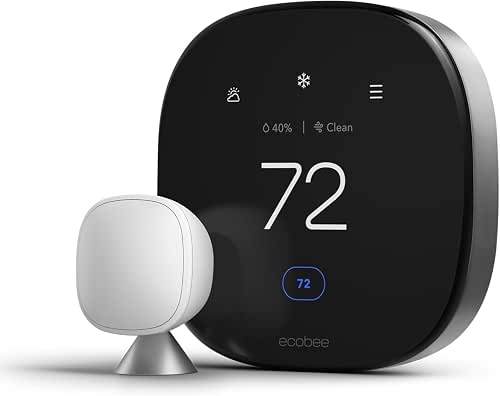
Let me be honest: I ignored my thermostat for years because I thought “programming” it would be a headache. I’d forget to turn it down when I left for the farmers market and wake up in a sweat at 2:00 AM because the heat was still cranking. According to ENERGY STAR, homeowners can save roughly $180 per year simply by using a programmable or smart thermostat properly [4].
I switched to a smart system a few years ago, and it’s one of those High ROI items I wish I’d bought sooner. It learns when I’m actually home and adjusts the temperature based on my routine. No more “forgetting” to save energy.
Micro-Verdict: The game-changer: Total control over your climate without the mental load.
The Science of Coziness: Sensory Upgrades
Comfort isn’t just about the temperature on the wall; it’s about how your brain perceives the space. This is where we bridge the gap between building science and interior design.
Layering Textures and Light
Have you ever walked into a room that felt “cold” even though the air was warm? That’s often a visual and acoustic issue. Hard surfaces like wood floors, large windows, and bare walls bounce sound and “feel” colder to our eyes.
- The Floor: Area rugs aren’t just for style. They act as a thermal barrier between your feet and a cold subfloor.
- The Windows: Closing your curtains at night isn’t just for privacy. Research from Tri-State suggests that closing curtains and blinds in winter can reduce heat loss from a room by up to 10% [5].
- The Light: Lighting design guidance consistently shows that “warm white” light—specifically in the 2700K to 3000K range—is optimal for relaxation and creating a cozy atmosphere.
Here’s a trick I love: instead of using one harsh overhead light, use “3-point lighting.” Put a floor lamp in one corner, a small table lamp on a side table, and maybe a candle or a soft sconce on another wall. This eliminates those dark, “scary” corners and fills the room with a soft, amber glow that makes the air feel five degrees warmer than it actually is.
High-ROI Weekend Projects: Quick Comfort Fixes
If you’re looking for simple home comfort improvement ideas that you can tackle this Saturday, you don’t need a massive budget. These are the “quick wins” that take under an hour but provide immediate relief.
The Rental Comfort Kit
If you’re renting, you can’t exactly blow insulation into the walls. But you don’t have to suffer, either.
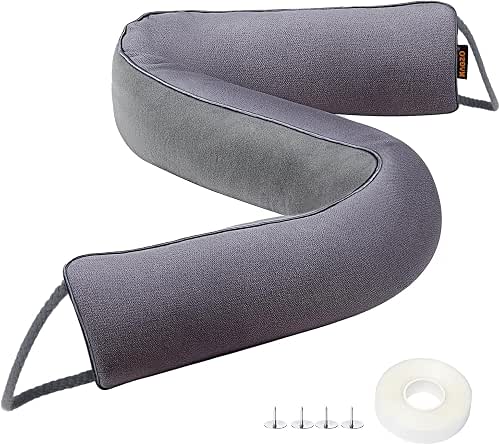
I’ll admit it—I used to think “draft snakes” were just for grandmas. Then I lived in a 1920s apartment where I could literally see the sidewalk through the gap under my front door. I found a sleek, weighted door draft stopper that matched my decor, and the difference was instant. No more wind whistling through the hallway.
Micro-Verdict: What sold me: It’s the easiest way to block a breeze without losing your security deposit.
For a complete Rental Comfort Loadout, I recommend these three essentials:
- Essential: A window insulation kit (a $20 plastic film that creates a “dead air” space to stop drafts).
- Essential: High-quality LED bulbs in a 2700K “Warm White” tone to replace harsh apartment lighting.
- Essential: Command hooks to hang heavy, thermal-lined curtains without drilling into the walls.
Ergonomics: Solving Bodily Discomfort at Home
Sometimes the discomfort isn’t coming from the walls—it’s coming from how you’re sitting. As more of us work from home, bodily aches have become a major “home discomfort” issue.
The Cleveland Clinic notes that sedentary home environments can aggravate chronic pain, and they recommend using heat therapy to relax stiff muscles [6]. If your “home office” is actually just a kitchen chair, your body is paying the price.
I struggled with lower back pain for months after I started working from my dining table. What finally clicked for me was that I wasn’t supporting my spine’s natural curve. Before you buy a $1,000 office chair, try a High-ROI ergonomic tweak: an adjustable footrest or a lumbar support pillow. When your body is supported, the whole room feels more comfortable.
The “Power User” Home Comfort Loadout
If you own your home and want to take comfort to the next level, here is the pro-tier list:
- Essential: A smart leak detector (to catch plumbing issues before they cause “musty” discomfort).
- Essential: An air purifier with a HEPA filter to improve indoor air quality and reduce allergens.
- Pro Upgrade: A whole-home dehumidifier or humidifier integrated into your HVAC for perfect “air feel.”
- Pro Upgrade: Smart window shades that close automatically when the sun hits the glass to prevent summer overheating.
At the end of the day, your home should be the place where you recharge, not where you fight the drafts. By starting with the building science—sealing those attic leaks and mastering your thermostat—and then layering in the sensory joy of warm light and soft textures, you create a space that truly supports you.
Creating a “Good Life” doesn’t require a perfect house; it just requires a house that works for you. Take one small step this weekend—maybe it’s just finding one draft or swapping one lightbulb. You’ll be surprised at how much better you feel when your environment finally stops fighting you.
Download our Home Comfort Checklist to audit your own space this weekend!
DIY Safety Disclaimer: When performing attic work, always wear proper protective equipment (mask, gloves, long sleeves). Be cautious around electrical wiring and recessed lights. If you are unsure about the safety of your home’s electrical or structural systems, always consult a licensed professional. Professional energy audits are highly recommended to ensure combustion appliances (like water heaters and furnaces) are venting properly after air sealing.
Expert Sources & Building Science References
- InterNACHI (International Association of Certified Home Inspectors). (2024). Ten Most Common Home Problems. https://www.nachi.org/ten-problems.htm
- U.S. Department of Energy (EnergySaver). (2025). Managing Your Home’s Comfort. https://www.energy.gov/energysaver/managing-your-homes-comfort
- NYSERDA (New York State Energy Research and Development Authority). (2024). Energy-Saving Improvement Ideas. https://www.nyserda.ny.gov/
- ENERGY STAR / EPA. (2025). Guide to Smart Thermostats and Energy Savings. https://www.energystar.gov/
- Tri-State Generation and Transmission Association. (2024). Winter Comfort Tips: Transform Your Home. https://tristate.coop/winter-comfort-tips
- Cleveland Clinic. (2024). Natural Pain Relief Strategies and Heat Therapy. https://health.clevelandclinic.org/