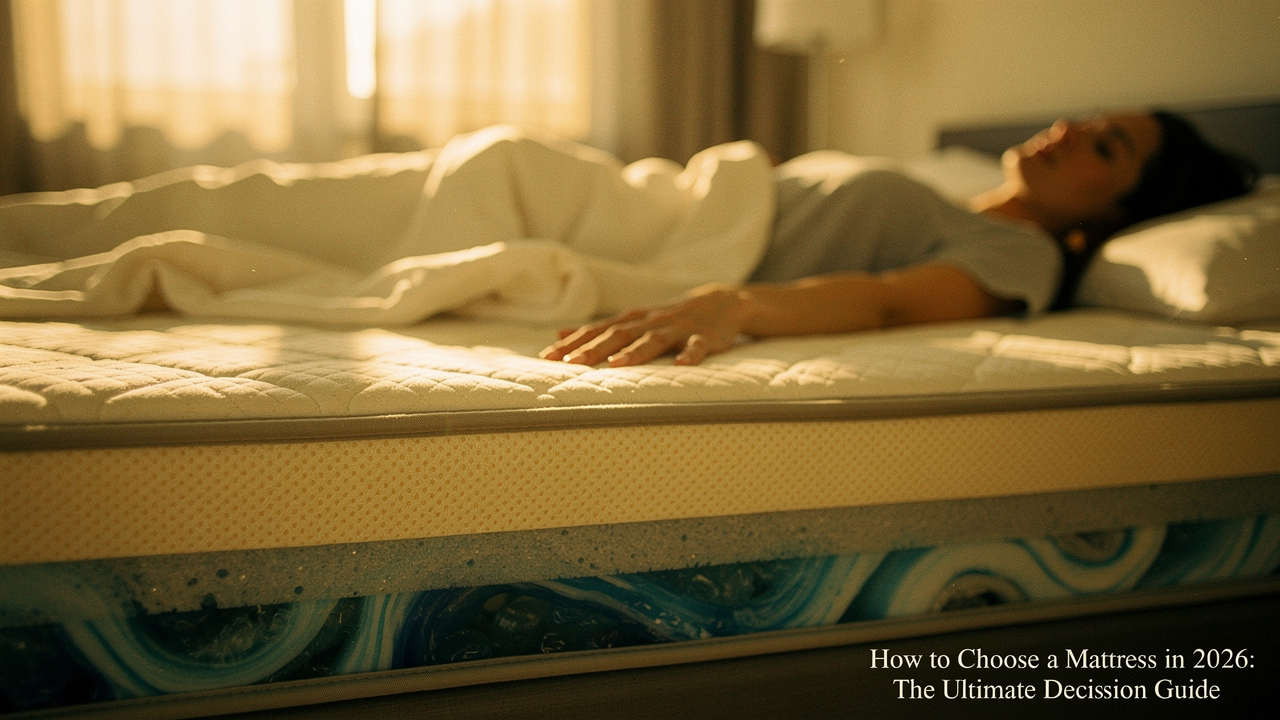
Think of your mattress as the most important piece of hardware you own. In 2026, the technology has moved far beyond simple “soft” or “firm” labels. We’re seeing zoned support systems that adjust to your biomechanics and bio-based foams that actually breathe. But with so many options, it’s easy to fall into “analysis paralysis.” I’ve spent the last few months diving into the latest sleep science and testing 2026’s top models to create a jargon-free map. Whether you’re dealing with Austin humidity making you a hot sleeper or a partner who tosses and turns, let’s find the bed that actually supports your best life.
The 2026 Mattress Landscape: Understanding Your Options
The mattress market has shifted significantly over the last year. According to the International Sleep Products Association (ISPA), we’re seeing a massive trend toward hybrid models as consumers move away from “pure” constructions in search of more balanced performance [1].
Before you dive into brands, you need to understand the “DNA” of what you’re buying.
Innerspring: The Traditional Feel
Innersprings are the classics. They rely on a network of metal coils for support. While they offer great “bounce” and airflow (perfect for those of us who run hot), they generally have the shortest lifespan, often needing replacement every 5–7 years as the coils lose their tension [2].
Memory Foam: The Pressure Relief King
If you love that “hugged” feeling, memory foam is your go-to. It’s designed to contour to your body’s unique shape. In 2026, the big news is the shift toward open-cell foams and copper-infused layers, which have finally solved the old “sleeping hot” problem. Most quality foams now carry CertiPUR-US certification, ensuring they are made without ozone depleters or heavy metals [5].
Latex: Eco-Friendly Durability
Latex is the “forever bed.” Made from the sap of rubber trees, it’s naturally cooling, antimicrobial, and incredibly resilient. While it’s usually a higher upfront cost, natural latex mattresses can last 15 years or more, making them a high-ROI choice for the long term [3].
Hybrid: The Best of Both Worlds
Hybrids are the current industry darling. By combining individually pocketed coils with layers of memory foam or latex, they offer the pressure relief of foam with the structural support and breathability of springs.
- Support: Provided by 800+ pocketed coils
- Comfort: 2-4 inches of high-density foam or latex
- Best for: Couples and people who want a “best of all worlds” feel
The Decision Framework: How to Choose a Mattress
Choosing a mattress isn’t about finding the “best” bed; it’s about finding the best bed for you. What works for my 130lb frame while I’m doing my Sunday morning yoga reset won’t work for someone with a different build or sleep style.
Step 1: Identify Your Primary Sleep Position
Your position dictates where you need support and where you need “give.”
- Side Sleepers: You need a medium to medium-soft feel. Your shoulders and hips are your widest points; if the bed is too firm, they’ll jam against the surface, leading to that annoying morning numbness.
- Back Sleepers: You’re the “medium-firm” crowd. You need enough cushion for your lower back to sink in slightly, but enough support to keep your spine in a neutral line.
- Stomach Sleepers: You need a firm surface. If your hips sink too far, it arches your back and puts massive strain on your neck.
Step 2: Factor in Your Body Weight
This is a huge content gap in most guides, but it’s critical. Firmness is subjective.
- Under 130 lbs: You’ll likely find most “medium” mattresses feel firm because you don’t have enough mass to sink into the comfort layers. Look for “soft” or “plush” models.
- 130–230 lbs: Most industry-standard “medium-firm” (a 6.5/10 on the scale) will feel just right.
- Over 230 lbs: You need a more supportive base. I recommend looking for a hybrid with “zoned coils” or a thicker 12-14 inch profile to prevent “bottoming out” against the support core.
Solving the ‘Back Pain’ Puzzle
Let’s be honest: most of us start mattress shopping because something hurts. Low back pain is a global epidemic, and your bed is often the silent culprit [4].
Is It Your Mattress or a Medical Issue?
I noticed a pattern in my own life: I’d wake up feeling like a stiff board, but after twenty minutes of moving around and a cup of coffee, the pain would vanish. That’s a classic “red flag” that your mattress is the problem.
- Morning Stiffness: If pain is worst right when you wake up, your mattress isn’t supporting your neutral alignment.
- The “Hammock” Effect: If your bed sags in the middle, your spine is being forced into a curve all night.
- The “Hand Test”: Lie on your back and try to slide your hand under the small of your back. If there’s a huge gap, the bed is too firm. If you can’t get your hand in at all, it’s too soft.
The Role of Zoned Support in 2026
Recent studies in the journal Spine suggest that medium-firm mattresses with “zoned” support lead to the best outcomes for chronic low back pain [4]. In 2026, manufacturers are using firmer coils or denser foams specifically under the hips (where we are heaviest) and softer materials under the shoulders. This keeps the spine straight regardless of your position.
The Couples’ Guide: Motion Isolation & Compromise
If you share a bed, you aren’t just buying for one person; you’re buying for a relationship. I’ve seen so many couples struggle when one partner is a “light sleeper” and the other moves like they’re running a marathon in their dreams.
The fix? Motion isolation. This is the ability of a mattress to absorb energy so it doesn’t travel across the bed.
- All-Foam: Generally the best at absorbing motion.
- Pocketed Coils: Because each spring is in its own fabric sleeve, they move independently. Avoid “interconnected” or “Bonnell” coils, which act like a trampoline.
- Split-Kings: If your preferences are truly opposite, 2026 has made split-king setups much more seamless, allowing you to have two different firmnesses in one bed frame.
Jordan’s Top Picks: Best Mattresses for 2026
I’ve vetted these based on my “Good Life Test”—they have to solve a real problem, be built to last, and actually make the routine of going to bed feel like a luxury.
Best Overall Hybrid:
Here’s the thing about most “bed-in-a-box” brands: they are great, but sometimes you just want a traditional, high-end feel without the showroom markup. I spent years switching between all-foam beds that felt too “mushy” and old-school springs that felt like sleeping on a park bench. When I finally landed on a high-quality hybrid with a dedicated lumbar support zone, my morning back stiffness literally evaporated within a week. It offers that hotel-luxury bounce but uses pocketed coils so I don’t feel my dog jumping on the bed at 6:00 AM.
The real win here: A dual-coil design that provides incredible airflow and durability for the long haul.
Best for Side Sleepers & Pressure Relief:
2026年10月15日 9:07 AM
-
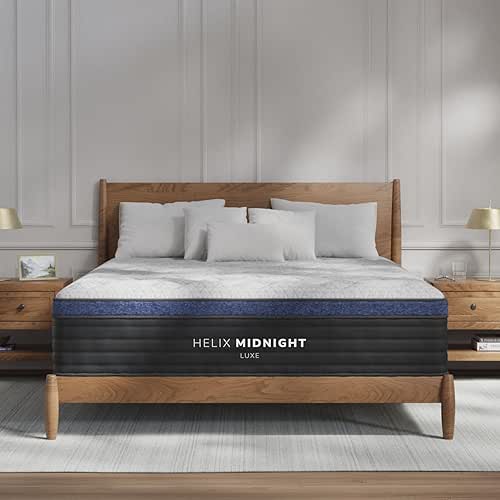

Let me be honest: I ignored my hip pain for way too long, thinking I just needed to stretch more. It turns out, as a side sleeper, my “firm” mattress was basically punishing my joints. I started looking for something that had a “cloud-like” top but didn’t make me feel like I was sinking into quicksand. This model uses a targeted zoned-support layer that is softer at the shoulders but firmer at the hips, which is the exact “Goldilocks” formula for side sleeping.
The game-changer: A plush pillow-top that provides instant pressure relief the second you lie down.
Best Budget Pick (<$1000):
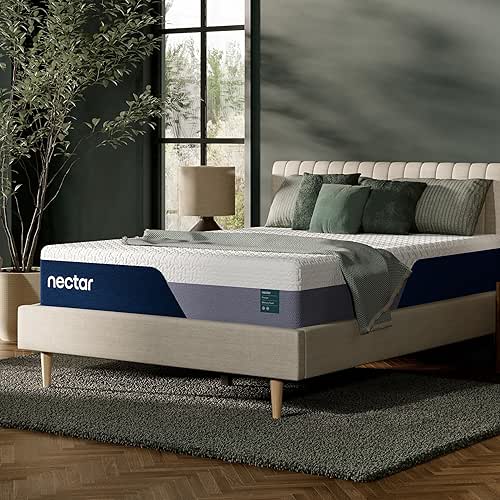
I’ll admit it—I was skeptical at first about “budget” foam beds. I’ve seen too many of them lose their shape after just two years. However, after looking into the 2026 density specs of this model, it’s clear they aren’t cutting corners on the transition layers. If you’re a minimalist who wants a straightforward, comfortable memory foam feel without the $3,000 price tag, this is the smartest ROI on the market right now.
Bottom line: Exceptional motion isolation and a “forever warranty” that takes the risk out of the purchase.
Best Eco-Luxury (Latex):
--
If you’re someone who spends their weekends at the farmers market and prioritizes organic living, the “chemical” smell of some foams can be a total dealbreaker. I went on a deep dive into sustainable bedding and found that natural latex is the only way to go for true eco-conscious durability. It’s naturally cool, buoyant (you feel like you’re floating on it rather than in it), and it’s one of the few materials that can realistically last you until 2040.
What sold me: 100% GOLS-certified organic latex and a needle-tufted finish that avoids toxic glues.
Troubleshooting: Is Your Current Bed Too Firm or Too Soft?
Not everyone is ready to drop $1,500 on a new bed today. If you’re tossing and turning every night but need to make your current setup work, here’s how to troubleshoot.
The Quick Fixes: Toppers and Bases
Think of a mattress topper like a “patch” for your hardware.
- If it’s too firm: A 2-to-3 inch memory foam or latex topper can add that much-needed “give” for your pressure points. It’s the cheapest way to buy yourself another year of sleep.
- If it’s too soft: This is harder to fix. Sometimes, the problem isn’t the mattress; it’s the foundation. Check your bed frame. If the slats are more than 3 inches apart, your mattress is sagging through the gaps. Adding a “Bunkie Board” (a flat, thin support) can instantly firm up the feel.
- The “Break-in” Period: New mattresses are like new shoes. It takes about 30 nights for the materials to soften and for your body to adjust. Don’t return a bed in the first week!
Choosing a mattress in 2026 is finally about personalization. We’ve moved past the “one size fits all” era and into a time where your bed can actually be a tool for recovery. Use those 100-night trial periods—they are your safety net. Sleep is the foundation of everything else we do in our “Good Life” journey. When you wake up without pain, the rest of the day just flows better.
Disclaimer: I am a lifestyle curator and product optimization expert, not a doctor. If you have chronic, debilitating back pain or a suspected sleep disorder like apnea, please consult a medical professional. This post contains affiliate links, which help support our research and curation efforts.
References
- International Sleep Products Association (ISPA). (2025). 2025 Mattress Industry Trends and Consumer Behavior Report. https://sleepproducts.org/
- National Sleep Foundation. (2024). How Often Should You Replace Your Mattress? https://www.thensf.org/
- Consumer Reports. (2025). Mattress Buying Guide: Durability and Satisfaction Ratings. https://www.consumerreports.org/
- Kovacs, F. M., et al. (2023). “Effect of firmness of mattress on chronic non-specific low-back pain: a randomized, double-blind, controlled, multicentre trial.” Spine/The Lancet.
- CertiPUR-US. (2026). Foam Certification Standards for Health and Environment. https://certipur.us/