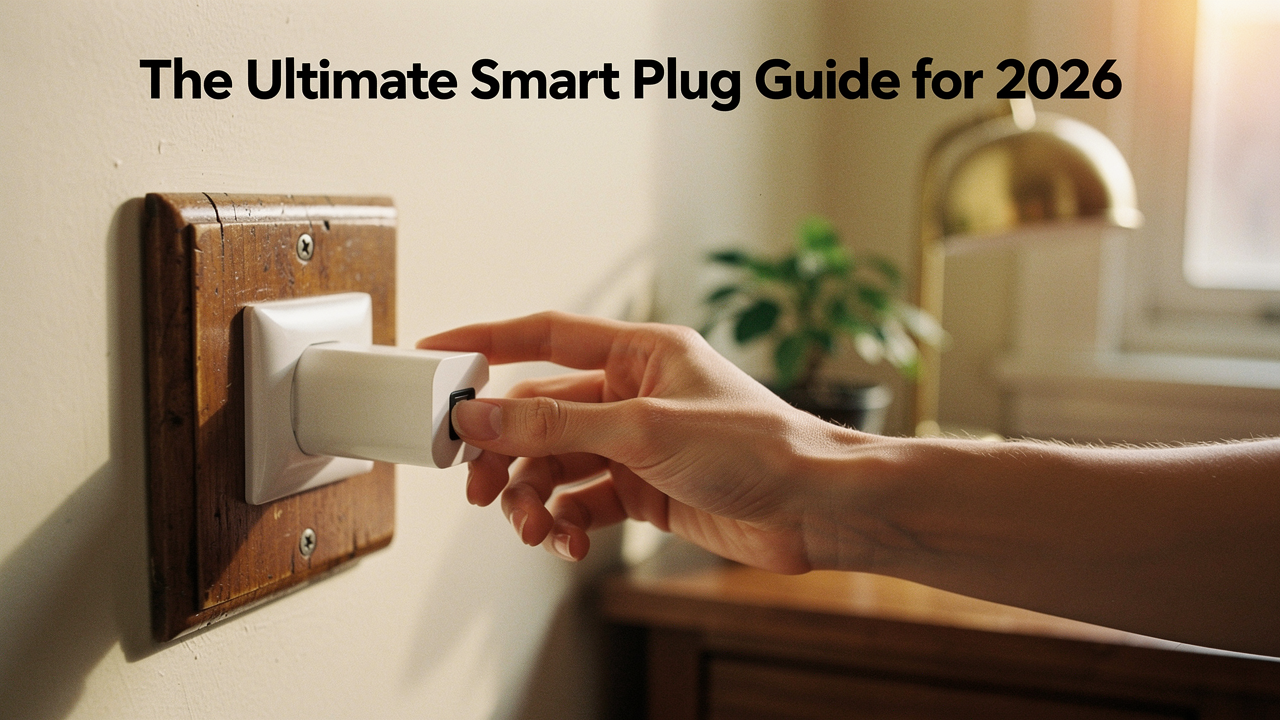
I’ve spent the last decade obsessed with “High Lifestyle ROI”—the idea that the things we bring into our homes should pay us back in time, calm, or actual dollars. In 2026, the humble smart plug is the undisputed champion of this philosophy. But here’s the thing: after years of testing everything from Matter-enabled hubs to budget Wi-Fi sticks, I’ve learned that a smart plug is only as good as the intention behind it.
This guide is my masterplan for you. We’re going to cut through the “home automation confusion,” tackle the energy waste crisis, and—most importantly—talk about when you should absolutely not plug something in.
Quick Answer: The 2026 Smart Plug Essentials
If you’re just looking for the “too long; didn’t read” version, here is the 2026 checklist for a successful setup:
- Look for Matter & Thread: This is the 2026 gold standard. It ensures your plug works with Alexa, Google, and Apple Home simultaneously without extra hubs.
- Check the Amps: Most smart plugs are rated for 10A or 15A. Never use a 10A plug for anything that heats up (like a coffee maker or toaster).
- Prioritize Energy Monitoring: Choose plugs that show real-time wattage. This is how you identify “vampire power” and actually lower your bill.
- Avoid High-Heat Appliances: Space heaters and window AC units are generally a no-go for standard smart plugs due to fire risks.
The Energy Waste Crisis: Why Your ‘Dumb’ Home is Costing You
We often think about energy waste in terms of big things—a drafty window or an old refrigerator. But there is a silent drain happening in your living room right now. It’s called “vampire power,” and it’s the energy consumed by devices while they are switched off or in standby mode.
Here’s a reality check: a typical coal-fired electricity plant is only about 38% efficient [1]. That means for every bit of “vampire” energy your TV or gaming console wastes, nearly two-thirds of the energy used to create that power was lost before it even reached your house. Environment America reminds us that the cleanest and most affordable energy is the energy we never use in the first place [2].
What finally clicked for me was realizing that my “dumb” appliances were essentially stealing from me. By using a smart plug to completely sever the connection to my entertainment center at 11:00 PM, I wasn’t just being “techy”—I was practicing a form of digital wellness. I was reclaiming control over my space and my utility bill.
Safety First: When You SHOULDN’T Use a Smart Plug
Let’s have a heart-to-heart: just because it fits into the smart plug doesn’t mean it belongs there. I’ve seen too many people try to automate their lifestyle without checking the electrical math first.
The Prizm Institute emphasizes that you must match the amp rating of your smart plug to the appliance [3]. Most “budget” plugs are 10-amp (10A), which is fine for a lamp or a fan. But for kitchen gear or heavy electronics, you need a 15-amp (15A) or 16-amp rated plug. If you overload a 10A plug with a high-wattage device, you aren’t just risking a blown fuse; you’re risking a fire.
What surprised me during my research was how many people use smart plugs to try and “fix” a broken appliance. If your coffee maker is acting up—flickering lights or inconsistent heating—that’s often a sign of a failing control board [4]. A smart plug won’t fix internal electronics; it will only mask the problem until something more serious happens.
The ‘No-Go’ List: Space Heaters and High-Wattage Gear
Before you start plugging things in, check the wattage. Most standard US outlets handle 1,800W. If your appliance is near that limit, it shouldn’t be on a smart plug.
- Space Heaters: These are the #1 cause of melted smart plugs. The constant high draw is too much for most consumer-grade relays.
- Window AC Units: The startup surge of an AC compressor can be 3x its running wattage, which can fry a smart plug instantly.
- Toaster Ovens & Air Fryers: These pull massive amounts of current in short bursts.
- Large Appliances: Refrigerators and washing machines should stay plugged directly into the wall to ensure they have a stable, un-switched power source.
Always look for the UL (Underwriters Laboratories) or ETL safety marks on the back of the plug. If it doesn’t have one, don’t put it in your home.
The 2026 Compatibility Matrix: Matter, Thread, and Wi-Fi
If you feel overwhelmed by the number of platforms and “hubs” out there, you aren’t alone. A 2023 Parks Associates report found that usability confusion is one of the leading causes of smart home complaints [5]. We’ve all been there: you buy a plug that says it works with Alexa, but then it won’t talk to your partner’s iPhone.
In 2026, the game has changed thanks to Matter. Think of Matter as a universal translator. If a plug has the Matter logo, it will work across Apple Home, Google Home, and Amazon Alexa without you having to jump through hoops.
What I’ve found most reliable lately are plugs that utilize Thread. Unlike Wi-Fi, which can get bogged down if you have 20 different devices connected to one router, Thread creates a “mesh” network. Each plug helps strengthen the signal for the next one. The Shelly Plug US Gen4 has become a bit of a benchmark here because it supports Matter, Zigbee, and Wi-Fi all in one tiny package, making it incredibly future-proof.
Strategic Smart Plug Uses: 5 Recipes for High Lifestyle ROI
I don’t want you to just buy a plug; I want you to solve a problem. Here are two of my favorite “recipes” for a better daily routine.
Scenario 1: The ‘Away Mode’ Security Loop
I’ve always felt a bit anxious leaving my Austin home for a weekend trip. The old-school mechanical timers that go “click-click-click” are a dead giveaway that no one is home.
- The Setup: Plug a floor lamp in the living room and a digital radio in the kitchen into smart plugs.
- The Routine: Use your app to set “Randomized” schedules. The lights will turn on and off at slightly different times each evening, making it look like a real person is moving from room to room.
Scenario 2: The Coffee & Sourdough Morning Routine
You know I love my sourdough. Part of my Sunday ritual is proofing dough, which requires a consistent environment.
- The Setup: I use a 15A smart plug for my older, “dumb” espresso machine and a small seedling heat mat for my bread proofing.
- The Routine: My espresso machine takes 20 minutes to fully heat up. I have a routine that triggers it the moment my phone alarm goes off. By the time I’ve done my morning stretches, the machine is ready. No waiting, no friction.
How to Use Energy Monitoring to Hack Your Bill
Most people use smart plugs as on/off switches, but the real “High Lifestyle ROI” comes from the data. Energy monitoring allows you to see the “invisible” cost of your habits.
Joel Rosenberg of Rewiring America points out that monitoring provides insights into your home that you simply can’t get any other way [6]. For example, I used an energy-monitoring plug on my older TV and discovered it was drawing 15 watts even when “off.” Over a year, that’s $20-$30 spent on literally nothing.
According to data from KaptonParts, systematic monitoring and scheduling can reduce home energy consumption by up to 30% in some households [7]. It turns the “guessing game” of your utility bill into a strategy game you can actually win.
Jordan’s Picks: Best Smart Plugs for 2026
When I’m looking for products to recommend, I apply the “Good Life Test”: Is it built to last, does it solve a problem, and is it easy to use? Here are the two I currently have in my own home.
Best for Matter & Thread: Eve Energy
I’ll be honest: I was skeptical about spending more on a plug until I tried the Eve Energy. If you’re someone who values privacy and hates the idea of every gadget in your house needing a “cloud account,” this is the one.
The beauty of the Eve Energy is that it uses Thread and Matter, meaning it talks directly to your home hub (like a HomePod or Nest Hub) without sending your data to a random server in another country. It’s snappy—the response time is almost instant. What sold me was the built-in energy monitoring that actually tracks your local electricity rate to show you the dollar amount you’re spending in real-time.
Micro-Verdict: The gold standard for privacy-conscious users who want a fast, future-proof connection.


Best Budget All-Rounder: TP-Link Kasa EP25
We’ve all been there—you want to automate your home, but you don’t want to spend $40 per outlet. I ignored the Kasa line for a while because I thought “budget” meant “flimsy,” but I was wrong.
The Kasa EP25 is the 15-amp workhorse that just works. I’ve used these for everything from my Austin-summer floor fans to my holiday porch lights. The app is incredibly intuitive, and it integrates perfectly with Alexa and Google Home. While it doesn’t use Thread, its Wi-Fi connection has been rock-solid even in the far corners of my apartment. It’s the easiest way to dip your toes into automation without a heavy investment.
Micro-Verdict: An incredibly reliable, high-amperage plug that offers the best “bang for your buck” on the market.
Making Every Day a Little Better
Smart home technology can feel like a burden when it’s poorly planned, but when you use it to solve real problems—like energy waste or home security—it becomes a quiet supporter of your best life.
Start small. Buy one plug, put it on your most-used lamp or your “vampire” entertainment center, and see how it feels to have that little bit of extra control. Check your “vampire power” today—which appliance in your living room is your biggest energy thief?
Let’s make every day a little better, together.
Affiliate Disclosure: This post contains affiliate links. If you purchase through these links, I may earn a small commission at no extra cost to you. I only recommend products I have researched or used personally.
Safety Disclaimer: This guide is for informational purposes. Always consult a licensed electrician when dealing with high-load appliances or if you are unsure about your home’s wiring. Never exceed the rated wattage of your smart plug.
Sources & Further Reading
- EnergyEducation.ca (2025). Energy Loss in Power Generation. https://energyeducation.ca/encyclopedia/Energy_loss
- Environment America (2024). Citizen’s Guide to Reducing Energy Waste. https://environmentamerica.org/resources/citizens-guide-to-reducing-energy-waste/
- Prizm Institute (2025). Best Smart Plugs for Beginners: A Safety Guide. https://www.prizminstitute.com/blog/best-smart-plugs-for-beginners/
- Appliance Medic Pro (2024). Signs of Appliance Control Board Failure. https://appliancemedicpro.com/appliance-control-board-failure/
- Parks Associates (via Decoradtech, 2023). Smart Home Usability and Adoption Challenges. https://decoradtech.com.co/common-home-automation-mistakes-and-how-to-avoid-them/
- EnergySage (2025). Interview with Joel Rosenberg: The Value of Home Energy Monitoring. https://www.energysage.com/energy-management/energy-monitors/
- KaptonParts (2026). The Impact of Smart Plugs on Residential Energy Consumption. https://www.kaptonparts.com/blog/best-smart-plug-outlet-options-2026/