=
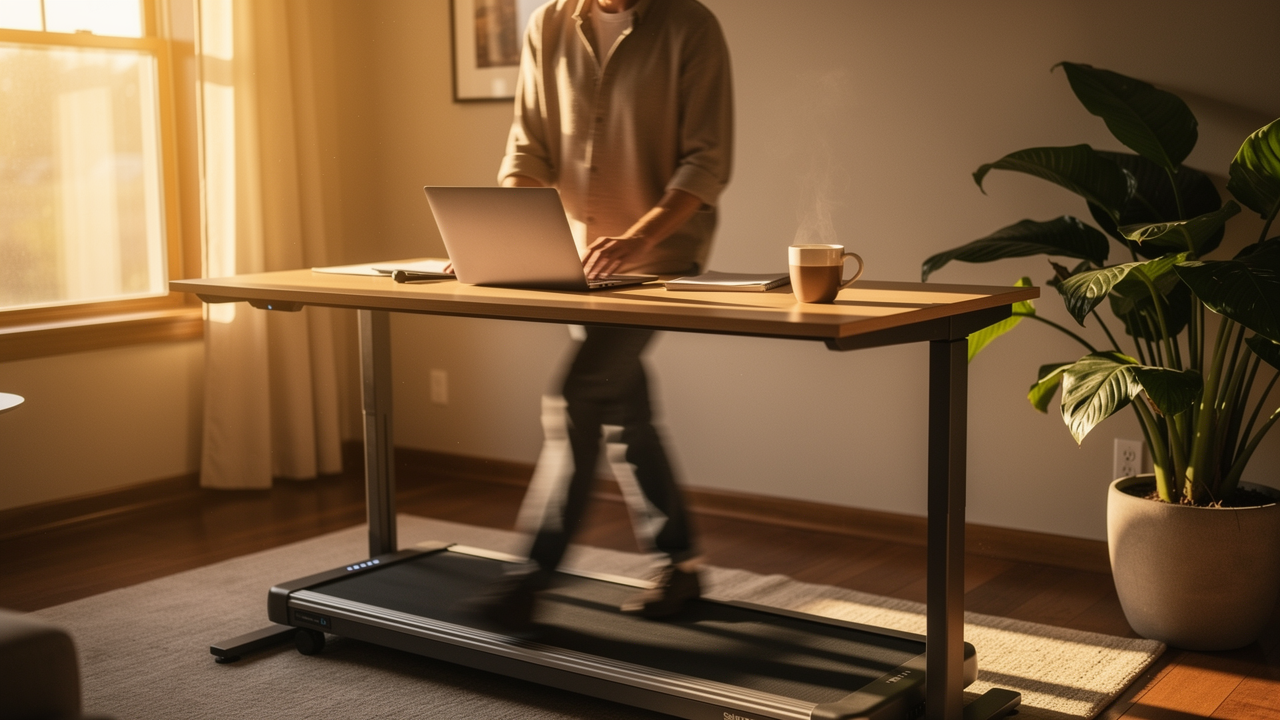
I decided to run a 90-day experiment with a walking pad. I wanted to see if I could bridge the gap between my sedentary work life and my fitness goals without leaving the house in a 40-degree drizzle. What I found was a complete shift in my daily energy. By the end of the winter, I was averaging an extra 4,000 steps a day—not from grueling gym sessions, but from simply moving while I worked.
The Winter Fitness Crisis: Why Motivation Dies in December
Let’s be honest: the struggle to stay active in winter isn’t just about the temperature; it’s about friction. When it’s dark before you even finish your afternoon emails, the psychological barrier to lacing up your shoes and heading to a cold gym feels insurmountable. I call this the Winter Friction Trap.
From a behavioral standpoint, friction is the number one killer of habits. If a task requires too many steps—dressing in layers, scraping ice off a windshield, or navigating slippery sidewalks—we’re wired to choose the path of least resistance (usually the couch). This seasonal slump isn’t just a mood killer; it has real health implications. The World Health Organization (WHO) recommends at least 150 to 300 minutes of moderate aerobic activity per week for adults [2]. During the winter, many of us fall dangerously short of that baseline.
Maintaining movement during the colder months is also critical for our immune systems. The Centers for Disease Control and Prevention (CDC) notes that regular physical activity can help your immune system better handle infections [1]. When I looked at my own habits, I realized I was essentially going into hibernation mode, which was exactly why I felt so depleted by mid-January.
Enter the Walking Pad: A Solution for Small Spaces and Big Goals
You might be wondering, Isn’t a walking pad just a cheap treadmill? Not exactly. For someone like me—who values intentional, calm spaces—a traditional treadmill is a lifestyle eyesore. It’s bulky, loud, and rarely moves once it’s delivered.
A walking pad is the optimization geek’s dream. It’s essentially a slimmed-down, motor-driven belt designed for walking speeds (usually topping out at 3.7 to 4.0 mph). The beauty lies in its High Lifestyle ROI. It solves the real problem of sedentary workdays without demanding a dedicated room. Research suggests that even low-intensity movement like walking can significantly improve cognitive function and heart health [3].
The real win here is the versatility. You can slide it under a standing desk during a meeting, then tuck it under the sofa when you’re hosting a wine night with friends. It’s a tool that supports your life rather than cluttering it.
My 90-Day Winter Testing Data: What Actually Changed?
I’m a big believer in living the data. To see if this was a worthy investment, I tracked my metrics from December through March. I wanted to know if I would actually use it or if it would become a very expensive place to hang my yoga blankets.
- Daily Step Count: My average jumped from 5,200 (pre-walking pad) to 9,800 steps per day.
- Focus Levels: I found that walking at a slow pace (1.2 mph) during shallow work like emails actually reduced my fidgeting and improved my focus.
- Noise Impact: At 1.5 mph, my walking pad registered at 45 decibels—roughly the sound of a quiet library. I successfully took dozens of Zoom calls without anyone realizing I was moving.
The American College of Sports Medicine (ACSM) emphasizes that low-impact cardio is vital for joint longevity, especially as we spend more time sitting [4]. By integrating these micro-walks into my workday, I noticed significantly less lower-back tightness by 5:00 PM.
The Best Walking Pads for Your Home Office (Tested & Vetted)
Finding the right machine depends entirely on your space and how you plan to use it. I’ve spent the winter testing these three models to see which truly delivers on the Good Life Test.
Best for Budget: Urevo Under Desk Treadmill
I’ll admit I was skeptical at first about the lower price point. I used to think that budget meant disposable, but I needed something simple for my guest room that wouldn’t break the bank. My daily reality was a 3:00 PM energy crash that no amount of coffee could fix, yet I couldn’t justify spending a thousand dollars on a secondary fitness tool. After researching dozen of models, I found this Urevo unit. It’s surprisingly sturdy for its weight, and the remote control is intuitive enough that you don’t have to look down while typing.
The game-changer: High-quality movement for less than the cost of a few months at a boutique gym.


Best for Small Apartments: WalkingPad P1 Foldable
You know that feeling when you love your small apartment but hate how quickly it feels cluttered? That was my biggest hurdle. I didn’t want a permanent fitness fixture in my living area. I ignored the walking pad trend for years because I couldn’t figure out where it would live. What finally clicked was the double-fold technology of the P1. It literally folds in half, allowing it to slide into the narrow gap between my cabinet and the wall. It’s the ultimate minimalist solution for anyone who lives in a city like Austin or New York where every square inch matters.
Bottom line: This is the only model that truly disappears when you’re done with your workout.
The Premium Choice: GoPlus 2-in-1 Folding Treadmill
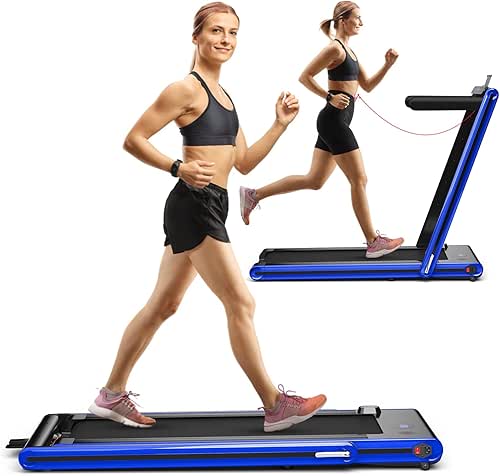
Here’s the thing about winter workouts—sometimes a slow walk just doesn’t cut it. On those days when I was feeling restless and actually wanted to work up a light sweat, a standard walking pad felt limiting. I found myself wishing for a bit more speed and a handrail for stability. This GoPlus model is a hybrid; with the handrail down, it’s a perfect under-desk walker, but with the rail up, it hits speeds of up to 7.5 mph. It’s built to last with a multi-layer belt that’s much easier on the knees than the cheaper, thinner alternatives.
What sold me: The flexibility to go from a 1.0 mph “meeting walk” to a 5.0 mph “proper jog” without changing machines.
Which Setup Fits Your Life?
The Minimalist Remote Worker (Small Spaces)
If you’re working from a corner of your bedroom or a small studio, you need gear that respects your floor plan.
- Essential: A foldable walking pad with a slim profile
- Essential: A pair of dedicated indoor-only walking shoes to keep the belt clean
- Pro Upgrade: A high-density rubber mat to protect your floors and dampen noise for neighbors
The Power User (Maximum ROI)
If you spend 8+ hours at your desk and want to hit 15k steps without thinking about it.
- Essential: A 2-in-1 walking pad with a higher weight capacity (300+ lbs)
- Essential: An adjustable-height standing desk with memory presets
- Pro Upgrade: A clip-on fan for your desk to stay cool during longer sessions
The Optimization Guide: Ergonomics and Habit Stacking
Adding a walking pad to your office isn’t as simple as just plug and play. If your ergonomics are off, you’ll trade your sedentary habits for a neck ache.
First, ensure your monitor is at eye level. When you’re walking, your head tends to bob slightly; if you’re looking down at a laptop, you’ll strain your cervical spine within twenty minutes. Second, keep your elbows at a 90-degree angle to the keyboard.
I’ve found that Habit Stacking is the secret to consistency. I only allow myself to walk during specific tasks:
- 1.0–1.5 mph: Clearing the inbox, Slack messages, and internal Zoom calls where I’m mostly listening.
- 2.0–2.5 mph: Listening to podcasts, watching industry webinars, or doing research.
- 3.0+ mph: Saved for dedicated cardio time after the laptop is closed.
Addressing the ‘Elephant in the Room’: Noise and Maintenance
I’ll be honest—walking pads aren’t silent. Even the whisper quiet ones create a rhythmic thump-thump that might annoy a downstairs neighbor in an older apartment building. Here’s how I handled it: I bought a 1/4-inch high-density equipment mat to go underneath. This absorbs the vibration before it hits the floorboards.
Maintenance is the other must-do. If you want your machine to last more than one winter, you have to lubricate the belt. Most manufacturers recommend adding a few drops of silicone oil every 100 miles or every three months. It takes two minutes and prevents the motor from overheating—a real concern with these compact units.
Final Thoughts: The Winter Survival Strategy
Living well isn’t about having a perfect gym; it’s about creating an environment that supports your best intentions. A walking pad has become my favorite winter survival tool because it removes the I don’t have time and It’s too cold excuses. It’s a High Lifestyle ROI investment that turned my most sedentary months into my most active ones.
If you’re tired of the seasonal slump, start small. Even 15 minutes a day while you’re checking your morning headlines can change the momentum of your entire week. After all, the best workout is the one that actually happens when it’s 34 degrees and raining outside.
Medical Disclaimer: The information in this article is for informational purposes only and is not intended as medical advice. Always consult with a qualified healthcare professional or physician before starting a new exercise regimen or using home fitness equipment, especially if you have pre-existing health conditions or injuries.
References
- Centers for Disease Control and Prevention (CDC). (2023). “Stay Active This Winter.” cdc.gov
- World Health Organization (WHO). (2020). “Guidelines on physical activity and sedentary behaviour.” who.int
- The Conversation. (2023). “Treadmill, exercise bike, rowing machine: what’s the best option for cardio at home?” theconversation.com
- American College of Sports Medicine (ACSM). (2022). “Physical Activity Guidelines for Americans.” acsm.org
- Personal testing log: Jordan Miller, December 2024 – March 2025. Data tracked via Oura Ring and Apple Watch.