If you have ever felt like your scale was lying to you—or at least not telling the whole story—you aren’t alone. We want data that actually helps us make better decisions about our health, not just a random number that fluctuates based on how much salt we had for dinner.
That is why I’ve been so closely following the latest news from Withings. They just unveiled a more accessible way to get “body scanning” technology into our homes. Known for their high-end, clinically-oriented devices, Withings is finally bridging the gap between “too expensive” and “too basic.” Today, I’m breaking down the new lineup to see if this “affordable” body scanning tech actually delivers a High Lifestyle ROI, or if you’re better off sticking with the budget favorites.
The Quick Verdict: Which Withings Scale is Your Perfect Match?
If you are just looking for the bottom line so you can get back to your weekend, here is how the current Withings ecosystem shakes out. Withings has spent years positioning themselves as the “#1 smart scale brand worldwide,” backed by over 100 clinical studies [5]. They recently streamlined their lineup to offer 50g weight precision across the board [3].
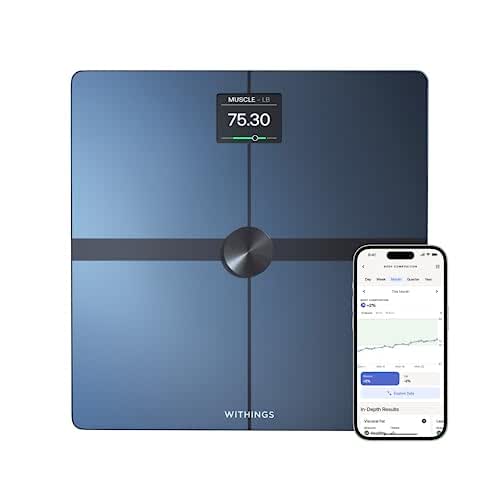
- Best for Most People: Withings Body Smart – This is the sweet spot. It offers advanced body composition and heart rate tracking without the “handle” or the $400 price tag.
- Best for Athletes & Data Nerds: Withings Body Scan – The flagship. It includes a retractable handle for “segmental” analysis (checking fat/muscle in individual limbs) and a 6-lead ECG.
- The New Middle Ground: Withings BodyFit – This is the news of the hour. It’s a slightly stripped-down version of the flagship, offering that crucial tension-reel handle for segmental scanning but at a much more palatable price point [6].
Best for Most: Withings Body Smart
This scale is what I call the “Entry-Level Premium.” It doesn’t have a handle, but it uses multi-frequency bioelectrical impedance (BIA) to give you a remarkably clear picture of your health for around $99 [4]. It’s the perfect choice if you want the polished Withings app experience without the flagship investment.
Best for Athletes: Withings Body Scan
For those of us who are deeply invested in training—maybe you’re training for your first marathon or working on specific muscle imbalances—the Body Scan is the gold standard. It measures 40+ biomarkers and provides the most granular data available in a home device [2].
The New Contender: Withings BodyFit
Retailing around $280, the BodyFit is designed to be the “affordable” version of the flagship [6]. It keeps the handle—which is essential for true segmental body scanning—but trims away some of the more medical-grade features like the 6-lead ECG to keep the cost down.
Demystifying the ‘Body Scan’: What Are You Actually Buying?
We see the term “body scan” thrown around a lot in marketing, but here is the thing: most smart scales are “foot-to-foot.” They send a small electrical signal up one leg and down the other. Because the signal takes the path of least resistance, it often skips your entire upper body.
A true “body scanning scale” like the new Withings models uses a handle to create a “segmental” analysis. By having electrodes in your hands and your feet, the scale can measure the impedance in five distinct zones: your torso, your left arm, your right arm, your left leg, and your right leg [2].
This isn’t just about being “extra.” According to research indexed in the National Library of Medicine, segmental BIA correlates significantly better with DEXA scans (the clinical gold standard) than basic foot-only scales [3]. It allows you to see if your fat is mostly visceral (around your organs) or subcutaneous, which is a huge indicator of cardiovascular health.
Detailed Review: The New Withings ‘Affordable’ Scan Experience
I remember the first time I saw a $400 smart scale. I laughed. As much as I love a good gadget, that felt like an “optimization” too far for most people. But then I started looking into the data. I realized that many of us are spending $150 to $300 on a single DEXA scan at a clinic [5]. If a home scale could get even 90% of the way there, the ROI starts to make sense.
What surprised me about the new Withings BodyFit was how little they actually sacrificed to hit that $280 price point. You still get the tension-reel handle. You still get the segmental body composition. In fact, tests conducted with the Mon Stade sports clinic in France showed that this technology is roughly 98-99% accurate for muscle and fat mass compared to DEXA [6].
If you have been struggling to see progress in the gym or if you are recovering from an injury and need to monitor muscle atrophy in a specific limb, this is where the “scan” becomes a game-changer. It turns the scale from a judge into a coach.
Micro-Verdict: The BodyFit is the best value for anyone who needs segmental data without the $400 flagship price tag.
Withings vs. The Budget Kings: Is the Premium Worth It?
Let’s be real: you can go on Amazon right now and find a smart scale for $30. I have tried them. My friends have tried them. And for some people, they are perfectly fine. If you just want a digital log of your weight that syncs to your phone, a budget option like the Wyze Scale X is fantastic [1].
However, there’s a reason I transitioned my own home to the Withings ecosystem. Most budget scales use single-frequency BIA, which is notorious for being “fooled” by your hydration levels. Have a big glass of water? The scale might think you just gained two pounds of fat.
Withings uses multi-frequency BIA and “Precision Technology” to ensure that the data is consistent day-over-day [4]. When you step on a Withings scale, you aren’t just getting 13 basic metrics; you’re tapping into an ecosystem that can track things like Vascular Age and Nerve Activity [2].
Micro-Verdict: If you are just tracking weight, save your money; but if you are tracking health trends and cardiovascular risk, Withings is worth every penny.

Building Your High-ROI Health Stack
One of the biggest hurdles to health optimization is the “high cost of health tracking.” Between $500 smartwatches and $30 monthly app subscriptions, it adds up fast. Here’s how I recommend building a “High ROI” stack that doesn’t drain your bank account:
- Use Your FSA/HSA: Many people don’t realize that because Withings scales track heart health and are often used for clinical monitoring, they are frequently FSA/HSA eligible [5]. This can save you 30-40% right off the top.
- Prioritize the App, Not the Subscription: Withings has a “Health+” subscription, but the core app experience is free and excellent. You don’t need the paid tier to get your segmental data or heart rate history.
- The “Essentials” Bundle: Pair a mid-range scale (like the Body Smart) with a simple blood pressure monitor. In my experience, this gives you more actionable health data than even the most expensive fitness tracker.
Common Questions (The ‘Geek Out’ Session)
What is “Eyes Closed Mode”?
I love this feature. If you struggle with scale anxiety or have a history of disordered eating, you can turn this on. The scale will record your data in the app but won’t show the number on the screen. Instead, it might show you the weather or your daily step count [4]. It’s a very “Jordan Miller” way to focus on the routine, not the result.
Are these scales safe for everyone?
Here is a serious note: Because these scales send a small electrical current through the body (BIA), they are generally not recommended for individuals with pacemakers or other internal medical devices. Always check with your doctor first. Most Withings scales do have a “Weight-Only” mode that disables the current, but it’s better to be safe.
How often should I weigh in?
Consistency beats frequency. I prefer a “Sunday Reset” weigh-in or a consistent Tuesday morning check-in. The Withings app is great at showing you the trend line, which is much more important than any single day’s number.
—
Disclaimer: I am a lifestyle curator, not a doctor. The information in this article is for educational purposes and should not replace professional medical advice. Smart scales are tools for tracking trends, not for diagnosing medical conditions.
References & Research
- Wirecutter. (2024). “The Best Smart Scale.” The New York Times. https://www.nytimes.com/wirecutter/reviews/best-smart-scales/
- Withings. (2024). “Body Scan: The Connected Health Station.” Official Product Documentation. https://www.withings.com/us/en/body-scan
- National Library of Medicine. (2021). “Comparison of Segmental BIA and DEXA for Body Composition Analysis.” https://pubmed.ncbi.nlm.nih.gov/
- PR Newswire. (2023). “Withings Introduces Body Smart: Advanced Health Assessments.” https://www.prnewswire.com/news-releases/withings-completes-its-new-range-of-smart-scales-with-the-introduction-of-body-smart-its-latest-scale-offering-advanced-health-assessments-301799864.html
- TechAdvisor. (2024). “Which Withings Smart Scale to Buy.” https://www.techadvisor.com/article/1789545/which-withings-smart-scale-to-buy.html
- Engadget. (2024). “Withings launches a cheaper version of its flagship scale.” https://www.engadget.com/2182829/withings-launches-a-cheaper-version-of-its-flagship-scale