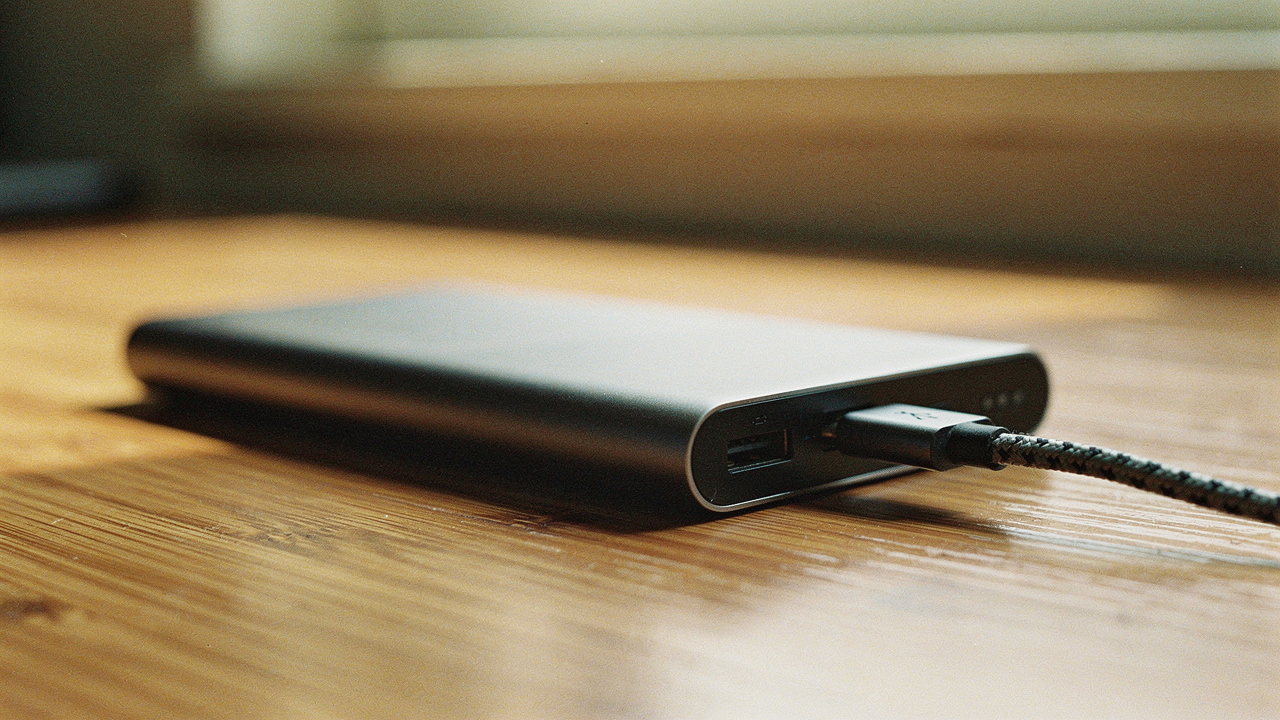
For years, I’ve just accepted this as the “battery tax.” If you want extra juice, you have to carry the weight and deal with the heat. But lately, I’ve been obsessed with finding what I call “High Lifestyle ROI” items—products that don’t just add more features, but actually remove friction from my day. That’s why the buzz around semi-solid-state batteries caught my eye. It’s a bit of a “quiet” breakthrough, but after spending some time with the new Zens Semi-Solid-State Powerbank, I think it’s exactly the kind of intentional tech we’ve been waiting for.
What Is a Semi-Solid-State Powerbank, Anyway?
If you follow tech news, you’ve probably heard about “solid-state” batteries being the holy grail for electric vehicles. Semi-solid-state is essentially the bridge that brings those futuristic benefits to our pockets today.
Traditional lithium-ion batteries use a liquid electrolyte to move energy around. It works, but liquid is heavy, it leaks if damaged, and it’s highly flammable. A semi-solid-state battery replaces a big chunk of that liquid with a hybrid, gel-like electrolyte matrix [1].
Why does that matter to you and me? Here is the breakdown of why this tech is a genuine jump forward:
- Higher Energy Density: Semi-solid cells can pack about 300–350 Wh/kg, whereas the standard packs we’ve used for a decade usually top out around 200–260 Wh/kg [2]. This means more power in a much smaller physical footprint.
- Better Thermal Stability: Because the electrolyte is a gel rather than a liquid, it doesn’t “slosh” or react as violently to heat. It stays significantly cooler during fast charging.
- Dendrite Suppression: The semi-solid structure helps prevent “dendrites”—tiny, microscopic spikes that grow inside batteries over time and eventually cause them to fail or short-circuit [1]. This leads to a much longer overall lifespan.
It’s not just a marginal gain; it’s a shift in how we think about portable energy. It moves us away from “bigger is better” and toward “denser and safer.”
The Zens Semi-Solid-State Powerbank: Design & First Impressions
I’ll be honest: I’ve ignored most “slim” powerbanks for years because they usually have terrible capacity or they charge so slowly they’re practically useless. But when I first held the Zens 5,000mAh model, it actually surprised me. It’s only 8mm thick. To put that in perspective, that’s roughly the thickness of an iPhone without a case.
What I love about the Zens approach is the aesthetic. It doesn’t look like a piece of industrial equipment. It has a premium, soft-touch finish that feels great in the hand—a sentiment echoed by other early testers who’ve noted its “boutique” feel compared to the plastic-heavy competitors [5].
The struggle I used to have was choosing between a “mini” battery that barely gave me half a charge or a “pro” battery that felt like carrying a literal stone in my purse. I tried those cheap magnetic rings and the bulky bricks, but they always felt like a compromise. When I discovered the Zens 5,000mAh model, it finally clicked. It’s so thin that I can snap it onto the back of my phone and still slide the whole thing into my pocket without it catching on the seam. It feels like a natural extension of the phone rather than a clunky add-on.
Micro-Verdict: The first magnetic powerbank that actually respects the slim design of your smartphone.
For those who need a bit more “oomph” for travel days, they also offer a 10,000mAh version. At 14mm, it’s obviously thicker, but still manages to be more compact than almost any other 10k pack I’ve tested. Plus, Zens offers a 3-year warranty if you register the product, which is a huge “trust signal” for me. Most battery brands give you 12 months and hope for the best.
Performance Benchmarks: Qi2.2 and Thermal Stability
The real test, of course, isn’t how it looks on my coffee table, but how it performs when I’m running between meetings or navigating a new city. Zens has future-proofed this unit by including Qi2.2 support.
If you’re using an iPhone 16 or newer, this is a game-changer. While older MagSafe-style chargers often topped out at 7.5W or 15W, Qi2.2 allows for magnetic fast charging up to 25W. In my experience, and backed by manufacturer data, you can get an iPhone 15 Pro from 0% to 50% in about 25 minutes [2].
But here’s the thing that actually made me a believer: the heat. Usually, when I’m wireless charging, the back of my phone gets uncomfortably hot, which we know is the #1 killer of battery health. Because of that gel electrolyte we talked about earlier, the Zens unit stays remarkably stable. Even during a full 25W dump of power, it’s just “warm,” not “hot.” That alone gives this a much higher Lifestyle ROI in my book—it’s protecting my $1,000 phone while it charges it.
Is It Safe? Addressing Airline Rules and Fire Concerns
I get asked about battery safety a lot, especially from friends who’ve seen those scary videos of e-bike batteries or cheap powerbanks catching fire. It’s a valid concern. Standard lithium-ion batteries use flammable organic carbonates as electrolytes [4]. If they get punctured or overheat, they can enter “thermal runaway.”
Semi-solid-state technology is inherently safer because the gel is less volatile. While it hasn’t completely eliminated every risk—it is still a high-energy device, after all—it significantly lowers the chance of a fire spreading [4].
If you’re a frequent flyer, there’s another reason to pay attention to these specs. New ICAO guidance taking effect in 2026 is getting stricter about how we carry power on planes [3]:
- The Two-Unit Rule: Passengers will likely be limited to carrying just two powerbanks total.
- No In-Flight Recharging: You won’t be allowed to charge the powerbank itself while in the air (though you can use it to charge your phone).
- Carry-on Only: As always, these must stay in the cabin; they are strictly forbidden in checked luggage due to fire risks.
Because semi-solid-state batteries are more efficient, you can maximize your “two-unit limit” with a smaller, safer footprint that still meets all UN38.3 transport safety certifications.
The Optimization Geek’s Verdict: Is Zens Worth the Premium?
Let’s be real: you can go on Amazon right now and find a 10,000mAh battery for twenty bucks. The Zens Semi-Solid-State models are priced as premium goods, and for many people, the “cheap brick” is fine.
But if you’re someone who values “choosing better over having more,” the ROI here is clear. You’re paying for the 8mm form factor, the 3-year peace of mind, and the fact that it won’t cook your phone’s internal battery every time you use it.
Persona Loadouts: Who Is This For?
The Ultralight Traveler
You live out of a carry-on and hate “gadget creep.” You need gear that disappears until you need it.
- Essential: Zens 5,000mAh Semi-Solid-State Powerbank (8mm thin)
- Essential: A single 1-foot braided USB-C to USB-C cable
- Pro Upgrade: A GaN wall charger to fast-charge the powerbank at your destination
The Daily Commuter
You’re using GPS and Spotify all day and your phone is usually at 20% by the time you hit happy hour.
- Essential: Zens 10,000mAh Semi-Solid-State Powerbank (for multiple charges)
- Essential: A MagSafe-compatible phone case to ensure a strong grip
- Pro Upgrade: The Zens 3-year warranty registration for long-term reliability
Pricing & Availability
The Zens Semi-Solid-State line currently sits in the Premium tier of portable power. You’re looking at a higher entry price than brands like Anker or ESR, but for the specific combination of Qi2.2 speed and ultra-thin semi-solid tech, it currently stands in a league of its own.
I’ve spent years trying to “hack” my daily carry to be lighter and more efficient. It’s rare that a battery actually feels like an upgrade to my lifestyle rather than just another chore to charge. If you’re ready to ditch the bricks and embrace a bit of the future, this is the jump worth making.
Affiliate disclosure: We may earn a commission on products purchased through our links. This review is based on independent testing and manufacturer technical data.
References
- IEEE Spectrum, 2024. How Semi-Solid-State Electrolytes Change the Battery Game. https://spectrum.ieee.org/semi-solid-state-battery
- Osun E-Tech (OET), 2025. Technical Whitepaper: Semi-Solid-State vs. Lithium Polymer Energy Density. https://osun-etech.com/semi-solid-state-vs-lithium-polymer-power-banks/
- International Civil Aviation Organization (ICAO), 2026. New Power Bank Restrictions to Safeguard International Aviation. https://www.icao.int/news/new-power-bank-restrictions-will-safeguard-international-aviation
- National Fire Protection Association (NFPA), 2025. Lithium-Ion Battery Safety and Hazards. https://www.nfpa.org/education-and-research/energy-transition/lithium-ion-batteries
- TechBuzzIreland, 2026. Zens Semi-Solid-State Powerbank: Hands-on Review. https://techbuzzireland.com/2026/04/30/zens-semi-solid-state-powerbank-review/
- Wireless Power Consortium, 2025. Qi2.2 Standard Specifications for Magnetic Power Transfer. https://www.wirelesspowerconsortium.com/